Why a Munchkin Cannot Get Away From a Dog
It’s a common misconception that because Munchkin cats are quick on their feet, they're inherently safe from the potential dangers of a dog encounter. Many owners, especially those new to the breed, worry about their little ones being able to protect themselves, and it’s a valid concern. This guide is here to shed light on why a Munchkin’s unique physical attributes, while charming, unfortunately limit their ability to escape danger effectively from a dog, and what you can do to create a truly safe haven for your short-legged friend.
The Munchkin's Physical Limitations in an Encounter
When you have a regular-sized cat, you naturally assume they can jump to safety, scale a fence, or perch themselves out of harm's way. But with a Munchkin, this just isn't the case. Their adorable short legs come with a specific set of physical limitations that dramatically change how they react to and escape from threats, particularly a fast-moving, larger animal like a dog. Understanding these limitations is the first step in ensuring their safety.
The Low Center of Gravity and Lack of Vertical Escape
One of the most defining characteristics of a Munchkin cat is, of course, their short legs, which give them that distinctive low-slung appearance. While this low center of gravity can actually make them surprisingly agile on flat ground, it's a huge disadvantage when it comes to vertical escape. A normal cat’s primary defense mechanism against a ground predator is to climb – up a tree, onto a fence, or even just onto a high piece of furniture. They can spring upwards with incredible force, using their powerful hind legs to propel them to safety.
A Munchkin, however, simply cannot do this. Their legs just aren't built for that kind of explosive vertical launch. Imagine your Munchkin faced with a playful but overly enthusiastic dog. A typical cat might be able to leap onto a kitchen counter, a tall bookshelf, or even dart up a cat tree to escape the dog's pursuit. Your Munchkin, on the other hand, will find these escape routes utterly impossible to access without assistance. This means that in a confrontation, their usual options for getting away are severely limited, leaving them far more vulnerable than their long-legged counterparts. It’s important to remember that A Munchkin Is a Normal Cat That Cannot Reach.
Speed on the Flat vs. Maneuverability in Tight Spots
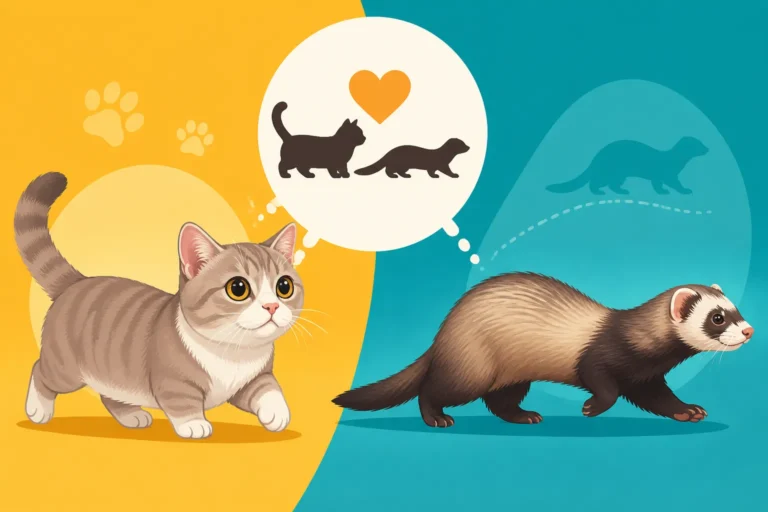
It’s true, Munchkins can be incredibly fast! If you've ever seen one darting across a room or chasing a toy, you know they can pick up quite a pace on a clear, flat surface. Their compact bodies and low profile allow them to zip along with surprising quickness, almost like little furry race cars. This speed might give some owners a false sense of security, believing their Munchkin can simply outrun any canine threat.
However, speed on the flat is one thing; agile, evasive maneuvering in a dynamic, unpredictable environment is quite another. When a Munchkin is being chased by a dog, they need to do more than just run in a straight line. They need to weave, dodge, change direction sharply, and navigate around obstacles. Their low-slung bodies, while great for straight-line speed, can actually hinder their ability to make quick, tight turns or squeeze through narrow gaps when under pressure. A dog, with its longer strides and often superior agility in a chase, can quickly close the distance, especially if the Munchkin's escape route involves anything more complex than a clear path. This is a critical factor in why How High a Munchkin Can Actually Jump is so relevant.
The "Prairie Dog" Sit as a Vulnerability, Not an Advantage
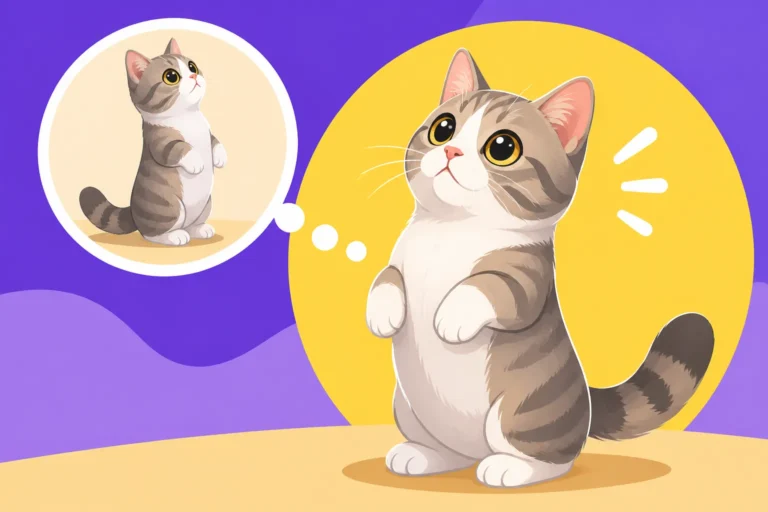
One of the most endearing and unique behaviors of a Munchkin is their "Prairie Dog" sit. They'll often sit up on their hind legs, forelegs dangling, to get a better view of their surroundings, much like a meerkat or a prairie dog. It's an adorable quirk that makes them even more captivating to watch, and it really showcases their curious nature. The Prairie Dog Sit Only a Munchkin Does is a definite crowd-pleaser.
However, in a tense situation involving a dog, this posture becomes a significant vulnerability. When a Munchkin adopts this upright stance, they are essentially a stationary, upright target. They're not poised to bolt, jump, or defend themselves. While they might be trying to assess the threat, the act of sitting up temporarily removes any immediate escape potential. A dog, especially one with a strong prey drive, could interpret this static posture as an invitation to investigate further, or worse, as an easy target, escalating a potentially harmless interaction into something dangerous before the Munchkin can even think about dropping back down and running. It’s a moment of adorable vulnerability that can unfortunately become a real risk in the wrong circumstances.
The Instinctual Responses of Cats and Dogs
Understanding the physical limits of your Munchkin is only half the battle. The other crucial element is recognizing the deeply ingrained instinctual behaviors of both cats and dogs. These are primal responses, often triggered without conscious thought, and they can dictate the outcome of an encounter far more than any training or familiarity between the individual animals might suggest.
Flight Instinct: Climb vs. Run
When a cat feels threatened, its immediate instinct is to get away. For most cats, this "flight" response has a strong vertical component. They will naturally try to climb to a higher vantage point – a tall piece of furniture, a shelf, or a window sill – where they feel safe and out of reach. This ability to ascend offers both physical safety and a psychological advantage, allowing them to observe the threat from a secure position.
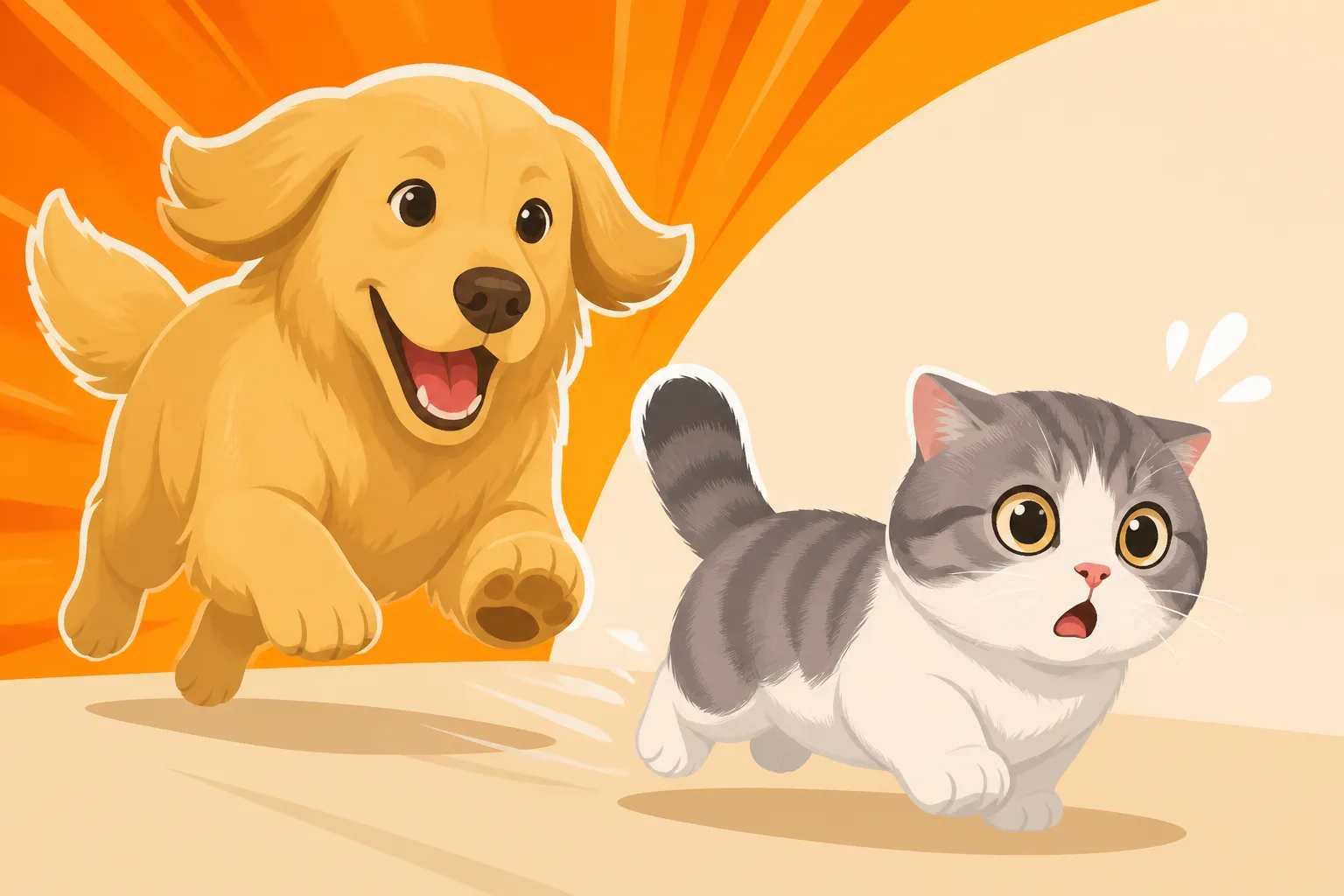
A Munchkin, sadly, lacks this crucial vertical escape route. Because they cannot jump or climb effectively, their only reliable flight option is to run horizontally. This means that if a dog is pursuing them, their escape path is limited to the floor level. This prolonged ground pursuit can be incredibly stressful and exhausting for a Munchkin, potentially leading to injuries from slips, falls, or simply being cornered. Unlike a cat that can vanish upwards, a Munchkin's ground-level escape means they remain in the direct line of fire, so to speak, for much longer, increasing the risk of capture or accidental injury. Why a Munchkin Cannot Escape a Confrontation becomes painfully clear in these situations.
Predatory Chase Drives in Dogs
Dogs, regardless of how gentle or well-behaved they usually are, carry the genetic blueprint of their predatory ancestors. One of the strongest instincts they possess is the "prey drive" – the urge to chase, catch, and sometimes, shake small, fast-moving objects. A running cat, especially one scurrying low to the ground, can very easily trigger this deeply ingrained drive in a dog. It’s not about malice; it’s about instinct.
Even a dog that lives peacefully with your Munchkin 99% of the time could, in a moment of heightened excitement or surprise, revert to this primal chase behavior. The quick, darting movements of a Munchkin can be irresistible to a dog's natural hunting instincts. Once the chase begins, it can be incredibly difficult for a dog to disengage, especially if they perceive the cat as 'prey.' This is why even a dog that has never shown aggression towards a cat before can still pose a significant threat, simply by acting on an instinctual impulse that they might not even fully understand or be able to control in the heat of the moment.
Scenarios Where a Munchkin Is Most Vulnerable
It's not just about the size difference; it's about the environment and the dynamics of the interaction. Certain situations amplify the risks for a Munchkin, turning what might be a minor inconvenience for a regular cat into a truly dangerous predicament for your short-legged friend.
Confined Spaces and Obstacle Courses
Imagine your home, but from a Munchkin's perspective. For a normal cat, a couch is a launchpad to the back of the sofa, a table is a stepping stone to a window sill, and a clear path leads to a high perch. For a Munchkin, however, the landscape is entirely different. A living room with furniture, plants, and other household items can quickly become a treacherous maze when a dog is involved.
In a confined space, like a small room or a hallway, a Munchkin has very few options for escape if a dog decides to give chase. They can’t jump onto a dresser or scale a bookshelf. Instead, they might try to dart under furniture, only to find themselves trapped or cornered. A coffee table or a desk, which might offer a high escape for a standard cat, becomes a barrier the Munchkin has to navigate around, potentially slowing them down or leading them into a dead end. Even an outdoor area without vertical climbing options, such as a patio or a fenced yard with no trees, becomes a flat, open arena where Why a Large Dog Is a Risk to a Munchkin is very real. These environments, while seemingly innocuous, strip the Munchkin of their already limited escape strategies, making them highly vulnerable.
Encountering Unfamiliar or Untrained Dogs
While you might carefully manage interactions with your own dog, the outside world or even a friend's house presents a different set of challenges. Encounters with unfamiliar or untrained dogs are perhaps the most dangerous scenarios for a Munchkin. You don't know the dog's history, its prey drive, or how it reacts to small, fast-moving animals. Even a dog described as "friendly" or "good with cats" might have a momentary lapse in judgment or an unexpected surge of instinct when faced with a Munchkin's unique gait and size.
Consider a visit to a friend's house where their normally placid Golden Retriever suddenly gets a burst of energy and decides your Munchkin is a fun new toy to chase. Or a stroll in a park, even on a leash, where an off-leash dog with an unknown temperament approaches rapidly. In these situations, your Munchkin has no established safe zones, no familiar escape routes, and you have no prior knowledge of the dog's behavior patterns. The risk of accidental injury, or even a more aggressive encounter, skyrockets. This is a huge reason Why a Munchkin Should Never Be Let Outdoors without extreme caution and supervision.
Interactions with Children and Dogs Simultaneously
When you combine the unpredictable energy of young children with the instinctual behavior of dogs and the physical limitations of a Munchkin, you have a recipe for potential danger. Children, especially toddlers, don't always understand appropriate boundaries with pets. Their sudden movements, loud noises, and attempts to grab or play can be startling and stressful for both cats and dogs.
If a child accidentally frightens a Munchkin, the cat's natural reaction will be to flee. Without the ability to jump to a high shelf or climb a cat tree, the Munchkin's only escape route is across the floor. This can mean darting directly into the path of a dog who might already be stressed by the child's antics, or whose prey drive is easily triggered by the fleeing movement. Why a Munchkin Cannot Climb Out of a Child's Reach means they are always accessible on the floor. The combination of these factors creates a chaotic environment where a Munchkin can easily get caught in the middle, unable to find a safe retreat from either the child's unintentional exuberance or the dog's instinctive reaction. It's a situation that demands extreme vigilance and proactive environmental management.
Mitigating Risks and Creating a Safe Environment
Understanding the vulnerabilities of your Munchkin is crucial, but the good news is that you can take proactive steps to minimize these risks and create a household where both your short-legged cat and your dog can coexist peacefully and safely. It requires thoughtful planning and consistent effort, but the peace of mind knowing your Munchkin is secure is absolutely worth it.
Creating Vertical Escape Routes (Even if Not Climbing)
Since your Munchkin can't perform those impressive vertical leaps, you need to bring the "vertical" to them in a more accessible way. Think of it as creating a series of low-rise steps or ramps that lead to safe, elevated perches. These aren't just luxuries; they are essential safety features for your Munchkin.
You can do this by arranging furniture in a staggered fashion, allowing your Munchkin to "climb" by hopping from one low surface to another, gradually reaching a safe height. Pet ramps and steps are invaluable here. Look for sturdy, carpeted ramps or steps with a gentle incline that your Munchkin can easily walk up. You can find excellent options on Amazon, such as multi-tiered cat trees with very close-set platforms or ramps that hook onto sofas and beds. Consider places where your cat likes to observe, like a window, and provide a ramp to a secure window perch. Which Cat Tree Layout Suits a Munchkin can give you more ideas for appropriate climbing structures that accommodate their unique needs.
Structured Introductions and Supervision
Bringing a dog and a Munchkin into the same household, or introducing them for the first time, requires a slow, deliberate, and highly supervised approach. You cannot simply let them "figure it out." Even if both animals have been around other cats or dogs before, each new introduction is unique, and your Munchkin's specific vulnerabilities must be prioritized.
Start with scent swapping, then move to visual introductions through a barrier, like a baby gate, before allowing any direct interaction. When they are together, constant and vigilant supervision is non-negotiable. Never leave your Munchkin and dog unsupervised, not even for a minute, especially in the early stages or if there's any history of chase behavior. Be ready to intervene immediately if you see any signs of stress, fear, or escalating play that could turn into a chase. Reinforce calm behavior in both animals with treats and praise. This careful management is critical to teaching them to respect each other's space and ensuring your Munchkin feels secure.
Safe Zones and Dog-Free Retreats
No matter how well your dog and Munchkin get along, your cat needs dedicated "dog-free" zones where they can retreat and relax without any canine presence. This is vital for their mental well-being and physical safety. These safe zones should be easily accessible to your Munchkin but completely inaccessible to your dog.
A spare room with a cat flap installed in the door (if the dog is too big to fit through) or a well-placed baby gate that your Munchkin can easily slip under or through is a great solution. Ensure their litter boxes – Why a Munchkin Needs a Litter Box It Can Walk Into – food, water, and favorite sleeping spots are located within these safe zones. This allows your Munchkin to regulate their interactions, choosing when and if they want to engage with the dog. For instance, you could purchase a pressure-mounted pet gate from Amazon that has a small cat door built into it, allowing your Munchkin free passage while keeping larger dogs out. These secure areas provide a vital sanctuary, empowering your Munchkin to escape any situation where they feel overwhelmed or threatened by their canine housemate.
| Feature | Normal Cat Escape Strategy | Munchkin Cat Escape Strategy | Vulnerability Compared to Dog |
|---|---|---|---|
| Vertical Access | Jumps onto high furniture, shelves, cat trees. | Requires ramps/steps; cannot jump directly to height. | High; limited ability to get out of reach. |
| Horizontal Speed | Fast, agile, can weave and change direction. | Surprisingly fast on flat surfaces, but less agile for tight turns. | Moderate; good for straight lines, but can be outmaneuvered in complex spaces. |
| Maneuverability | Excellent for dodging and squeezing through gaps. | Low body can hinder quick turns or navigating tight obstacles under pressure. | High; can get trapped or cornered more easily. |
| Primary Retreat | Climb upwards to safety. | Run horizontally, often under furniture or into corners. | High; remains at ground level, susceptible to continued pursuit. |
| Defensive Posture | Hissing, swatting, then quick vertical escape. | May "Prairie Dog" sit (vulnerable) or run. | High; vulnerable when sitting; running offers limited escape. |
| Self-Grooming | Reaches all parts of its body. | Struggles to reach hindquarters, requiring owner intervention. | Low-relevance to direct dog interaction but indicates overall physical limitation. |
Disclaimer
This article is for general informational purposes only and does not constitute professional advice. Laws, prices and regulations vary by location and change over time. Consult a qualified professional for guidance on your specific situation.