Munchkin Dwarfism Is Dominant and Lethal in Two Copies
It's incredibly worrying when you hear about genetic conditions in a beloved breed, especially terms like "lethal" that can send a shiver down any cat lover's spine. Understanding the specific genetic quirk behind the Munchkin cat's signature short legs, and what happens when that gene is inherited in a double dose, is crucial for anyone considering bringing one of these charming felines into their home. This guide will meticulously break down the science of Munchkin dwarfism, explaining why its dominant nature means it's always visible and why inheriting two copies of the gene is, tragically, not compatible with life.
Understanding the Munchkin Dwarfism Gene
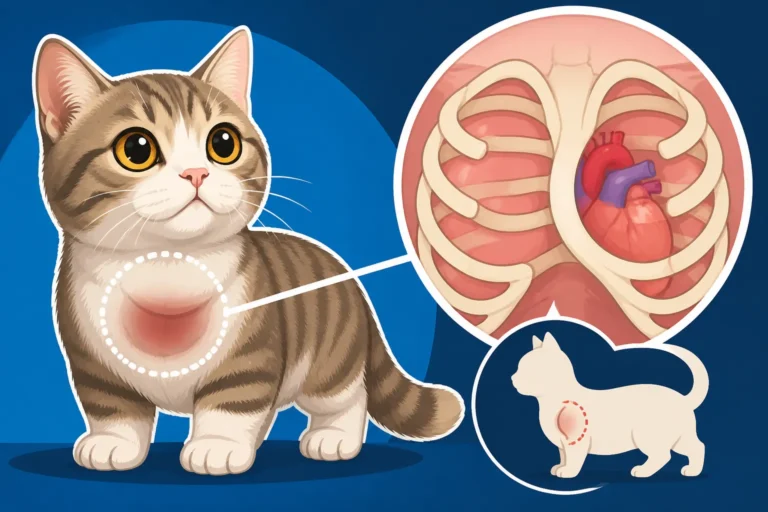
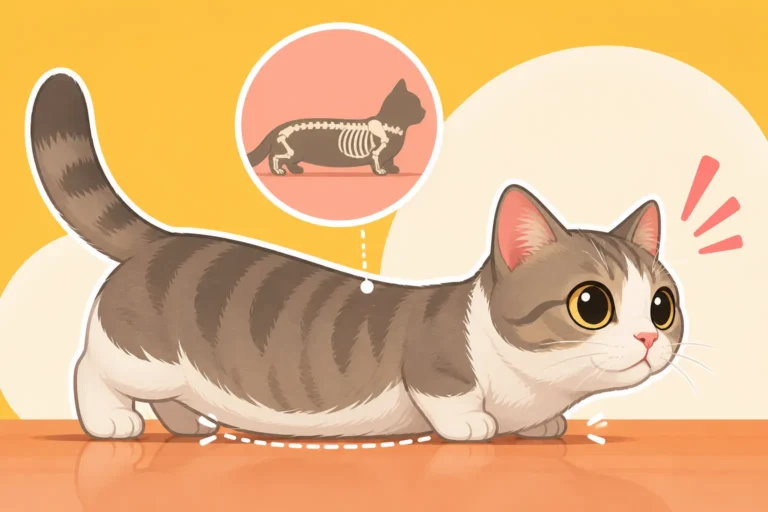
The unique appearance of the Munchkin cat, with its characteristically short legs, stems from a genetic mutation that affects bone development. This isn't just a cosmetic trait; it's a form of dwarfism known as pseudoachondroplasia. Unlike some forms of dwarfism that affect overall body size, Munchkin cats have normal-sized bodies and heads, but their long bones in the legs are significantly shortened. This distinction is important because it means their torso and internal organs develop as they would in a standard cat, which can sometimes lead to particular challenges down the line.
The gene responsible for this condition is often referred to simply as the Munchkin gene. It's quite different from other genetic traits we see in cats, and understanding its mechanism is key to comprehending the breeding practices and health considerations associated with the breed. It's not a gene that's hidden away, only appearing under certain circumstances; its presence fundamentally alters the cat's physical structure right from development. The short legs are the most obvious manifestation, but the underlying skeletal differences impact everything from their gait to how they interact with their environment.
When we talk about dwarfism in cats, it's vital to differentiate between the Munchkin's specific type and other conditions. The Munchkin's legs are short, but their joints are generally well-formed, which means they can still run and play with surprising agility on flat surfaces. However, the disproportionate body and short limbs mean that they carry their weight differently, potentially placing additional stress on their spine and other joints over time. This is a point of ongoing discussion among veterinarians and breeders alike, highlighting the importance of careful observation and proactive care throughout a Munchkin's life.
What Pseudoachondroplasia Does to a Munchkin's Legs
The scientific term for the Munchkin's dwarfism is pseudoachondroplasia, which literally means "false achondroplasia." Achondroplasia is a similar form of dwarfism found in humans and other animals, but pseudoachondroplasia in cats has its own distinct genetic markers and physiological effects. In a Munchkin, the development of the cartilage that later forms the long bones in their legs is disrupted. This disruption leads to prematurely shortened bones, especially noticeable in the upper arm (humerus) and thigh bone (femur), as well as the bones of the lower leg.
It's not just that the bones stop growing too soon; the growth plates themselves are affected. These are the areas of developing tissue near the ends of a bone in children and growing animals, where cartilage is produced and gradually replaced by bone, allowing the bone to lengthen. In Munchkin cats, these growth plates don't function normally, leading to the characteristic short, thick appearance of their limbs. This is why you'll see a distinct difference in leg length even in very young kittens, with the short-legged trait becoming more apparent as they grow.
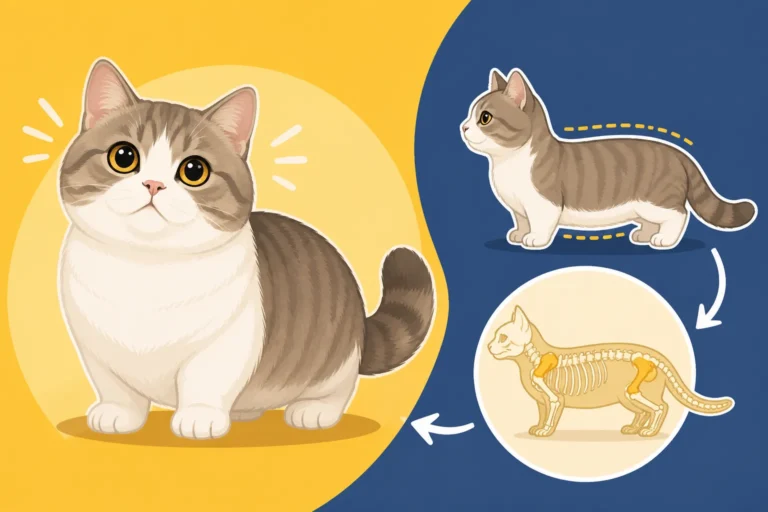
While the legs are short, the rest of the cat's skeletal structure, including the spine and rib cage, is typically of normal length. This creates the unique "long body, short legs" silhouette that Munchkin cats are known for. However, this normalcy in spinal length combined with shortened limbs means that the spinal column carries its load differently. You might wonder, "Why a Munchkin's Spine Carries a Load a Normal Cat's Does Not," and it's precisely because the leverage and biomechanics are altered by the short legs. This altered weight distribution is a key area of concern for responsible breeders and owners, especially as the cat ages, and can contribute to conditions like arthritis.
Genetic Basis: A Single Gene Mutation
The short-legged trait in Munchkin cats is caused by a single, specific gene mutation. This mutation spontaneously occurred in a stray cat named Blackberry in Louisiana in the early 1980s and was later passed down to her offspring. What's fascinating about this particular gene is its simplicity and direct impact. It's not a complex interplay of multiple genes; it's one distinct genetic change that dictates whether a cat will have short legs or not.
This single gene is what breeders focus on when planning matings. They know that if a cat inherits even one copy of this specific gene, it will display the short-legged trait. This makes it relatively easy to predict the outcome of a breeding pair, assuming you know the genetic makeup of the parents. However, this predictability also comes with a significant responsibility, as we'll explore further when discussing the implications of inheriting two copies of the gene.
The fact that it's a single gene mutation also helps explain why "Why the Munchkin Gene Has Not Been Identified" in some broader genetic screenings. While the phenotypic expression (the short legs) is clear, pinpointing the exact location and sequence change can be a more complex scientific endeavor than identifying genes for coat color or eye color, for instance. However, its mode of inheritance is very well understood, which is what truly guides breeding practices.
Autosomal Dominant Inheritance Explained
When we talk about the Munchkin gene, one of the most important terms to understand is "autosomal dominant." This describes how the gene is passed down from parent to offspring and how it manifests in the cat. The "autosomal" part simply means the gene is located on a non-sex chromosome – it's not linked to whether the cat is male or female. The "dominant" part is where things get really interesting and are critical to understanding Munchkin genetics.
In genetics, "dominant" means that only one copy of the gene is needed for the trait to be expressed. Think of it like a very strong voice in a choir: if that voice is singing, you're going to hear it, regardless of what other voices are doing. So, if a cat inherits just one copy of the Munchkin gene from either parent, it will have short legs. This is why you never see a short-legged Munchkin cat that doesn't carry at least one copy of this specific gene.
This mode of inheritance has profound implications for breeding programs. It means that if you breed a short-legged Munchkin (who carries one copy of the gene) with a normal-legged cat (who carries no copies), you will always get a mix of short-legged and normal-legged kittens in the litter. There's no "carrier" state where a cat looks normal but silently carries the short-leg gene. If a cat has normal-length legs, it does not have the Munchkin gene and cannot pass it on. This principle is fundamental to understanding "Why Munchkin Dwarfism Is Called Autosomal Dominant."
What "Dominant" Truly Means for Traits
Let's dig a little deeper into what "dominant" really means in a practical sense for the Munchkin. Imagine a pair of genes for leg length, one inherited from the mother and one from the father. We can represent the Munchkin short-leg gene with a capital 'M' (because it's dominant) and the normal-leg gene with a lowercase 'm'.
- If a cat inherits MM, it has two copies of the Munchkin gene. As we'll discuss, this is the "lethal" combination.
- If a cat inherits Mm, it has one Munchkin gene and one normal gene. Because 'M' is dominant, this cat will have short legs. This is the genetic makeup of every short-legged Munchkin cat you will ever see.
- If a cat inherits mm, it has two normal-leg genes. This cat will have normal-length legs. These are often referred to as "long-legged Munchkins" or "Munchkin variants" within the breed context, even though they don't carry the short-leg gene themselves.
So, the visible trait (short legs) appears whenever 'M' is present. There's no "recessive" form of Munchkin dwarfism where a cat could be a silent carrier for generations without showing the trait. This immediate expression makes the trait quite transparent in a breeding program, which is a key factor in how breeders plan their matings to ensure healthy kittens.
The Impact on Breeding Outcomes
Understanding dominant inheritance directly informs how breeders responsibly manage Munchkin litters. Because a Munchkin cat needs only one copy of the gene to have short legs (Mm genotype), and because two copies (MM genotype) are lethal, breeders must never breed two short-legged Munchkins together. This is a non-negotiable rule in ethical Munchkin breeding.
Instead, a short-legged Munchkin (Mm) is always bred to a normal-legged domestic cat (mm). This practice ensures that no kitten can inherit two copies of the dominant Munchkin gene. When an Mm cat breeds with an mm cat, the possible genetic combinations for the kittens are always 50% Mm (short-legged Munchkins) and 50% mm (normal-legged cats). This outcome is remarkably consistent and predictable.
This careful breeding strategy is why "Why Half a Munchkin Litter Has Normal Legs." These normal-legged kittens are genetically identical to any other domestic cat and do not carry the Munchkin gene. They can be placed as pets or used in outcross programs if needed, without the concern of passing on the short-leg trait. This controlled breeding helps maintain genetic diversity within the Munchkin lines while preventing the tragic outcome of a homozygous pairing.
| Parent 1 (Short-Legged Munchkin) | Parent 2 (Normal-Legged Outcross) | Possible Kitten Genotypes | Phenotype (Appearance) | Ratio |
|---|---|---|---|---|
| Mm (Short legs) | mm (Normal legs) | Mm | Short-legged Munchkin | 50% |
| mm | Normal-legged | 50% |
The Lethal Homozygous Gene
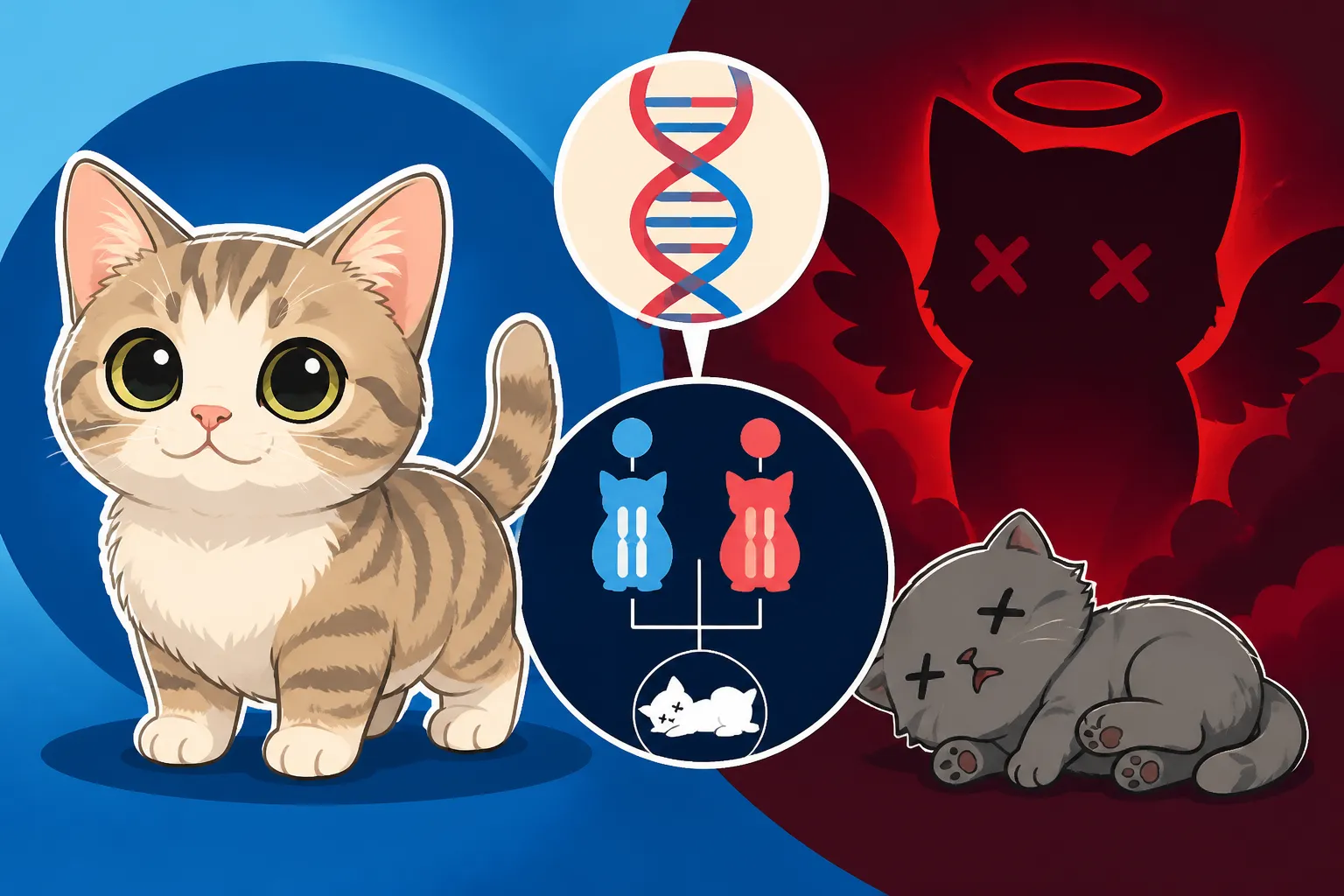
Here's where the term "lethal" comes into play, and it's the most critical aspect of Munchkin genetics for ethical breeding. When we say the Munchkin gene is "lethal in two copies," it means that if a kitten inherits two copies of the dominant short-leg gene (the 'MM' genotype), it will not survive. This is why you will never see a living cat with this genetic combination.
The lethality typically occurs very early in development, often during embryonic or fetal stages. The genetic anomaly is so severe in this double dose that the embryo or fetus simply cannot develop correctly or sustain life. It's a spontaneous abortion that happens before the kitten is even born, and often, before the owner or even the queen herself is aware it has happened. This prevents severe suffering for kittens that would otherwise be born with debilitating skeletal deformities far beyond just short legs.
Understanding this "lethal in two copies" aspect is fundamental to explaining "What Two Copies of the Munchkin Gene Do." It’s not just a theoretical concept; it’s a biological reality that underpins all responsible Munchkin breeding practices. If breeders did not adhere to the strict protocol of outcrossing, the suffering of both the queens and their severely affected unborn kittens would be immense. It’s a stark reminder of the power of genetics and the responsibility breeders hold.
Embryonic and Fetal Development Failure
For those rare instances where a pairing of two short-legged Munchkins might occur (which, to be clear, should never happen in an ethical breeding program), the outcome for any "MM" embryos would be a failure to thrive. These embryos simply do not develop beyond the earliest stages of gestation. The genetic instructions for critical developmental processes are so severely disrupted by having two doses of the short-leg mutation that life cannot be supported.
This means that a queen carrying such a litter might have smaller litter sizes, or reabsorb the embryos without any outward signs. It's a silent tragedy within the womb, preventing a future of pain and severe physical deformities for any homozygous kittens. The mutation's effect is so profound at the cellular and developmental level that it quickly becomes incompatible with the complex processes required for a viable pregnancy and birth.
The fact that this lethality occurs so early is, in a way, nature's failsafe. It's an extreme example of natural selection at work, ensuring that only kittens with a viable genetic makeup are carried to term. This mechanism is why "Why Homozygous Munchkin Kittens Are Never Born" and why you will never encounter a live cat with two copies of the Munchkin gene. It’s a harsh truth of genetics, but one that is crucial for the overall health and ethical standing of the breed.
Consequences of a Homozygous Mating
The consequences of a hypothetical homozygous mating (short-leg Munchkin x short-leg Munchkin) are entirely predictable: 25% of the kittens would be MM (lethal), 50% would be Mm (short-legged Munchkins), and 25% would be mm (normal-legged). The 25% that would be MM are the ones that either fail to implant, are reabsorbed, or are stillborn with severe skeletal anomalies. This dramatically reduces the viable litter size and places unnecessary stress on the breeding queen.
Beyond the tragic loss of life, such a mating would be considered highly unethical and irresponsible by any reputable cat association or breeder. It goes against the very principle of preventing suffering and promoting genetic health. The breeding guidelines for Munchkin cats are explicitly designed to avoid this outcome, emphasizing the pairing of a short-legged Munchkin with a non-Munchkin outcross.
This genetic knowledge is a cornerstone of responsible breeding. It’s not just about producing cute kittens; it’s about understanding the biological mechanisms at play and making informed decisions that prioritize the health and welfare of every cat. The "Why Two Short Legged Munchkins Are Never Bred Together" rule is not arbitrary; it's a direct response to the lethal nature of the homozygous gene.
Why Homozygous Kittens Are Never Born
The absence of homozygous Munchkin kittens in live births is a direct result of the gene's lethality. From a genetic perspective, it means that the specific combination of two short-leg genes is so detrimental to early embryonic development that the embryo cannot survive to full term. This phenomenon is not unique to Munchkin cats; many genetic mutations in various species exhibit similar patterns of lethality when inherited in a double dose.
This explains why, when you look at a litter from a properly planned Munchkin breeding (a short-legged Munchkin bred to a normal-legged cat), you will only see two types of kittens: short-legged Munchkins (genotype Mm) and normal-legged cats (genotype mm). The "MM" genotype, which would theoretically occur if two short-legged Munchkins were bred, simply does not produce a live birth. This is not due to human intervention but to a biological roadblock that prevents the completion of development.
This genetic fact simplifies the landscape for breeders, though it comes with its own inherent seriousness. It means they don't have to worry about "What Happens to a Homozygous Munchkin Embryo" post-birth; the issue is resolved much earlier, albeit tragically. It underscores the importance of the genetic counseling and pedigree analysis that should always accompany responsible breeding.
The Role of Embryonic Resorption
When an embryo or fetus with the MM genotype fails to develop, the queen's body typically reabsorbs the non-viable tissue. This process, known as embryonic or fetal resorption, is quite common in many mammalian species, including cats. It's a natural biological mechanism to eliminate non-viable pregnancies without the need for a full delivery.
Often, a queen might not show any obvious signs that resorption has occurred, especially if it happens very early in pregnancy. She might have fewer kittens than expected, but without diagnostic imaging like ultrasound, a breeder might never know that a homozygous embryo was present and subsequently reabsorbed. This silent process is part of why the "lethal in two copies" aspect of the Munchkin gene isn't visually apparent after birth; the evidence is removed by the queen's own body.
This mechanism highlights a natural protective measure, preventing the birth of kittens with severe, life-limiting conditions. While the genetic cause is serious, the biological outcome prevents prolonged suffering. It reinforces the ethical necessity for breeders to prevent homozygous pairings entirely.
What Happens to the Uterus
Following embryonic or fetal resorption, the queen's uterus typically returns to its normal state, ready for future pregnancies if she is a breeding animal. There are usually no long-term adverse effects on the queen's reproductive health from absorbing a non-viable embryo. The body is remarkably efficient at clearing out the uterine lining and preparing it for the next cycle.
However, repeated instances of resorption due to inappropriate matings could potentially lead to complications or be a sign of underlying issues, though this would be rare in a properly managed breeding program. The focus for ethical breeders is always on preventative measures—avoiding the pairing that would lead to homozygous embryos in the first place. This proactive approach minimizes any potential strain on the queen and ensures the healthiest possible outcomes for future litters.
This understanding of what happens at a physiological level in the queen further cements the need for careful genetic planning in Munchkin breeding. It’s not just about the kittens, but also about the well-being of the breeding queen. A breeder always prioritizes the health and comfort of their animals, and preventing potentially problematic pregnancies is a key part of that care.
Breeding Practices to Avoid Harm
Given the autosomal dominant and lethal nature of the Munchkin gene in two copies, responsible breeding practices are absolutely paramount. The core principle for any ethical Munchkin breeder is to always breed a short-legged Munchkin cat (which carries one copy of the gene, Mm) with a normal-legged domestic cat (which carries no copies of the gene, mm). This ensures that no kitten will ever receive two copies of the lethal gene.
This outcrossing strategy is not just a recommendation; it's a fundamental requirement for the welfare of the breed. It maintains genetic diversity by bringing in new bloodlines and prevents the severe developmental issues associated with the homozygous genotype. Breeders carefully select outcross partners based on health, temperament, and conformity to a desired look, without introducing additional genetic health concerns.
If you are looking for a Munchkin cat, a reputable breeder will be transparent about their breeding practices and should be able to clearly explain "How a Breeder Plans a Munchkin Mating." They will never shy away from discussing the genetics involved or the importance of outcrossing. This transparency is a hallmark of an ethical operation dedicated to the health and longevity of their cats.
Why Outcrossing is Essential
Outcrossing, the practice of breeding a Munchkin to a domestic non-Munchkin cat, serves several vital purposes beyond simply avoiding the lethal homozygous pairing. Firstly, it keeps the Munchkin gene pool wide and healthy. Unlike some established breeds that have a very closed gene pool, the continuous introduction of unrelated normal-legged cats helps to minimize the risk of accumulating other undesirable genetic traits that can arise from inbreeding. This constant refreshing of the gene pool is a significant advantage for the Munchkin breed's long-term vitality.
Secondly, outcrossing is crucial for maintaining the overall health and vigor of the breed. By breeding to healthy, robust domestic cats, breeders can introduce genes for strong immune systems, good conformation, and a diverse genetic background that helps protect against hereditary diseases. This prevents the "stacking" of genetic predispositions that can sometimes plague breeds with very limited genetic diversity. For instance, if a breeder is using a Persian as an outcross, they should be screening for issues like Polycystic Kidney Disease (PKD), ensuring they bring in healthy genes. This is part of the reason "Why a Munchkin From a Persian Cross Needs a PKD Test."
Ultimately, outcrossing is the cornerstone of ethical Munchkin breeding. It demonstrates a breeder's commitment to the health and welfare of their cats above all else. A breeder who understands and champions outcrossing is signaling their dedication to producing robust, healthy kittens, rather than simply prioritizing certain traits at any cost.
What a Responsible Breeder Should Provide
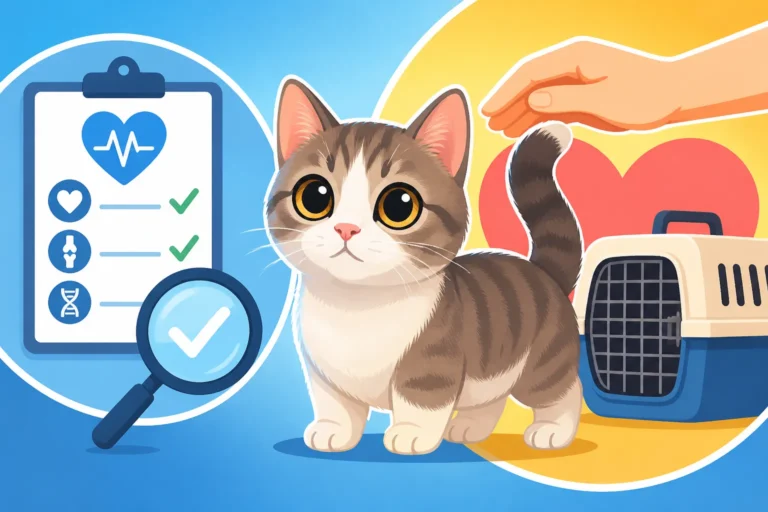
When considering a Munchkin kitten, a responsible breeder will go above and beyond to provide reassurance and information. First and foremost, they should be able to clearly articulate their breeding program, including who the parents are and how the mating was planned to avoid homozygous offspring. They should be open about the genetic realities of the breed, not shy away from them. This includes explaining "Why a Munchkin Is Always Bred to a Normal Legged Cat."
You should also expect a comprehensive health guarantee that outlines what congenital conditions are covered and for how long. A good breeder will have performed veterinary checks on the parents and the kittens, ideally with documentation to support this. They should also be able to discuss the potential long-term health considerations of Munchkins, such as the possibility of arthritis in their joints or other spinal issues, and what proactive steps owners can take. Many reputable breeders also offer advice on pet insurance options, and some may even suggest providers like Healthy Paws, knowing the importance of comprehensive coverage for potential future health needs.
Furthermore, a responsible breeder will be interested in your living situation. They might ask about stairs in your home, other pets, or young children, to ensure their kitten is going to a suitable environment that can be adapted to a Munchkin's needs. They will provide a contract that outlines terms, conditions, and often includes a spay/neuter clause for pet-quality kittens. They should be a lifelong resource for you and your cat, ready to answer questions and offer support. This kind of thoroughness is a hallmark of ethical breeding practices focused on the welfare of the animals.
The Ethical Debate and Genetic Responsibility
The existence of the Munchkin breed itself has ignited considerable debate within the veterinary community and among cat fanciers globally. The central ethical question revolves around intentionally propagating a genetic mutation that results in dwarfism, especially one with a lethal homozygous form. Critics argue that breeding for such a trait prioritizes aesthetics over animal welfare, potentially leading to discomfort, mobility issues, or secondary health problems.
Proponents of the breed, including many dedicated Munchkin breeders, counter that a well-bred Munchkin, kept in an appropriately adapted environment, can lead a full, active, and healthy life. They emphasize that the gene's lethality in two copies is precisely why strict breeding protocols are in place, ensuring that no severely affected kittens are born. They also point to ongoing veterinary oversight and owner responsibility as key factors in maintaining a Munchkin's quality of life. This is a complex discussion, and it highlights the ongoing tension between breed standards and animal welfare concerns.
Understanding this debate is crucial for anyone considering a Munchkin cat. It’s not a simple black-and-white issue, and it requires careful consideration of the genetics, potential health challenges, and the commitment an owner must make. This deep dive into "What Welfare Bodies Say About the Munchkin" and "Why Vets Disagree About the Munchkin" shows the spectrum of views.
Ethical Considerations of Breeding for Dwarfism
Intentionally breeding animals for a specific genetic mutation that causes dwarfism raises several ethical red flags for many animal welfare organizations. Their primary concern is that such breeding prioritizes human aesthetic preferences over the natural health and physical capabilities of the animal. While Munchkin cats are often described as active and playful, their short legs undeniably restrict certain natural feline behaviors, such as jumping to significant heights or climbing trees. This is a topic often discussed, for example, in "What the Short Legs Actually Cost a Munchkin" in terms of physical limitations.
There is also the underlying concern that even with careful breeding, the inherent skeletal differences might predispose Munchkins to certain health issues over their lifetime. While many Munchkins live long and healthy lives, there are discussions around potential spinal issues (such as lordosis) or early-onset arthritis due to the altered biomechanics of their short limbs. These are legitimate concerns that ethical breeders and prospective owners must acknowledge and prepare for.
The debate isn't just about the physical impact; it's also about the precedent. If breeding for dwarfism is acceptable, where do we draw the line with other mutations that might be seen as "cute" but have more significant welfare implications? This is a question that cat registries like the CFA (Cat Fanciers' Association), which refuses to recognize the Munchkin, grapple with constantly.
The Breeder's Responsibility and Transparency
For breeders who choose to work with the Munchkin cat, the genetic responsibility is immense. It involves not only understanding the dominant and lethal nature of the gene but also rigorously adhering to ethical breeding practices, which includes constant outcrossing to normal-legged cats. Transparency with potential buyers is also crucial. Breeders should openly discuss the breed's genetics, potential health considerations, and the necessary environmental adaptations for a Munchkin.
A responsible breeder will never try to minimize the genetic realities or the potential for specific health challenges, such as the possibility of "Whether a Munchkin Gets Arthritis Earlier." Instead, they will educate buyers on how to mitigate these risks through proper care, diet, and a suitable home environment. They will provide detailed information on everything from appropriate litter boxes to ramps for furniture access. They will also advise on regular veterinary check-ups that include assessing joint health and spinal conformation.
This level of transparency and commitment to education is what differentiates an ethical breeder from one who might be less scrupulous. Ultimately, the ethical onus is on the breeder to ensure that every kitten they produce has the best possible chance at a healthy and happy life, free from the suffering that could arise from irresponsible genetic pairings.
Supporting a Munchkin's Health and Lifespan
While the genetics of Munchkin dwarfism carry serious implications for breeding, it's important to remember that most short-legged Munchkins lead remarkably normal and fulfilling lives as pets. With proper care and a thoughtfully adapted environment, many Munchkins enjoy "The Twelve to Fifteen Years a Munchkin Usually Gets" with their families. The key is understanding their physical limitations and providing proactive support throughout their life.
Their short legs mean they might not be adept jumpers, so ensuring they have ramps or steps to access favorite spots like sofas, beds, or windowsills is crucial. Maintaining a healthy weight is also paramount, as every extra pound places increased stress on their unique skeletal structure. Regular veterinary check-ups are vital, focusing on joint health and spinal integrity, especially as they age.
Owning a Munchkin is a commitment to understanding and accommodating their special needs. It's about celebrating their unique personality and charm while being vigilant about their health. With the right care, these resilient and affectionate cats can be wonderful companions.
Environmental Adaptations for Mobility
Because of their unique leg structure, Munchkins thrive in environments that are adapted to their mobility needs. They might not be able to leap onto high counters or tall cat trees, but that doesn't mean they can't be curious and active. Providing ramps, pet stairs, or strategically placed furniture can create accessible pathways to their favorite perching spots. Think of it as creating a multi-level playground that's scaled for their shorter reach. This is a core tenet of "With a Munchkin the House Changes, Not the Cat."
Consider their litter box needs: a low-entry litter box is essential so they can easily step in and out without straining their back or hips. Similarly, food and water bowls should be placed at an comfortable height – either directly on the floor or slightly raised so they don't have to bend down too far. Small changes like these make a huge difference in their daily comfort and ability to navigate their home independently.
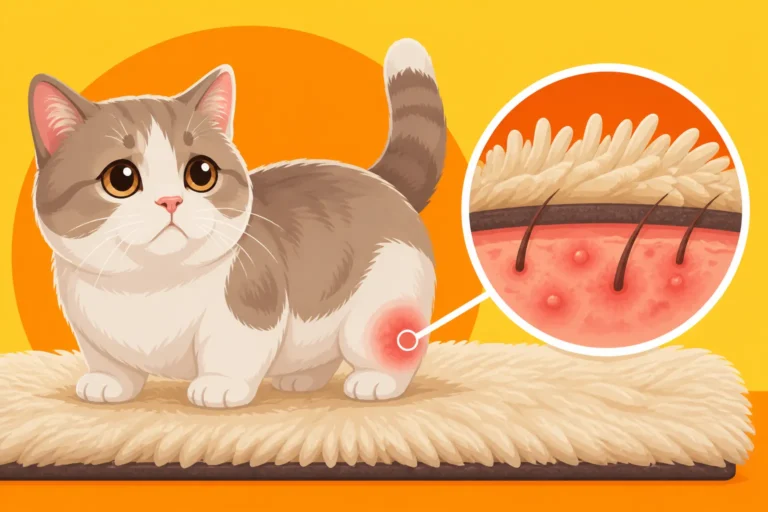
Also, be mindful of flooring. Slippery surfaces like hardwood or tile can be challenging for Munchkins, potentially leading to slips and falls that could injure their joints or spine. Rugs and carpets can provide better traction and a softer landing surface, making their home a safer and more comfortable place to explore.
Proactive Veterinary Care and Weight Management
Regular veterinary care is particularly important for Munchkin cats, especially with a focus on musculoskeletal health. Your vet should perform routine checks on their gait, joint flexibility, and spinal health during annual visits. Discussing preventative measures for conditions like osteoarthritis, which some argue might be more prevalent in Munchkins due to their unique conformation, is a good idea. Supplements like glucosamine and chondroitin might be recommended by your vet as they age to support joint health. Investing in pet insurance, such as a plan from Healthy Paws, early in their life can also provide peace of mind and financial support should any age-related or genetic conditions arise.
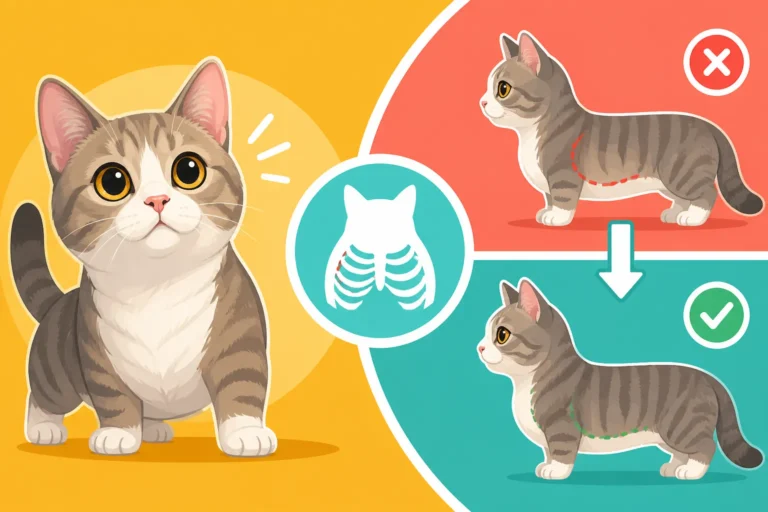
Weight management is perhaps one of the single most crucial aspects of a Munchkin's long-term health. Every extra pound on a Munchkin places disproportionate stress on their spine and joints, particularly their shoulders and elbows. This can exacerbate any predisposition to arthritis or spinal issues. "Why Weight Is More Dangerous on a Munchkin" cannot be overstated. Your vet can help you determine the ideal body condition for your individual cat and recommend a diet plan to maintain it.
Engaging in appropriate play and enrichment activities that encourage movement without excessive jumping can also help keep them active and maintain a healthy weight. Interactive toys that stay closer to the ground are often best suited for their play style. By being proactive with vet care and meticulous with weight management, you can significantly contribute to your Munchkin's comfort and longevity.
Disclaimer
This article is intended for informational purposes only and does not constitute veterinary advice. Always consult with a qualified veterinarian regarding your pet's health and specific medical conditions. The information provided here should not be used as a substitute for professional veterinary care.