Why a Munchkin’s Meals Are Measured Rather Than Poured
It's incredibly easy to fall into the habit of free-feeding your beloved feline or simply pouring a seemingly "appropriate" amount of kibble into their bowl each day. We all do it, thinking we're giving them enough, or even a little extra love. But for Munchkin cat owners, this seemingly innocent practice can have serious, long-term health consequences for our unique little friends. This guide will dive deep into why precise meal measurement isn't just a suggestion but a critical part of ensuring your Munchkin lives a long, healthy, and comfortable life.
The Unique Metabolic and Structural Realities of a Munchkin
Let's face it, Munchkins are adorable, and their short legs give them a distinct charm. But those short legs, while endearing, mean their bodies function a little differently from their long-legged counterparts. They aren't just scaled-down versions of other cats; they have specific anatomical considerations that directly impact their metabolism and how they carry weight. Understanding these differences is the first step in appreciating why careful meal measurement is non-negotiable.
Why a Munchkin Burns Fewer Calories Than Expected
One of the biggest misconceptions about Munchkin cats is that because they're smaller, they automatically burn fewer calories. While size plays a role, it's more nuanced than that. Their unique dwarfism, known as pseudoachondroplasia, affects their limb bones, making them shorter. This isn't just about appearance; it changes their locomotion. A long-legged cat can launch itself, spring, and stretch with ease, burning calories with every agile movement. A Munchkin, however, has to work harder for some movements and avoids others entirely.
Think about how a typical cat leaps onto a counter or scales a tall cat tree. Those actions engage powerful muscles and burn a significant amount of energy. A Munchkin, by contrast, might use a series of smaller jumps, find a ramp, or simply decide it's not worth the effort, choosing to stay on the floor. While they are surprisingly fast and agile on flat surfaces, their overall daily caloric expenditure for movement is generally lower. They aren't constantly expending energy reaching high places or making dramatic leaps. This means their caloric needs are often less than what an owner might intuitively expect for a cat of their body weight, leading to an easy surplus if food isn't carefully controlled. Why a Munchkin Burns Less Than a Normal Legged Cat explains this in more detail.
The Impact of Short Legs on Energy Expenditure
The biomechanics of a Munchkin's gait also contribute to a lower calorie burn. Their shortened limbs mean their stride is different; they often have a distinctive "ferret-like" run, which, while efficient on the flat, doesn't involve the same high-impact, energy-intensive movements as a cat with full-length legs. They may spend more time trotting at floor level rather than engaging in vertical play.
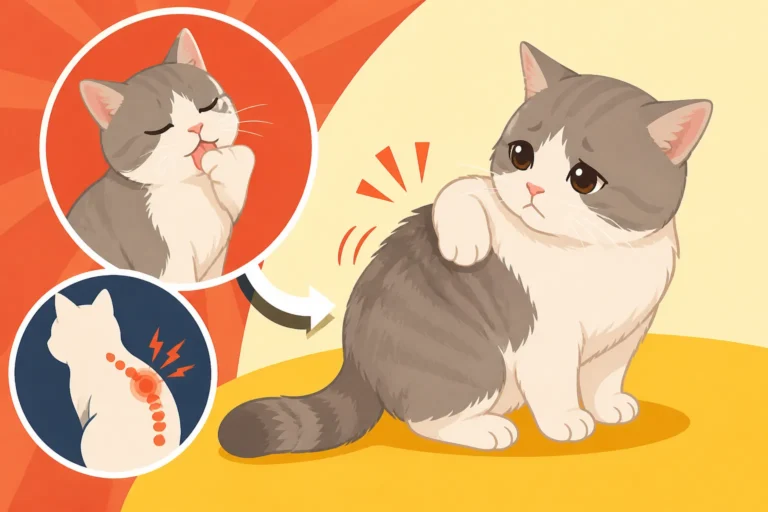
Consider a Munchkin trying to groom its hindquarters. A normal cat stretches easily. A Munchkin often has to twist its body or rely on an owner. These small, daily differences add up. Less stretching, less high jumping, less climbing means less energy used throughout the day. If their food intake isn't adjusted to match this reduced energy output, the excess calories are stored as fat. This might seem minor, but over weeks and months, it can quietly lead to significant weight gain.
The Perils of the "Just a Little More" Mindset
We've all been there: your cat looks up at you with those big, innocent eyes, and you think, "Oh, just a tiny bit more won't hurt." Or perhaps you free-feed, assuming your cat will self-regulate. While some cats are good at self-regulation, many are not, especially if they're bored, stressed, or if the food is particularly palatable. For a Munchkin, every extra calorie and every extra ounce of weight carries a disproportionately higher risk.
Why Every Extra Gram Lands on a Munchkin's Spine
The most significant risk factor for an overweight Munchkin is the strain placed on its spine and joints. Unlike a standard cat, a Munchkin's spine is the same length as any other domestic cat, but it sits horizontally much closer to the ground, supported by those shorter legs. This unique conformation means its spine is already under a different kind of mechanical load.
When a Munchkin gains weight, this excess weight isn't distributed evenly across strong, long limbs. Instead, it directly adds pressure to their relatively normal-length spine and their shorter, more heavily loaded leg joints. Imagine carrying a heavy backpack: it's much harder if your legs are shorter and your stance is lower. For a Munchkin, this manifests as increased stress on the intervertebral discs and the small bones of the spine, as well as the shoulder and elbow joints, which already bear a significant brunt of movement and impact. Why a Munchkin's Spine Carries a Load a Normal Cat's Does Not vividly illustrates this challenge.
Increased Risk of Joint Problems and Arthritis
Extra weight significantly escalates the risk of joint issues like osteoarthritis. A Munchkin's front legs, in particular, are built to withstand the impact of landing from small jumps and supporting their body weight. When that body weight increases, these joints — especially the shoulders and elbows — suffer. The cartilage wears down faster, inflammation increases, and pain sets in. You might notice your once playful Munchkin becoming reluctant to jump even small heights or showing stiffness after resting.
This isn't just about discomfort; it can severely impact their quality of life. An overweight Munchkin might struggle even more with grooming its hindquarters, leading to mats and skin issues, or find it difficult to enter a standard litter box. The vicious cycle begins: weight gain leads to pain, which leads to less movement, which leads to more weight gain. This is why Why an Overweight Munchkin Is in Real Trouble is such an important read for owners.
The Link to Lordosis and Pectus Excavatum
While not directly caused by weight, conditions like lordosis (an inward curvature of the spine) and pectus excavatum (a sunken chest) can be exacerbated by excess weight. If a Munchkin already has a mild predisposition to lordosis, adding more weight to its midsection can increase the strain and potentially worsen the condition, leading to more discomfort or even organ compression in severe cases. Similarly, for a cat with a mild sunken chest, being overweight can put additional pressure on the respiratory and circulatory systems, potentially making breathing more challenging. Precise weight management is a foundational element in mitigating the impact of these existing conditions.
The Power of Portion Control: Why Measuring is Key
So, how do we combat these risks and ensure our Munchkins stay at a healthy weight? The answer is simple but requires consistency: portion control through accurate measurement. This isn't about deprivation; it's about providing the right amount of fuel for their unique bodies.
Moving Beyond the Scoop: Why Precision Matters
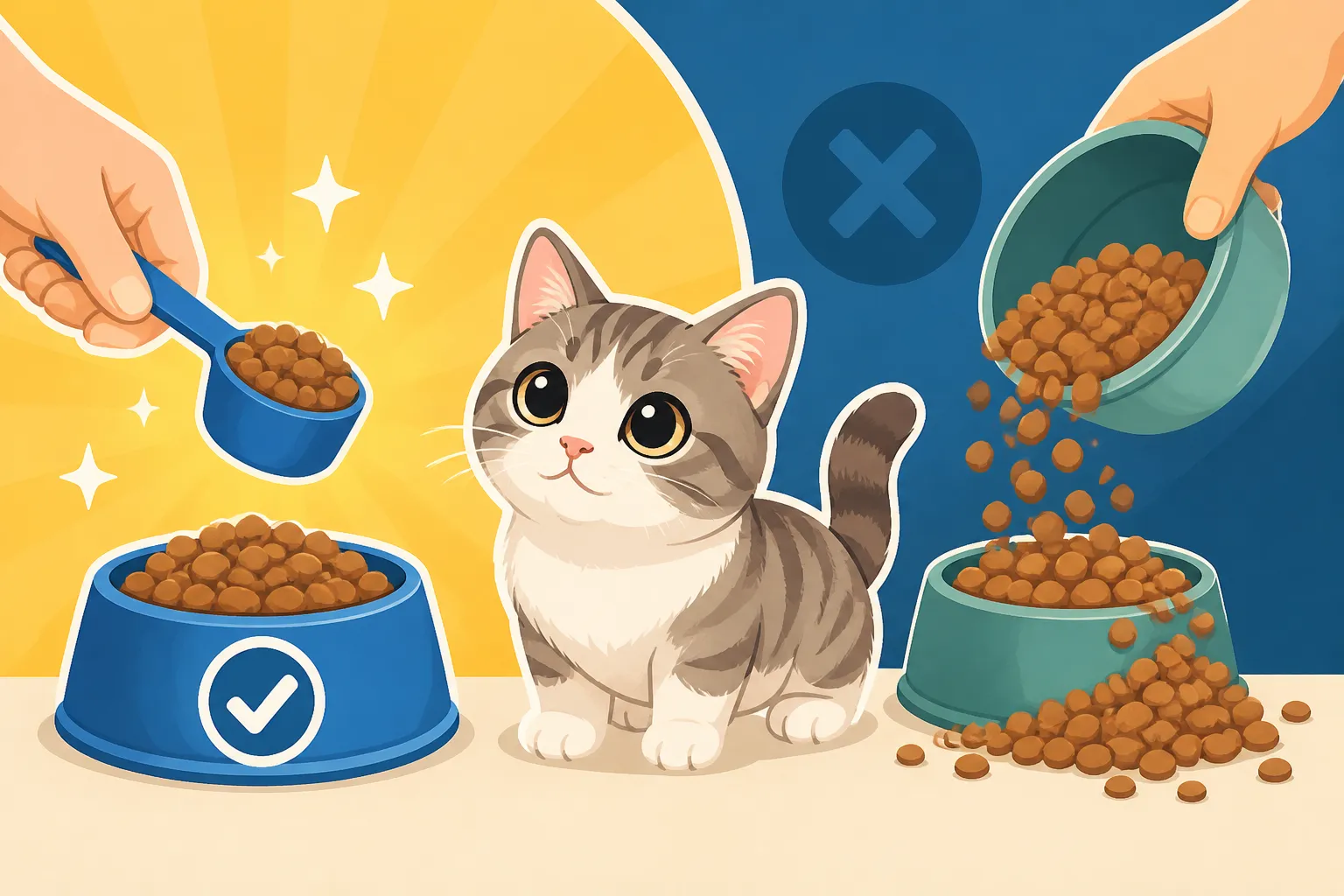
Many cat food bags come with a generic scoop, or we use a coffee scoop, or just eye-ball it. The problem is, these aren't calibrated instruments, and what looks like "half a scoop" can vary wildly depending on how packed it is or whose hand is doing the scooping. Different brands and types of food also have varying caloric densities. A handful of one kibble might be twice the calories of another.
By actually measuring your Munchkin's food, preferably by weight using a digital kitchen scale, you eliminate guesswork. You know exactly how many grams or ounces you're providing, allowing you to match their caloric intake precisely to their needs and activity level. This precision is the cornerstone of effective weight management and long-term joint health. It empowers you to make informed adjustments based on their body condition, not just a vague feeling.
Preventing Overeating and Calorie Creep
Measuring helps prevent "calorie creep," where small, unnoticed excesses add up over time. If you free-feed, your Munchkin might graze throughout the day out of boredom or habit, consuming far more than they need. Scheduled, measured meals give you control. It helps establish a routine, which many cats appreciate, and allows you to monitor exactly how much they're eating. If they leave food behind, you know instantly, rather than wondering how much they've eaten from a full bowl.
This also means you can account for treats! Those little morsels of joy are part of their daily caloric intake. If you're accurately measuring their main meals, you can adjust their portion slightly to accommodate a few treats without throwing their whole diet off balance. Many pet supply stores like Chewy offer joint-supportive foods and treats, but even those need to fit within their daily caloric allowance.
Practical Tips for Accurate Meal Measurement
Alright, you're convinced. Measuring is the way to go. But how do you actually implement this in your daily routine without it feeling like a chore? It's easier than you think, and the long-term benefits for your Munchkin are immeasurable.
Investing in the Right Tools
The absolute best tool for precise food measurement is a digital kitchen scale. These are inexpensive and allow you to measure food in grams or ounces, which is far more accurate than cups or scoops. If your vet recommends a specific caloric intake, it's usually given in calories per day, and food manufacturers typically list calories per gram or ounce on their packaging. This makes calculating and delivering the correct portion straightforward. You can easily find reliable kitchen scales on Amazon or at most home goods stores.
Alternatively, if you prefer volume measurements, use standardized measuring cups, not random scoops. However, even with measuring cups, the density of kibble can vary, leading to inaccuracies. For wet food, a scale is also highly recommended, as different can sizes or paté versus shredded textures can throw off visual estimations. Some foods come with clear portioning guidelines, taking a lot of the guesswork out for you.
| Method of Feeding | Pros | Cons | Accuracy Level |
|---|---|---|---|
| Free Feeding | Always available food, less work for owner | High risk of overeating, difficult to monitor intake, leads to weight gain | Very Low |
| Scooping (Eyeball) | Quick, no special tools needed | Inconsistent portions, subjective, easy to underestimate/overestimate | Low |
| Scooping (Standard Measuring Cup) | Better than eyeballing, simple to use | Density of food varies, still prone to slight inaccuracies, less ideal for weight-based portions | Medium |
| Weighing (Digital Kitchen Scale) | Most accurate, precise caloric control, easy to track | Requires a scale, takes a few extra seconds per meal | High |
| Pre-Portioned Meals | Ultimate convenience, eliminates guesswork | Can be more expensive, less flexibility for individual adjustments | High |
Establishing a Feeding Schedule
Once you have your measuring tools, establish a consistent feeding schedule. Most adult Munchkins do well with two meals a day, usually morning and evening. This allows you to divide their total daily caloric needs into two measured portions. A schedule helps regulate their metabolism, manages hunger, and can even reduce begging behavior once they learn when meal times are.
For younger Munchkin kittens, they may need 3-4 smaller meals a day as their digestive systems are still developing and they have higher energy requirements for growth. Always consult your vet for specific portion recommendations, especially for growing kittens or cats with specific health conditions. Feeding a Munchkin Kitten Without Loading Its Joints is a great resource on this topic.
Monitoring and Adjusting Portions
The initial portion you calculate might not be perfect. Every cat is an individual, and their metabolism can vary. Regular monitoring of your Munchkin's body condition is crucial. You should be able to feel their ribs easily without seeing them prominently, and they should have a discernible waistline when viewed from above. Their belly should not drag on the floor.
At home, you can gently palpate their sides, feeling for their ribs. If you can't feel them easily, or they feel padded, it's likely your Munchkin is overweight. How to Score a Munchkin's Body Condition provides excellent guidance. Adjust their measured portion slightly down if they're gaining weight, or up if they seem too lean. Make small changes and give them a few weeks to see the effect before making further adjustments. Your veterinarian is your best partner in this process and can help you determine your Munchkin's ideal weight and caloric needs. Many vets will also recommend specific joint supplements to add to their diet, which can be easily mixed into accurately measured wet food.
Consistency is Key
The most important thing is consistency. If multiple people are feeding the cat, make sure everyone understands the exact measured portion. Leave the scale out or have clear instructions. Automated feeders can also be a fantastic tool for dispensing precise, pre-measured amounts at set times, especially if your schedule is erratic. Many smart feeders available on Amazon or Chewy allow you to program precise gram amounts and dispense them automatically.
Remember, you're not denying your Munchkin; you're actively caring for their long-term health. By measuring rather than pouring, you're giving them the best chance at a comfortable, active life, free from the preventable pain of excess weight on their unique skeletal structure.
Disclaimer
This article is for general informational purposes only and does not constitute professional advice. Laws, prices and regulations vary by location and change over time. Consult a qualified professional for guidance on your specific situation.