Why a Munchkin Cannot Make the Kitchen Counter
One of the most common frustrations new Munchkin cat owners face, and certainly a recurring question I hear from folks considering bringing one of these adorable felines into their home, is about their vertical limits. You might wonder, "Can my Munchkin jump onto the kitchen counter like a regular cat?" The short, empathetic answer is almost always no, and understanding why is key to creating a safe, enriching environment for your little companion. This guide will meticulously break down the unique physical characteristics and behavioral adaptations that explain why the kitchen counter, and many other high places, remain out of reach for a Munchkin, and how you can support them.
The Unique Anatomy That Defines a Munchkin's Reach
It’s easy to look at a Munchkin and simply see "short legs." But their unique anatomy is far more complex than just a stunted limb length. This is what truly dictates their jumping capabilities, making high surfaces like the kitchen counter an impossible feat for most. Their short stature isn't just a cosmetic trait; it's a fundamental aspect of their skeletal structure that impacts every aspect of their mobility.
Pseudoachondroplasia: The Root Cause of Short Legs
The distinctive short legs of a Munchkin cat are due to a genetic mutation that causes pseudoachondroplasia. This isn't just about bones being shorter; it's about how the cartilage in their long bones develops. Essentially, the growth plates, which are areas of growing tissue at the ends of the long bones, close prematurely. This means the bones of their legs don't elongate as much as those in a standard cat, leading to their characteristic appearance. It's a form of dwarfism, specifically known as achondroplasia in humans, but pseudoachondroplasia in cats because their head size remains proportional to their body, unlike some forms of human dwarfism.
This genetic difference means that while their torso and spine are typically of normal length and proportion, their limbs – specifically the long bones of the forelegs and hindlegs – are significantly shorter. This creates a cat that looks like a miniature version of a regular feline, but with all the muscle mass and body weight distributed over much shorter levers. When you consider a normal cat, their long legs act as powerful springs and shock absorbers, coiled and ready to launch them upwards. For a Munchkin, those springs are significantly compressed, and the leverage just isn't there to achieve the same vertical thrust. You can learn more about What Pseudoachondroplasia Does to a Munchkin's Legs to grasp the full extent of this genetic trait.
Leverage and Leg Proportions
Think of a jump as a physics problem. A cat needs to generate force to propel its body mass upwards against gravity. This force comes from the rapid extension of its leg muscles, translating into kinetic energy. Longer legs provide greater leverage and a longer range of motion for these powerful muscles to work. They act like a powerful catapult, allowing the cat to gather momentum and launch itself efficiently.
Now picture a Munchkin. Their muscles are still strong, but they are attached to much shorter bones. This dramatically reduces the leverage they can exert. It's like trying to lift a heavy object with a short crowbar versus a long one – the longer crowbar makes the job much easier. The shorter limbs mean a significantly reduced arc of motion, making it incredibly difficult for a Munchkin to generate enough upward force to clear considerable heights. The powerful thigh muscles might be there, but the "lever arm" (the leg bone) is simply too short to convert that muscle power into impressive vertical leaps. They have to work much harder for a fraction of the height.
The Physics of a Munchkin's Limited Jump
Understanding the biological reasons for a Munchkin's short legs sets the stage, but truly grasping why they can't reach the kitchen counter requires a little dive into the physics of feline locomotion. It's not just about the length of the legs, but how that length impacts their ability to generate power, control their ascent, and execute a typical cat jump.
Ground Clearance and Initial Thrust
A standard cat prepares for a jump by crouching low, gathering its powerful hindquarters underneath itself, and then exploding upwards. This deep crouch allows them to maximize the distance over which their muscles can accelerate their body mass. They effectively load their legs like springs, storing potential energy before releasing it with incredible force.
For a Munchkin, this initial phase of the jump is fundamentally limited by their short legs. They can crouch, but their belly often comes very close to, or even touches, the floor. This severely restricts the "wind-up" motion, meaning they cannot coil as deeply or effectively as their long-legged counterparts. With less distance to push off the ground, the initial thrust they can generate is inherently diminished. It’s like trying to get a running start in a very cramped space; you simply can’t build up the same speed or power. This limits how high a Munchkin can actually jump, often surprising owners with just how much difference a few inches of leg length can make.
Impact of Weight Distribution and Center of Gravity
Cats are incredibly agile creatures, and a significant part of their jumping prowess comes from their finely tuned balance and control over their center of gravity. A normal cat can adjust its body in mid-air, shifting its weight to prepare for landing or to correct its trajectory.
While a Munchkin cat's body is typically normal length, their short legs mean their overall center of gravity sits much lower to the ground. This low center of gravity is a fantastic asset for stability and cornering at speed on flat surfaces, making them surprisingly agile runners. However, for jumping, it presents a challenge. To achieve significant height, a cat needs to efficiently transfer energy from its legs through its body upwards. A lower center of gravity, while great for stability, doesn't lend itself to explosive vertical propulsion. The energy transfer is less efficient, and the body mass needs to be lifted further relative to its initial position. It takes a much greater effort to lift their entire body mass from such a low starting point, making high jumps energetically costly and often physically impossible.
Behavioral Adaptations: When Jumping Isn't an Option
Because reaching high places with a single, powerful leap is often beyond their physical capabilities, Munchkin cats have developed some truly ingenious and endearing ways to navigate their world. They don't just give up; they adapt! Watching a Munchkin strategize its ascent can be quite fascinating, showcasing their intelligence and resilience.
The Art of the "Staircase" Climb
One of the most common and effective strategies Munchkins employ to get to higher ground is using their environment as a series of steps. Instead of one big jump, they break down the ascent into multiple smaller, more manageable climbs. A coffee table becomes the first step to the sofa, and the sofa then becomes the launchpad for a nearby bookshelf or cat tree.
You'll often see them meticulously planning their route, assessing the gaps, and ensuring each jump or climb is within their comfortable range. This might involve scaling curtains, scrambling up textured furniture, or using stacked boxes. It's a testament to their determination that they will find a way, even if it's not the conventional one. This multi-stage approach highlights How a Munchkin Uses Furniture as a Staircase, turning your living room into their own personal climbing frame. This makes it crucial for owners to think about their home not just as flat surfaces, but as a vertical landscape with accessible pathways.
The "Prairie Dog" Sit: A Glimpse of What They Want
Anyone who owns a Munchkin will be familiar with their adorable "prairie dog" sit. This is when they sit upright on their hind legs, paws tucked close to their chest, often swaying slightly. It's not just a cute pose; it's a practical adaptation. From this elevated position, they gain a few precious inches of height, allowing them to better survey their surroundings, spot distant toys, or peer over obstacles that would otherwise obscure their view.
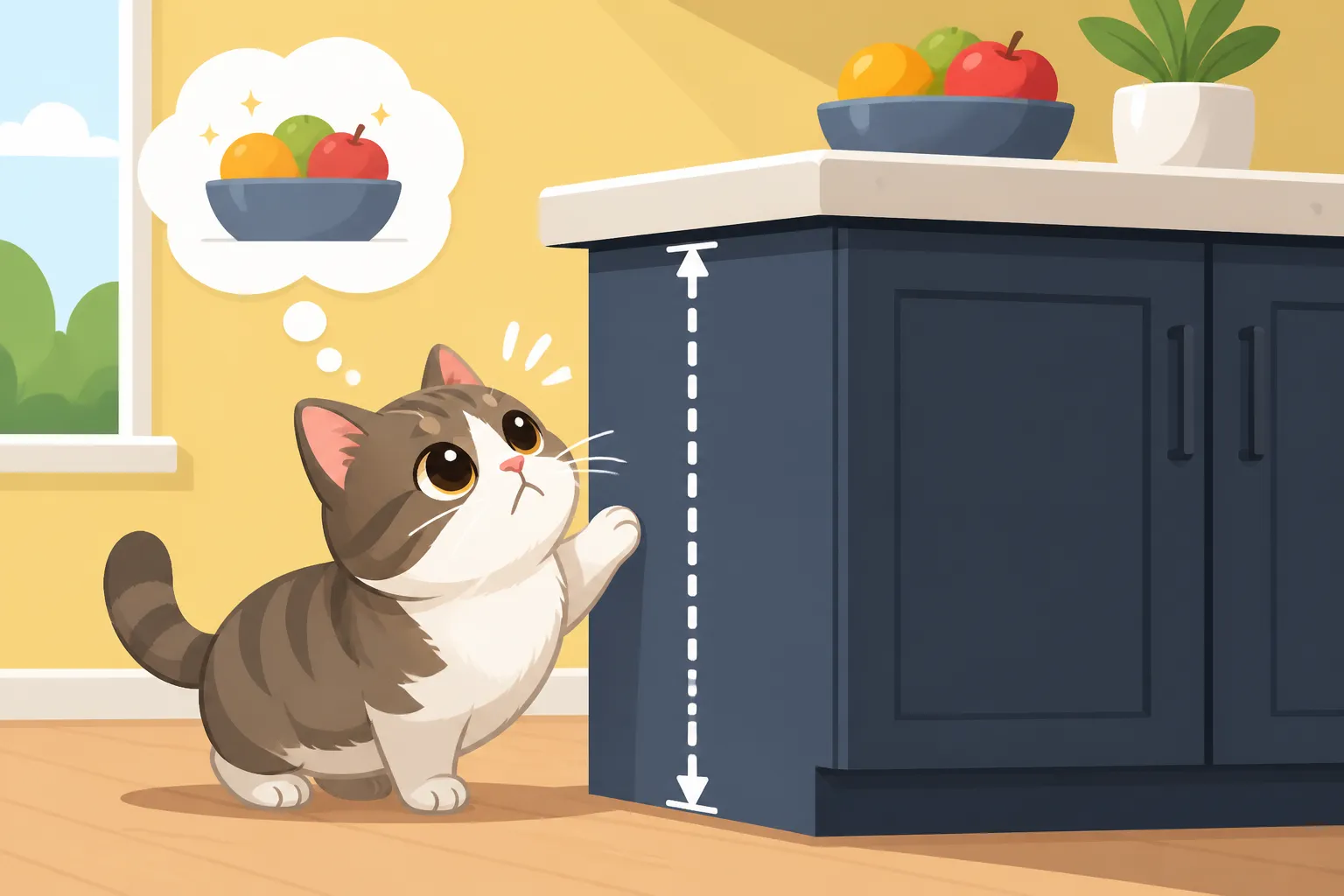
While they can't hold this position indefinitely, it gives them a temporary advantage in observation and reconnaissance. It's often accompanied by intense focus, their eyes tracking something just out of reach. If you see your Munchkin doing the prairie dog sit near the kitchen counter, it’s a good sign they are curious and wishing they could see what's up there! They’re essentially saying, "I want to see what you're doing, but I can't quite get there myself." It’s an endearing way they try to overcome their physical limitations, even if it doesn't give them enough height to jump.
The Ferret-Like Gait and Agility on the Flat
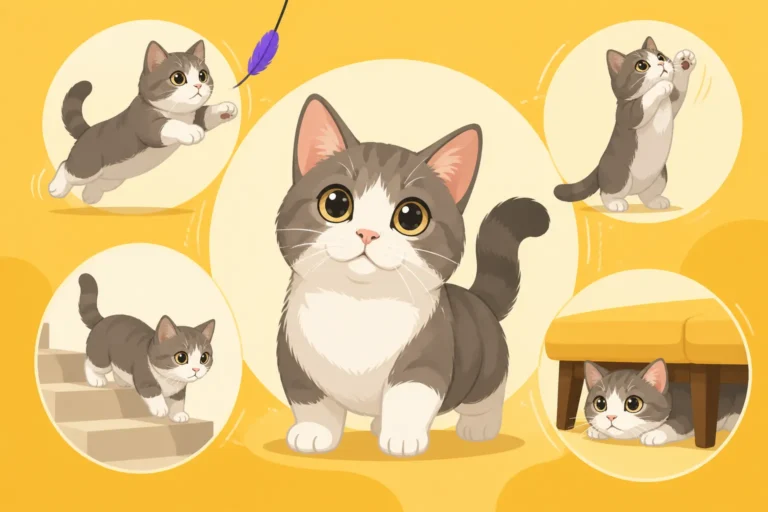
When a Munchkin isn't trying to go up, they are often a blur on the ground. Their low center of gravity and short legs, while hindering vertical jumps, make them incredibly agile and fast on flat surfaces. Their movement is often described as ferret-like, with a distinctive waddle or scurry that allows them to accelerate, stop, and change direction with remarkable speed.
This horizontal agility is their superpower. They can dart under furniture, zip through legs, and chase toys across the floor with an intensity that belies their stature. This adaptation means they compensate for their lack of vertical reach with exceptional ground-level speed and maneuverability. They are masters of the low-to-the-ground chase, making playtime on the floor an absolute joy. While they might not conquer Everest, they certainly dominate the living room floor! Observing them, you truly understand Why a Munchkin Moves Like a Ferret and why their low-slung body is a marvel of adaptation for ground-level navigation.
Creating a Munchkin-Friendly Vertical World
Knowing your Munchkin can't easily reach high places means you, as their dedicated human, have a wonderfully important role to play in adapting their environment. This isn't about baby-proofing in a restrictive sense; it's about enriching their lives by providing safe and accessible pathways to explore. You're creating their own personalized cat park, tailored to their unique needs.
Ramps and Steps: Essential Mobility Aids
For a Munchkin, ramps and steps aren't luxuries; they are fundamental pieces of equipment that bridge the gap between their short legs and the elevated surfaces they want to reach. Think about all the places your Munchkin might want to go: the sofa for cuddles, your bed for nighttime snuggles, a favorite windowsill to watch the birds, or even just a higher perch on a cat tree. Without ramps or steps, these spots become inaccessible, leading to frustration for your cat and potentially joint strain if they repeatedly attempt risky jumps.
A well-placed ramp, perhaps from the floor to the sofa, or a set of low-rise pet stairs leading to the bed, can make a world of difference. When choosing or building these, consider the gradient of the ramp – it shouldn't be too steep – and the spacing of the steps, which should be close enough together for their short stride. I've found that carpeted ramps are often preferred by cats for grip. You can find many suitable options on Amazon, designed for small dogs or older cats, that work perfectly for Munchkins. Remember, Ramps and Steps Are Munchkin Equipment, Not Luxuries, and they will dramatically improve your cat's quality of life and independence.
Thoughtful Furniture Arrangement and Cat Trees
Beyond dedicated ramps and steps, a mindful arrangement of your existing furniture can create a natural "staircase" for your Munchkin. Consider placing a sturdy ottoman next to the sofa, or a small bookcase near a sunny windowsill. These intermediate steps allow your cat to break down a large vertical climb into several smaller, manageable hops.
Cat trees are fantastic for enrichment, but a standard tall cat tree with wide gaps between platforms can be a source of frustration for a Munchkin. Look for cat trees with platforms that are closely spaced, forming a continuous, easy-to-navigate ascent. Some companies now make "cat condo" style trees with multiple levels and ramps specifically for less agile or older cats, which are perfect for Munchkins. If you already have a tall cat tree, you can often add smaller, sturdy shelves or boxes between existing platforms to create the necessary intermediate steps. A good rule of thumb is that platforms should be no more than 8-10 inches apart to be truly accessible for a Munchkin.
Low-Entry Litter Boxes and Feeding Stations
While not directly related to jumping onto the kitchen counter, ensuring all essential resources are easily accessible is part of creating a truly Munchkin-friendly home. A standard litter box with high sides can be a struggle for a Munchkin to enter and exit comfortably, especially as they age or if they experience any joint stiffness. This can lead to accidents outside the box, which is frustrating for everyone.
Opt for low-entry litter boxes, or even consider cutting down one side of a regular plastic tub to create an easy walk-in entrance. Many senior cat litter boxes are designed with this in mind and work wonderfully. Similarly, food and water bowls should be placed at floor level or on slightly raised platforms that don't require any stretching or jumping. While a normal cat might enjoy a fountain on a high counter, a Munchkin will need its hydration accessible from the floor. Thinking about these seemingly small details significantly contributes to your Munchkin's comfort and prevents unnecessary strain on their little bodies.
Risks and Frustrations of Unreachable Heights
It's easy to just think of a Munchkin's inability to jump high as a cute quirk, but it can lead to genuine risks and frustrations for the cat if their environment isn't properly adapted. Ignoring their limitations can compromise their safety, well-being, and even their relationship with you.
Potential for Injury from Failed Jumps
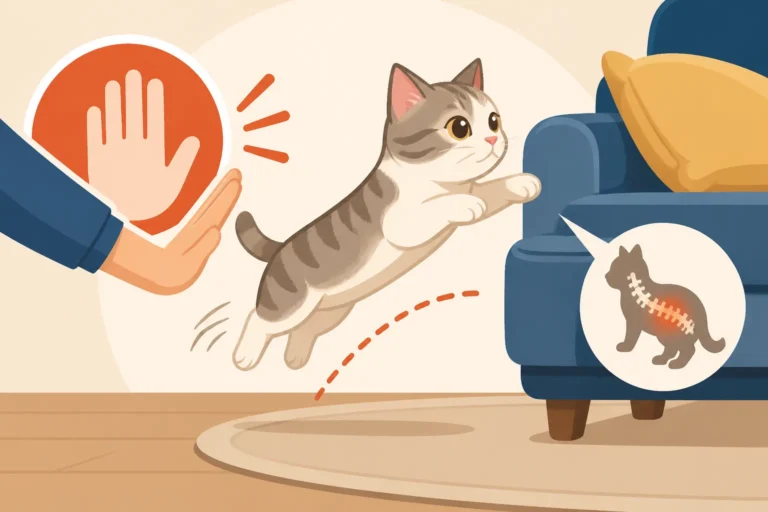
While Munchkins are incredibly resilient and adaptive, constantly attempting jumps beyond their capability can lead to injuries. Picture a scenario: your Munchkin desperately wants to reach a sunny spot on the windowsill, but it's just too high. They might launch themselves, fall short, and land awkwardly, potentially straining muscles, pulling ligaments, or even causing more serious skeletal issues, especially around their shoulders and spine. What a Munchkin's Spine Carries a Load a Normal Cat's Does Not is a real concern, and repeated impacts can exacerbate any underlying vulnerabilities.
Even seemingly minor falls can contribute to cumulative stress on their joints over time, potentially leading to earlier onset of conditions like arthritis. Owners often see a Munchkin trying the same jump repeatedly, learning from previous failures, but sometimes sheer desire can override caution. This is particularly true for kittens who are still learning their limits. Providing ramps and steps isn't just about convenience; it's a proactive measure to safeguard their physical health and prevent unnecessary wear and tear on their unique skeletal structure.
Emotional Frustration and Social Isolation
Imagine constantly wanting to be part of the action, to see what everyone else sees, but being physically unable to reach it. That's a daily reality for a Munchkin in an unadapted home. Cats are naturally curious and social creatures. If the kitchen counter is where all the interesting food prep happens, or where you spend a lot of time, and your Munchkin can't even see what's going on, it can lead to feelings of frustration and even a sense of being left out.
This can manifest as excessive meowing at your feet, pawing at your legs, or even a noticeable withdrawal from active participation in household life if they feel consistently excluded from higher vantage points. While some cats are perfectly content on the floor, many thrive on exploring vertical spaces and observing their territory from above. Denying them safe access to these opportunities can impact their overall happiness and mental stimulation. Providing accessible perches, window seats, and even sturdy chairs that they can climb onto to join you at eye level can significantly boost their emotional well-being.
Safety Concerns: Escape and Retreat
Cats inherently seek high ground for safety and security. It's where they escape from perceived threats (like a boisterous dog or an overenthusiastic child), where they can observe their territory without being disturbed, and where they feel most in control. For a Munchkin, this instinct is still present, but their physical limitations can put them at a disadvantage.
If they cannot jump onto a high shelf or scale a cat tree quickly, they lack crucial escape routes. This can make them feel vulnerable and stressed, especially in multi-pet households or homes with small children. Why a Munchkin Cannot Climb Out of a Child's Reach or Why a Munchkin Cannot Get Away From a Dog highlights serious safety concerns. An unadapted home can make a Munchkin feel trapped on the floor, unable to retreat to a safe haven when they need one. Providing low, easily accessible hiding spots and elevated perches reachable by ramps ensures they can exercise their natural instincts for safety and privacy.
Living with a Ground-Level Explorer: What Your Munchkin CAN Do
While their vertical reach is limited, it's crucial to remember that Munchkins are not "broken" cats. They are incredibly capable, playful, and affectionate companions who simply navigate the world a little differently. Focusing solely on what they cannot do misses the joy and unique abilities they do possess. They are truly masters of their own domain, the floor.
Speed and Agility on the Flat
Don't let those short legs fool you into thinking a Munchkin is slow or clumsy. On the contrary, many Munchkins are remarkably quick and agile on level ground. Their low center of gravity provides exceptional stability, allowing them to take corners at impressive speeds and make swift, darting movements. They can weave through furniture, chase toys, and engage in energetic play sessions across the floor with surprising intensity.
Their unique gait, sometimes described as a "ferret-like" scurry, is actually incredibly efficient for horizontal movement. They are natural ground hunters, excelling at games that involve chasing toys across the floor rather than leaping for them in the air. This ground-level speed means they can still enjoy vigorous play and exercise, keeping them healthy and mentally stimulated. Just be sure to provide plenty of space for them to zoom around! Discover How Fast a Munchkin Runs on Level Ground to truly appreciate their speed.
Playfulness and Curiosity
Munchkins are known for their playful and curious personalities. They may not scale your bookshelves, but they will explore every nook and cranny at ground level with boundless enthusiasm. They love interactive toys that roll, slide, or can be batted around the floor. Wand toys are fantastic for encouraging them to chase and pounce, bringing the "prey" down to their level.
Their intelligence often shines through in their problem-solving skills, especially when figuring out how to reach a desirable spot using multiple small steps. They are highly engaged with their environment and will follow you from room to room, eager to participate in whatever you're doing, even if it's from an ankle-height perspective. Their curiosity means they benefit greatly from puzzle feeders and rotating new toys to keep their minds sharp and prevent boredom. Don't underestimate their desire for engagement simply because they can't jump like other cats.
The Delight of Lap Cat Status
Perhaps one of the most endearing qualities of many Munchkins is their propensity to be affectionate lap cats. Because they often cannot jump onto your lap unaided, they frequently seek out human interaction by coming to your feet and looking up expectantly. This often leads to them being lifted onto laps for cuddles, which they tend to thoroughly enjoy.
This reliance on their human for vertical access can forge a very strong bond. They often become incredibly cuddly and attached, relishing the moments they spend snuggled up on a warm lap or tucked into bed beside you. While they might trot after you rather than climbing, their desire for proximity and affection is just as strong, if not stronger, than a long-legged cat who can jump onto any surface at will. They appreciate being brought into your world, especially when it involves being lifted to your height.
Practical Solutions for Elevated Access: Your Role as an Owner
Since your Munchkin can't effortlessly spring onto the kitchen counter or other high surfaces, it's up to us, their loving caregivers, to make their world accessible and enriching. This involves a mix of practical solutions and a keen eye for how your home's layout affects their daily life. It’s about being proactive, not reactive, to their unique needs.
Strategic Placement of Ramps and Pet Steps
The most straightforward way to help your Munchkin access higher spots is by strategically placing ramps and pet steps. Think about the key areas where your cat spends time or might want to:
- Sofa and Chairs: A small set of pet steps or a low ramp next to your favorite armchair or sofa can be a game-changer for shared cuddle time. Look for sturdy options on Amazon.
- Bed: If your Munchkin is allowed on the bed, a taller set of steps or a longer ramp will be essential, especially for safely getting down. Consider how to anchor the ramp so it doesn't slip.
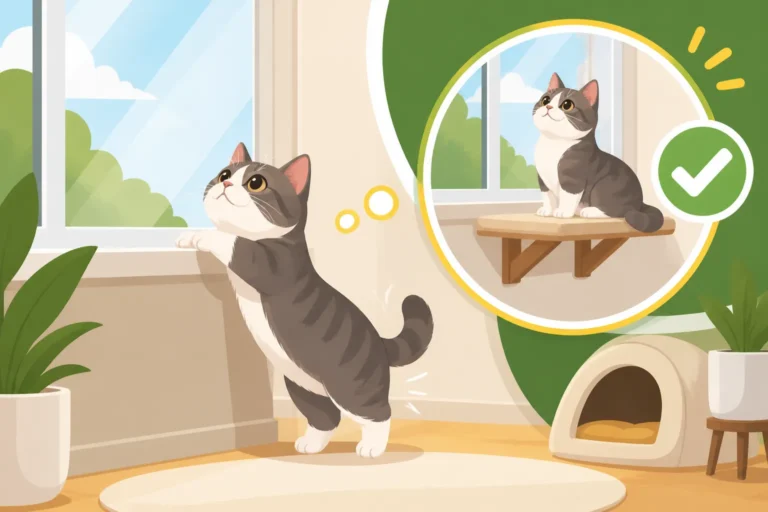
- Windowsills: A small stool, sturdy storage cube, or a carpeted step placed directly beneath a favorite windowsill can provide the perfect boost for birdwatching.
- Cat Trees: As mentioned, if your cat tree has large gaps, add intermediate steps or platforms. You can often buy universal carpeted cat tree shelves that bolt on, found easily on Amazon.
When choosing ramps or steps, prioritize stability and a non-slip surface. The incline shouldn't be too steep, as this can be daunting or even physically challenging for their short legs. Observing where your Munchkin attempts to jump most frequently will give you clues as to where these aids are most needed. They will quickly learn to use them, especially if you encourage them with treats and praise initially.
Curated Vertical Spaces and Safe Perches
Beyond functional ramps, think about creating appealing vertical spaces specifically for your Munchkin that are safely accessible.
- Window Perches: Instead of a tall, hanging perch, consider a sturdy, floor-standing window perch or a dedicated cat tree with a top platform level with the windowsill. This allows them to enjoy the view without precarious jumps.
- Shelving Systems: If you're handy, you can install cat-friendly shelving that is tiered and staggered, creating a walkable pathway up to a higher resting spot. Ensure each shelf is wide enough for them to comfortably walk and turn, and that the gaps between shelves are small enough for easy climbing.
- Furniture Ladders: Sometimes, a simple step stool or even a sturdy, low bookcase can serve as a "ladder" to a slightly higher piece of furniture. Just ensure whatever you use is stable and won't tip over.
The goal is to create a multi-level environment that satisfies their instinct to climb and explore without relying on dangerous leaps. Remember, How to Rearrange a Room So a Munchkin Can Climb involves thinking creatively about every surface.
Supervision and Training for Safe Behavior
Even with the best modifications, supervision and gentle training are important.
- Discourage Risky Jumps: If you see your Munchkin consistently attempting a jump that looks too high or dangerous, gently redirect them. Pick them up and place them on a safe, accessible route, or lure them with a toy to a ramp. It’s important to teach them that the safe path is the easy path.
- Positive Reinforcement: Reward them when they use ramps and steps. Treats, praise, and cuddles can reinforce good habits and make them eager to use their new climbing aids.
- Child and Pet Interaction: If you have small children or larger dogs, it's crucial to ensure your Munchkin has safe, accessible retreat zones. A raised cat bed with steps, or a cat tree that only they can easily reach (via their steps), provides a sense of security. Make sure children understand that the Munchkin needs its space and shouldn't be picked up without supervision, especially if they are high up.
By being mindful and providing the right tools and pathways, you can ensure your Munchkin enjoys a full, enriched life where no desired spot feels truly out of reach, even if it means taking a few extra steps to get there.
Munchkin vs. The Kitchen Counter: A Summary of Limits and Solutions
The fascination with whether a Munchkin can reach the kitchen counter is a perfect illustration of the broader challenges and joys of living with these uniquely built felines. While the romantic idea of your cat elegantly leaping onto the counter for a clandestine snack might be part of general cat lore, for a Munchkin, it’s a physical impossibility due to their distinctive anatomy.
Why the Counter Remains Out of Reach
The primary reason is the Munchkin’s pseudoachondroplasia, which results in significantly shorter long bones in their legs. These short limbs drastically reduce the leverage and range of motion needed to generate sufficient upward thrust for a high jump. Their muscles are strong, but the "catapult" mechanism of longer legs simply isn't there. This means the several feet from the floor to a standard kitchen counter is an insurmountable height for most Munchkins.
Moreover, their low center of gravity, while excellent for ground-level agility, makes lifting their entire body mass to such a height energetically inefficient and physically difficult. Repeated attempts at such a jump would not only be frustrating but potentially harmful, placing undue stress on their spine and joints. They are built for speed and stability on the flat, not for scaling vertical landscapes in a single bound. You'll find that their behavioral adaptations lean towards horizontal exploration and multi-stage climbing rather than explosive vertical leaps.
Creating an Accessible and Engaging Home
Instead of focusing on what they cannot do, a Munchkin owner’s joy comes from adapting their home to highlight what they can do, and how you can help them achieve their aspirations.
- Ramps and Steps: These are non-negotiable for providing access to sofas, beds, and window perches. Look for sturdy, low-gradient options to ease their journey up and down.
- Thoughtful Furniture Layout: Arrange existing furniture to create natural "staircases" to higher levels. Ottomans, sturdy chairs, or low bookcases can serve as excellent intermediate steps.
- Munchkin-Friendly Cat Trees: Invest in or modify cat trees to have closely spaced platforms, allowing for easy, sequential climbs rather than large jumps.
- Ground-Level Enrichment: Provide plenty of interactive toys, tunnels, and puzzle feeders that engage their natural hunting and exploration instincts on the floor.
Ultimately, living with a Munchkin cat means embracing their unique physical traits and actively participating in creating a home environment that is safe, stimulating, and accessible. While they might never stand on your kitchen counter unaided, they will fill your life with incredible affection, playful antics, and the endless delight of watching a truly special feline navigate its world with grace and ingenuity. Their world is simply closer to the ground, and by understanding and respecting that, you unlock the full joy of Munchkin ownership.
| Obstacle/Desired Location | Munchkin Challenge | Owner Solution |
|---|---|---|
| Kitchen Counter (High) | Too high for a single jump, no leverage. | Not practically accessible for unassisted climbing. Engage at floor level. Consider a low stool nearby for them to sit and observe you, or a tall, sturdy cat tree next to the counter with steps if you truly want them at that height, but ensure it's safe and stable. |
| Sofa/Bed | Too high for many to jump onto and especially off of. | Ramps: Carpeted pet ramps with a gentle slope. Steps: Low-rise pet stairs with wide, stable steps (e.g., from Amazon). Furniture Stacking: Place a sturdy ottoman or storage cube next to the sofa as an intermediate step. |
| Windowsill | Often too high for a direct jump. | Steps/Stools: Place a stable step stool or a low bookcase underneath the sill. Cat Tree Access: Position a Munchkin-friendly cat tree with a top platform level with the windowsill. Window Perches: Floor-standing window perches or those with built-in steps are ideal. |
| Standard Cat Tree Platforms | Gaps between platforms too wide for short legs. | Modify: Add intermediate shelves or sturdy boxes between existing platforms to reduce vertical distance. Specialized Trees: Purchase cat trees designed for small breeds or senior cats with closely spaced platforms (check Amazon for options like "multi-level cat condo"). |
| Tall Scratching Posts | Cannot reach the top to stretch fully. | Horizontal Scratchers: Provide plenty of cardboard or sisal horizontal scratchers. Angled Scratchers: Look for angled scratching ramps. Lower Posts: Find shorter, wider scratching posts they can fully utilize without straining. |
| Dining Table | Generally too high for jumping, similar to counter. | Engage them on the floor during meals. Provide their own low-level enrichment in another room if counter-surfing is an issue for other pets. Avoid feeding them from the table to prevent them from attempting to reach it. |
Disclaimer
This article is for general informational purposes only and does not constitute professional advice. Laws, prices and regulations vary by location and change over time. Consult a qualified professional for guidance on your specific situation.