How a Munchkin Asks to Be Picked Up
Munchkin cat communication cues explain how short legs and reduced jumping limits require human help to reach laps.
Change the room, not the cat.
Litter box avoidance, scratching and furniture, multi-cat tension and night activity — and the vertical space, play routines and feeding puzzles that solve more than correction does.
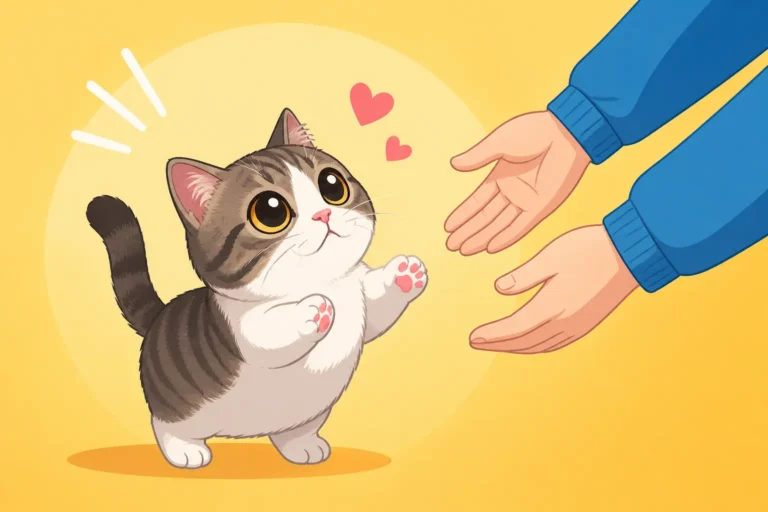
Munchkin cat communication cues explain how short legs and reduced jumping limits require human help to reach laps.
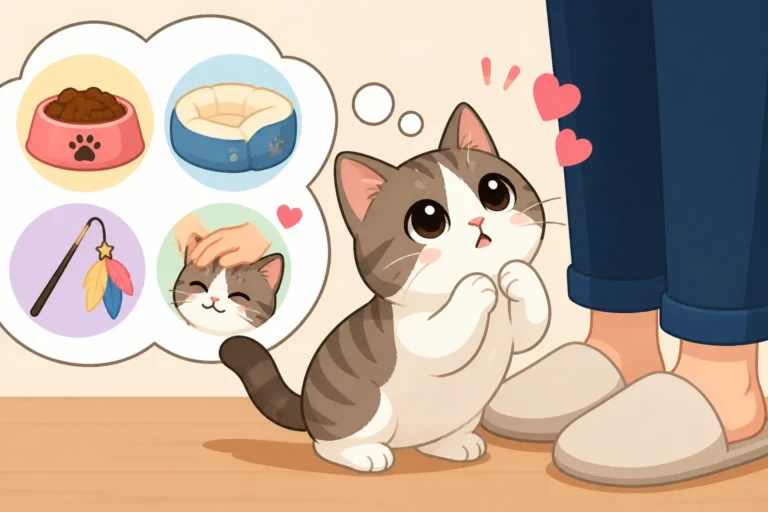
Munchkin cat behavior at your feet reveals communication needs, limited vertical mobility, and desires for safety or interaction.
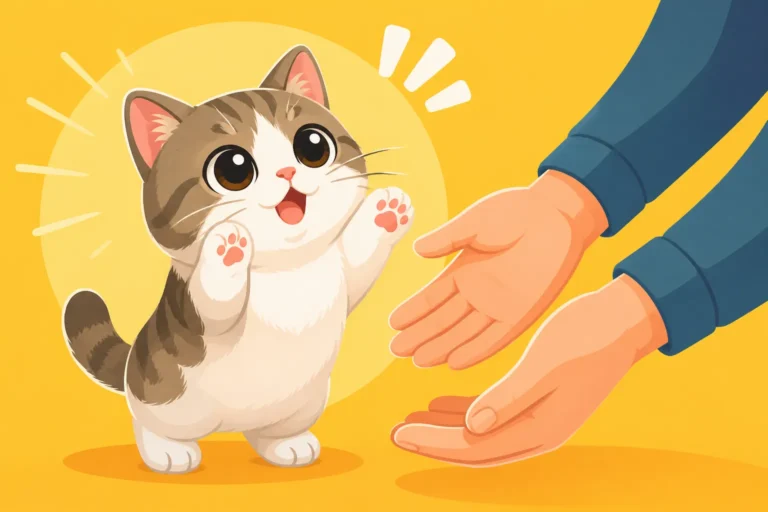
Munchkin cat vocalizations when wanting lifting range from soft chirps and mid-volume meows to loud, prolonged cries and prairie dog stances.
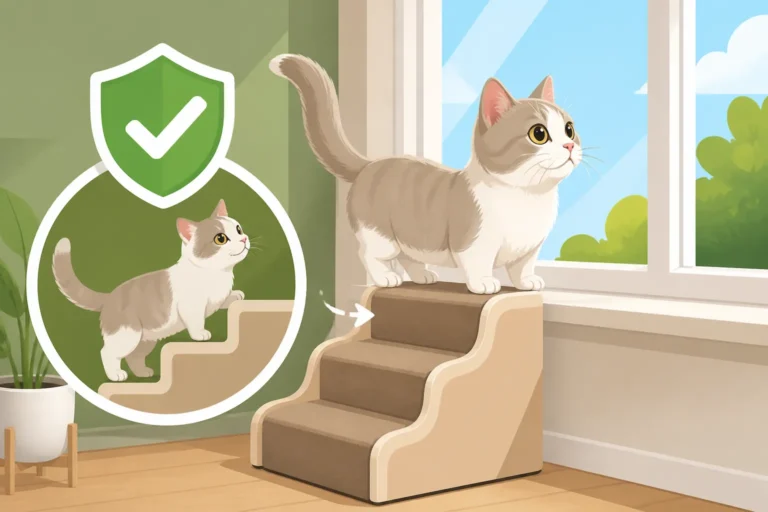
Safe window access for short-legged Munchkin cats prevents joint strain and provides vital mental enrichment through outside views.
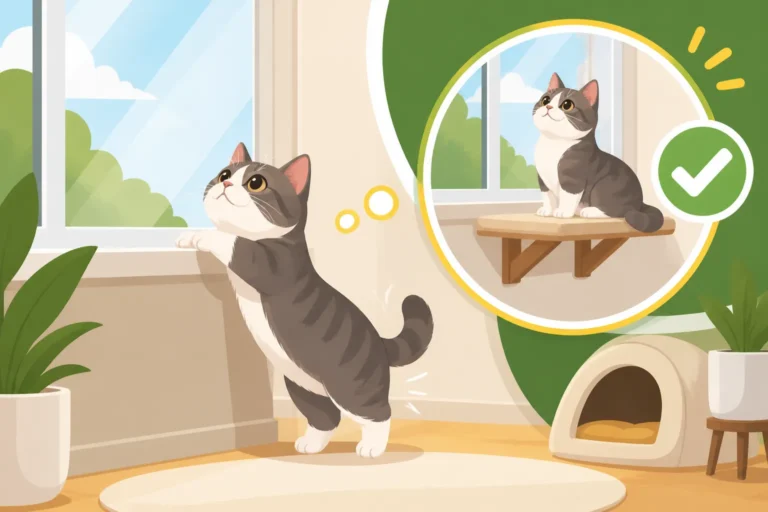
Munchkin cat physical limitations and short legs require accessible window perches for safe territorial observation and mental stimulation.
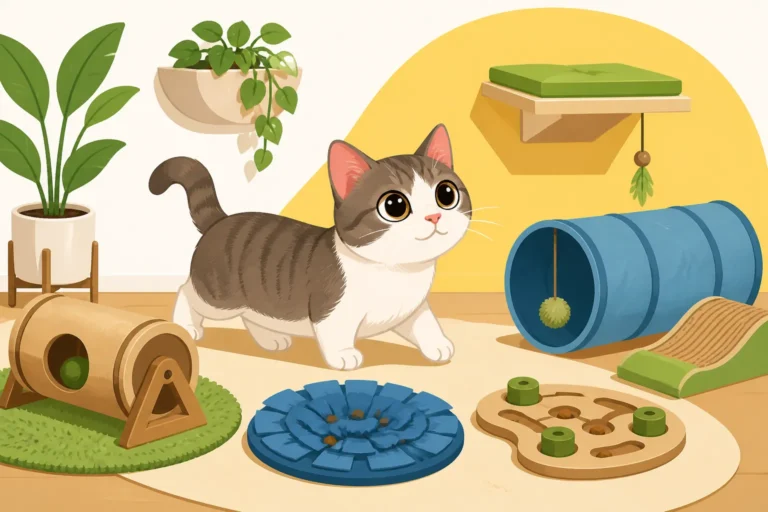
Floor level enrichment for Munchkin cats protects short legs and joints while satisfying natural instincts through safe ground play.
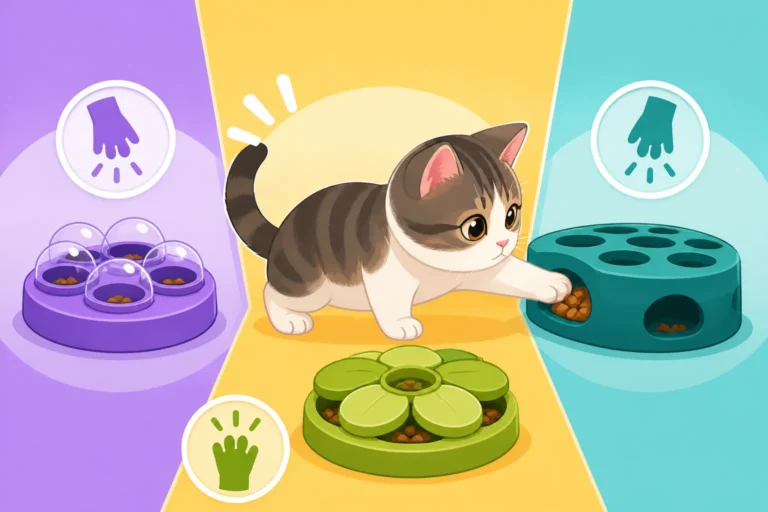
Munchkin cat puzzle feeders must feature floor-level designs and wide access points to prevent physical strain during play.

Munchkin cat reactions to catnip and nepetalactone, including how short legs and physical traits affect behaviors during a five to fifteen minute high.
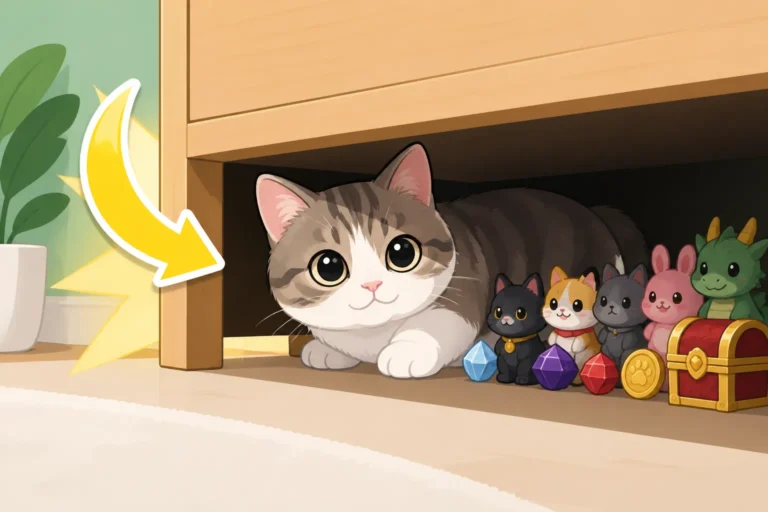
Munchkin cat hoarding habits explain why short-legged cats hide hair ties and bottle caps in low spots like under sofas.

Munchkin cat stealing behavior stems from predatory instincts and unique physical traits, explaining why they hide household objects.