Whether the Prairie Dog Sit Strains a Munchkin’s Spine
Munchkin cat pseudoachondroplasia and spinal health, explaining if the prairie dog sit strains their normal length spine.
Change the room, not the cat.
Litter box avoidance, scratching and furniture, multi-cat tension and night activity — and the vertical space, play routines and feeding puzzles that solve more than correction does.
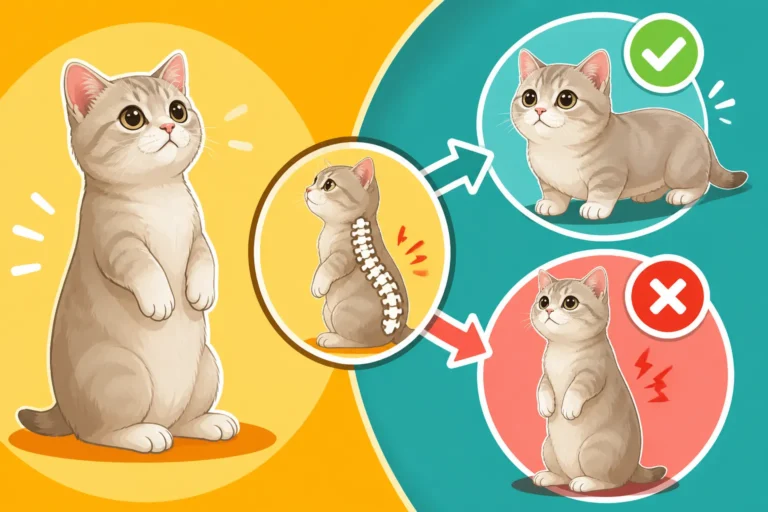
Munchkin cat pseudoachondroplasia and spinal health, explaining if the prairie dog sit strains their normal length spine.
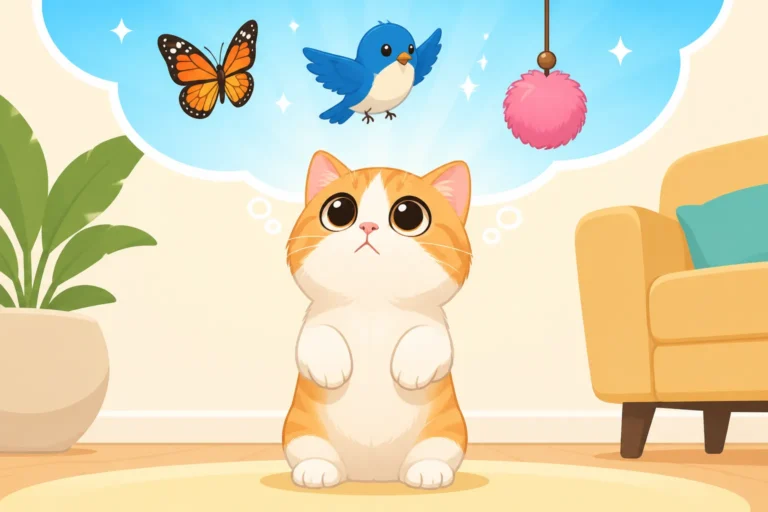
Munchkin cats with pseudoachondroplasia use an upright sit on their hind legs to compensate for short stature and gain a better view.
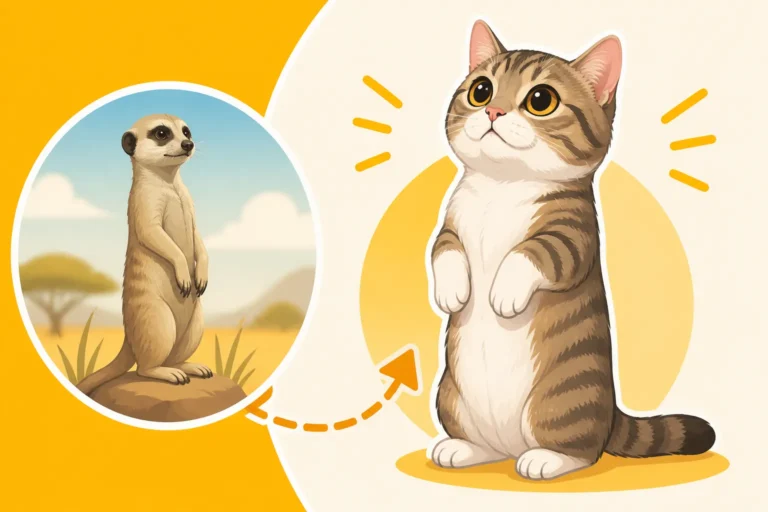
Munchkin cat posture mechanics explain why these short-legged felines sit upright like meerkats to improve their field of vision.
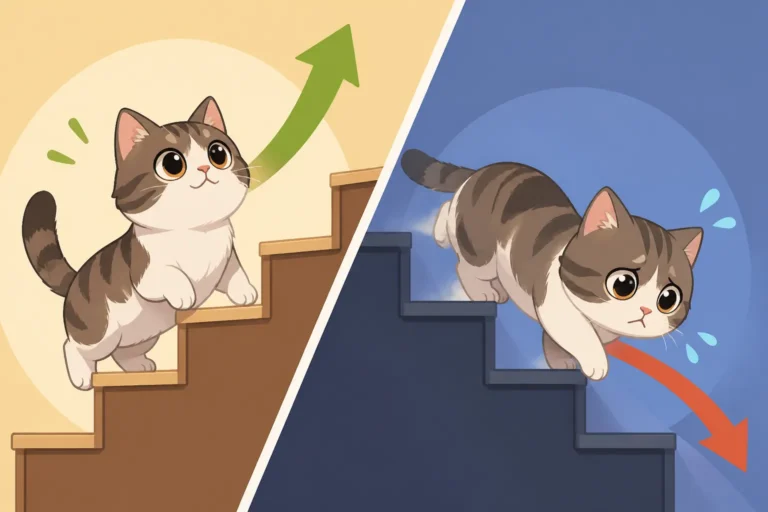
Munchkin cat anatomy creates severe joint impacts during descents because short legs lack the suspension travel needed for proper shock absorption.
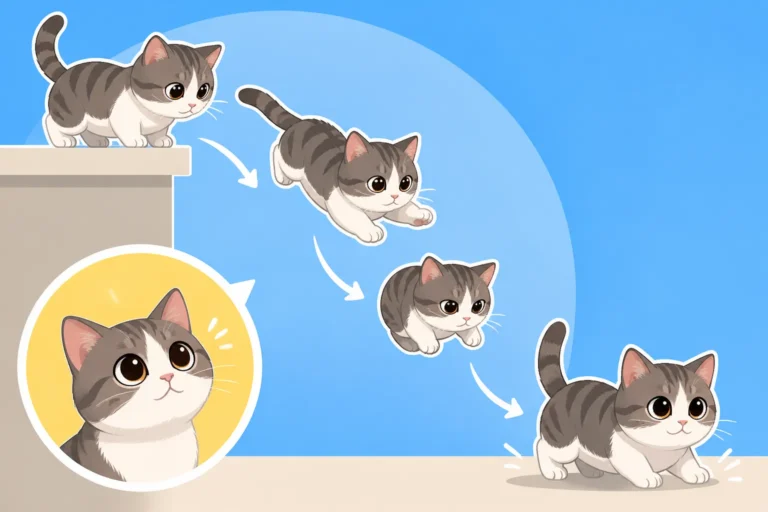
Munchkin cat descents involve controlled falls rather than true jumps because short legs limit shock absorption during landings.
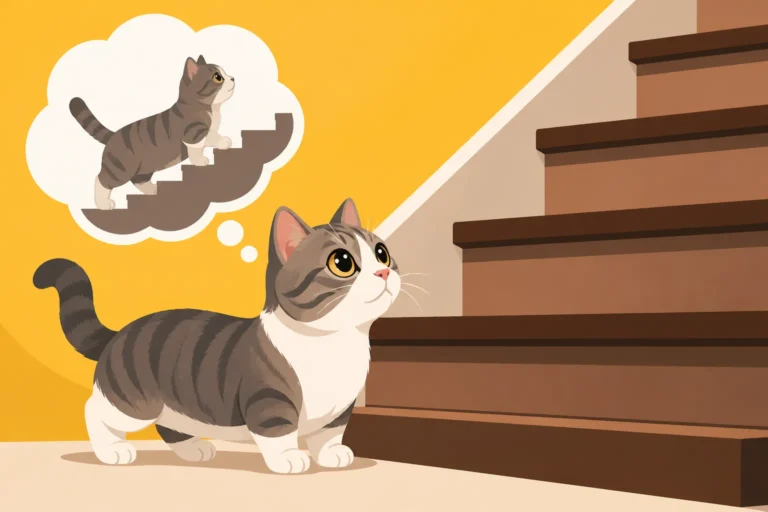
Munchkin cat short legs create biomechanical strain, making stair climbing and descending a physical challenge that risks injury.
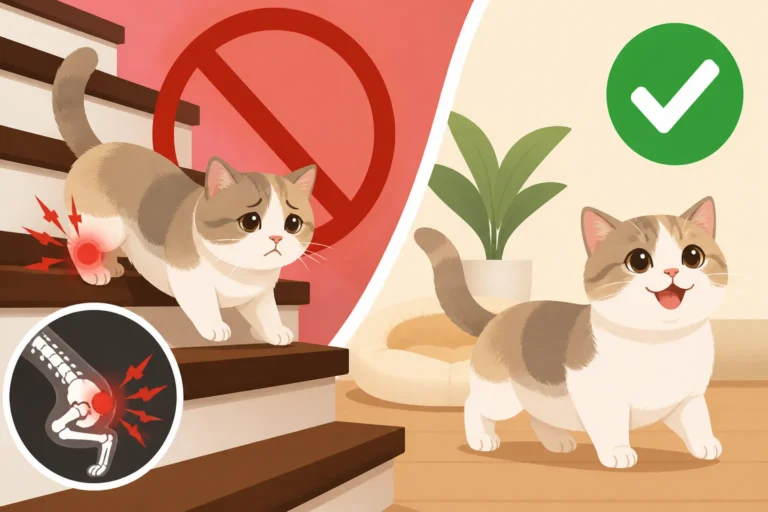
Munchkin cat anatomy creates spinal and joint strain because short limbs and body proportions handle gravitational forces poorly on stairs.
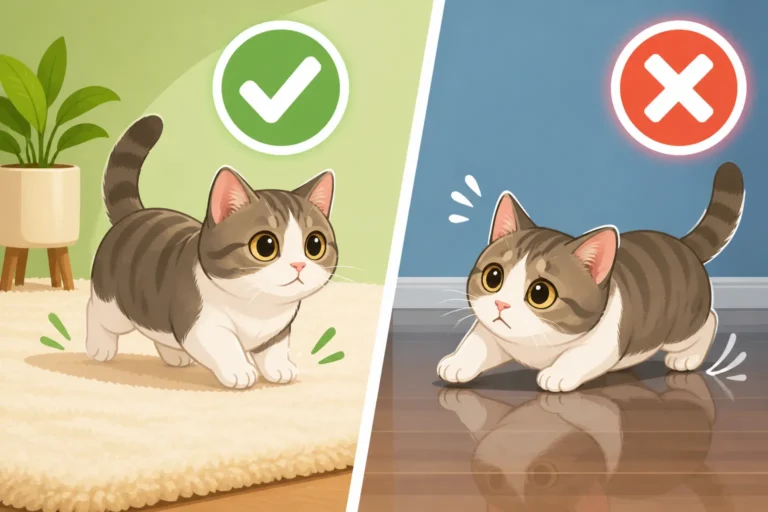
Rugs and carpets provide traction for short-legged Munchkin cats on smooth floors, preventing painful joint injuries and slips.
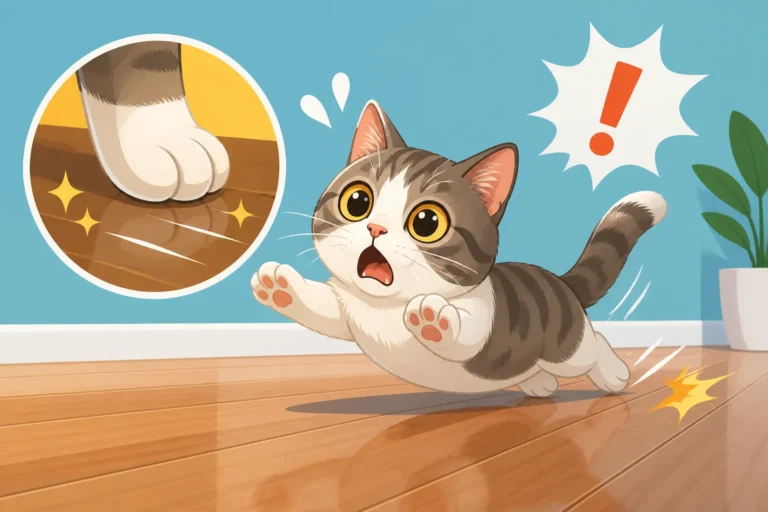
Munchkin cat leg biomechanics and low center of gravity explain why short-legged cats struggle with slippery laminate floors.
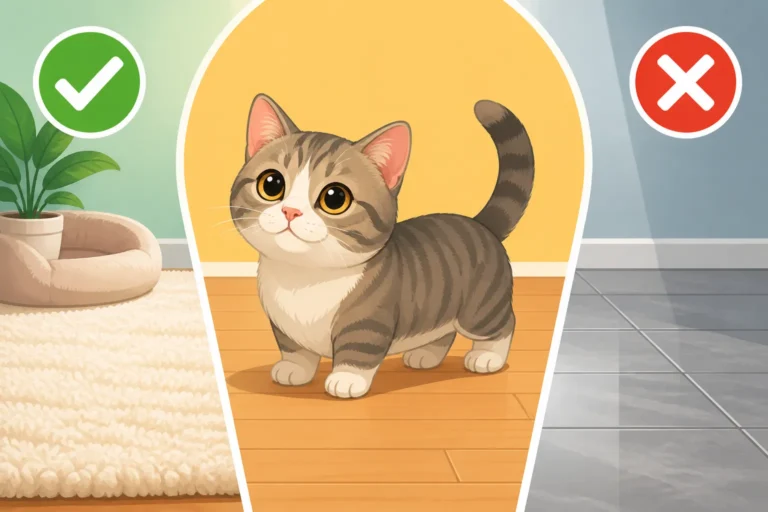
Munchkin cat flooring needs include high traction surfaces that protect short legs and joints from slipping, strain, and injury.