Why a Munchkin Should Not Use Stairs Repeatedly
It’s easy to assume that all cats are agile creatures, effortlessly leaping and climbing wherever they please, especially when it comes to something as mundane as stairs. But for us Munchkin cat parents, we know our little whiskered friends are built a bit differently, and those everyday staircases can pose a significant, often overlooked, challenge. This guide will dive deep into why repeated stair use isn't ideal for your beloved Munchkin, exploring the anatomical reasons, potential long-term health risks, and practical steps you can take to make your home a safer, more comfortable haven for them.
Understanding the Munchkin's Unique Anatomy and Movement
Our Munchkins are undeniably adorable with their signature short legs, but those endearing limbs come with a unique set of biomechanical considerations. Unlike a standard-legged cat, a Munchkin's body is of normal length, but its limbs are significantly shorter due to a natural genetic mutation. This means their body proportions and the way they move, navigate, and absorb impact are fundamentally different.
The Mechanics of Short Legs and Spinal Load
Imagine trying to navigate a flight of stairs with much shorter legs – it would be a struggle, right? For a Munchkin, every step up requires a greater exertion from their back and hindquarters to propel their body upwards, and every step down places a disproportionate load on their front limbs and spine. They can't just gracefully flow up or down like a regular cat; it's a series of more deliberate, often less efficient, movements. This constant, slightly awkward exertion means their spine and joints are under a kind of stress that their longer-legged counterparts simply don't experience in the same way. It's a fundamental difference in how their skeletal structure handles gravitational forces and everyday locomotion, especially on an incline.
Think about the leverage involved. A normal cat uses its long legs to distribute its weight and absorb shock evenly across its joints and spine. A Munchkin, however, has less "lever arm" for propulsion and shock absorption. This means the forces involved in climbing and descending stairs are less efficiently managed by their limbs and transferred more directly to their torso and spine. It's a subtle distinction that has profound implications over time. We've talked before about Why a Munchkin's Spine Carries a Load a Normal Cat's Does Not, and stairs are a perfect example of this increased burden in action.
Why Downward Movement is Particularly Challenging
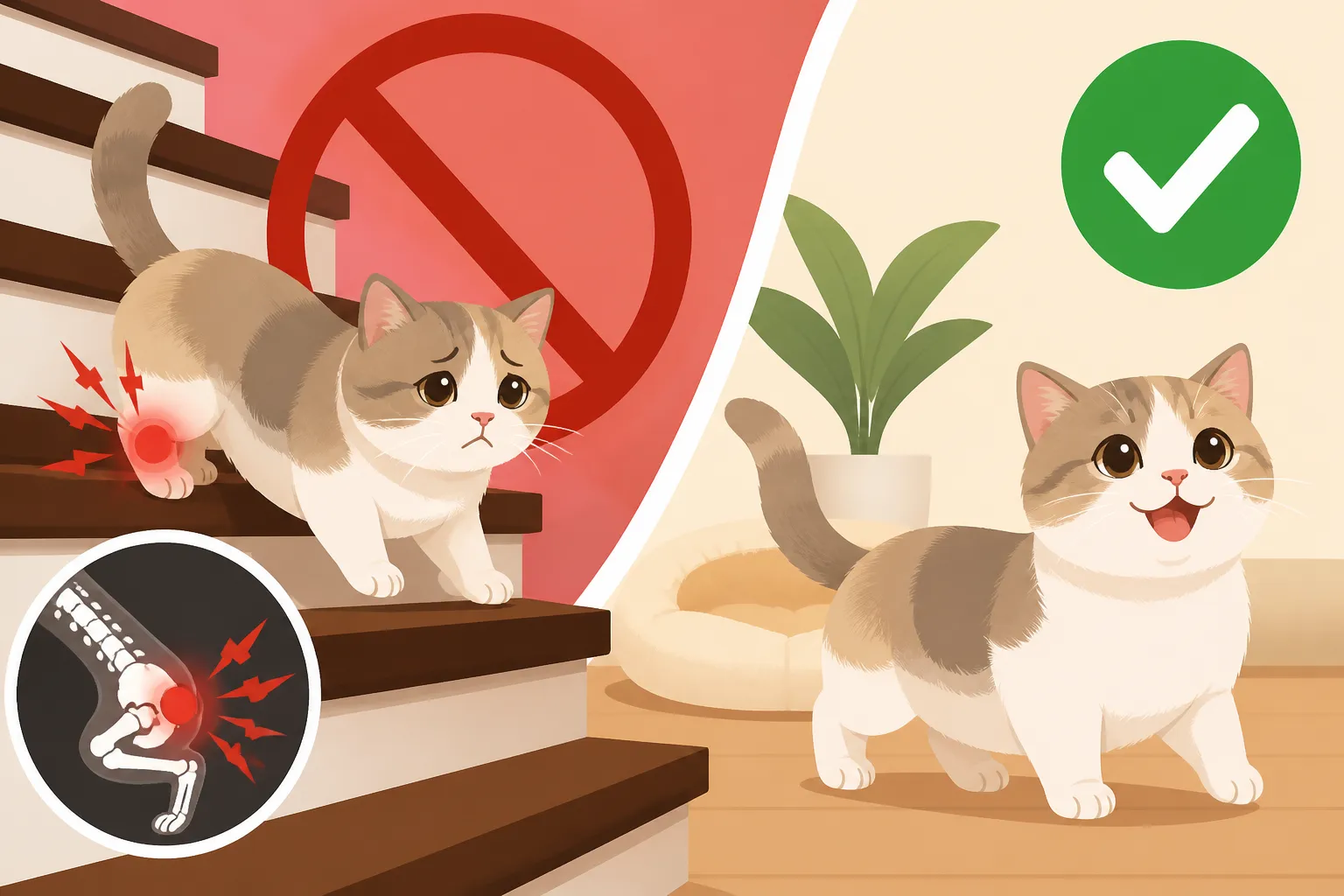
While climbing stairs is taxing, descending them often presents an even greater challenge and risk for Munchkins. When a cat goes downstairs, gravity is working with them, which sounds easier, but it means they rely heavily on their front legs and shoulders to control the descent and absorb impact. For a Munchkin, with their already shortened front limbs, this can be like a perpetual series of small, jarring landings.
Each step down can result in a thudding impact on their wrists, elbows, and especially their shoulders. They simply don't have the same length of limb to act as a spring, cushioning the fall. This repetitive compression and jarring motion can lead to significant wear and tear over time. They might misjudge a step, slip, or even tumble, leading to acute injuries beyond the chronic strain. Observing your Munchkin descend stairs, you might notice a more hesitant, almost lurching gait, as they try to manage the descent carefully. This carefulness is their body telling them it's hard work, and as owners, we need to listen. It’s also a key reason Why Coming Down Is Harder Than Going Up for a Munchkin.
The Cumulative Strain and Long-Term Health Risks
The occasional stair climb might not seem like a big deal, but when it becomes a regular part of a Munchkin's daily routine, the cumulative effect on their delicate anatomy can lead to serious long-term health problems. We love our cats dearly, and understanding these risks helps us protect them.
Increased Risk of Joint and Spinal Issues
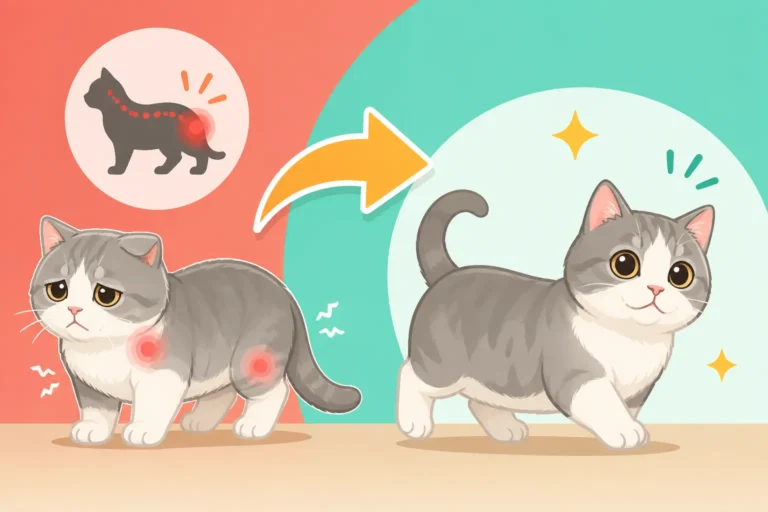
The constant strain from navigating stairs can significantly increase a Munchkin's risk of developing or exacerbating joint and spinal issues. Arthritis, for instance, is a common concern for many cat breeds as they age, but for Munchkins, the added stress on their weight-bearing joints can hasten its onset and severity. Their knees, hips, and especially their shoulders and elbows are constantly working overtime.
Beyond general arthritis, Munchkins are also predisposed to certain spinal conditions due to their unique genetics. Lordosis, a severe inward curvature of the spine, is one such condition that can be greatly impacted by repeated spinal stress. If a Munchkin is frequently arching their back to climb or hunching to descend, it puts undue pressure on the vertebrae, potentially worsening any existing predisposition or accelerating the development of such issues. We've explored What Lordosis Actually Is in a Munchkin in detail, and understanding how daily activities like stair climbing contribute to its progression is vital. Pectus excavatum, or a sunken chest, is another condition that, while not directly caused by stair use, can make breathing more difficult and any physical strain more pronounced.
Wear and Tear on Front Legs and Shoulders
As mentioned, the front legs and shoulders bear the brunt of the impact when a Munchkin descends stairs. This isn't just a theoretical concern; it translates into real, physical wear and tear on their joints and cartilage. Over months and years, this constant impact can lead to inflammation, pain, and reduced mobility. It's like a tiny athlete repeatedly performing high-impact movements without proper cushioning or recovery.
You might start to notice your Munchkin becoming less enthusiastic about jumping, or showing stiffness after periods of activity. They might favor one leg, or simply move more slowly. These are often early signs that their front limbs and shoulders are feeling the strain. It's a sad reality that Why a Munchkin's Shoulders Wear First is directly linked to how they navigate their world, and stairs are a significant contributor to that early wear. Furthermore, the elbows, which are critical for absorbing landing forces, are also under constant pressure, leading to issues like What Repeated Landing Does to a Munchkin's Elbows. It's crucial for us to minimize these impacts where we can to preserve their comfort and mobility for as long as possible.
Adapting Your Home for a Munchkin's Safety and Well-being
Knowing the risks is the first step; the next is taking action to create an environment where your Munchkin can thrive without constantly putting their body under unnecessary strain. Our homes are their whole world, so let's make it a safe one.
Creating Safe Pathways with Ramps and Steps
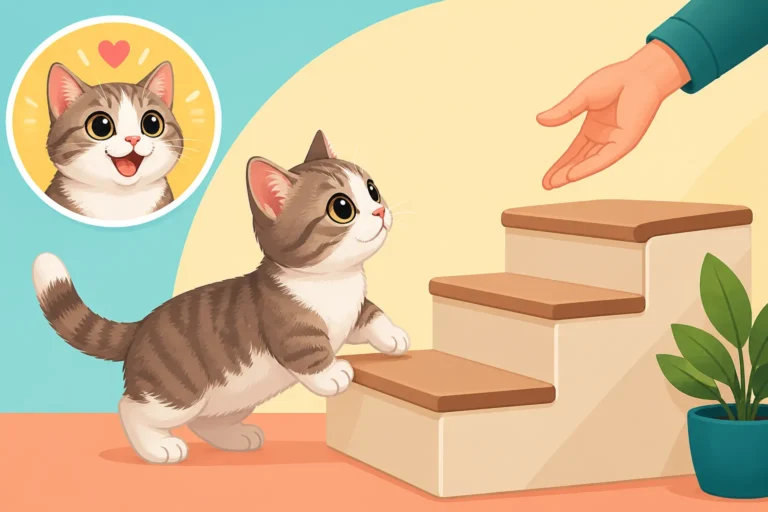
The most effective way to prevent repeated stair use is to provide safe, accessible alternatives. Ramps and pet steps are absolute game-changers for Munchkins. Instead of struggling up and down a full flight of stairs, they can use gentle inclines or closely spaced steps to reach different levels of your home or even just get onto furniture.
When choosing ramps or steps, consider the incline and the material. A gradual incline is always better than a steep one, as it reduces the strain on their joints. Look for non-slip surfaces, like carpeted ramps or textured steps, to give them confidence and prevent slips. You can find many options on platforms like Amazon that are specifically designed for pets. Place them strategically at the bottom and top of staircases, or next to sofas and beds, so your Munchkin always has an easy, low-impact option. Teaching your Munchkin to use these can take a little patience and positive reinforcement, but it's incredibly rewarding to see them confidently navigate their space. We've written a whole guide on How to Teach a Munchkin to Use a Ramp, and the key is making it an inviting, stress-free experience from the start. Remember, How High a Munchkin's First Step Should Be is critical to making it accessible.
| Feature | Standard Stairs (for Munchkins) | Ramps / Pet Steps (for Munchkins) |
|---|---|---|
| Effort | High, straining back and joints | Low, gentle on body |
| Impact | High, especially descending | Low, distributed pressure |
| Risk of Injury | High (slips, falls, chronic strain) | Low (with proper traction and incline) |
| Long-Term Health | Exacerbates joint/spinal issues | Preserves joint/spinal health |
| Accessibility | Limited, stressful | High, promotes independence |
| Mental Stress | Can be high | Low, confidence-building |
Strategic Placement of Essential Resources
Beyond ramps and steps for larger climbs, consider the overall layout of your home and the placement of your Munchkin's everyday necessities. If their food, water, and litter boxes are all on different floors, they're going to be using those stairs multiple times a day, every day. This adds up to a significant amount of strain that can be easily avoided.
Ensure that each floor your Munchkin spends time on has access to fresh water, food, and a litter box. For litter boxes, remember that a low-entry box is crucial for a Munchkin's comfort and dignity, preventing them from having to take an awkward high step every time nature calls. Why a Munchkin Needs a Litter Box It Can Walk Into is more than just convenience; it's about preventing unnecessary contortion and strain. Similarly, place food and water bowls in easily accessible, floor-level locations. While some cats prefer raised bowls to ease neck strain, for a Munchkin whose short legs mean their body is already low to the ground, trying to reach a high bowl can still be awkward. The key is to avoid any setup that requires them to stretch or strain. Keeping Why a Munchkin's Food and Water Belong at Floor Level in mind ensures their daily essentials are always within easy, comfortable reach.
Encouraging Healthy Movement and Preventing Overexertion
Even with an adapted home, it's important to actively manage your Munchkin's activity to ensure they stay healthy without overdoing it. It's a balance between encouraging natural cat behavior and protecting their unique physical needs.
Monitoring Your Munchkin's Activity Levels
Munchkins are often described as playful and active, and they certainly are! They're quick, curious, and love to explore. However, because they don't always show pain until it's quite advanced, it's up to us to be vigilant about their movements. Watch how they move, particularly after periods of play or if they've had to navigate a challenging spot. Are they limping slightly? Are they hesitant to jump onto a favorite low perch? Do they seem stiffer than usual after waking up?
While we don't want to turn our Munchkins into sedentary creatures, we do need to be mindful of activities that involve repeated high jumps or prolonged periods of climbing. A little bit of jumping is natural for a cat, but we should definitely consider Whether a Munchkin Should Be Discouraged From Jumping to excessive heights or onto hard surfaces. Instead, focus on enriching floor-level play that allows them to chase, bat, and pounce without needing to launch themselves upwards. Toys on strings, laser pointers, and rolling balls are fantastic for this. Engaging them in How Much Floor Level Play a Munchkin Needs helps keep them stimulated and active in a safe way. If you notice any signs of discomfort or reluctance to move, a vet visit is always a good idea to rule out any underlying issues and get professional advice.
The Importance of Weight Management
Perhaps one of the most critical aspects of caring for a Munchkin, especially concerning their joints and spine, is meticulous weight management. Every extra gram of weight your Munchkin carries puts additional stress on their short legs and spine. It's a simple physics problem: less leverage and a smaller frame mean that even a small amount of excess weight has a disproportionately large impact.
An overweight Munchkin will find even simple movements more challenging, let alone navigating stairs. The strain on their shoulders, hips, and spine will be amplified, accelerating joint degradation and increasing discomfort. We’ve discussed Why Weight Is More Dangerous on a Munchkin in depth, and it bears repeating: keeping them at a lean, healthy weight is perhaps the single best thing you can do for their long-term mobility and comfort. Work with your vet to establish a healthy target weight and a feeding plan. Measure their food precisely, and be mindful of treats. Regular, gentle play, combined with a controlled diet, will go a long way in preserving their quality of life.
Ultimately, while our Munchkins might be able to physically climb stairs, asking them to do so repeatedly is putting them at an unfair disadvantage and increasing their risk of pain and health issues down the line. By understanding their unique needs and making thoughtful adaptations to our homes and routines, we can ensure our short-legged companions live happy, comfortable, and independent lives for many years to come.
Disclaimer
This article is for general informational purposes only and does not constitute professional advice. Laws, prices and regulations vary by location and change over time. Consult a qualified professional for guidance on your specific situation.