How Long a Munchkin Takes to Learn a New Layout
Moving house is incredibly stressful for anyone, and for our feline friends, especially a Munchkin cat, it can be a monumental undertaking. You're probably worrying about how your little whiskered companion, who already navigates the world a bit differently, will cope with a completely unfamiliar environment. It’s a very real concern, because their unique physical attributes mean they often interact with their surroundings in ways other cats don't. This guide will walk you through what to expect when introducing your Munchkin to a new layout, the typical adjustment timeline, and how you can make the transition as smooth and stress-free as possible for your beloved short-legged companion.
Understanding a Munchkin's Spatial Awareness and Adaptation
When you think about how a cat explores, you usually picture them leaping onto counters, scaling cat trees, and surveying their domain from on high. For a Munchkin, this isn't quite their reality, and it fundamentally changes how they perceive and adapt to a new space.
Why Navigating a New Space is Different for a Munchkin
A Munchkin's signature short legs, while undeniably adorable, mean their world is primarily a ground-level experience. They can't just hop onto the kitchen counter to get a lay of the land or scramble up a tall bookcase to escape a perceived threat. This means their initial exploration of a new home is much more focused on horizontal pathways and discovering accessible "steps" – like low stools, ottomans, or even cleverly placed cushions – that can help them reach higher, more secure spots.
Imagine a standard cat walking into a new room; they might immediately dart under the sofa, then leap onto it, then onto a side table, scanning from various vantage points. A Munchkin, however, will meticulously explore the floor plan, often sticking to walls or furniture perimeters. They're mapping out safe routes, noting clear paths, and identifying potential low-level hiding spots. How a Munchkin Gets Where It Wants Without Jumping is a great resource to understand their unique locomotion. They’re looking for places they can easily access and escape from, without relying on vertical leaps. This slower, more ground-based mapping process can mean they take a bit longer to feel fully comfortable and secure in a new, sprawling layout, especially if there are many open, exposed spaces without clear routes.
The Importance of Familiar Scents and Objects
Cats are creatures of scent. Their home isn't just a place; it's a tapestry of familiar smells – their scent, your scent, the scent of their bedding, toys, and even the couch they nap on. When you move to a new house, that entire comforting scent profile is gone, replaced by unfamiliar odors. This alone can be hugely unsettling for any cat, and Munchkins are no exception.
Bringing along familiar items, especially those that carry their scent and yours, can act as powerful anchors in an alien environment. Their favorite blanket, a well-loved toy, or even your recently worn t-shirt placed in their new "safe zone" can provide immense comfort. These familiar smells signal safety and continuity, reassuring them that despite the new surroundings, their world hasn't entirely disappeared. Don't underestimate the power of a grubby old cat bed or a scratched-up post in making them feel at home. It’s not just about comfort; it's about grounding them in an overwhelming sensory experience.
Individual Cat Personality and Its Role
Just like people, every cat has its own unique personality, and this plays a massive role in how quickly they adapt to a new home. You might have one Munchkin who's an adventurous explorer, curious about every nook and cranny, and another who's a shy little wallflower, easily overwhelmed by change.
A confident, outgoing Munchkin might take to a new house relatively quickly, eager to sniff out every corner and test out all the new floor-level hiding spots. They might still be a bit cautious, but their inherent curiosity will drive them to explore sooner. On the other hand, a more timid or anxious Munchkin might retreat and hide for days, or even weeks, preferring the safety of a small, contained space over the daunting expanse of a new home. Their past experiences also weigh heavily; a Munchkin who has moved before, or who came from a chaotic environment, might be more wary than one who has known a stable, calm home all their life. Understanding your cat's baseline personality is crucial for setting realistic expectations for their adjustment period.
The Initial Adjustment Period: Days to Weeks
The first few days and weeks after a move are the most critical for your Munchkin. This is when they're making their first impressions and starting to build their mental map of their new territory.
The "Safe Room" Strategy for Munchkins
For any cat, a dedicated "safe room" is highly recommended after a move, but for a Munchkin, it's absolutely paramount. This isn't just a suggestion; it's a strategic necessity. A large, unfamiliar house can be terrifying and disorienting for a small, short-legged cat who can’t easily navigate or escape to high ground.
Choose a quiet room – a spare bedroom, a large bathroom, or even a spacious utility room – that you can completely cat-proof and equip for them. This room should contain everything they need: their low-entry litter box (essential for Munchkins to avoid straining or making a mess), their food and water bowls (raised bowls can be a real blessing for their little necks and shoulders, even if the floor is their main domain), a comfortable bed or two, and a few familiar toys. How to Set Up a Home for a New Munchkin Kitten offers great insights into creating an accessible environment from scratch. Make sure there are also easy-to-access hiding spots – a cardboard box, a cat tunnel, or a blanket draped over a chair. Keep this room as their sanctuary for the first few days, or even a week, depending on their comfort level. This allows them to decompress, adjust to the ambient sounds and smells of the new house from a secure base, and understand that this specific space is theirs and safe. Spend time with them in this room, playing gently, talking softly, and just being present without forcing interaction.
Gradual Introduction to New Areas
Once your Munchkin seems comfortable and confident in their safe room – eating, drinking, using the litter box, and showing signs of relaxation – you can begin the gradual introduction to the rest of the house. This isn't a race; it's a slow, deliberate process.
Start by opening the door to their safe room and allowing them to explore the adjacent hallway or room under your supervision. Leave the safe room door open so they can retreat if they feel overwhelmed. Don't force them out; let their curiosity lead the way. You might find them peeking out, then darting back in, repeating this many times. This is perfectly normal. Gradually, over days or even weeks, you can expand their access to other rooms. It's often helpful to keep doors to particularly large or complex areas (like a multi-level living room or a room with lots of high, inaccessible furniture) closed initially, opening them only when they've mastered the smaller, simpler spaces.
Remember to map out their potential routes and make sure all essential resources are available. For example, if they expand into the living room, make sure there's a low-entry litter box there, even if it's temporary. This staggered approach helps them build confidence incrementally, reducing the stress of a sudden, vast change. Think about Making One Room Reachable for a Munchkin All Day and apply that concept to each new space.
Observing Body Language for Stress Cues
Your Munchkin can't tell you in words how they're feeling, so it's up to you to be a keen observer of their body language. Understanding these cues is essential during the adjustment period.
Signs of stress can include hiding frequently, flattened ears, dilated pupils, a tucked tail, excessive grooming (or lack thereof), changes in appetite or litter box habits, increased vocalization (like nervous meows), or even aggression. If you see these signs, it's a clear signal that you might be moving too fast or that they need more reassurance. Conversely, signs of comfort and curiosity include a relaxed posture, ears facing forward, a tail held high, engaging in play, rubbing against furniture or your legs, and confidently exploring with their tail up. If they're exhibiting positive body language, it's a good indication they're feeling more secure. Patience and responsiveness to their signals are your best tools during this phase.
Settling In: Weeks to Months
After the initial few weeks, your Munchkin will start moving past basic survival and begin to truly settle into their new home, establishing routines and favorite spots.
Establishing New "Safe Routes" and Pathways
Because Munchkins can't rely on jumping to the same extent as other cats, they develop very specific "safe routes" for navigating their environment. In a new home, they will actively work to establish these. This means identifying pathways on the floor, under or around furniture, and utilizing any accessible steps or ramps you've provided.
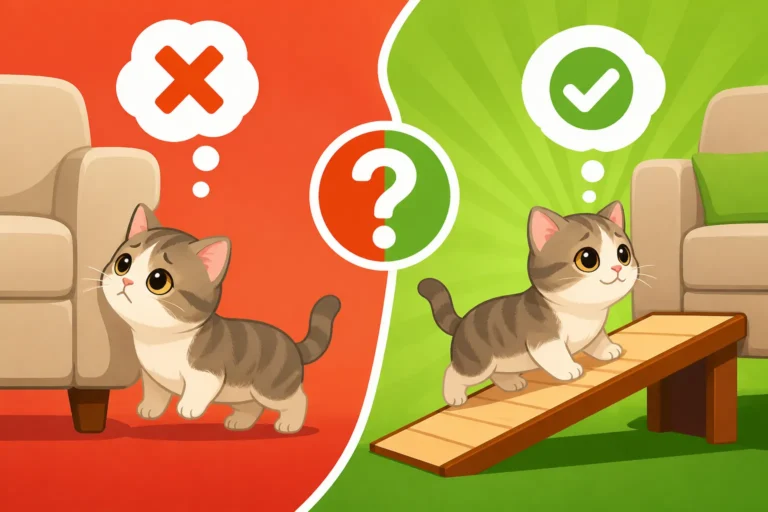
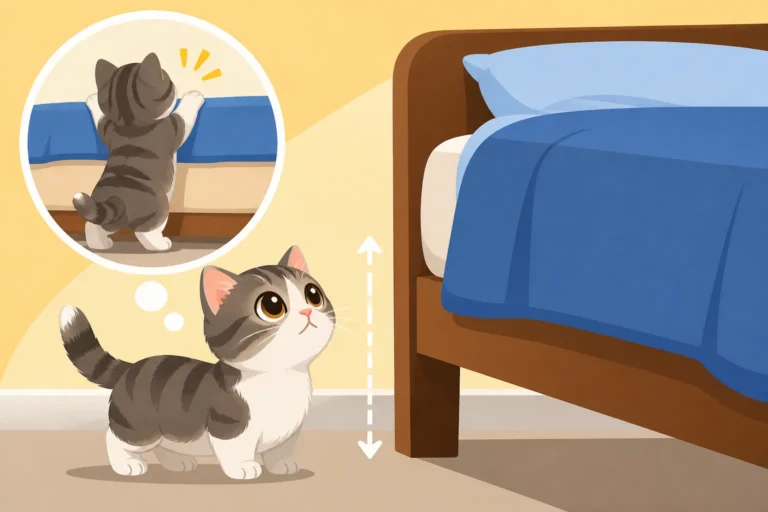
You'll likely notice them creating consistent travel patterns, favoring certain pieces of furniture as stepping stones to higher surfaces (like the sofa or your bed), and finding preferred hiding spots. Why a Munchkin's Route to Everything Should Be Mapped is a critical concept here. You might even find yourself subconsciously arranging furniture to make their journeys easier. If they repeatedly attempt to jump onto a surface that's just out of reach, consider adding a small step or ramp. This active establishment of their own navigable "map" is a key indicator that they are becoming more comfortable and confident in their new territory. They're not just existing in the space; they're actively owning it.
Reinforcing Positive Associations
As your Munchkin explores and settles, it's vital to reinforce positive associations with the new home. Every new area they visit should be a positive experience.
Use treats, praise, and gentle play to encourage them to explore further. If they venture into a new room, quietly follow with a favorite wand toy (many great options are available from brands like Amazon Basics for pets) or a few treats. Reward them for calm exploration, not for retreating. Spend time with them in different rooms, making yourself a comforting presence throughout the house. Regular, predictable playtimes, especially floor-level play, can also build confidence and help them see the new space as a fun, stimulating environment. Consistency in feeding times, litter box maintenance, and daily interactions provides a stable framework that helps reduce anxiety and builds trust in their new surroundings. Remember, positive reinforcement helps rewire their brain to see the new house as a good place. How Much Floor Level Play a Munchkin Needs can guide your play strategy.
Patience is Key for Full Integration
While some Munchkins might seem settled within a few weeks, others, especially those with more anxious personalities or previous traumatic experiences, can take several months to feel completely at home. It’s a marathon, not a sprint.
Don't get discouraged if your Munchkin still seems a bit wary after a month or two. Every cat's timeline is different. Continue to offer them safe spaces, respect their need for alone time, and maintain a consistent routine. Avoid making sudden, drastic changes to the furniture layout or introducing new pets or loud guests during this critical integration period. Full integration means they are not only comfortable but thriving: they're playing, exploring, engaging with you, and showing no signs of chronic stress. This complete sense of belonging can sometimes take up to six months or even a year for some individuals. Trust your cat’s pace, and they will get there.
Long-Term Adaptation and Ongoing Support
Even after your Munchkin is fully integrated, their unique needs mean that ongoing attention to their environment and well-being is crucial.
Maintaining Accessible Environments
Long-term care for a Munchkin in any home, but especially a new one, involves a conscious effort to maintain an accessible environment. Those ramps and steps you put in place? They're not temporary solutions; they're permanent fixtures of a Munchkin-friendly home.
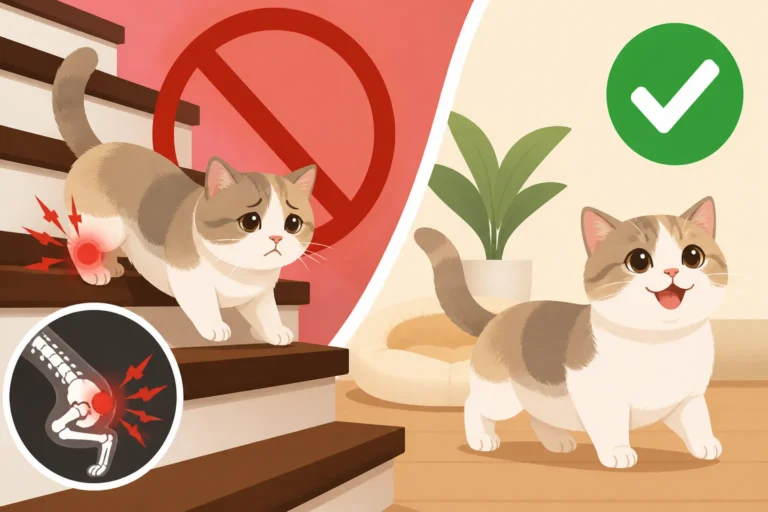
Regularly check that ramps are stable and steps haven't shifted. Ensure furniture they use for climbing is still accessible and hasn't been blocked. As they age, their mobility might change, and what was once an easy jump or climb might become more challenging. You might need to adjust ramp gradients or add more steps over time. Remember, a Munchkin that suddenly stops using a ramp or avoids certain furniture it once navigated easily could be signaling discomfort or pain, as discussed in Why a Munchkin That Stops Using Its Ramp Is Unwell. Keeping their environment consistently accessible ensures their comfort and reduces the physical strain on their unique anatomy, helping them to maintain their independence and quality of life for years to come.
Addressing Residual Anxieties or Changes
Even after months, some Munchkins might exhibit residual anxieties or develop new behavioral quirks. A sudden change in behavior – like new hiding spots, increased vocalization, changes in grooming, or litter box accidents – could indicate a re-emergence of stress or an underlying health issue.
If you notice your Munchkin becoming withdrawn, unusually clingy, or exhibiting destructive behaviors, it's important to investigate. Could there have been a new stressor, like a new pet, a loud renovation next door, or even a change in your schedule? Sometimes, even after a long time, subtle environmental changes can trigger anxiety. Revisit the "safe room" concept if necessary, offering a temporary sanctuary. Reinforce positive interactions and ensure all their basic needs are met in a predictable manner.
When to Seek Professional Guidance
While patience is paramount, there are times when professional help is warranted. If your Munchkin's adjustment issues persist despite your best efforts, or if they escalate into severe anxiety, aggression, or significant health-related symptoms, it's time to consult your veterinarian or a certified feline behaviorist.
Extreme hiding, refusal to eat or drink, persistent inappropriate urination or defecation, excessive self-grooming to the point of skin irritation, or aggression towards you or other household members are all red flags. A vet can rule out any underlying medical conditions that might be contributing to their stress or behavioral changes. If health issues are cleared, a feline behaviorist can offer tailored strategies and interventions to help your Munchkin feel more secure and comfortable in their new home. Early intervention can prevent minor issues from becoming entrenched problems, ensuring your Munchkin can truly thrive in their new environment.
The table below provides a general timeline for a Munchkin cat's adjustment to a new home layout, but remember that individual cats will vary.
| Phase | Typical Duration | Key Behaviors / What to Expect | Your Role |
|---|---|---|---|
| Initial Shock | First 24-72 hours | Hiding, exploring cautiously, eating/drinking less, increased vigilance. | Confine to a safe room with all essentials. Minimal interaction, gentle presence. |
| Cautious Exploration | 1-2 weeks | Gradually exploring safe room, starting to use litter box/food regularly. | Continue safe room sanctuary. Begin supervised access to adjacent rooms. Provide familiar items and scents. |
| Building Confidence | 2-4 weeks | More confident in safe room and initial explored areas. Increased play. | Expand access to more rooms. Reinforce positive exploration with treats/play. Ensure accessible routes are clear. |
| Establishing Territory | 1-3 months | Developing routines, finding favorite spots, mapping safe routes. | Maintain consistent routines. Continue positive reinforcement. Observe for any signs of lingering stress. Consider ramps. |
| Full Integration | 3-6+ months | Fully comfortable, relaxed, engaging in normal behaviors throughout the home. | Ongoing maintenance of accessible environment. Regular play and interaction. Address any new anxieties promptly. |
This article is for general informational purposes only and does not constitute professional advice. Laws, prices and regulations vary by location and change over time. Consult a qualified professional for guidance on your specific situation.