What Repeated Landing Does to a Munchkin’s Elbows
The everyday world is built for cats with long, athletic legs, and for our beloved Munchkins, navigating this world means adapting in ways that can put undue stress on their unique bodies. One of the most common concerns I hear from Munchkin parents is how their short-legged companions cope with everyday movements, particularly the constant impact on their joints. This guide will delve into the specific stresses that repeated landings place on a Munchkin's elbows, helping you understand the mechanics, recognize the signs of strain, and provide the best possible care for your furry friend.
The Unique Biomechanics of a Munchkin's Movement
It's easy to look at a Munchkin zipping across the floor or attempting a playful leap and think, "Wow, they're so agile!" And they truly are. Their determination and adaptability are incredible. But the truth is, their short stature fundamentally changes how their bodies interact with gravity and movement, especially when it comes to the impact of landing. This isn't just about looking different; it's about a completely different set of physical forces at play.
How Short Legs Impact Mobility
Unlike a standard-legged cat that can coil its powerful hindquarters and launch itself gracefully to significant heights, a Munchkin's jump is often more of a "bound" or a series of smaller, more frequent leaps. They might not reach the kitchen counter in one go, but they'll often scale furniture by using a series of intermediate platforms. This cascade of shorter jumps and landings means their joints are absorbing impact more regularly, albeit from lower heights. While it might seem like jumping from a lower height would be less impactful, the sheer frequency adds up. Think of it like a thousand tiny taps versus a few big thuds – both can cause wear and tear over time.
Because their legs are proportionally shorter, their center of gravity is lower, which can give them surprising stability and agility on the flat. This is why you might see a Munchkin cornering like a race car! However, when they do need to gain height, their limited leg length means they often have to use more force and less extension, leading to a harder, more direct impact upon landing. This difference in how they use their bodies, compared to a longer-legged cat, means that joints that are typically designed for one type of impact are consistently experiencing another.
The Role of Front Legs in Landing
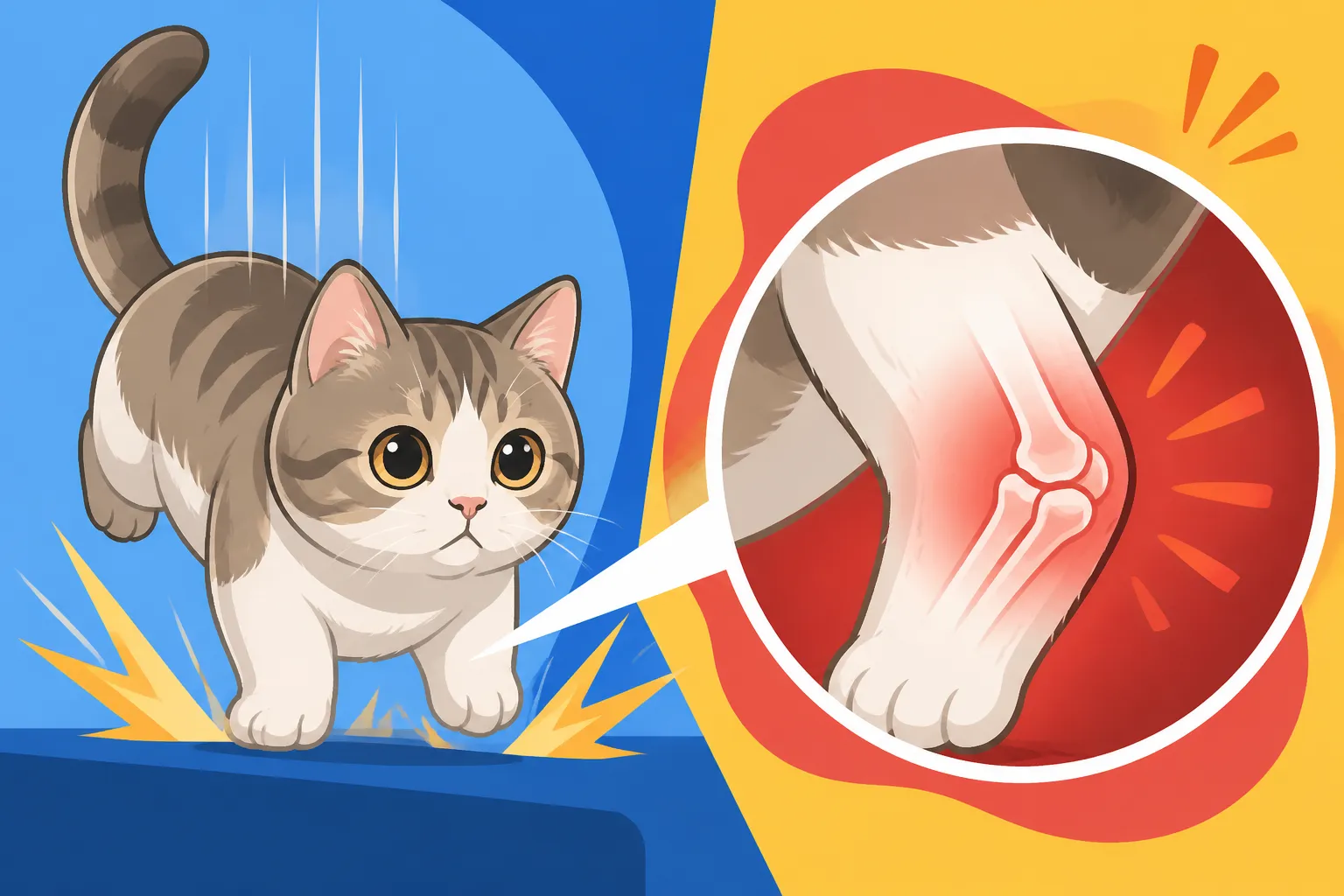
When any cat lands from a jump, the front legs act as shock absorbers. The shoulders, elbows, and wrists (carpi) all work in concert to cushion the fall, dissipating the energy through muscle and joint flexion. For a standard cat, this is a highly efficient system, allowing them to land softly and spring away.
For a Munchkin, however, the front legs bear a disproportionately heavier load during landing. Because their hind legs don't provide the same powerful launch or extended reach for a balanced landing, the front legs often take the brunt of the impact. Imagine trying to jump down from a sofa when your legs are half the normal length – you’d naturally lean forward more, putting extra strain on your arms and shoulders as you brace for impact. This is precisely what happens with Munchkins. Their front legs, and specifically their elbows, are constantly being asked to perform at a higher compensatory capacity. This isn't just a casual landing now and then; it's an inherent part of how they move through their adapted world, making those elbows a critical point of concern for their long-term comfort and health. It’s no wonder many owners ask, "Whether a Munchkin is in pain from its legs," as this consistent strain can definitely lead to discomfort over time.
The Specific Strain on Munchkin Elbows
It's not just the act of landing, but the way a Munchkin lands that truly matters for their elbows. These aren't super-strong, reinforced joints; they're cat elbows, built for a cat's typical range of motion and impact absorption. When faced with repeated, specific stresses, they can start to show signs of wear earlier than we might expect in a regular-legged feline.
The Mechanics of Elbow Impact Absorption
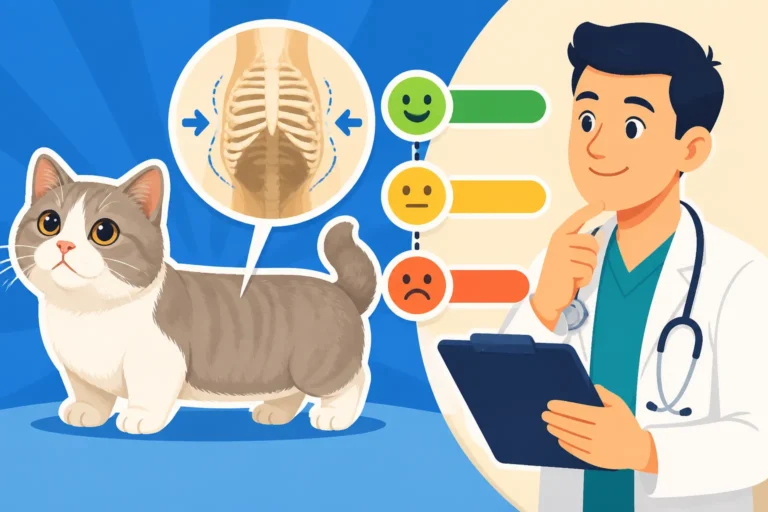
The elbow joint in a cat, like in humans, is a hinge joint, primarily allowing for flexion and extension. It's made up of three bones: the humerus (upper arm), radius, and ulna (forearm bones). These bones are capped with smooth cartilage, which allows them to glide past each other without friction, and the whole joint is encased in a capsule lined with synovial fluid, providing lubrication and nutrition. When a cat lands, the muscles around the joint contract to absorb some of the shock, and the joint itself flexes, compressing the cartilage. This system is brilliantly designed for bursts of activity and occasional jumps.
However, a Munchkin's shorter, often slightly bowed forelegs, coupled with their landing style, means that the forces traveling up their limbs are distributed differently. Instead of a long lever arm and a wide stance absorbing impact, their compact structure often results in a more direct, concentrated force on the elbow joint. Imagine continually banging a hammer directly on a hinge, rather than using a proper wrench to apply even pressure. Over time, this repeated compression and microtrauma can lead to inflammation within the joint capsule, known as synovitis, and can begin to degrade the smooth cartilage surface. This is why owners should always be observing their cat's gait and activity levels, particularly if they notice that "At What Age a Munchkin Starts to Stiffen."
Long-Term Consequences: Osteoarthritis and Degeneration
The persistent stress and inflammation, left unchecked, will almost inevitably lead to degenerative joint disease, most commonly osteoarthritis. Osteoarthritis is a progressive condition where the cartilage within the joint begins to break down, leading to bone-on-bone friction. This causes pain, stiffness, and a reduced range of motion. For a Munchkin, whose elbows are already working harder, this process can unfortunately begin earlier in life than in many other breeds.
As the cartilage erodes, the body tries to compensate by producing new bone, often in the form of osteophytes (bone spurs) around the joint margins. While the body intends these to stabilize the joint, they actually make it less flexible and more painful. This chronic pain can lead to a vicious cycle: the cat avoids using the limb fully, muscles weaken, and the joint becomes even stiffer. It’s a harsh reality that Munchkin parents need to be aware of, especially concerning potential issues like "Whether a Munchkin Gets Arthritis Earlier," which is a very real possibility due to their unique conformation. Pet owners frequently seek guidance on "Which Joint Supplements Suit a Munchkin" to try and slow down this progression and support joint health.
Recognizing and Managing Elbow Issues in Munchkins
The good news is that with attentive care and a proactive approach, you can significantly help your Munchkin manage and potentially delay the onset of severe elbow issues. Being observant and working closely with your veterinarian are your best tools in this journey.
Signs to Watch For
Catching early signs of discomfort is paramount. Our cats are masters at hiding pain, so you need to be a super-sleuth. Here are some key indicators that your Munchkin might be experiencing elbow discomfort or developing arthritis:
- Reluctance to Jump or Play: If your usually playful Munchkin starts to hesitate before jumping onto a low sofa or seems less enthusiastic about chasing toys, it could be a sign. They might look at a spot they used to reach easily and then walk away. You might notice they are "Whether a Munchkin Should Be Discouraged From Jumping" if they start showing these signs.
- Stiffness, Especially After Rest: Observe them when they first wake up. Do they seem stiff, taking a few awkward steps before loosening up? This "warm-up" period is a classic sign of arthritis.
- Limping or Favoring a Limb: This can range from a subtle, intermittent limp to a more pronounced hobble. It might be more noticeable after a period of activity.
- Changes in Gait: Their ferret-like scamper might become more cautious, or they might shift their weight more noticeably onto their hindquarters to take pressure off their front.
- Reduced Grooming: Cats are meticulous groomers. If they can't comfortably bend or reach certain areas, particularly around their chest or shoulders, mats might start to form, or their coat might look unkempt.
- Pain Response: They might vocalize (a soft meow, growl, or hiss) when touched around the elbow area, or pull away sharply.
- Behavioral Changes: Increased irritability, withdrawal, or seeking out solitude can also be indicators of chronic pain.
If you observe any of these signs, it's not a time for "wait and see." A prompt vet visit is always the best course of action.
Proactive Care and Environmental Adaptations
Prevention and early intervention are truly your best allies. Adapting your home environment is crucial for a Munchkin, as it directly reduces the strain on their joints.
- Ramps and Steps: This is non-negotiable for a Munchkin home. Provide ramps or low steps to all elevated surfaces they regularly access, such as sofas, beds, and even window sills if they enjoy looking outside. Ensure these ramps have a non-slip surface and a gentle incline. For more ideas, consider reading about "How to Teach a Munchkin to Use a Ramp."
- Weight Management: Every extra gram carried by a Munchkin puts disproportionate stress on their short legs and spine. Maintaining a lean body condition is one of the single most impactful things you can do for their joint health. Consult your vet for an ideal weight range and feeding plan. Overweight Munchkins are definitely "Why an Overweight Munchkin Is in Real Trouble."
- Raised Food and Water Bowls: These help your Munchkin avoid stooping too much, which can alleviate strain on their neck and shoulders, and indirectly, their front legs.
- Soft Landings: Consider placing soft rugs or pet beds under common jumping-off points to provide a gentler landing surface.
- Joint Supplements: Many veterinarians recommend joint supplements containing ingredients like glucosamine, chondroitin, and omega-3 fatty acids. These can help support cartilage health and reduce inflammation. Always discuss with your vet before starting any supplements.
- Regular Vet Check-ups: Consistent veterinary care is essential. Your vet can monitor your Munchkin's gait, palpate their joints for swelling or pain, and recommend imaging if necessary. Having pet insurance, like a plan from Healthy Paws, can certainly ease the financial burden of these crucial diagnostic and preventative care visits. Healthy Paws offers comprehensive coverage that can be a lifesaver when joint issues arise.
Veterinary Intervention and Treatment Options
If your Munchkin is diagnosed with elbow arthritis or severe joint pain, your veterinarian will discuss a tailored treatment plan.
- Diagnostics: X-rays are usually the first step to visualize the joint and assess the extent of cartilage damage and bone spur formation. In some cases, more advanced imaging like MRI or CT scans might be recommended.
- Pain Management: This is often a cornerstone of treatment. Non-steroidal anti-inflammatory drugs (NSAIDs) prescribed by your vet can significantly reduce pain and inflammation. Other pain medications, nerve pain medications, or even injectable treatments may be used depending on the severity. Remember, never give human pain medications to your cat.
- Physical Therapy and Rehabilitation: This can be incredibly beneficial. Techniques like therapeutic exercises, massage, cold laser therapy, and even hydrotherapy can improve joint mobility, strengthen surrounding muscles, and reduce pain. Your vet might refer you to a veterinary rehabilitation specialist.
- Environmental Adjustments (Reinforced): Your vet will reiterate the importance of home adaptations, ensuring your cat can navigate their world with minimal strain.
- Dietary Management: Specific prescription diets formulated for joint health, often enriched with omega-3s and other joint-supporting nutrients, can be recommended.
- Weight Control: Continued, strict weight management will be emphasized as a critical component of treatment.
It’s important to remember that while arthritis is a chronic condition, it can be managed effectively to ensure a good quality of life for your Munchkin. Early detection and consistent care, perhaps supported by a robust pet insurance plan like those from Healthy Paws, are vital for keeping your special companion comfortable and active for as long as possible. Many owners find peace of mind knowing that their pet's health is protected by a reliable plan from Healthy Paws.
| Action Item | Benefit for Munchkin Elbows | Notes |
|---|---|---|
| Install Ramps/Steps | Reduces jumping impact on elbows and shoulders | Ensure gentle slope, non-slip surface. |
| Maintain Healthy Weight | Minimizes overall load and stress on all joints | Critical for spinal and joint health, including elbows. |
| Provide Raised Bowls | Lessens strain on neck, shoulders, and front limbs | Prevents excessive stooping during eating/drinking. |
| Use Joint Supplements | Supports cartilage health, reduces inflammation | Consult vet for appropriate type and dosage. |
| Regular Vet Check-ups | Early detection of discomfort, tailored care plan | Important for monitoring progression and adjusting treatment. Consider pet insurance from Healthy Paws. |
| Soft Landing Surfaces | Cushions impact from accidental or intentional jumps | Place rugs or mats under common jump-off points. |
| Controlled Exercise | Maintains muscle strength around joints without overexertion | Focus on floor-level play, avoid high jumps. |
Disclaimer
This article is intended for informational purposes only and is not a substitute for professional veterinary advice. Always consult with a qualified veterinarian for any health concerns or before making any decisions about your pet's care.