Which Puzzle Feeders a Munchkin Can Reach Into
One of the biggest frustrations Munchkin cat owners face is finding enrichment toys and tools that genuinely work for their short-legged companions. Many standard cat puzzle feeders are designed with a typical cat's reach and height in mind, leaving our adorable, low-slung friends unable to access the tasty rewards inside. This guide is all about helping you navigate the world of puzzle feeders, identifying which designs are truly accessible and enjoyable for your Munchkin, and ensuring they get the mental stimulation and slow feeding benefits they need without unnecessary strain or disappointment.
Understanding the Munchkin's Unique Physical Needs for Feeders
It’s easy to look at a standard cat puzzle feeder in a pet store and assume it’ll work for any cat. But for a Munchkin, their distinct physiology means many common designs are simply not fit for purpose. Their charmingly short legs, low center of gravity, and often elongated back mean they interact with their environment in a fundamentally different way than a long-legged cat. What might be an engaging challenge for one cat can become an inaccessible barrier for a Munchkin, leading to frustration rather than enrichment.
The Challenge of Standard Puzzle Feeders
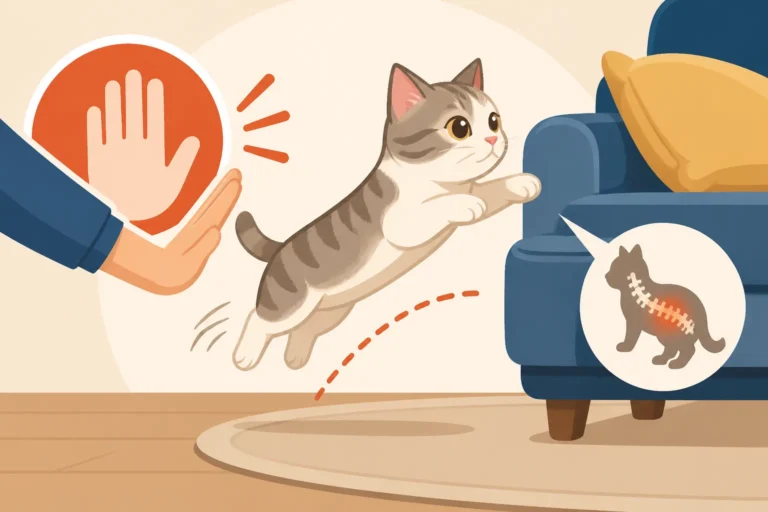
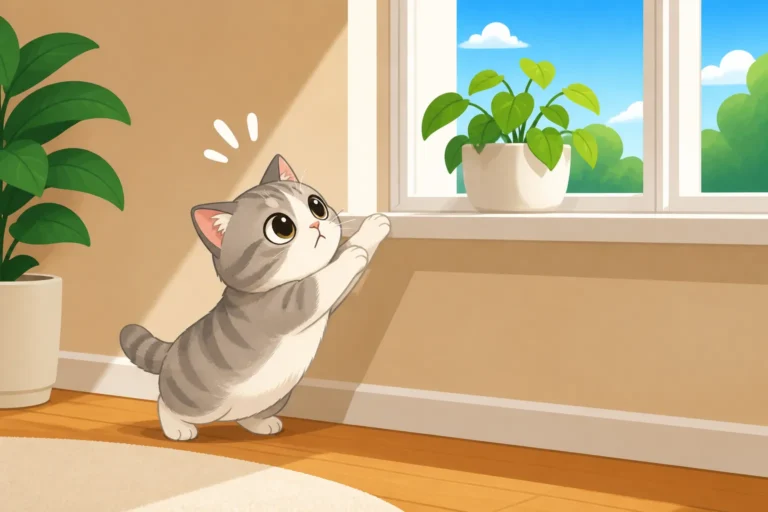
Imagine a puzzle feeder that requires a cat to reach into a tall, narrow cylinder, or one that has deep pockets they need to scoop food out of. For a typical cat, this is a fun game of dexterity and problem-solving. But for a Munchkin, it’s a non-starter. Their front legs are simply too short to reach the bottom of many designs, and trying to stretch or stand on their hind legs can put undue stress on their spine and shoulders. They might attempt it a few times, get discouraged, and then abandon the feeder entirely, leaving you with a wasted investment and a cat that missed out on the enrichment.
Furthermore, many feeders are designed to be knocked around or tilted. While a long-legged cat can easily stabilize themselves or adjust their posture, a Munchkin's lower stance means they might struggle to maintain balance when pushing or manipulating a taller, less stable feeder. This isn't just about frustration; it can also be a safety concern if a feeder tips over unexpectedly or causes them to overextend. We want to promote healthy play, not physical strain.
What "Floor Level" Really Means for a Munchkin
When we talk about "floor level" for a Munchkin, we're really talking about something that truly sits on the floor, or is only raised by a minimal amount. This isn't just about their food bowl, which we know Why a Munchkin's Food and Water Belong at Floor Level, but also applies to any interactive enrichment. Any feeder that requires them to significantly lift their head, stretch their neck, or stand on tiptoes to access food is likely to be uncomfortable or even impossible to use. Think about puzzle feeders that have a small lip or a low tray design. These are often perfect.
A good rule of thumb is to look for feeders that your Munchkin can access comfortably while sitting or lying down, or with only a slight forward stretch. If they have to crane their neck or stand on their hind legs (doing their adorable "prairie dog" sit, which they love to do for observation, not typically for eating from a feeder), it's probably too high. The goal is to make the puzzle engaging, not physically demanding in a way that risks their long-term joint health. Remember, Why an Overweight Munchkin Is in Real Trouble especially when considering the stress on their unique physique.
Stability and Access: More Than Just Height
Beyond the actual height, a puzzle feeder's stability and the width of its access points are crucial for a Munchkin. A feeder that's too light or prone to sliding might frustrate them as they try to engage with it, sending treats scattering or the feeder itself skidding across the floor. Our short-legged friends need a solid base to push against without the item shifting constantly. Look for feeders with non-slip bases or enough weight to stay put during play.
Similarly, consider the size of the openings and the dexterity required. Some puzzle feeders have very small holes or intricate mazes that require a cat to use their paw in a very precise way. While Munchkins are surprisingly agile and clever, overly complex or tiny openings might prove too fiddly, especially if they can't get a good angle of approach due to their short stature. Wide, shallow channels, larger openings, or designs that allow for nudging with their nose or mouth are often far more successful. It's about making the challenge accessible, not impossible.
Types of Puzzle Feeders That Work Well for Munchkins
Now that we understand the unique constraints, let's explore the kinds of puzzle feeders that genuinely shine for our Munchkin pals. The key is to think horizontally and broadly, rather than vertically. We want designs that keep the action close to the ground, require minimal stretching, and allow for easy, comfortable access. This isn't about dumbing down the challenge, but adapting it to their physical capabilities.
Flat or Low-Profile Puzzle Mats and Trays
These are often your best bet for a Munchkin, and honestly, many cats just adore them. Think 'snuffle mats' for cats, but specifically designed for treats or kibble. These feeders typically consist of a flat base with various textures, shallow indentations, or small, maze-like channels that require your cat to nose around, paw, or lick to extract the food.
- Licking Mats: While not traditional puzzle feeders in the sense of 'solving,' licking mats offer wonderful mental stimulation and can be used with wet food, pureed treats, or even a dollop of plain yogurt. They are perfectly flat, allowing your Munchkin to enjoy them comfortably without any strain. You can find excellent options on Amazon.
- Slow Feeder Trays: These are generally flat trays with various shallow ridges, bumps, or swirl patterns. The food sits on the surface, distributed amongst the obstacles, rather than in them. This forces your Munchkin to eat more slowly and engage their senses to get every morsel. They can easily reach into all areas, making them ideal.
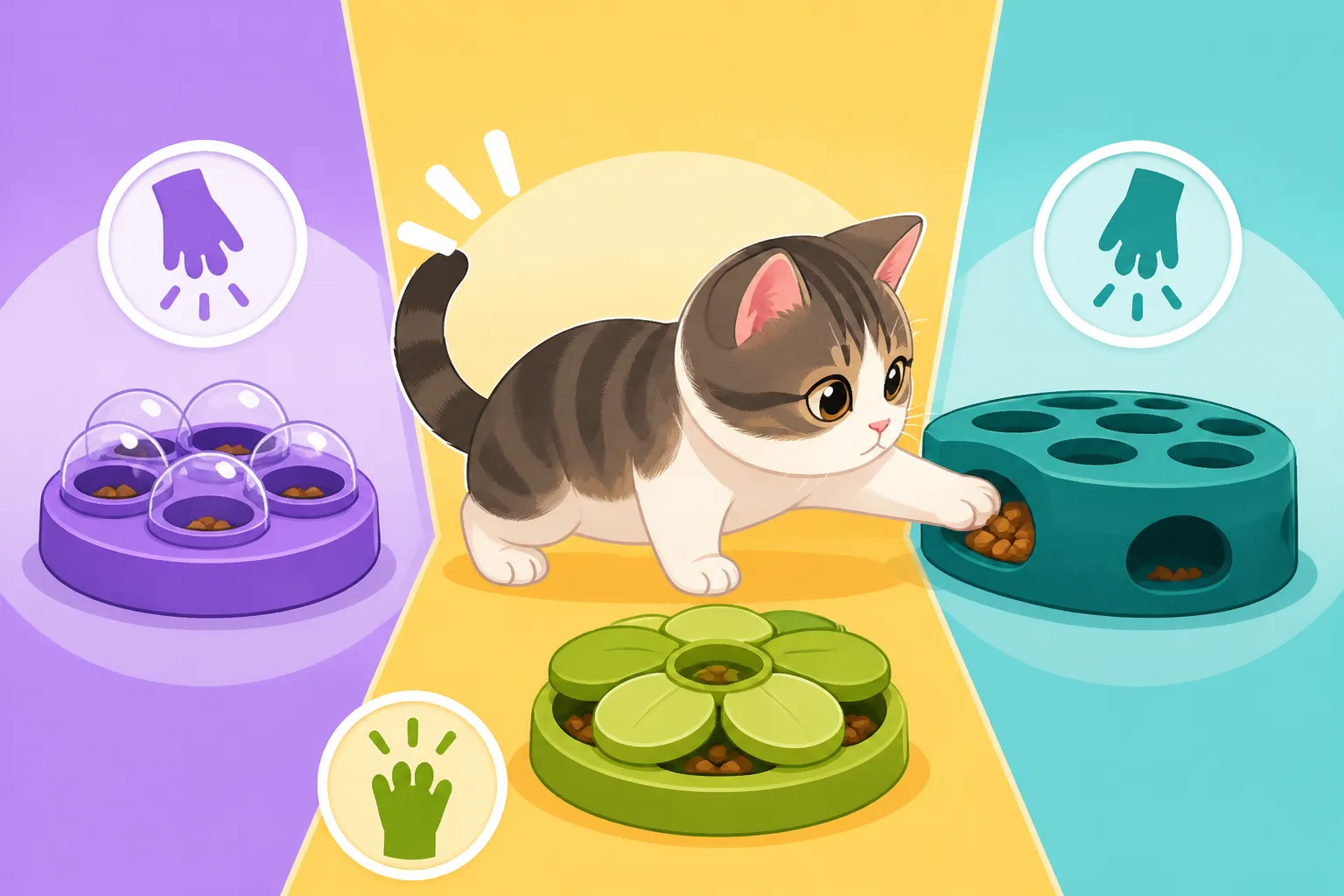
- Activity Boards/Mats: Some brands offer modular or fixed boards with various shallow games – think small cups to lift, sliders to push, or shallow tunnels to explore. The beauty here is that everything happens on a horizontal plane, perfectly suited for a Munchkin's approach. These are fantastic for mental enrichment and can keep them occupied for a good while.
Interactive Ball or Wobble Feeders
While some taller wobble feeders might be too much of a challenge, there are many smaller, squatter versions that are excellent for Munchkins. The key here is the center of gravity and the height.
- Low Wobble Balls/Towers: Look for feeders that are wide at the base and relatively short. When your Munchkin nudges it, it wobbles, releasing treats. Because they are low to the ground, your cat can easily bat at them with their paws or nose without having to stand up or reach awkwardly. The movement is usually enough to engage them.
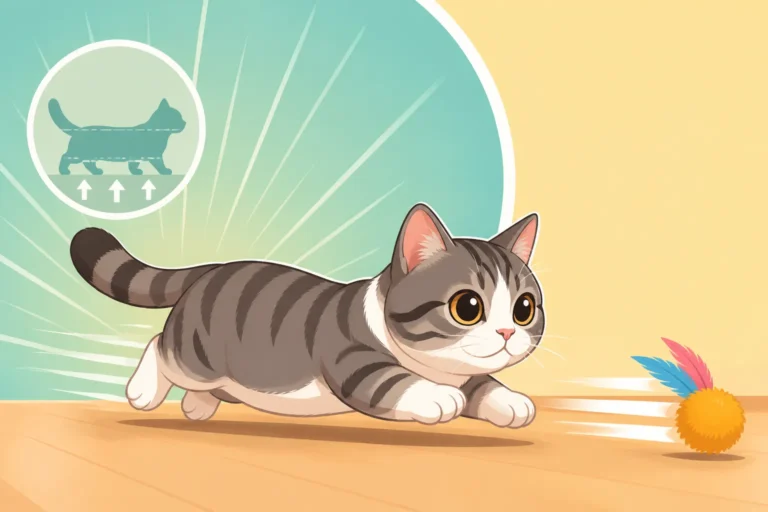
- Rolling Treat Balls: These are simple hollow balls with adjustable holes that dispense kibble as your cat rolls them around the floor. Since your Munchkin is already spending a lot of time on the floor, these are a natural fit for their play style. How Much Floor Level Play a Munchkin Needs is significant, and these types of feeders integrate seamlessly into that. They can bat them around, chase them, and get rewarded as they go. Just make sure the openings aren't so small that the food gets stuck, frustrating your cat.
Slow Feeder Bowls with Shallow Obstacles
While a regular slow feeder bowl might seem obvious, it's important to differentiate. Many slow feeder bowls have tall, intricate designs meant for dogs or much larger cats. For a Munchkin, you want those with shallow, smooth, and widely spaced obstacles.
- Gentle Ridge Designs: Seek out bowls where the "obstacles" are more like gentle, sweeping ridges or rounded bumps, rather than sharp, tall columns. The food should sit largely exposed on the surface, just slightly partitioned, forcing them to eat around the shapes rather than dig deep.
- Wide, Open Spaces: Ensure there’s plenty of open space between the obstacles for your Munchkin to comfortably maneuver their mouth. If the spaces are too tight or deep, they might struggle to get their tongue or whiskers in, leading to frustration and potential food waste. Remember, their little bellies are close to the ground, so they don't want to be straining too much. Why a Munchkin's Belly Nearly Touches the Floor highlights how their entire posture is low-slung.
DIY and Modified Options
Sometimes the best solution is one you create yourself! Don't underestimate your ingenuity.
- Muffin Tins or Ice Cube Trays: These are fantastic, simple, and cheap DIY puzzle feeders. Just scatter a few pieces of kibble or treats into each compartment. Your Munchkin will have to move from section to section, nudging and eating each piece individually, slowing down their meal and providing a little "hunt" without any height challenges.
- Toilet Paper Roll Mazes: Glue several empty toilet paper or paper towel rolls together in a flat, horizontal arrangement, standing upright, within a shallow box lid. Drop treats into some of the tubes. Your Munchkin will enjoy pawing the treats out. This keeps the activity entirely at floor level and can be customized to their dexterity.
- Plastic Bottle Feeders (Modified): For the truly crafty, you can take a small, sturdy plastic bottle (like a clean soda bottle), cut large holes in it, and lay it on its side, secured so it can roll but not escape. Fill it with kibble. When your Munchkin bats at it, treats fall out. This is a bit more advanced but offers a lot of floor-level engagement. Just ensure all cut edges are smooth and safe.
Choosing the Right Puzzle Feeder for Your Munchkin
Selecting the perfect puzzle feeder isn't just about what's available; it's about understanding your individual Munchkin and what they'll enjoy and benefit from the most. Every cat has a unique personality, and while one might love batting a rolling ball, another might prefer the deliberate action of a flat maze.
Assessing Your Munchkin's Play Style and Dexterity
Before you hit the pet store or browse Amazon, take a moment to observe your Munchkin's existing play habits. Do they love to bat at toys with their paws? Are they more inclined to use their nose to nudge things? Do they enjoy exploring nooks and crannies?
- Paw-Focused Cats: If your Munchkin is a champion paw-swatter, they'll likely enjoy feeders that require batting, pushing, or flicking, like rolling treat balls or some of the interactive wobble designs. Look for textures they can easily grip with their claws.
- Nose/Mouth-Focused Cats: For cats that prefer to nudge or lick, flat licking mats, snuffle-style mats, or slow feeder trays with gentle ridges will be a hit. These leverage their natural foraging behaviors without requiring complex paw dexterity.
- Problem Solvers: If your Munchkin seems to enjoy more complex tasks, you might start with a simple flat maze and gradually introduce more intricate activity boards that have sliders or covers they need to move. Start simple and work your way up to avoid immediate frustration. Which Toys Work at a Munchkin's Height is a related read that might offer further insights into their play tendencies.
Material and Cleaning Considerations
Puzzle feeders are, by nature, going to get slobbery and covered in food, so ease of cleaning is a non-negotiable feature. No one wants to spend more time scrubbing a feeder than their cat spends using it!
- Dishwasher Safe: The absolute gold standard is a feeder that can go straight into the dishwasher. Many plastic or ceramic slow feeder bowls and licking mats offer this convenience.
- Easy to Hand Wash: If it's not dishwasher safe, make sure it has smooth surfaces and minimal crevices that food can get stuck in. Intricate designs, while sometimes engaging, can be a nightmare to clean thoroughly by hand. Silicone licking mats are often very easy to rinse and dry.
- Durable Materials: Choose materials that can withstand chewing (if your cat is prone to it) and repeated washing. Food-grade plastic, silicone, and ceramic are common and generally safe choices. Avoid flimsy materials that might break or shed small pieces.
- Non-Slip Base: This relates to stability, but also indirectly to cleanliness. A feeder that slides all over the floor will drag food particles with it, creating a bigger mess. A good non-slip base keeps the feeder (and the mess) contained.
Gradual Introduction and Supervised Play
Introducing a puzzle feeder should be a positive experience, not a source of stress. Start simple, keep it exciting, and always supervise the first few sessions.
- Start Easy: Don't overload the feeder with kibble or make the puzzle too hard initially. Place a few highly enticing treats or pieces of their favorite kibble very visibly and easily accessible in the feeder. The goal is for them to "win" quickly and understand the concept.
- Use High-Value Treats: For the first few introductions, use treats your Munchkin absolutely loves. This creates a strong positive association with the feeder.
- Supervise: Watch your Munchkin closely during their first few interactions. Are they getting frustrated? Are they struggling physically? If so, you might need to simplify the feeder or try a different type. Your supervision also ensures they're not trying to eat the feeder itself or getting stuck.
- Positive Reinforcement: Offer verbal praise and gentle pets when they successfully extract a treat. Make it a fun, rewarding activity.
- Integrate into Routine: Once they're comfortable, you can start incorporating the puzzle feeder into their regular meal times to slow down eating or provide enrichment during the day. This can be a great way to manage their calorie intake, especially since Why a Munchkin Burns Less Than a Normal Legged Cat due to their reduced mobility compared to long-legged cats.
Reading Reviews and Seeking Recommendations
You're not alone in this! Many Munchkin owners have already navigated the world of puzzle feeders. Leverage their experience:
- Look for Cat-Specific Reviews: When shopping online, specifically look for reviews from other cat owners, and if possible, those with short-legged breeds. They often highlight issues related to accessibility.
- Check Photos/Videos: User-submitted photos or videos can be incredibly helpful. You can often see the scale of the feeder in relation to a cat and get a better sense of its design.
- Join Online Communities: Facebook groups or forums dedicated to Munchkin cats are fantastic resources. Ask other owners what feeders their cats love and why. You’ll get real-world, honest feedback.
- Ask Your Vet: While your vet might not recommend specific brands, they can offer insights into what kind of physical movements are safe and healthy for your Munchkin, guiding your choices. Especially if your Munchkin has any spinal concerns, asking When a Munchkin Should Have Its Spine Imaged or checking Why a Munchkin's Spine Carries a Load a Normal Cat's Does Not can give you an idea of what to avoid.
Here's a quick comparison of popular puzzle feeder types for Munchkins:
| Feeder Type | Munchkin Suitability | Pros | Cons | Best For |
|---|---|---|---|---|
| Flat Licking Mat | Excellent | Zero height, calming, versatile for wet/dry food | Not a "puzzle" in the traditional sense, can be messy | Lick-focused cats, anxiety reduction, wet food meals |
| Low-Profile Slow Feeder Tray | Excellent | Low height, easy access, promotes slow eating | Can be quickly "solved" by very motivated eaters | All Munchkins, especially fast eaters, kibble or wet food |
| Rolling Treat Ball | Good | Floor-level, encourages active play | Can roll under furniture, some cats may lose interest | Paw-focused, playful Munchkins, kibble treats |
| Wobble Feeder (Short/Wide) | Good | Interactive, engaging, stable | Taller models can be difficult, may need heavier treats | Playful Munchkins who enjoy batting and nudging |
| DIY Muffin Tin/Ice Tray | Excellent | Cheap, customizable, easy to clean | Limited challenge, very basic, not visually stimulating | Any Munchkin, budget-conscious owners, first-time users |
| Cat Activity Board (Flat) | Very Good | Offers varied challenges, mental stimulation | Can be pricey, some sections might be ignored | Curious, problem-solving Munchkins, long-lasting engagement |
By thoughtfully selecting a puzzle feeder that respects your Munchkin's unique physical makeup, you can provide hours of engaging, beneficial enrichment, contributing positively to their overall well-being and happiness.
Disclaimer
This article is for general informational purposes only and does not constitute professional advice. Laws, prices and regulations vary by location and change over time. Consult a qualified professional for guidance on your specific situation.