How Far Apart to Space a Munchkin’s Steps
It can be incredibly frustrating to watch your adorable short-legged Munchkin struggle to get to their favorite napping spot on the sofa or that coveted sunny windowsill. While their unique stature is charming, it also means traditional cat accessories and furniture layouts just don't work for them, leaving them literally grounded. This guide will walk you through the essential considerations for correctly spacing steps and ramps in your home, ensuring your Munchkin can navigate their world safely and comfortably without unnecessary strain.
Understanding the Unique Needs of Your Munchkin
Before we dive into the nitty-gritty of step spacing, it's really important to grasp why Munchkins need such specific arrangements. They aren't just short; their entire skeletal structure, while often healthy, is built differently from a long-legged cat. This isn't about coddling; it's about prevention and ensuring a happy, mobile life.
Their Unique Gait and Movement Style
You've probably noticed your Munchkin's distinctive walk, often described as a "ferret-like" scamper or a charming waddle. This gait, while efficient for horizontal movement and turning corners quickly, isn't designed for vertical leaps. A regular cat uses its powerful hind legs to launch itself upwards, extending its spine and legs to clear significant heights. A Munchkin, however, relies more on momentum and a series of smaller, more controlled "bounces" to gain elevation. They really can't spring upwards with the same force or reach. This means that a step that's perfectly manageable for a long-legged cat can feel like scaling Mount Everest for a Munchkin. Why a Munchkin's Legs Are Short but Its Body Is Not is crucial to understand here. They have a normal length body, just short legs, which changes their leverage.
Think about it this way: for a long-legged cat, a 12-inch step might be a simple hop. For a Munchkin, that same step is a true jump, often requiring them to push off with their short front legs and land with a heavier impact on their shoulders and spine. Over time, repeated high-impact jumps can contribute to joint wear and discomfort. We want to minimize that impact as much as possible, making every ascent and descent as smooth as a ramp, even if it's a series of steps.
Limited Jumping Capability
Let's be realistic: your Munchkin can jump. They're not completely stuck on the floor! But their jumping capability is significantly limited compared to other felines. While a domestic shorthair might effortlessly clear a kitchen counter, your Munchkin will likely only manage a few inches off the ground, perhaps enough to get onto a low footstool or the first tier of a specially designed cat tree. Trying to force them to repeatedly attempt jumps beyond their natural physical limits isn't just frustrating for them; it’s genuinely detrimental to their long-term health. How High a Munchkin Can Actually Jump is a question many new owners ask, and the answer is "not very."
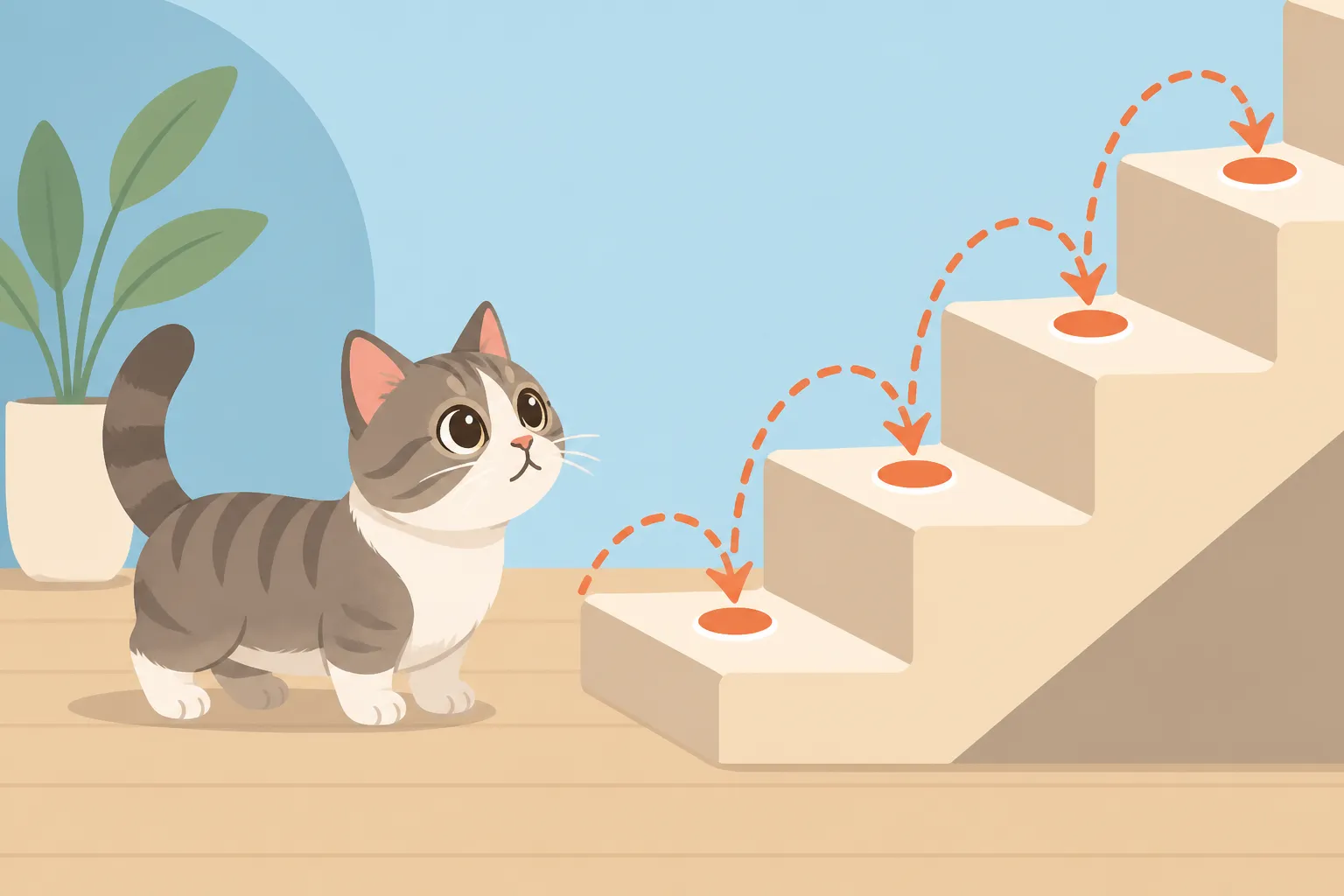
The problem isn't just getting up but also getting down. Jumping down from a height, even one a Munchkin managed to climb, places considerable stress on their front legs, shoulders, and spine. Their short legs offer less shock absorption, and the impact can be quite jarring. This is where properly spaced steps truly become their heroes. They provide a controlled, gradual incline that allows your cat to ascend and descend without straining their body. You want to create a staircase, not a series of hurdles.
Spinal Health Considerations
The Munchkin's distinctive short legs are due to a genetic mutation that affects bone growth. While their spine itself is generally of normal length, the way their short legs interact with their body can place different stresses on it. Conditions like lordosis, a severe inward curvature of the spine, are sometimes associated with the breed, and while not all Munchkins suffer from it, minimizing spinal stress is always a good idea. Why a Munchkin's Spine Carries a Load a Normal Cat's Does Not explains this in more detail.
When a Munchkin jumps, especially if they have to twist or contort their body to gain purchase or land, it can put uneven pressure on their vertebrae. Properly spaced steps reduce the need for these awkward maneuvers. They allow the cat to maintain a more natural, level posture as they move upwards, distributing their weight evenly and protecting their delicate spine. Think of steps as an ergonomic solution for your cat's movement, much like a good office chair is for your back.
Key Factors for Optimal Step Spacing
There's no universal "right answer" for step spacing because every Munchkin is an individual, and every piece of furniture or access point is different. However, we can apply some core principles to get it right.
Munchkin Leg Length Variance
Not all Munchkins have the same leg length. You'll hear terms like "standard," "super short," or "rug hugger" Munchkins, reflecting the spectrum of their leg shortness. A "rug hugger" with incredibly short legs will need much closer step spacing than a "standard" Munchkin whose legs might be a bit longer. This is why getting to know your own cat's capabilities is paramount.
- Observation is Key: Watch your cat. How high do they comfortably step without jumping? How far can they stretch their front legs to reach for a higher surface? This isn't about how high they can jump when motivated by a treat, but what they can do with ease and grace.
- Measurement Matters: Take a rough measurement of your Munchkin's leg length (from paw to armpit, essentially). This will give you a baseline for how much vertical height they can comfortably manage in a single step. Generally, a good rule of thumb is that each step should be no higher than your Munchkin's standing shoulder height. For many Munchkins, this means steps will be between 4 to 6 inches tall, but some might need as little as 3 inches.
Body Proportions and Reach
While their legs are short, their body is typically a normal feline length. This means they have a decent reach forward when standing, but their vertical reach is limited. When planning steps, consider both the vertical rise and the horizontal distance between steps. They need enough horizontal space to place their paws firmly on the next step without feeling cramped or having to stretch awkwardly.
Imagine your Munchkin taking a step. They'll likely lift a front paw, place it on the next step, and then bring their hind legs up. If the step is too far horizontally, they might have to stretch precariously, potentially losing balance or straining their shoulders. If it's too close, they might trip or not have enough room to get a stable footing. A good starting point for horizontal depth is at least the length of your cat's body from shoulder to tail base, allowing them to fully plant all four paws if needed, though usually, they'll just need enough for their front two paws to get secure purchase before bringing the back ones up.
Surface Material and Grip
The material of your steps is just as important as the spacing. A slick, hard surface like polished wood or plastic can be a major hazard. Munchkins, with their lower center of gravity, might struggle more with traction, especially when pushing off or landing. You don't want them slipping and potentially injuring themselves.
- Carpeted or Textured Surfaces: Opt for steps that are carpeted, have a non-slip rubber surface, or are made of a textured material that provides good grip. Many pet steps found on Amazon or at pet stores come with carpeted treads, which are ideal. If you're building your own steps, consider adding carpet remnants, sisal, or self-adhesive non-slip strips to each tread.
- Stability: Ensure the steps are stable and don't wobble. A wobbly step will instantly lose your cat's trust and they'll avoid it. If you're building steps, make them sturdy. If you're buying, check reviews for stability.
Cat's Age and Health
A young, spry Munchkin kitten might be able to handle slightly larger steps or a steeper incline than an older cat. As Munchkins age, just like any cat, they can start to develop arthritis, particularly in their shoulders and elbows, which take a lot of impact. How Arthritis Shows in a Munchkin's Front Legs is something to be aware of. What was once easy might become painful.
- Adapt as They Age: Be prepared to adjust your steps as your cat gets older. You might need to add more steps to reduce the rise of each one, or switch to a ramp altogether if steps become too difficult. Signs of hesitation, difficulty, or vocalizing during ascent/descent are huge red flags that changes are needed.
- Consider Health Issues: If your Munchkin has a known condition like mild lordosis or early signs of arthritis, you'll want to be even more conservative with step height and ensure the spacing is absolutely perfect to minimize any potential strain. When a Munchkin Counts as Senior is a good time to reassess all their access points.
Recommended Spacing and Setup for Common Scenarios
Let's get down to the practical application of these principles for the places your Munchkin wants to reach most.
Sofa and Bed Access
These are typically the most common "mountains" your Munchkin will want to conquer. Sofas and beds present a vertical challenge that can be easily mitigated with the right step setup.
- Step Height: For most Munchkins, a step height of 4-6 inches (10-15 cm) per step is ideal. If your Munchkin is particularly short (a "rug hugger") or senior, aim for the lower end, even 3-4 inches. The goal is that they can literally step onto the next platform rather than jump.
- Step Depth: Each step should have a depth of at least 8-10 inches (20-25 cm). This provides ample space for them to comfortably place all four paws if they choose, and to gather themselves before the next ascent. You don't want them doing a tightrope walk.
- Total Length/Angle: The overall length of the step unit should create a gentle incline. Think of it like a staircase. A good rule of thumb is that for every 1 inch of vertical rise, you want at least 2 inches of horizontal run. So, a 6-inch high step should have at least 12 inches of horizontal surface before the next step begins. This creates a ramp-like angle of about 20-30 degrees, which is much more manageable than a steeper climb.
- Landing Platform: The top step should be flush or nearly flush with the target surface (sofa or bed). This eliminates any final jump and makes the transition seamless. You can find many pre-made pet stairs on Amazon that adhere to these principles, but always check the dimensions.
Window Sills and Cat Perches
Munchkins love a good view, just like any other cat, but that elevated windowsill or a tall cat perch can be out of reach. Here, you're often building a custom solution or modifying existing furniture.
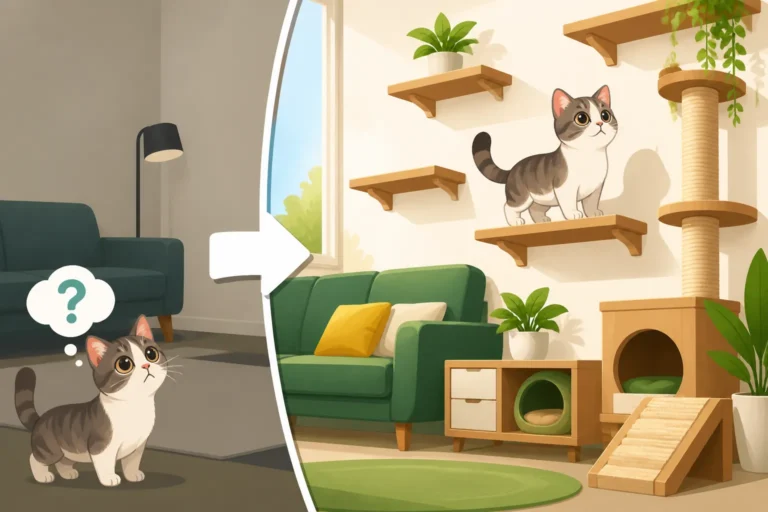
- Cascading Furniture: Instead of a single step unit, consider using a series of strategically placed, stable pieces of furniture that act as intermediate steps. A low bookcase next to a sturdy chair, leading to a window bench, can create a fantastic "cat highway." Each transition point should follow the 4-6 inch height rule and have ample landing space. How to Get a Munchkin Up to a Window Safely offers more tips.
- Cat Trees: Standard cat trees are often designed with huge gaps between platforms. For a Munchkin, these are utterly useless. Look for cat trees with platforms that are no more than 8-10 inches (20-25 cm) apart vertically, and ideally closer. The platforms should also be generous in size, allowing for a comfortable turn-around or lounge. If modifying an existing tree, you might need to add extra shelves or ramps between existing platforms.
Litter Box Entry
While not "steps" in the traditional sense, the entry height of a litter box is a crucial accessibility point for Munchkins, and the same principles of easy access apply.
- Low Entry Boxes: A Munchkin needs a litter box with a very low entry point, ideally no more than 3-4 inches (7-10 cm) high. Standard litter boxes can have much higher sides, forcing your Munchkin to jump or stretch uncomfortably every time they need to go, which can lead to accidents outside the box. Which Litter Box a Munchkin Can Actually Enter provides more insight into this.
- Ramps or Cut-Outs: If you love a high-sided box for containing litter scatter, consider one with a built-in ramp or a strategically cut-out entry point. You can even create a small, low step or ramp leading up to a slightly higher box entry if absolutely necessary, but the lowest entry possible is always best.
Here's a quick reference table for optimal step spacing:
| Access Point | Ideal Step Height (Vertical Rise) | Ideal Step Depth (Horizontal Run) | Recommended Angle | Key Considerations |
|---|---|---|---|---|
| Sofa / Low Bed | 4-6 inches (10-15 cm) | 8-10 inches (20-25 cm) | Gentle (20-30 degrees) | Flush top step, non-slip surface, sturdy construction |
| High Bed / Window | 3-5 inches (7-13 cm) | 10-12 inches (25-30 cm) | Very Gentle (15-25 deg) | Multiple intermediate steps/furniture, wide platforms |
| Cat Tree Platforms | 6-8 inches (15-20 cm) | 10-12 inches (25-30 cm) | Gentle (20-30 degrees) | Wide, stable platforms, carpeted, secure against walls |
| Litter Box Entry | 3-4 inches (7-10 cm) | N/A (low threshold) | Flat | Low entry essential, prevents accidents, check for mats |
Maintaining and Adjusting Your Munchkin's Steps Over Time
Setting up the perfect steps isn't a one-and-done deal. Your Munchkin's needs might change, and environmental factors can also play a role. Regular monitoring and occasional adjustments are key to their long-term comfort and safety.
Regular Checks for Wear and Stability
Just like human stairs, pet steps can show wear and tear. Over time, carpeted treads might fray, non-slip surfaces can lose their grip, or joints might become loose. Make it a habit to regularly inspect all your Munchkin's access points.
- Weekly Visual Scan: Quickly check for obvious issues like loose carpet, torn fabric, or wobbling. If you used adhesive strips, ensure they're still firmly in place.
- Monthly Hands-On Check: Get down on their level. Push on the steps. Do they creak? Do they shift? If you have multi-piece step units, ensure they're still securely connected. If you sourced materials from places like Amazon for DIY projects, remember that even high-quality wood or carpeting can degrade over years of use. Tighten any screws or bolts as needed. Loose steps are a significant safety hazard and can cause your Munchkin to lose confidence in using them.
Recognizing Signs of Discomfort or Hesitation
Your Munchkin can't tell you in words if their steps are too high or uncomfortable, but they'll communicate it through their behavior. Be a keen observer of their movement.
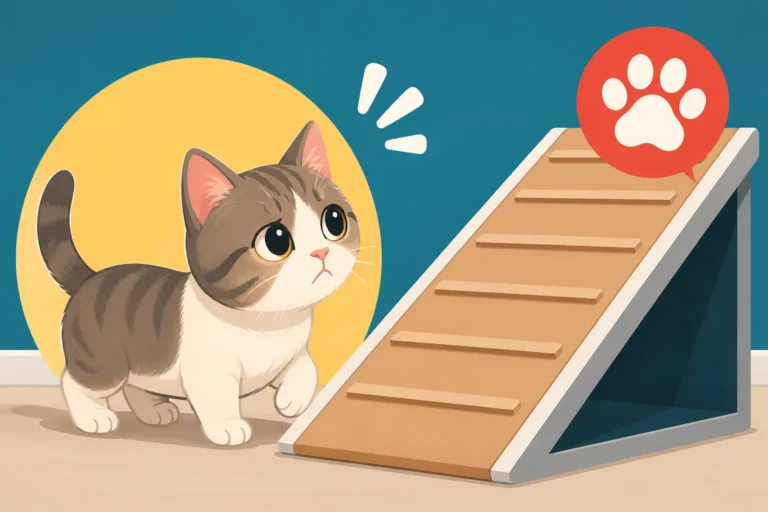
- Hesitation: Does your cat pause before jumping onto a step, sometimes multiple times, as if weighing the effort? Do they look up at a step and then turn away, choosing to stay on the floor instead? This is a strong indicator that the step is too challenging.
- Awkward Movement: Are they stumbling, slipping, or visibly struggling to lift themselves onto a step? Do they land heavily, or does their back arch unnaturally? These are all signs of strain.
- Vocalizations: A soft groan, a little grunt, or even an uncharacteristic meow when attempting to climb can indicate pain or discomfort. How Much a Munchkin Talks When It Wants Lifting might give you clues that their steps aren't working anymore.
- Changes in Habits: If your Munchkin used to love sleeping on the bed but now consistently chooses a floor-level spot, it's a huge clue that getting onto the bed has become too difficult or painful. Don't assume they just prefer the floor now; investigate the access.
Adapting for Senior Munchkins
As your Munchkin enters their golden years (typically around 8-10 years old), their physical capabilities will naturally decline. They might develop arthritis, lose some muscle mass, or just generally feel less agile. Caring for an Old Munchkin That Has Stopped Climbing is a reality many owners face. What worked perfectly for a spry youngster might be too much for a senior cat.
- Lowering Step Height: This is the most critical adjustment for older Munchkins. Aim for the absolute minimum step height possible, perhaps 3-4 inches (7-10 cm). This reduces the effort required for each ascent.
- Wider and Deeper Steps: Provide even more surface area on each step. A wider, deeper step gives them more room to maneuver, adjust their footing, and feel secure.
- Ramps as an Alternative: If steps become too difficult or painful, even with optimal spacing, consider transitioning to a ramp. Ramps provide a continuous, gentle slope that eliminates any impact or jumping. Ensure the ramp has a textured, non-slip surface and a very gradual incline. You can often find suitable ramps on Amazon designed for small dogs or cats.
- Increased Support: Consider adding soft, padded landings around the steps or at the bottom to cushion any accidental falls or heavy landings. Ensuring easy, pain-free access to all their favorite spots is one of the kindest things you can do for your aging companion.
By paying close attention to your Munchkin's individual needs, carefully planning the spacing and materials of their steps, and being willing to adapt over time, you can create a home environment where your adorable short-legged friend can thrive, reach all their favorite spots, and enjoy a full, active life without unnecessary strain or discomfort.
Disclaimer
This article is for general informational purposes only and does not constitute professional advice. Laws, prices and regulations vary by location and change over time. Consult a qualified professional for guidance on your specific situation.