Whether a Munchkin’s Papers Record Its Leg Length
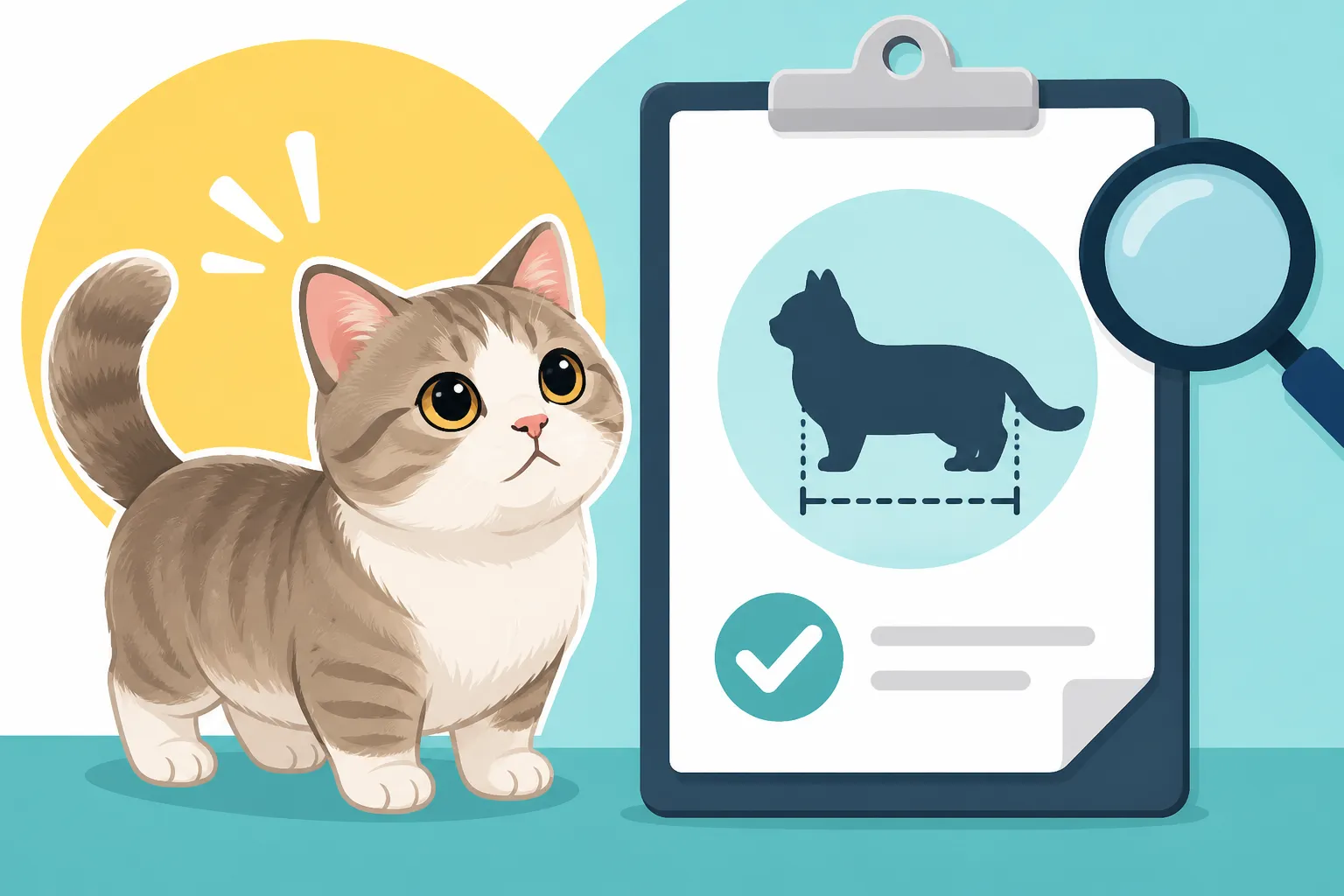
It’s a common and completely understandable question when you’re looking into bringing a Munchkin cat into your home: you see all these different descriptions – "standard leg," "rug hugger," "super short" – and naturally wonder if these crucial details about their unique physical trait are officially documented. The truth is, while official breed papers provide a wealth of information about a Munchkin’s lineage and registration status, they generally do not include a specific measurement or classification of an individual cat’s leg length. This guide will clarify what you can expect from registration papers, what you should look for instead, and how to properly assess a Munchkin's physical characteristics.
What Breed Registration Papers Actually Tell You
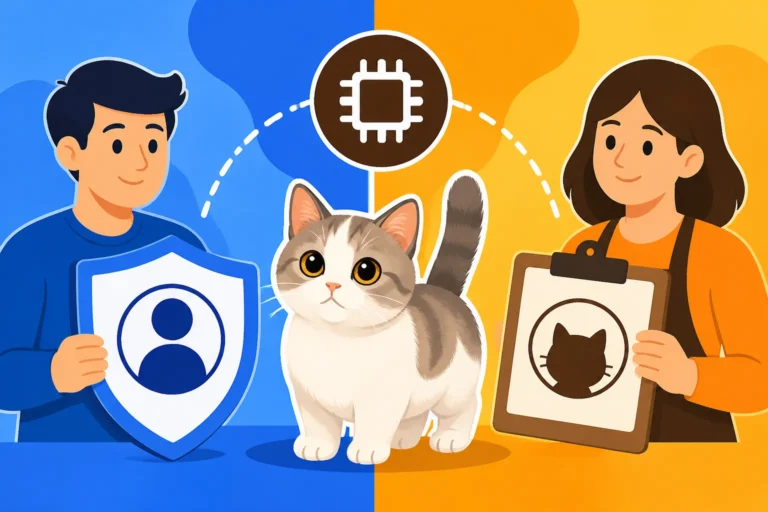
When you receive registration papers for any purebred cat, including a Munchkin, you're getting a document that attests to its ancestry and adherence to certain breed guidelines. These papers are designed to confirm identity and parentage, not to serve as a detailed physical description of an individual animal.
Pedigree Information and Lineage
The primary purpose of breed registration papers is to provide a detailed pedigree. This is essentially a family tree for your cat, tracing its lineage back through several generations. You’ll typically find the names of the sire (father) and dam (mother), along with their own registration numbers and possibly their parents’ details. This information is critical for breeders to maintain healthy bloodlines and avoid inbreeding, and for prospective owners to understand the cat's background. It helps confirm that your Munchkin kitten comes from a recognized breeding program and is indeed a purebred. For instance, you might see that a particular cat in the pedigree was an outcross, which is important for understanding how the Munchkin gene pool stays wide.
Beyond just names, these papers also list the cat's birth date, breed, sex, and often its coat color and pattern. If the cat has been shown, sometimes titles or awards achieved by its ancestors might be noted, signifying their conformation to the breed standard. This all contributes to the cat's identity within the registry, ensuring that all cats registered under the Munchkin banner can be traced back to the foundational cats, Blackberry and Toulouse.
Breeder's Role in Documentation
A responsible breeder plays a vital role in the accuracy and completeness of these registration documents. They are the ones who register the litter, providing the necessary information about the parents and each kitten. When you purchase a Munchkin, the breeder should provide you with copies of the registration papers, or at least proof that the kitten has been registered and that transfer of ownership will be completed. This process ensures the integrity of the breed registry and helps track breeding practices.
However, the breeder’s documentation, even when thorough, adheres to the established format of the registering body. These forms aren't typically set up to include subjective measurements or descriptions of leg length beyond the general breed classification. For example, while the papers will clearly state "Munchkin," they won't add a qualifier like "Munchkin – Rug Hugger variant." This is because such distinctions often arise from breeder observation and marketing, rather than standardized, individually recorded traits on official documents.
The TICA Standard and Munchkin Leg Length
The International Cat Association (TICA) is the primary registry that fully recognizes the Munchkin breed, granting it Championship status. Understanding what TICA's breed standard focuses on can shed light on why individual leg length isn't itemized on papers.
TICA's Acceptance of the Munchkin
TICA officially accepted the Munchkin breed into its championship program, a significant step that acknowledged the breed's distinct characteristics and established a formal standard. This acceptance was not without controversy, as some judges resigned over the Munchkin. However, for TICA, the Munchkin represents a valid and unique breed with a stable genetic foundation, provided breeding practices adhere to specific rules, such as the crucial rule that two short-legged Munchkins are never bred together to avoid lethal homozygosity.
The recognition means that Munchkins can be shown in TICA-affiliated shows, allowing breeders to pursue titles and demonstrate their cats’ conformation to the breed standard. This formal acceptance by TICA is what gives Munchkin breeders a legitimate framework within the cat fancy, differentiating them from unregistered backyard breeders.
The General Description of Legs in the Standard
The TICA breed standard for the Munchkin does, of course, describe the desired leg length and conformation. It specifies that the legs should be short, well-muscled, and of equal length from front to back, with an emphasis on the cat's overall balance and proportion. However, the standard describes the ideal and acceptable range of the trait, not a precise measurement for each individual cat. It's a guideline for judges and breeders to evaluate whether a cat fits the breed type.
For instance, the standard might state that the ideal leg length allows for a proportionate body, rather than a specific number of inches. It talks about the quality of the bone and musculature, the straightness of the legs, and how they contribute to the cat's unique movement, often described as a "ferret-like gait." What the Short Legs Actually Cost a Munchkin is a good reference point for understanding the physical impact. It’s about the holistic appearance and health, not a quantifiable "score" for leg shortness that would be written on a registration certificate. The TICA standard also explicitly states that the spine and body length should be normal, despite the short legs, which is another crucial aspect of the breed's conformation.
Why Leg Length Isn't on Official Documents
The absence of specific leg length data on official papers stems from several practical and genetic realities unique to the Munchkin breed.
Variability in Leg Length
One of the biggest reasons you won't find leg length recorded on a Munchkin's papers is the inherent variability of the trait within the breed itself. Because Munchkin dwarfism is inherited as an autosomal dominant gene, a short-legged Munchkin must always be bred to a normal-legged cat (an outcross). This ensures that every Munchkin litter is a carrier cross, meaning a mix of short-legged and normal-legged kittens. Even among the short-legged kittens, there's a spectrum of leg lengths, ranging from what breeders might call "standard" to the extremely short "rug hugger" variety.
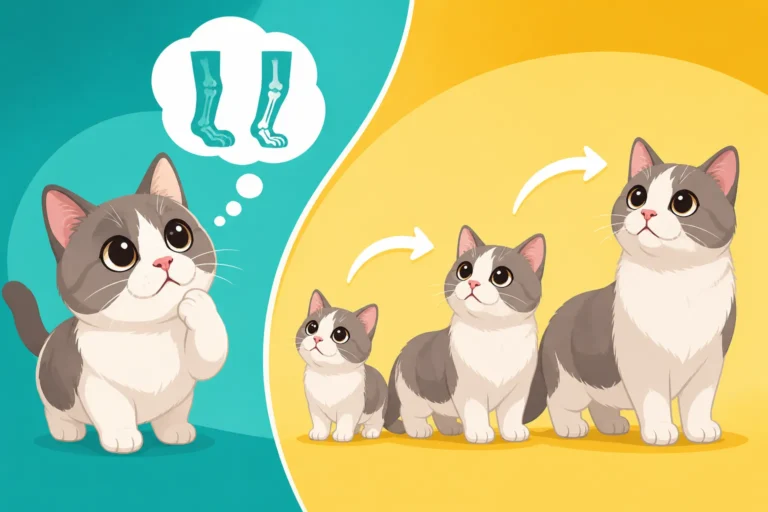
This spectrum isn't precisely quantifiable or easily categorized into official, universally accepted sub-types for documentation. A kitten might appear to have "rug hugger" legs at 8 weeks, but its bone development might slightly alter its perceived length by 12 weeks when it's ready to go home. The growth trajectory can be subtle and unique to each kitten. Trying to put a definitive, official "leg length grade" on papers would be challenging to standardize across all breeders and potentially misleading given developmental changes. Furthermore, the focus of the registration bodies is on the breed's genetic purity and parentage, not minute phenotypic variations.
The Genetic Mechanism
The genetic mechanism behind the Munchkin's short legs, known as pseudoachondroplasia, is another key factor. While the gene causes shortened long bones, the degree to which this manifests can vary. Every Munchkin litter is a carrier cross, and each short-legged kitten inherits one copy of the dominant gene. The severity of the leg shortening isn't a simple binary; it's a continuous trait influenced by other genetic factors and even environmental elements during development.
If a specific leg length were recorded on papers, it would imply a precise, unchanging measurement, which doesn't align with the biological reality of how the trait expresses itself. The gene itself, though identified as responsible for the short legs, doesn't come with a built-in "shortness meter." What a Munchkin breeder should be able to show you is usually the parents, which helps indicate the genetic potential, but not a guarantee of a specific leg length for every kitten. The complex interplay of genetics means a fixed label on papers wouldn't accurately reflect the nuances of the phenotype.
What You Should Look for in a Munchkin's Papers
While leg length isn't on the papers, there are other vital pieces of information that responsible breeders should provide or make available, especially concerning health and ethical breeding practices.
Health Clearances and Sire/Dam Information
The health of your Munchkin should be paramount, and good breeders will have documentation to prove they're breeding healthy cats. This includes health clearances for the sire and dam. While the Munchkin breed does not have a comprehensive breed-specific DNA test for its defining short-leg trait, responsible breeders will screen for conditions known to affect many cat breeds, and sometimes conditions relevant to the outcross breeds they use. For example, if a breeder uses a Persian outcross, they should provide evidence of a PKD (Polycystic Kidney Disease) test.
You should inquire about veterinary check-ups, vaccine records, and deworming schedules for the kitten. A good breeder will also provide a health guarantee for their kittens. This guarantee typically covers genetic health conditions that might manifest early in life. These records, although not part of the official registry papers, are crucial supplementary documents that speak volumes about a breeder's commitment to the health of their lines. They are far more important than a leg length measurement.
Outcross Documentation and Ethical Breeding
Given that Munchkins must be outcrossed to normal-legged domestic cats, the papers should clearly indicate these outcrosses in the pedigree. This isn't just a detail; it's a testament to ethical breeding practices. The continuous use of outcrosses is vital for maintaining genetic diversity and preventing the accumulation of recessive genetic health problems that can plague closed gene pools.
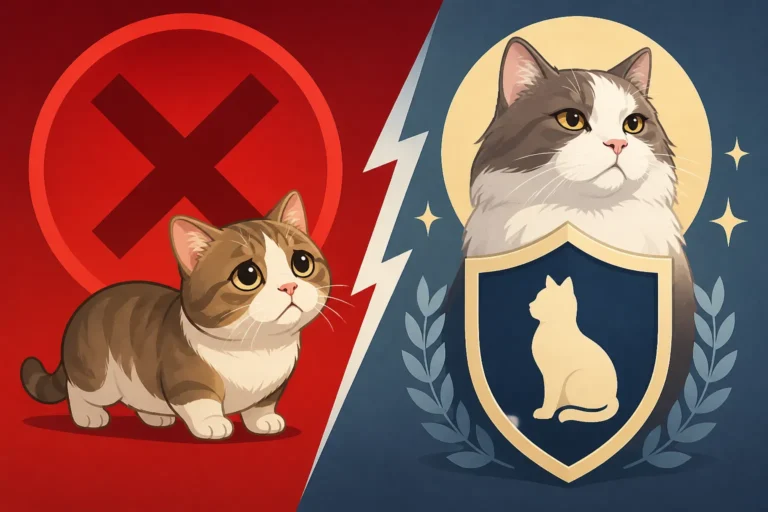
The pedigree should show a healthy mix of Munchkin and acceptable outcross breeds (such as domestic shorthairs or specific TICA-recognized breeds). If a pedigree shows continuous short-legged to short-legged matings (which should never happen due to the lethal nature of two copies of the Munchkin gene), or if it shows crosses with breeds that stack skeletal mutations, like a Scottish Fold, that would be a major red flag. Understanding the pedigree helps you verify that you’re not buying into unethical breeding that could lead to significant health issues down the line. A breeder who proudly displays these responsible outcrosses is a good sign you’re getting a healthy kitten from an ethical source.
Beyond the Papers: Other Ways to Assess Leg Length and Health
Since official papers don't detail leg length, it's up to you, the prospective owner, to engage directly with the breeder and observe the kitten to understand its physical characteristics.
Visual Assessment and Breeder Discussion
The most direct way to assess a Munchkin's leg length is through careful visual observation. When visiting a breeder, take the time to watch the kittens move. Observe how short their legs are, how they walk, run, and play. Do they exhibit the characteristic "ferret-like" gait? Do they struggle with basic movements or appear uncomfortable? Don't be shy about asking the breeder about their specific leg length classifications (e.g., "standard," "rug hugger") and what those terms mean to them. A reputable breeder will be transparent and happy to discuss the individual traits of each kitten. They should be able to tell you how short a Munchkin's legs actually are in their experience.
This is also the time to ask about the parents. Seeing the sire and dam move can give you a better idea of what the kitten might grow into. Pay attention to how the adult cats navigate their environment. Are there ramps and steps for them to access furniture? This shows the breeder is aware of their cats' unique needs. The breeder might even provide videos of the kittens at various ages, which can be particularly helpful if an in-person visit isn't immediately possible. Remember, a Munchkin is a normal cat that cannot reach, so observe their efforts.
Veterinary Evaluation and Health Screening
Before finalizing any purchase, it is highly recommended to have your chosen Munchkin kitten examined by an independent veterinarian. This vet can provide an objective assessment of the kitten's overall health, including its musculoskeletal structure. They can palpate the spine and evaluate the conformation of the legs. While a vet won't typically provide an official "leg length grade," they can identify any red flags related to the dwarfism, such as signs of lordosis (a spinal curve) or pectus excavatum (sunken chest), which are sometimes linked to the Munchkin gene.
It's wise to choose a vet who has experience with brachycephalic (flat-faced) or dwarf breeds, as they will be more attuned to the specific considerations of Munchkins. This pre-purchase vet check is often a condition of a good breeder's contract, giving you peace of mind. Some owners even opt for early X-rays to get a baseline on their Munchkin's bone structure, though this is a more advanced step. Ensuring the kitten is healthy from the start is much more critical than a specific leg measurement on paper. You might also want to discuss pet insurance options like Healthy Paws with your vet, to understand what typical exclusions might apply to certain breed-specific conditions. And for those low-entry litter boxes and ramps, places like Chewy are excellent resources.
Ultimately, while the official papers won't give you a ruler measurement of your Munchkin's legs, they are invaluable for verifying lineage and ethical breeding. Your best tools for understanding leg length and overall health are direct observation, open communication with a reputable breeder, and a thorough veterinary examination.
| Feature | Found on Official Munchkin Papers? | What to Look for Instead (or Additionally) | Why It Matters |
|---|---|---|---|
| Breed Name | Yes (e.g., "Munchkin") | Confirmed by TICA registry. | Verifies the cat is indeed a recognized Munchkin. |
| Parentage/Pedigree | Yes | Detailed lineage, including outcrosses. | Ensures ethical breeding practices and genetic diversity. |
| Birth Date | Yes | Accurate date. | Helps track development, vaccinations, and age-related health needs. |
| Coat Color/Pattern | Yes | Specific description (e.g., "blue point," "black tabby"). | Confirms physical appearance details. |
| Leg Length (Specific) | No | Visual assessment of kitten/parents, breeder discussion, videos, independent vet check. | Allows for understanding the cat's unique mobility and potential future needs. |
| Leg Conformation | No | Breeder comments on straightness/bowing, vet assessment during physical exam. | Indicates structural soundness and potential for orthopedic issues. |
| Health Clearances | No (sometimes notes on specific parents) | Breeder-provided documentation for parents (e.g., PKD tests for Persian outcrosses), vet health check records for kitten, health guarantee. | Crucial for ensuring a healthy kitten and peace of mind regarding genetic conditions. |
| Microchip Number | Yes | Verification with a scanner, ensure registration details are transferred to you. | Essential for identification and reuniting if lost. |
Disclaimer
This article is for general informational purposes only and does not constitute professional advice. Laws, prices and regulations vary by location and change over time. Consult a qualified professional for guidance on your specific situation.