Which Scratching Post a Munchkin Can Use
Oh, the scratching post dilemma with a Munchkin cat! If you're anything like me, you've probably brought home one of those majestic, towering cat trees or a tall, sturdy scratching post, only to watch your adorable short-legged friend gaze up at it with a mixture of confusion and defeat. It's a common frustration for Munchkin owners: these little furballs have all the natural instincts of a regular cat, but their unique physique means standard cat accessories often miss the mark. This guide is here to unravel that mystery, helping you understand exactly what kind of scratching post will truly work for your Munchkin, keeping their claws healthy, their spirits high, and your furniture safe.
Why Traditional Scratching Posts Just Don't Work for Munchkins
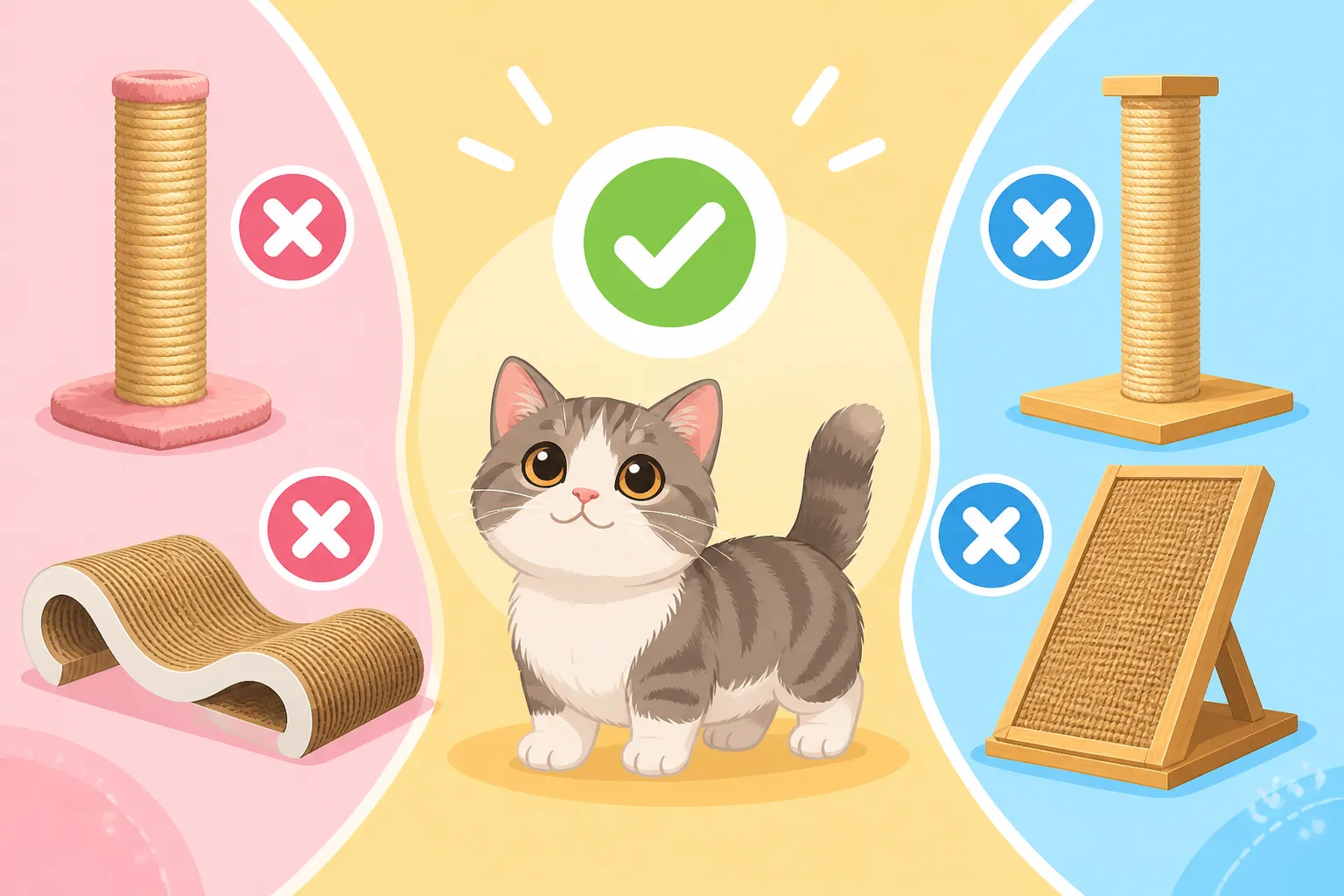
It's easy to assume a scratching post is a scratching post, right? But for our short-legged Munchkin companions, the standard designs are often more of an obstacle course than an inviting spot for a good stretch and scratch. It’s not about their willingness; it’s about their physical reality.
The Height Challenge
Imagine trying to reach something on a high shelf when you're a third of the height of everyone else. That's essentially the daily reality for a Munchkin cat when confronted with a tall scratching post. Most traditional posts are designed for cats to stretch their full body length upwards, engaging their back muscles and really digging their claws in. A Munchkin simply cannot achieve this vertical reach.
They might try, bless their cotton socks, but it often looks awkward and ineffective. They'll stand on their hind legs, stretching as far as they can, perhaps getting a few tentative scratches in at the very bottom, but they won't get that satisfying, full-body extension that other cats enjoy. This isn't just about comfort; it's about fulfilling a natural, instinctual need. If they can't properly use the post, they'll seek out other surfaces that do allow for a good scratch, and often, those surfaces are your beloved sofa, carpet, or wooden furniture. The goal is to provide an accessible alternative, not to frustrate their natural tendencies.
Stability and Reach
Beyond just height, the stability of a tall, narrow scratching post can also be an issue. When a standard cat throws its full weight into a vigorous scratch, the post is designed to absorb that force. However, for a Munchkin, whose center of gravity is lower, their approach to a tall post can be quite different. They might try to launch themselves a little, or lean heavily, and if the post isn't incredibly sturdy at its base, it can wobble or even tip.
A wobbly post isn't just annoying; it can be downright dangerous and scary for a cat. A single bad experience with a tipping post can teach a Munchkin to avoid it altogether, regardless of how suitable a different post might be. Furthermore, even if the post is stable, the sheer effort required for a Munchkin to reach a suitable scratching surface can deter them. They need something that meets them where they are, literally, making the act of scratching effortless and enjoyable, rather than a physical challenge. This is why you need to remember that With a Munchkin the House Changes, Not the Cat.
The Vertical Stretch Dilemma
The vertical stretch is a fundamental part of a cat's scratching behavior. It’s not just about sharpening claws; it’s a full-body exercise, a way to mark territory, and a stress reliever. When a cat stretches up to scratch, they're extending their spine, flexing their muscles, and depositing scent from glands in their paws. This isn't a movement a Munchkin can easily perform on a typical tall post.
Because their legs are short, a vertical post that's tall enough for a normal cat means the prime scratching area is simply out of reach for a Munchkin's full-body stretch. They can reach the very bottom, sure, but that doesn't offer the same biomechanical benefits or satisfaction. This often leads to them looking for horizontal surfaces to scratch, or finding corners of furniture where they can lean and scratch at an angle. Understanding Why a Munchkin Cannot Stretch Up a Scratching Post is crucial to providing them with appropriate alternatives that still allow them to engage in this vital natural behavior without strain or frustration.
What Makes a Scratching Post "Munchkin-Friendly"?
So, if traditional posts are out, what exactly does work for a Munchkin? It's all about rethinking the design to accommodate their unique proportions and natural movement patterns.
Accessible Height and Design
A Munchkin-friendly scratching solution is primarily defined by its accessibility. This means posts that are significantly shorter, allowing the cat to comfortably reach the top and get a full, satisfying stretch without having to jump or strain. Think of it less as a "post" and more as a "stump" or a "pad."
For vertical scratchers, the scratching surface should ideally start right at floor level and extend no more than 12-18 inches high. This allows a Munchkin to approach it, stretch their front paws up, and engage their back muscles for a good scratch without feeling like they're climbing Mount Everest. Even better are inclined scratchers, which offer a natural angle for them to lean into, or horizontal scratching pads. When browsing online retailers like Amazon or Chewy, look for products specifically marketed as "kitten scratchers" or "senior cat scratchers," as these often have lower profiles that are surprisingly perfect for Munchkins. The key is to visualize your Munchkin approaching it and imagine if they could comfortably use it without any heroic efforts.
Material Matters
Just like any cat, Munchkins have preferences when it comes to scratching materials. The ideal material needs to provide good resistance, allowing their claws to shed outer layers effectively. Sisal rope is a classic for a reason – its fibrous texture is excellent for shredding and gives a satisfying feel. Sisal fabric, often seen on scratching ramps or panels, is another great option.
Cardboard scratchers are also immensely popular and very effective. They are often inexpensive, come in various shapes (flats, waves, inclines), and offer a unique texture that many cats adore. Plus, when one side is worn out, you can often flip them over for double the life! Some cats also enjoy carpeted surfaces, though I personally prefer sisal or cardboard as carpet can sometimes mimic your home flooring too closely, potentially confusing your cat about what's okay to scratch and what's not. The texture should feel good on their paws and allow them to really get their claws into it, not just slide off. Different textures satisfy different scratching urges, so offering a variety, especially at floor level, can be incredibly beneficial.
Strategic Placement
Even the most perfectly designed Munchkin-friendly scratcher will be ignored if it's not placed correctly. Cats use scratching as a way to mark territory, stretch after waking up, and relieve stress. Therefore, placement is absolutely critical.
Place scratchers in prominent areas where your Munchkin likes to hang out. This often means near their sleeping spots (cats love a good stretch and scratch right after a nap!), by entryways where they might feel the need to mark territory, or next to furniture they've previously targeted. If your Munchkin has a favorite spot to scratch your sofa, place a suitable scratcher directly in front of that spot. Sometimes, having multiple scratching options in different locations around the house is the best approach. Think about the flow of your home and where your cat naturally moves and rests. A low, inviting scratching pad next to their favorite sunbeam will be far more appealing than a tall, ignored post tucked away in a corner. You want these tools to be an integral part of their environment, part of the process of Making One Room Reachable for a Munchkin All Day.
Types of Scratchers That Get a Paws-Up from Munchkins
When it comes to scratching solutions for your Munchkin, variety is key, and going horizontal or low-rise is usually the way to go. These options allow them to engage their claws and stretch their bodies in ways that are natural and comfortable for their short stature.
Horizontal Scratchers
These are often the unsung heroes of Munchkin scratching. Horizontal scratchers come in many forms, from simple cardboard pads to sisal mats and carpet squares. They allow your Munchkin to stretch out on the floor, dig their claws in, and get that satisfying pull without any need for vertical reach.
Many cats, Munchkins included, actually prefer scratching horizontally or at an incline. It’s a natural motion for them, mimicking the scratching they might do on a log or the ground outdoors. You can find cardboard scratch pads shaped like wavy beds, flat rectangles, or even ones with balls inside for added play. Sisal mats can be placed directly on the floor or attached to a low wall. These are particularly great because they're stable, always accessible, and often very affordable. Plus, if your Munchkin has a habit of scratching the carpet, a large, enticing horizontal scratcher placed right on top of their preferred spot can be an excellent deterrent. Look for multi-packs on Chewy or Amazon to place throughout your home.
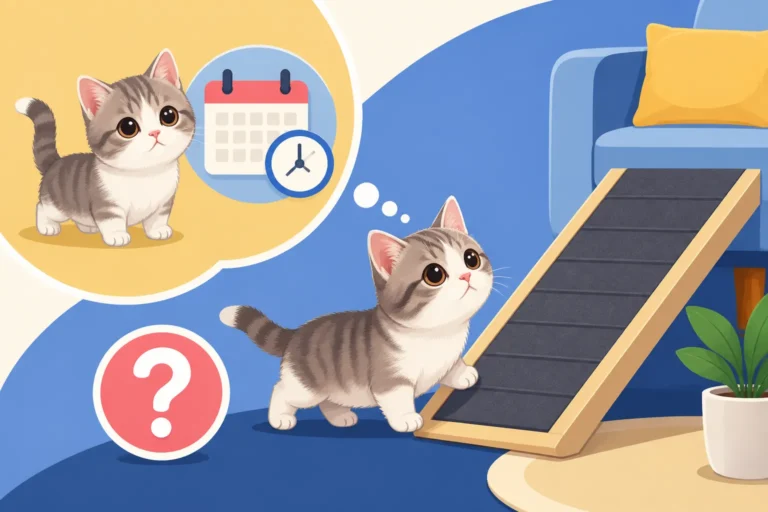
Inclined Scratchers
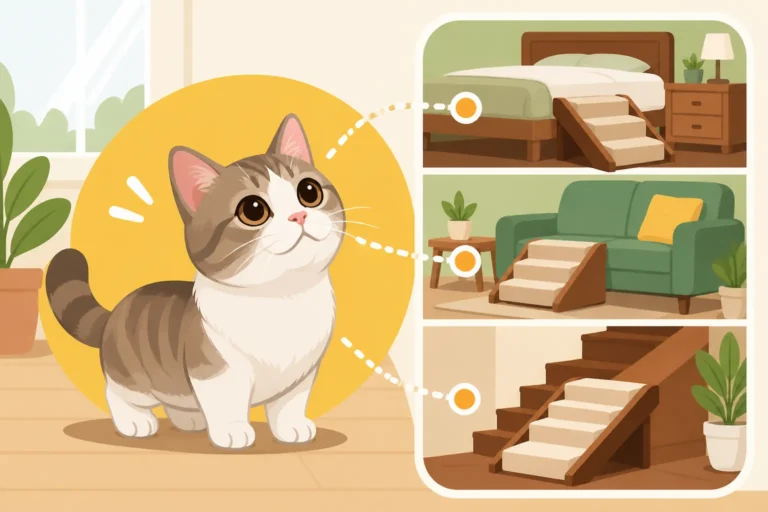
Inclined scratchers offer a fantastic middle-ground, providing an angle that many Munchkins find irresistible. These are essentially flat scratching surfaces that are propped up at an angle, often made from cardboard or sisal.
The incline allows a partial vertical stretch, engaging slightly different muscle groups than a purely horizontal scratcher, but without the extreme height of a traditional post. Your Munchkin can lean into it, get a good stretch along their back, and really work their claws. Some inclined scratchers even double as a lounging spot once the scratching is done, which is a big bonus for many cats! They offer a comfortable and ergonomic scratching experience, reducing any potential strain on their unique spine. Remember, it's about making the motion easy and instinctual, not a chore. These are also great because they provide a stable base, preventing any accidental tipping, which as we discussed, can scare a cat away from using a scratcher for good.
Low-Rise Vertical Posts and Mats
While tall posts are a no-go, very low-rise vertical options can still be effective, as can flat mats that can be affixed to low walls or furniture sides. The trick is to keep them truly low.
Imagine a vertical post that's only about 10-15 inches high, perhaps attached to a sturdy base. This height allows a Munchkin to stand on their hind legs and get a decent stretch, albeit not a full, towering one. Some designs incorporate a small platform on top, turning it into a mini-cat tree that's actually usable by a Munchkin. Another excellent option is a sisal or carpeted scratching mat that you can attach to the lower portion of a wall or the side of a sturdy piece of furniture. This turns an otherwise ignored surface into a prime scratching zone that's perfectly at your Munchkin's height. It's about meeting them where they are and understanding How a Munchkin Gets Where It Wants Without Jumping. These solutions provide the desired texture and resistance for claw maintenance and stretching, without forcing your little cat to perform acrobatic feats.
Here's a quick comparison of effective Munchkin-friendly scratcher types:
| Scratcher Type | Ideal Height/Angle | Material | Pros | Cons |
|---|---|---|---|---|
| Horizontal Pads/Mats | Floor level | Cardboard, Sisal, Carpet | Extremely accessible, stable, often inexpensive, good for carpet scratchers | No vertical stretch |
| Inclined Scratchers | Gentle angle (e.g., 20-45°) | Cardboard, Sisal | Combines horizontal comfort with a partial stretch, stable, often doubles as lounge | Takes up a bit more floor space than flat pads |
| Low-Rise Vertical Post | 10-18 inches tall | Sisal rope/fabric | Allows some vertical stretch, can have a small platform | Less full-body stretch than for normal cats |
| Wall-Mounted Panels | Mounted low (e.g., 5-15 inches from floor) | Sisal fabric, Carpet | Space-saving, customizable height, stable | Requires mounting to a wall/furniture |
DIY Solutions and Adapting Your Home for Your Munchkin's Scratching Needs
Sometimes, the best solution isn't found on a store shelf, but crafted with a little love and ingenuity right at home. Adapting your environment isn't just about providing the right tools; it's about integrating them seamlessly into your Munchkin's world.
Crafting Your Own Munchkin Scratcher
Making your own Munchkin-friendly scratcher can be surprisingly simple and cost-effective. The beauty of DIY is that you can tailor it precisely to your cat's size and your home's aesthetic. For a simple horizontal scratcher, you can take a sturdy piece of wood or thick cardboard and wrap it tightly with sisal rope. Just make sure to secure the ends of the rope well so it doesn't unravel.
For an inclined scratcher, you can create a simple wedge-shaped frame from wood and cover it with sisal fabric or tightly glued cardboard layers. Many online tutorials can guide you through the process, and materials like sisal rope or fabric are readily available from craft stores or online retailers like Amazon. The key is to ensure any DIY project is stable, free of sharp edges, and uses non-toxic materials. What a Munchkin Owner Spends on Furniture Modifications often includes these types of projects, and they can be incredibly rewarding. Plus, your cat might appreciate something made just for them!
Integrating Scratching Surfaces into Furniture
Think beyond the standalone post. You can incorporate scratching surfaces directly into your Munchkin's environment, making them an organic part of their daily life. Do they love lounging on a particular low shelf? Consider attaching a sisal mat to the side of that shelf. Is there a sturdy end table that's just the right height for a leaning scratch? Cover one of its legs with sisal rope.
The goal is to make scratching as convenient and intuitive as possible. You can even purchase sisal fabric by the yard and attach it to the lower panels of cat-friendly furniture, or wrap it around table legs or chair legs that are currently tempting your cat. This method not only saves floor space but also provides readily available scratching opportunities exactly where your Munchkin wants them. Just ensure that the materials you use are securely attached and won't come loose during an enthusiastic scratch session.
Encouraging Good Scratching Habits
Even with the perfect scratchers, you still need to encourage your Munchkin to use them. Positive reinforcement is your best friend here. When you see your cat sniffing or approaching a new scratcher, offer praise or a small treat. If they start scratching, even a little, shower them with affection and maybe a delicious treat.
You can also use catnip spray or sprinkle dried catnip on the new scratcher to make it more appealing. Play with your Munchkin near the scratcher, allowing their paws to accidentally (or purposefully) touch the surface during play. Never punish your cat for scratching inappropriate surfaces; instead, redirect their attention to the appropriate scratcher. If they're scratching your sofa, gently pick them up, say "no" calmly, and place them on their designated scratcher. Over time, they'll associate the good feeling of scratching with the appropriate surface. This gentle guidance is part of the larger picture of Caring for a Munchkin Past Ten and managing their environment effectively throughout their lives, ensuring their comfort and happiness.
Disclaimer
This article is for general informational purposes only and does not constitute professional advice. Laws, prices and regulations vary by location and change over time. Consult a qualified professional for guidance on your specific situation.