What a Rug Hugger Munchkin Is
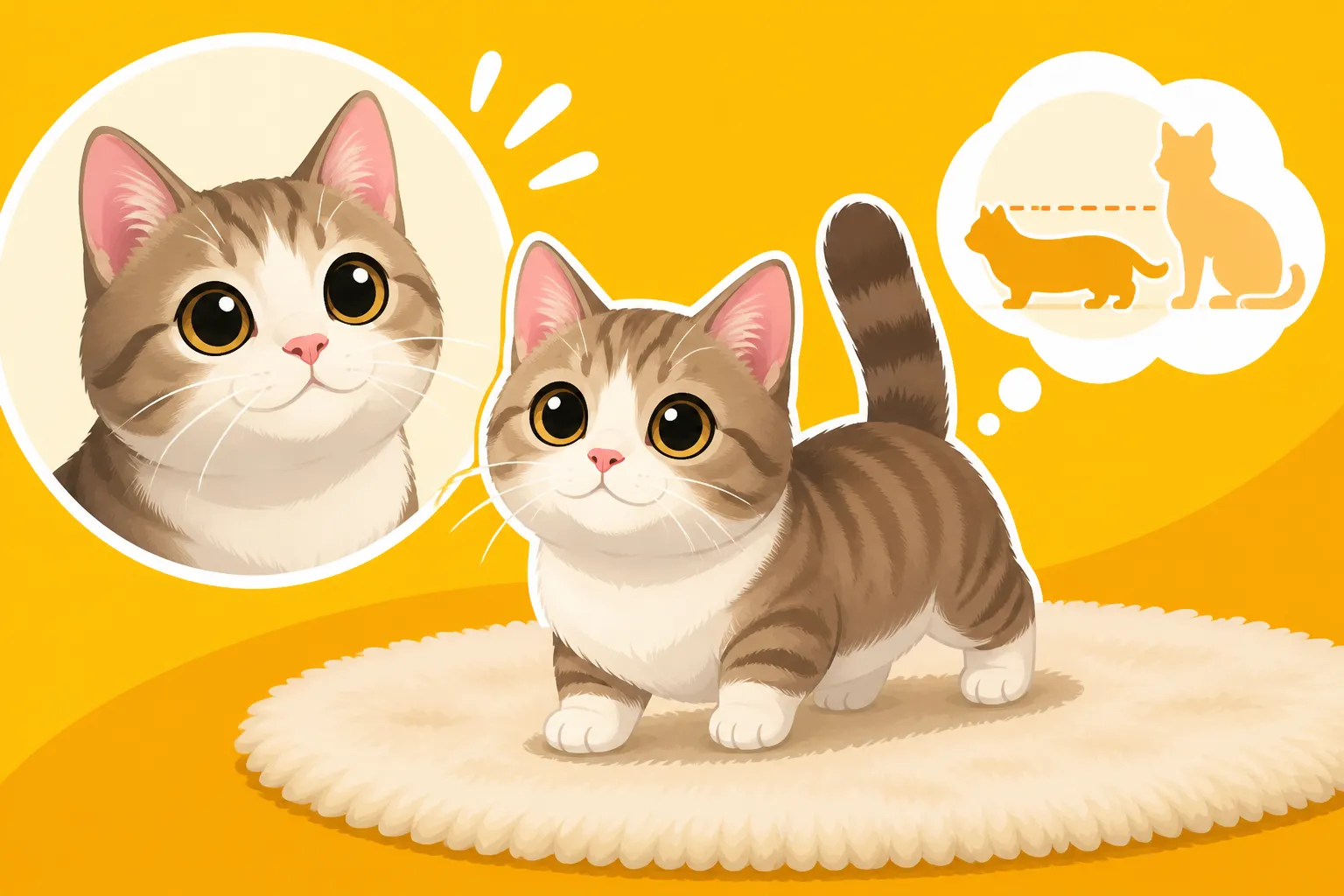
A rug hugger Munchkin is a Munchkin cat described as having especially short legs, so its body sits very close to the floor. The name sounds like a formal breed category, but it is generally an informal descriptive or sales term, not a universally standardized classification. Here’s what the label can tell you, what it cannot tell you, and what to look at beyond leg length.
What “rug hugger” means
A description, not a separate breed
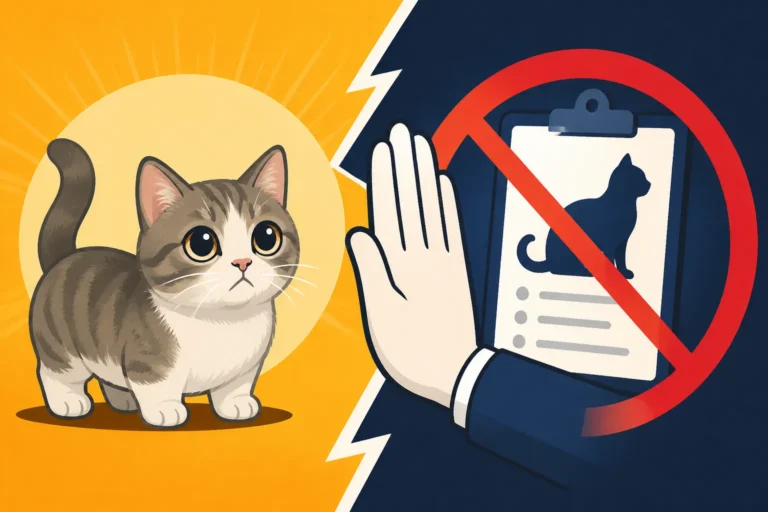
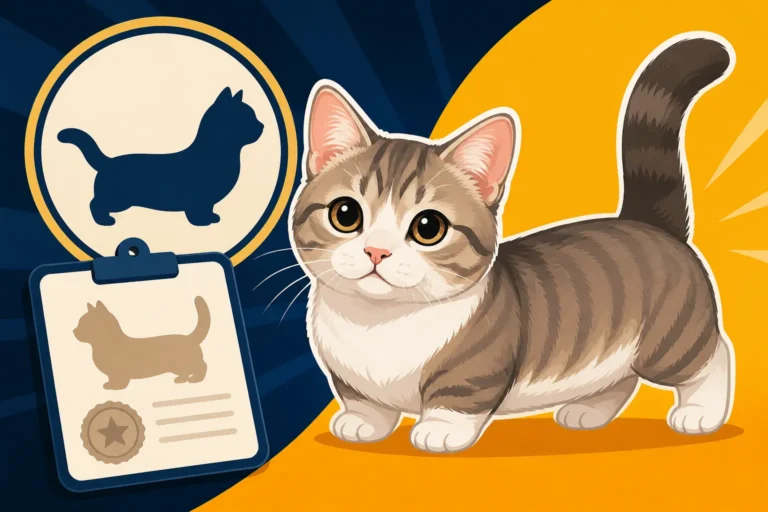
“Rug hugger” usually refers to a Munchkin whose legs are notably short relative to its body, creating a low-to-the-ground appearance. The cat is still a Munchkin; the phrase does not name a separate breed. Nor does it tell you, by itself, how the cat moves, how comfortable it is, or whether it has a health problem.
The term is informal, and breeders or sellers may use it differently. There is no single agreed measurement that makes one Munchkin a rug hugger and another one not. So if a listing uses the phrase, treat it as a visual description rather than a precise, independently verified category.
That distinction matters when comparing kittens. One seller may use “rug hugger” for the shortest-legged kittens in a litter, while another may use it more loosely for any Munchkin that looks especially low. For a broader comparison of common labels, see What a Standard Munchkin Is and What a Super Short Munchkin Is.
Why the cat looks so close to the floor
A Munchkin’s short legs change how high its body sits above the ground. The torso is not simply a miniature version of a long-bodied cat, and leg length can vary from one Munchkin to another. A particularly low stance may make the belly look close to the floor, especially when the cat is standing on soft carpet or has a full coat.
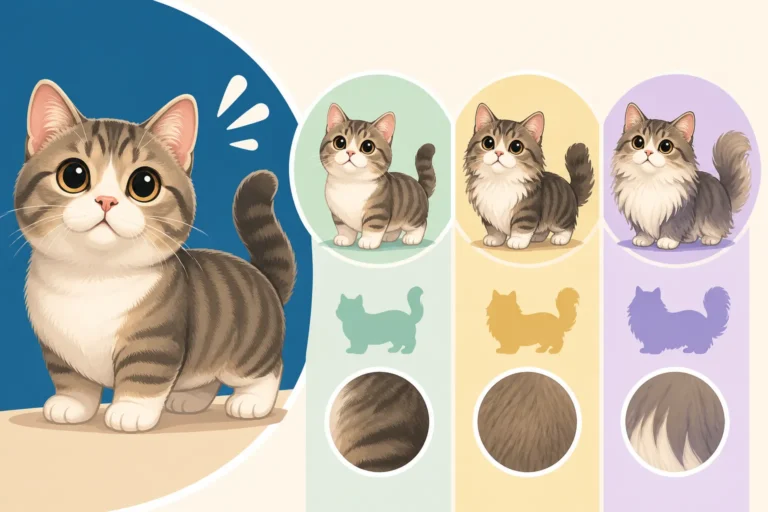
Photos can exaggerate that effect. A low camera angle, fluffy fur, or a cat crouching can make the legs look shorter than they appear when the cat walks. Conversely, a standing pose on a smooth floor may reveal more of the space beneath the body. If you are assessing a particular cat, look at several unposed views and a video of it moving, not just a carefully framed portrait.
The Munchkin’s overall appearance involves more than leg length. Body proportions, head shape, coat, and movement all contribute to what you see. What a Munchkin Looks Like Against the TICA Standard gives more context on the breed’s general appearance, while How a Munchkin's Legs Are Judged helps explain why a nickname alone is not a dependable measurement.
How to assess the label
Ask what the seller means by “rug hugger”
Because the phrase is not standardized, ask the breeder to explain exactly how they use it. Do they mean the kitten has especially short legs compared with its littermates? Are they using the phrase as a casual nickname, or suggesting it identifies a formal variety? A clear answer should describe the individual kitten rather than rely on a catchy label.
Ask to see the kitten standing and walking on a level, nonslip surface. If possible, watch the kitten turn, play, sit, and get up. You are not trying to diagnose a cat from a video; you are looking for a more realistic picture of its everyday movement than a single still image can provide.
It is also reasonable to ask how the kitten’s legs and general health have been assessed, and whether a veterinarian has examined it. A responsible seller should be willing to discuss the kitten’s health history and answer ordinary questions without making the label sound like a health guarantee. Leg length can change in appearance as a kitten grows, so Whether a Munchkin's Legs Change as It Grows is useful background when comparing a young kitten with an adult.
Compare movement, not just height
A cat’s height above the floor does not tell you everything about its mobility. Pay attention to whether it walks and plays comfortably, uses its limbs evenly, and can move around the spaces it needs. A short-legged cat may have a different-looking gait from a long-legged cat, but a label or appearance alone cannot establish whether a specific movement is normal for that individual.
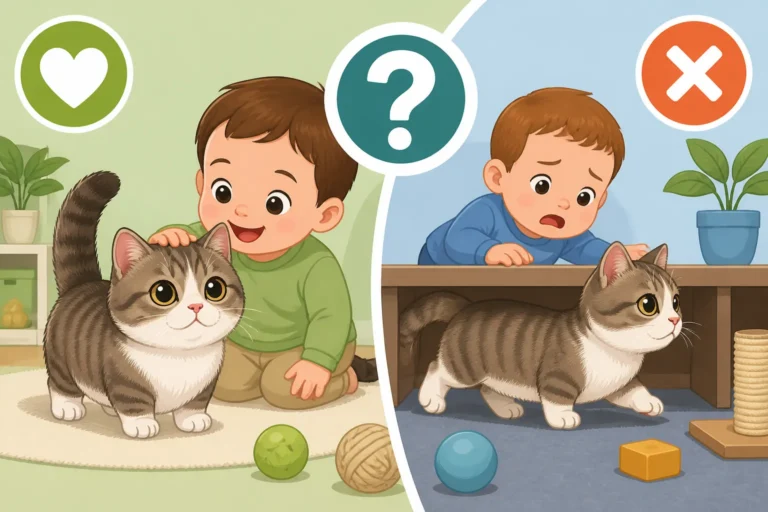
Notice the home environment the cat will need to manage. Can it reach its food, water, litter box, favorite resting places, and hiding spots without repeatedly attempting difficult jumps? A rug hugger may benefit from low, stable access routes, such as steps or a gentle ramp to a sofa. The goal is not to prevent all activity; it is to avoid making basic needs depend on a jump the cat struggles to complete.
Use observations as a starting point for questions, not as a substitute for a veterinary assessment. If you notice limping, reluctance to move, repeated stumbling, or an obvious change in activity, contact a veterinarian. How to Judge a Munchkin's Quality of Life offers a wider framework for thinking about comfort, daily routines, and access to the home.
Rug hugger versus other Munchkin labels
The words used in listings can sound more exact than they are. This table separates common descriptions from what you can reasonably infer from them.
| Label | Common meaning | What the label does not establish |
|---|---|---|
| Rug hugger | An informal description for a Munchkin with especially short-looking legs and a low stance | A universal measurement, health status, or guarantee of mobility |
| Standard Munchkin | A commonly used description for a short-legged Munchkin | That all cats described this way have identical leg length or needs |
| Super short | An informal label suggesting very short legs | A formal category used consistently by every breeder or registry |
| Long-legged Munchkin | A Munchkin from a breeding line or litter that does not show the short-legged appearance | That the cat is a different breed or lacks a Munchkin family background |
Why labels vary between breeders
Breeders may use leg-length descriptions to help distinguish kittens within a litter or to communicate what a buyer can expect the cat to look like. But terminology is not consistent from one breeder to another. Two listings using “rug hugger” may describe cats with noticeably different proportions, and two breeders may use different words for cats that look similar.
Ask for the details behind the label: the kitten’s age, its parents’ appearance, whether it has been seen walking, and what the breeder can share about its health checks. Written information is useful, but video can show posture and movement more clearly. The point is not to treat a seller’s description as suspicious by default; it is to make sure you understand what is being promised.
If a seller focuses heavily on “the shortest legs” or suggests that extreme shortness alone makes a kitten healthier, better, or more valuable, pause and ask more questions. Very short appearance is not a substitute for evidence about health and temperament. For more on how leg length may affect sales descriptions, see Why the Shortest Legged Munchkin Kitten Goes First.
What to consider before choosing one
Look at everyday access and care
A very low body can make ordinary household details more important. A high-sided litter box may be awkward to enter, a tall bed may be inaccessible, and a slippery floor may make movement less confident. A low-entry litter box, secure steps, and nonslip rugs can make daily routes easier to manage. The right setup depends on the individual cat, the layout of your home, and how it moves.
Grooming is another practical consideration. Some cats may have trouble reaching parts of their backs or hindquarters, and long coats can require regular brushing to prevent tangles. Keep an eye on the belly and rear as well, especially if the coat is long or the cat picks up litter while walking. If choosing tools online, Chewy is one retailer where owners may compare brushes and combs; check that a tool suits the cat’s coat and use it gently. What a Munchkin Cannot Reach to Groom covers the areas owners may need to help maintain.
For mobility equipment, focus on stability and a surface the cat can grip rather than on appearance. A ramp that slides or feels steep may go unused, while a secure route with shallow steps may work better. Chewy is one place an owner might browse for pet steps or ramps, but measure the furniture and check how firmly the equipment sits before relying on it. Introduce new access equipment gradually, using treats or play to let the cat explore at its own pace.
Choose the individual cat, not the nickname
A kitten’s short legs may be the first thing you notice, but they should not be the only thing guiding your decision. Consider the kitten’s behavior, the breeder’s openness, its veterinary history, and whether you can provide an environment that suits its movement. A short-legged cat still needs play, companionship, scratching opportunities, and comfortable places to rest.
Think, too, about your own home and routine. If your bed or favorite chair is high, will you be willing to provide safe access? If you have stairs, can the cat’s essential resources be arranged on the same floor? These are practical questions, not reasons to assume every Munchkin will have the same limitations. The individual cat’s abilities and needs matter.
If you already have a cat described as a rug hugger, you do not need to redesign everything at once. Watch how it moves through the home, note where it hesitates or asks for help, and make adjustments where they solve a real problem. A vet can help assess changes in movement or comfort over time. For a broader decision-making guide, see Whether a Munchkin Is the Right Cat for You.
Disclaimer
This article is for general informational purposes only and does not constitute professional advice. Laws, prices and regulations vary by location and change over time. Consult a qualified professional for guidance on your specific situation.