Whether a Munchkin Suits a Family With Toddlers
A toddler can move from gentle petting to grabbing, chasing, or falling onto a cat in a few seconds, and a Munchkin’s short legs may make it harder to get away from a child or reach a high retreat. This guide helps you weigh the risks, set practical boundaries, and decide whether your household can meet both the child’s and cat’s needs.
Is a Munchkin a good fit for a family with toddlers
Breed traits do not guarantee a child-friendly temperament
Munchkins are individual cats, not a temperament setting. One may be sociable and relaxed around ordinary household activity; another may prefer quiet and space. A breed label cannot tell you whether a particular cat will tolerate a toddler’s noise, sudden movements, or enthusiasm. The specific cat’s history, personality, and comfort with children matter more than assumptions about the breed.
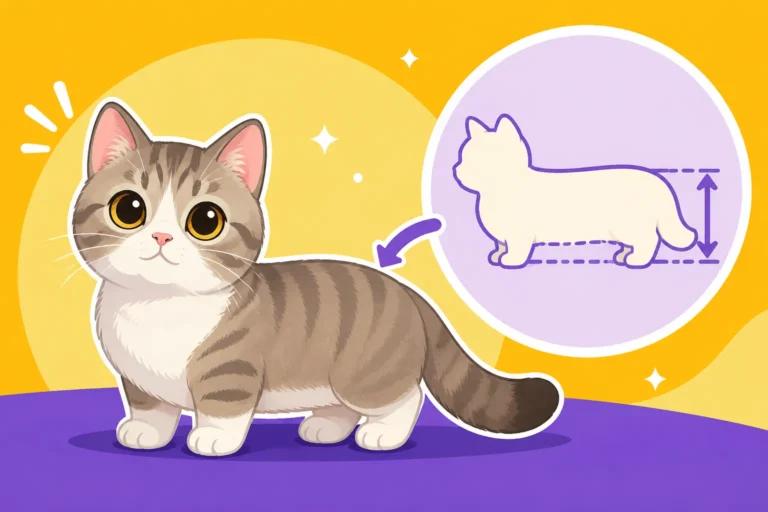
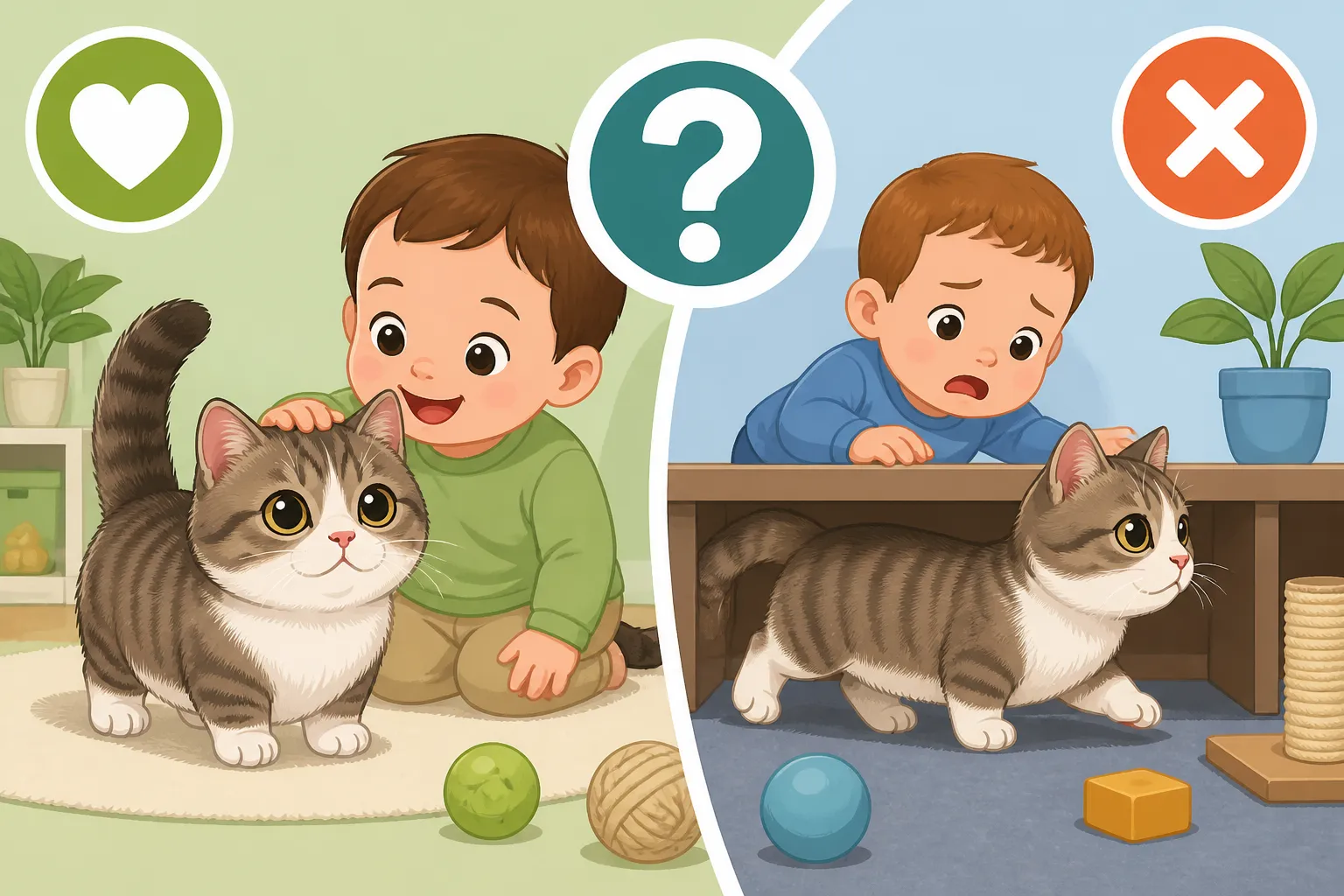
A Munchkin’s short legs also do not mean it cannot move quickly or jump. But a cat that feels crowded needs a dependable way to leave, and a toddler can unintentionally block a doorway, corner the cat beside furniture, or follow it into a hiding spot. Because a Munchkin may not be able to climb away as easily as some cats, it’s especially important to plan safe escape routes and protected places.
Before deciding, consider the child as they are today—not only how you hope they will behave after a few lessons. Toddlers are still learning impulse control and may forget rules when they are excited, tired, or upset. If an adult cannot stay close enough to interrupt unsafe interactions every time, the household may not be ready for a cat. For a broader fit check, see Whether a Munchkin Is the Right Cat for You.
The cat’s ability to retreat is part of the decision
A cat needs to be able to end an interaction. That means more than having a bed in a busy room: it needs a quiet, protected place where a toddler cannot follow, reach in, or block the exit. A high shelf may work for some cats, but it should not be the only retreat you rely on for a Munchkin. Instead, create safe spaces at floor level, such as a room with a child gate or a secure area behind a barrier.
Short legs do not prevent every climb or jump, but access can vary between cats and may change with age or health. Don’t assume a Munchkin can escape a toddler by getting onto a counter, climbing a tall cat tree, or squeezing through an opening. A useful planning question is: if the child approaches, can the cat leave without being chased or picked up? The practical concern is explored in Why a Munchkin Cannot Climb Away From Anything.
A cat’s retreat also needs to stay available during normal family life. If it is beside a toy pile, in a room where the toddler plays, or behind a door that is often shut, it may not offer much protection. Think through everyday routines: who opens the safe room, where the child plays, and whether adults can reliably keep the spaces separate when they are busy.
How to keep toddler and cat interactions safe
Supervision means staying close enough to intervene
For a toddler, “supervised” should mean an adult is present and attentive—not watching from another room or glancing over from a phone. Stay close enough to stop chasing, grabbing, climbing on furniture beside the cat, or reaching into the cat’s bed. If you need to leave, separate the child and cat behind a secure barrier or put the cat in its protected room with what it needs.
This level of supervision can feel demanding, especially during meals, phone calls, or the evening rush. That practical strain matters. If there is no realistic way to keep an adult nearby during the child’s waking hours, plan for reliable separation rather than expecting the cat to cope. A cat that cannot get away may scratch or bite when frightened, while a toddler may be hurt and the cat may become increasingly stressed.
Build the routine around predictable boundaries. The child can watch the cat play with a wand toy held by an adult, or help place a treat on the floor while an adult controls the interaction. Keep the cat’s food, litter box, and sleeping area out of the toddler’s play zone. A child should never be left alone with a cat, even if the cat has seemed tolerant before. Why a Toddler Cannot Be Left With a Munchkin covers why that boundary is important.
Teach gentle behavior without expecting perfect self-control
Keep instructions short and consistent: “Use one finger to stroke,” “Let the cat walk away,” and “We don’t pick the cat up.” Show the child how to touch the cat briefly on an area the cat accepts, then stop. Praise calm behavior, and end the interaction as soon as the cat turns away, crouches, hides, flicks its tail, or appears tense.
Do not ask a toddler to carry a Munchkin. A child may lose their balance, squeeze too tightly, or drop the cat, even when trying to be kind. If the cat needs to be moved, an adult should lift and support it securely, or invite it to walk into a carrier or another safe space. As the child grows, they can learn more about handling with close adult guidance. For a practical discussion of this boundary, see Why a Child Should Not Carry a Munchkin and How to Teach a Child to Lift a Munchkin.
It also helps to give the toddler alternatives to touching. They can toss a toy along the floor, help an adult prepare a meal, or look at the cat from a comfortable distance. These small routines let a child feel involved without making the cat responsible for tolerating constant contact.
| Household situation | What it may mean for a Munchkin | A safer approach |
|---|---|---|
| Toddler is learning not to grab | Rules may be forgotten in exciting moments | Stay within immediate reach and keep interactions brief |
| Cat has no child-free retreat | It may be unable to rest or end an interaction | Create a secure room or gated area the toddler cannot enter |
| Adults are busy or away from the room | Supervision can lapse without warning | Separate the cat and child whenever an adult cannot attend |
| Child wants to carry or hug the cat | The cat may be squeezed, dropped, or frightened | Make carrying and hugging off-limits; offer floor-level play instead |
| Cat regularly hides or avoids the child | Its current environment or interactions may be stressful | Increase separation and consult a veterinarian or qualified behavior professional if concerns persist |
Set up the home before bringing a cat home
Create routes and resources that work at floor level
Walk through the rooms where the Munchkin will spend time and consider what it can reach without jumping onto furniture. Keep water, food, a resting spot, and a litter box accessible. A low-entry litter box can be easier for a short-legged cat to use, while placing it away from the toddler’s play area gives the cat privacy. Make sure the child cannot corner the cat between its resources and a wall or piece of furniture.
A floor-level retreat should be comfortable and genuinely protected. It could be a quiet room with a bed, water, litter box, and toys, with a child gate or closed door managing access. Check that the cat has a clear path in and out, and that the toddler cannot reach through bars or push into the space. An adult can use the area to give the cat a break during busy parts of the day, not as punishment.
Plan enrichment that does not depend on climbing. Floor toys, food puzzles that the cat can use comfortably, and short play sessions with an adult can make the space engaging. If you are preparing for a kitten, How to Set Up a Home for a New Munchkin Kitten offers more ideas for arranging the home. Retailers such as Chewy may be one place to look for basic supplies, but check the item’s dimensions and stability rather than assuming a product designed for cats will suit your individual cat.
Make supervision and separation workable for your family
A home setup only helps if everyone can use it consistently. Agree on household rules before the cat arrives: which rooms are off-limits to the toddler, who checks that the gate is latched, and what happens when an adult needs to cook or answer the door. If other caregivers or relatives visit, explain the rules clearly. A single person who assumes “the cat is fine with the child” can undo a careful routine.
Look for gaps in the plan. Can the toddler open the safe-room door? Is the gate easy to climb? Does the cat have to pass through the child’s play area to get to its litter box? If the cat’s only bed is beside the toddler’s toys, move it. When making a space reachable, focus on continuous access to the things the cat needs, rather than adding a ramp or step without checking that it is stable and useful. Making One Room Reachable for a Munchkin All Day may help you think through a cat-friendly room layout.
Chewy or a local pet-supply shop may be useful for comparing gates, litter boxes, and floor toys, but household safety depends on the fit and setup. Measure the opening, check whether the gate can be secured properly, and consider whether the toddler can reach through it. Keep purchases secondary to the bigger question: can you maintain a calm, child-free zone for the cat every day?
Decide based on the cat and your family’s capacity
Choose the individual cat carefully
If you are considering a kitten, ask the breeder or rescue how it responds to everyday handling, unfamiliar people, and household noise. Ask what it does when it wants a break and whether it has lived around children. A confident kitten is not automatically comfortable with toddlers, and a friendly kitten still needs patient introductions and protection from rough handling. Watch how it behaves when it can approach or leave by choice.
An adult cat may offer a clearer picture of its established personality, although its history with children still matters. Ask how it reacts to sudden movement, loud sounds, and being approached while resting. If possible, observe the cat in a calm setting and make sure it can retreat during the visit. Avoid choosing based only on a cute photo or a promise that a cat is “good with kids.” The household has to fit the cat’s actual needs.
Whatever the cat’s age, ask about health, mobility, and any known handling sensitivities. A cat that is sore or unwell may be less tolerant of unwanted contact, and a toddler may not recognize subtle signs of discomfort. If you are unsure whether the cat can move comfortably around your home, arrange a veterinary check and discuss your household setup honestly.
Recognize when waiting is the kinder choice
A Munchkin may suit a family with a toddler if adults can supervise closely, the cat has secure ways to rest and retreat, and the child’s access can be managed consistently. It may be a poor fit if the home cannot offer separation, if the toddler is regularly left near the cat without an adult, or if family members expect the cat to tolerate being picked up and cuddled. Those are not small details to work out later; they are central parts of day-to-day care.
It is also reasonable to wait until the child is older, or to consider a different time in family life. That does not mean the child is bad or the breed is automatically unsuitable. It means the adult workload, the cat’s welfare, and the child’s safety need to work together. If you already have a Munchkin and interactions are tense, increase separation first, then seek guidance from a veterinarian or qualified feline behavior professional.
The most useful test is practical: can you protect the cat’s space on an ordinary, busy day—not just when everyone is calm and attentive? If the answer is yes, a carefully chosen cat and thoughtful home setup may make cohabitation possible. If the answer is no, delaying the decision may be safer and kinder for everyone.
Disclaimer
This article is for general informational purposes only and does not constitute professional advice. Laws, prices and regulations vary by location and change over time. Consult a qualified professional for guidance on your specific situation.