What a Munchkin’s Body Type Is Called
A Munchkin’s body type is commonly described as semi-foreign: a medium-sized, moderately built cat with a fairly long torso and short legs. That combination can look unusual, but it does not mean the cat should have a shortened body or a heavy, barrel-shaped frame. Here’s how to understand the terminology and tell normal breed proportions from a body shape that deserves a closer look.
The Munchkin body type is generally called semi-foreign
What semi-foreign means in cat terminology
“Body type” describes a cat’s overall proportions: its torso, bone structure, muscle, and general outline. In breed descriptions, semi-foreign usually means a cat has a moderate, balanced build rather than an extremely fine-boned, sleek frame or a broad, heavily compact one. It is a broad descriptive term, not a diagnosis or a measurement you can determine from one photograph.
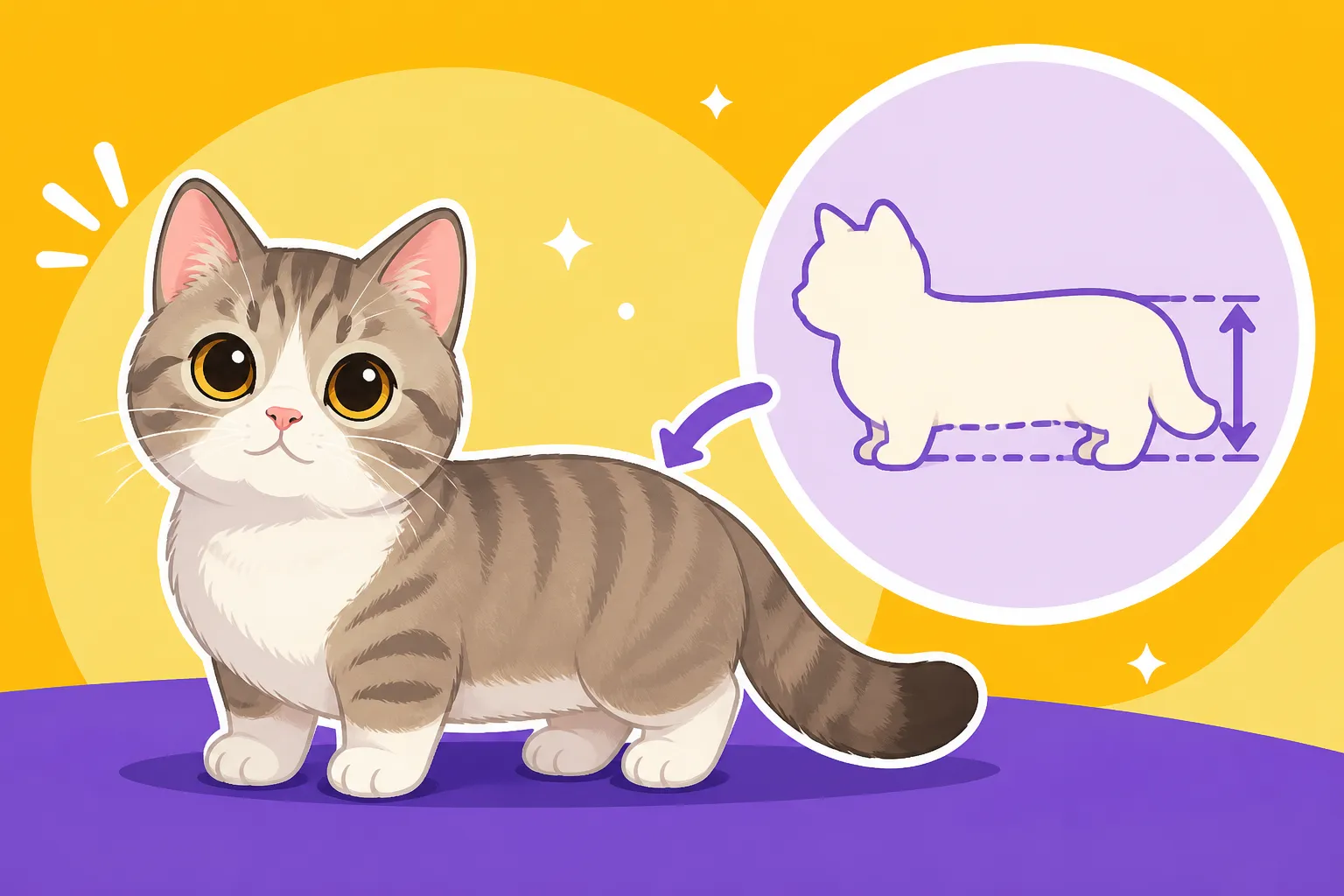
Munchkins are often described as having a medium-sized body with moderate boning and noticeable musculature. Their torso is not meant to be miniature simply because their legs are short. Seen from the side, a healthy adult may look relatively long through the body, with a level back and a low-to-the-ground stance. The short legs change the cat’s height and silhouette; they do not, by themselves, define the shape of the torso.
Breed language can vary in emphasis between descriptions and registries. For that reason, it is more useful to think of “semi-foreign” as a shorthand for a moderate, balanced outline than as a rigid template. The broader proportions and the cat’s health matter more than whether someone applies that particular label.
How a moderate frame differs from extreme body types
A semi-foreign Munchkin is not supposed to resemble an especially fine-boned, narrow-bodied cat, nor should it be built like a very heavy, rounded cat. “Moderate” is the key idea: the body should look substantial enough to be well-muscled, but not so bulky that the cat appears overloaded or cumbersome.
The short legs can make the torso look longer or heavier than it would on a taller cat, even when the cat is at a healthy weight. The eye often compares the body with the ground rather than with the cat’s underlying frame. That’s why a Munchkin may look unusually low and long without actually having an abnormally long spine or an oversized body.
If you are trying to picture the proportions, What a Munchkin Looks Like Against the TICA Standard gives a related overview of the breed’s appearance. The standard is useful for understanding the intended outline, but it should not replace an individual veterinary assessment. Cats vary, and a breed description does not guarantee that every Munchkin will look exactly alike.
How short legs affect the way the body looks
The torso stays distinct from the legs
The defining visual contrast is a body of ordinary cat proportions carried close to the floor by shorter legs. A Munchkin is not simply a normal-legged cat crouching down, and short legs do not mean the chest, abdomen, or back must also be shortened. Looking at the cat as a whole helps: consider the length and shape of the torso, the way the back sits, the muscle over the shoulders and hindquarters, and whether the cat moves comfortably.
This is why a Munchkin’s outline can be misleading in a quick photo. A low camera angle, a tucked sitting posture, long belly fur, or a rounded abdomen can make the cat appear more compact or heavier than it is. A side-on view of the cat standing naturally is usually more informative than a picture taken while it is curled up or reaching for something.
The relationship between body and limb length is also part of what distinguishes this breed from other forms of dwarfism. Why a Munchkin's Body Must Be Normal Length and How a Munchkin Differs From a Dwarf Cat explore that distinction. In everyday terms, the intended Munchkin outline is a normal-length torso on short legs, not a generally compressed body.
Why a low stance is not the same as a short body
A cat’s height at the shoulder is affected by leg length. Since a Munchkin’s legs are shorter, its belly and chest sit closer to the floor. That low stance can make the body look unusually long, especially when the cat is walking across a smooth floor or standing beside a taller cat. It does not necessarily mean the spine itself is unusually long.
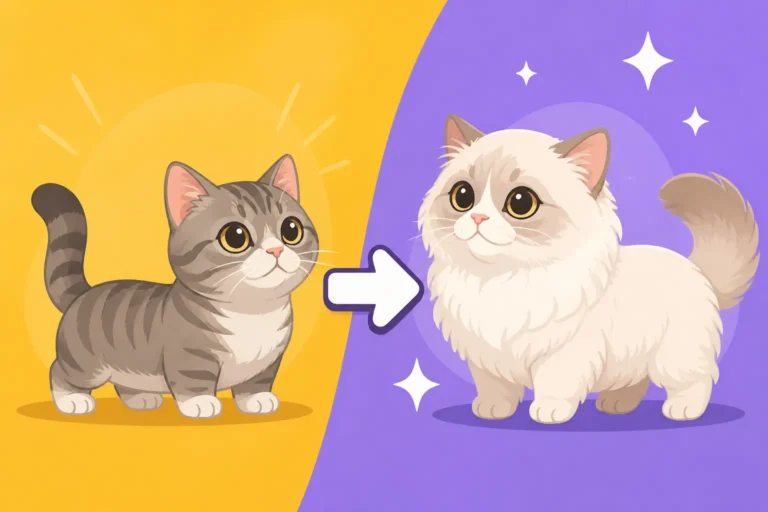
A long-haired coat can add to the impression. Fur around the belly and hindquarters may hang down and visually blur the outline of the legs. In a short-haired cat, the body-to-leg contrast may be clearer, while in a long-haired cat the body can look rounder or lower than it really is. Looking through the coat at the cat’s actual shape, rather than judging by the outline alone, helps prevent misunderstandings.
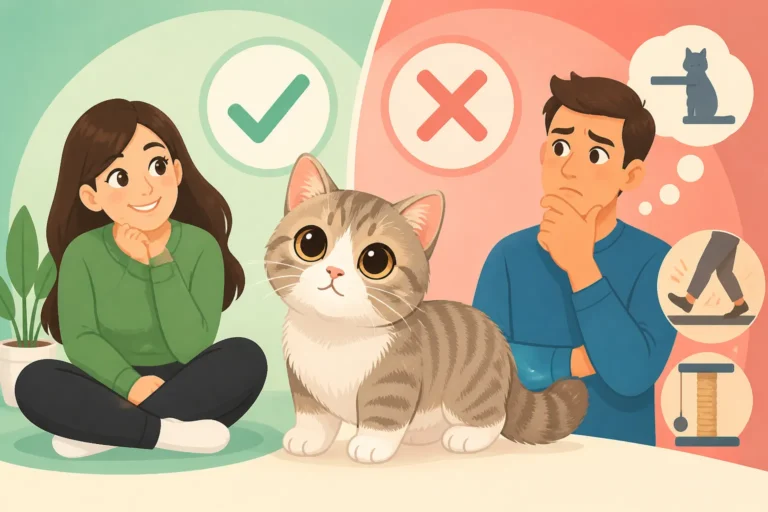
If a cat suddenly looks hunched, unusually rounded, or reluctant to stand and move, that is different from its usual low-slung appearance. A visible change in posture or movement deserves attention, particularly if it appears with discomfort, reduced activity, or trouble getting to familiar places. Breed type is not a reason to dismiss a new physical change as “just how the cat is built.”
What a balanced Munchkin frame looks like
Moderate does not mean a fixed size
A body-type label does not tell you how much an individual cat should weigh or how tall it should be. Munchkins vary in size, coat, and proportions, just as other cats do. A moderate frame refers to the overall build, not a single ideal number that applies to every adult.
When judging condition, focus on the cat’s shape and feel rather than on a visual impression from above. A thick coat, a low belly, or a broad chest can make it difficult to spot the waist. Gentle hands-on assessment can help you and your veterinarian determine whether the ribs are easy to feel beneath a light layer of tissue and whether the cat is carrying excess fat. For an overview of the breed’s general size range, see How Big an Adult Munchkin Gets.
The practical issue is that extra weight changes the appearance of the whole frame. A cat that already stands low can look especially round when overweight, and added weight can make movement less comfortable. A Munchkin’s body type should not be used as an excuse to overlook weight gain. Regular check-ins with a veterinarian can help distinguish normal proportions from changes in body condition.
Body shape and leg shape should be considered separately
People sometimes use “body type” to describe the entire cat, then assume that any unusual feature belongs to one single category. It is clearer to separate the torso from the limbs. The torso may be medium-sized and moderately built, while the legs are distinctly short. The exact leg appearance can vary between cats, so a short-legged look alone does not explain every detail of their stance or gait.
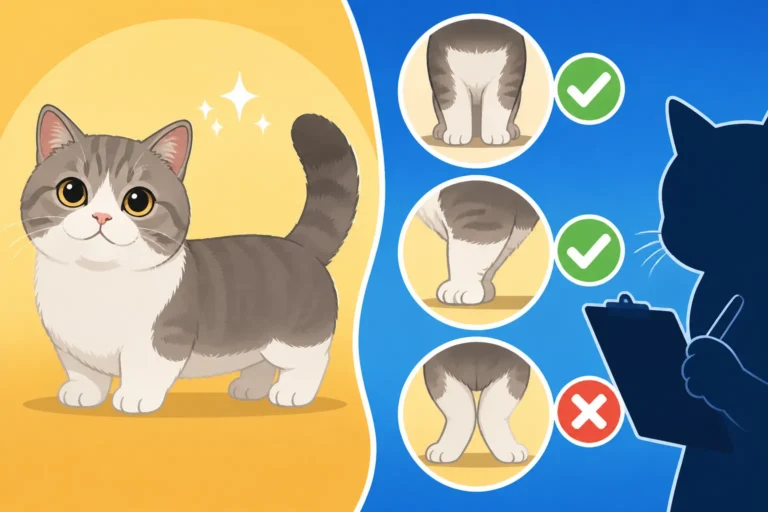
For a closer look at limb conformation, How a Munchkin's Legs Are Judged is a useful companion topic. The body and legs should be considered together when assessing overall balance, but they are not interchangeable features. A cat’s breed label also cannot establish whether a particular movement pattern is healthy; a veterinarian can assess gait, comfort, and physical condition in context.
This distinction is helpful when looking at kitten listings or meeting a cat for the first time. A posed photograph can make the legs seem shorter, the torso seem rounder, or the back look more level than it does in motion. If you are evaluating a kitten, observe it walking and playing naturally, and ask about its health history rather than relying on a single visual impression. What a Standard Munchkin Is and What a Rug Hugger Munchkin Is explain terms sometimes used to describe leg length, but those labels do not substitute for a health assessment.
| Feature | What the term or appearance usually describes | What it does not tell you by itself |
|---|---|---|
| Semi-foreign body type | A moderate, balanced build rather than an extremely fine or heavily compact frame | Exact weight, health, or ideal proportions for every individual cat |
| Medium-sized torso | A body that is not meant to be shortened simply because the legs are short | Whether the cat is at a healthy body condition |
| Low-to-the-ground stance | The visual effect of shorter legs carrying the body closer to the floor | That the spine is unusually long or that the cat is in pain |
| Rounded outline | A possible result of coat, posture, or body condition | Whether the cat is overweight without a hands-on assessment |
| Short legs | A defining feature of the Munchkin’s appearance | Whether the cat’s movement and joints are healthy |
How to assess the body type without relying on a photo
Look at the cat standing and moving naturally
Start with an ordinary standing posture, ideally on a surface where the cat can walk without slipping. Notice whether the torso looks balanced, whether the back appears level in a relaxed stance, and whether the cat moves willingly. Do not try to force a pose or repeatedly encourage a jump just to see what the cat can do. Normal movement around a room can offer useful context without turning the observation into a physical test.
Photos can still be helpful, but they have limits. A wide-angle phone camera can exaggerate whichever part is closest to the lens. A cat photographed from floor level may look longer and lower; a top-down picture may make the torso appear broader. Coat length, camera angle, and posture all affect what you think you see.
If you are comparing cats, remember that “more compact” or “longer-looking” is not automatically better or worse. The goal is not to find a single perfect silhouette. It is to understand the cat’s build and notice whether there are changes, discomfort, or difficulty with ordinary activities. A cat that has always had a low outline is different from one that has recently started moving stiffly or holding its body differently.
Ask a veterinarian about changes or concerns
A veterinarian can assess more than appearance. They can feel the body condition, observe the cat walking, and consider whether a posture or movement change warrants further examination. If you are concerned about a kitten or adult Munchkin, bring clear observations: when you first noticed the difference, whether it happens all the time, and what activities seem harder.
A video of the cat walking at home may help show a pattern that is difficult to reproduce in a clinic. This can be especially useful if the cat behaves differently in a new environment. For a broader guide to distinguishing breed appearance from other causes of short legs, see How to Tell a Munchkin From a Cat With Injured Legs.
Everyday setup can also matter to a low-slung cat. A litter box that is easy to enter and stable steps or ramps to favorite resting places may reduce the need for repeated awkward climbs. If you are browsing retailers such as Chewy for a low-entry litter box, check the entrance height and the usable floor space rather than choosing by the product label alone. A box with a low opening can still have sides high enough to contain litter.
For grooming, the torso’s low position can make belly and hindquarter fur more likely to pick up debris or form tangles, particularly in a long-haired cat. A suitable comb and a gentle routine can make those checks easier. Chewy is one place owners may look for basic grooming tools, but the right tool depends on coat type and the individual cat’s tolerance. If you have difficulty reaching a mat safely, ask a veterinary professional or groomer for help rather than pulling at it.
The most useful takeaway is simple: “semi-foreign” describes a moderate body build, while the Munchkin’s short legs create its distinctive low outline. Assess the torso, limbs, body condition, and movement as related but separate details. If a shape or gait changes, seek an individual veterinary opinion instead of assuming it is part of the breed.
Disclaimer
This article is for general informational purposes only and does not constitute professional advice. Laws, prices and regulations vary by location and change over time. Consult a qualified professional for guidance on your specific situation.