How Popular the Munchkin Is in Japan
A Munchkin’s short legs and expressive, low-to-the-ground movement make it instantly recognizable in photos and videos, but online attention does not tell us how many people own one in Japan. This guide separates the breed’s visibility from measurable popularity, explains why it attracts interest, and outlines what to consider before treating its appeal as evidence of widespread ownership.
How popular is the Munchkin cat in Japan
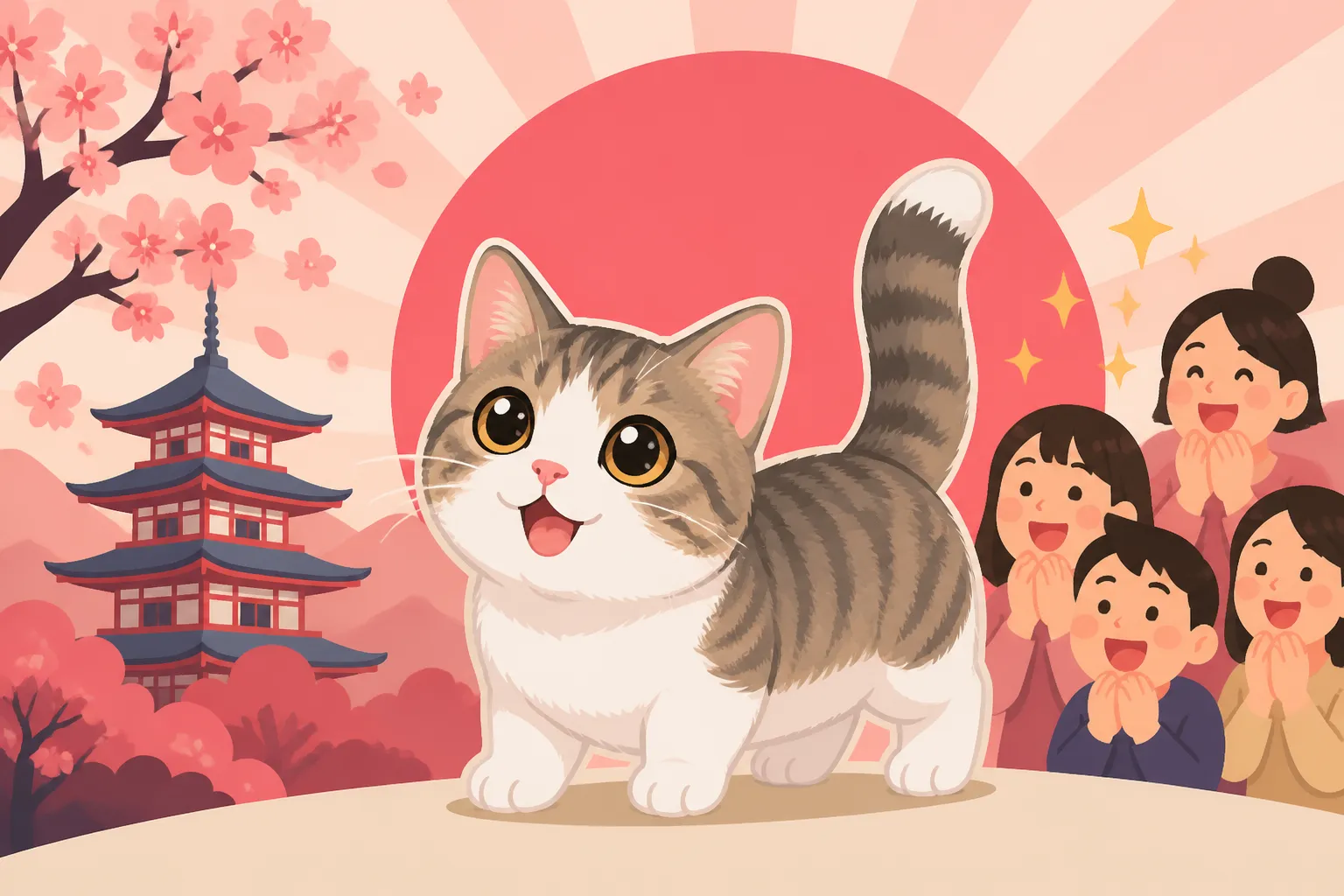
The careful answer is that Munchkins are visible and recognizable in Japan, but their exact popularity is difficult to measure. A breed can show up often in social media posts, pet content, and search results without being among the country’s most commonly owned cats.
It helps to separate three different things: public interest, availability, and the number of cats actually living in Japanese homes. Those measures do not automatically rise or fall together.
Visibility is not the same as ownership
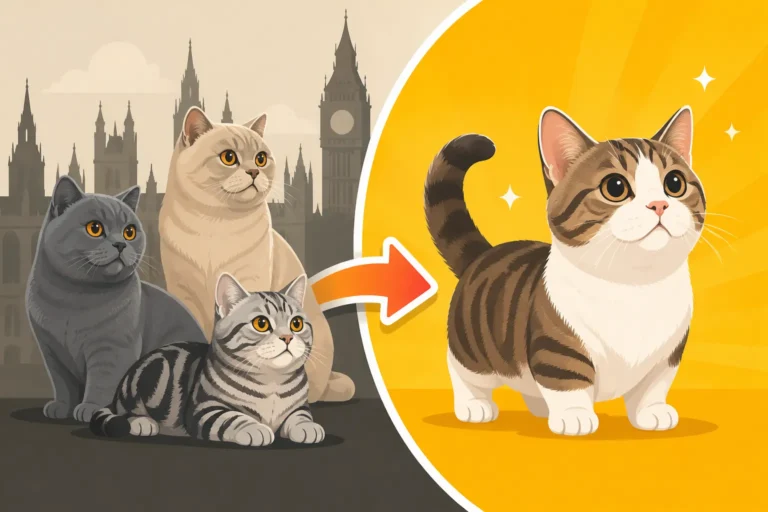
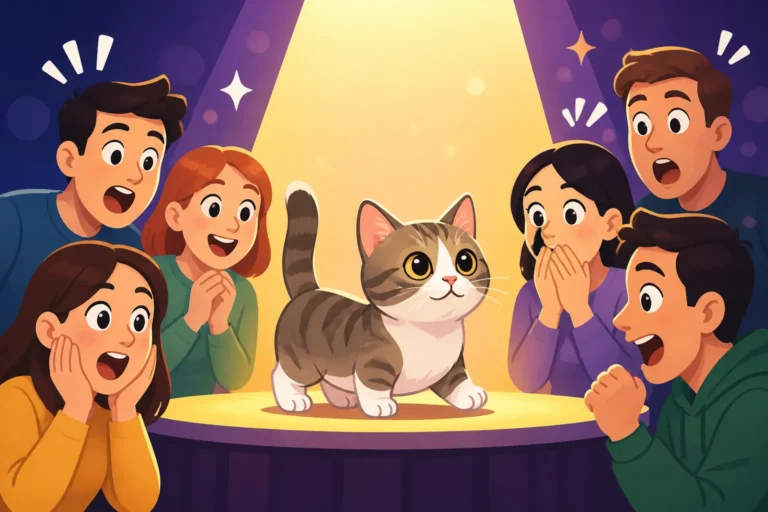
The Munchkin’s appearance makes it easy to notice. Short legs create a distinctive silhouette, and the cat’s low stance can make ordinary behaviors—trotting after someone, sitting upright, or investigating a toy—especially striking on camera. That visual distinctiveness is well suited to short-form videos and shareable photos.
But online visibility can be misleading. A memorable image may be reposted repeatedly, and a small number of cats can generate a great deal of content. A video that circulates widely does not establish how many Munchkins live in Tokyo, Osaka, Kyoto, or elsewhere in Japan.
It is also useful to distinguish breed recognition from breed registration. Many people may recognize a short-legged cat without knowing whether it is registered as a Munchkin, has known ancestry, or is simply a domestic cat with short legs. The difference matters when someone tries to turn online attention into a claim about the breed’s size or prevalence. For background, How a Munchkin Differs From a Dwarf Cat explains why appearance alone does not settle every question about a cat’s type.
Popularity depends on what is being counted
There is no single everyday measure that captures “how popular” a breed is. Registration records, breeder listings, search interest, social media engagement, and household pet surveys each answer a different question. Some count documented pedigrees; others reflect what people are curious about or what sellers are advertising.
| Measure | What it can indicate | What it cannot prove by itself |
|---|---|---|
| Social media posts and views | How much attention the breed attracts online | How many Munchkins are owned |
| Breeder listings | Whether kittens are being offered in a market | How many are responsibly bred or ultimately placed |
| Registry records | Documented registrations within a particular system | Every cat living in the country |
| Search interest | What people are curious about at a given time | Ownership, welfare, or long-term demand |
| Pet surveys | Household ownership patterns, depending on the survey | Complete counts of every breed or unregistered cat |
This distinction is especially important for a breed whose recognition varies between cat organizations. A registry may accept a breed while another does not, so figures from one system may not represent every cat people call a Munchkin. Which Registries Refuse the Munchkin Today offers useful context for understanding why registry-based comparisons can be incomplete.
For the same reason, a claim that Munchkins are “one of Japan’s most popular cats” needs a clear definition and reliable data behind it. Without that, it is more accurate to say that the breed has a visible public profile and attracts interest, rather than assigning it a definite national rank.
Why the Munchkin attracts attention in Japan
A few features make the breed especially easy to notice: its unusual proportions, the lively way it moves, and the contrast between its short legs and ordinary cat behavior. Those qualities can make the Munchkin appealing to people encountering it online or in person, although they do not explain how many households choose one.
Japan’s broader interest in cats also provides a setting in which distinctive breeds can receive attention. Still, general affection for cats should not be mistaken for proof that any particular breed is widely owned.
A distinctive look makes the breed memorable
Munchkins have a normal-length body with shorter-than-usual legs. That combination gives the cat a low profile that is immediately recognizable in a photograph. Viewers do not need specialist knowledge to notice the difference, which can help a breed travel quickly through visual media.
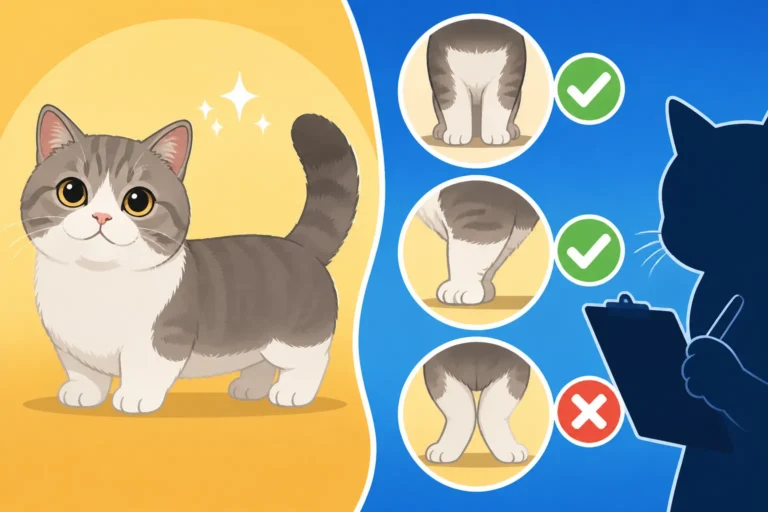
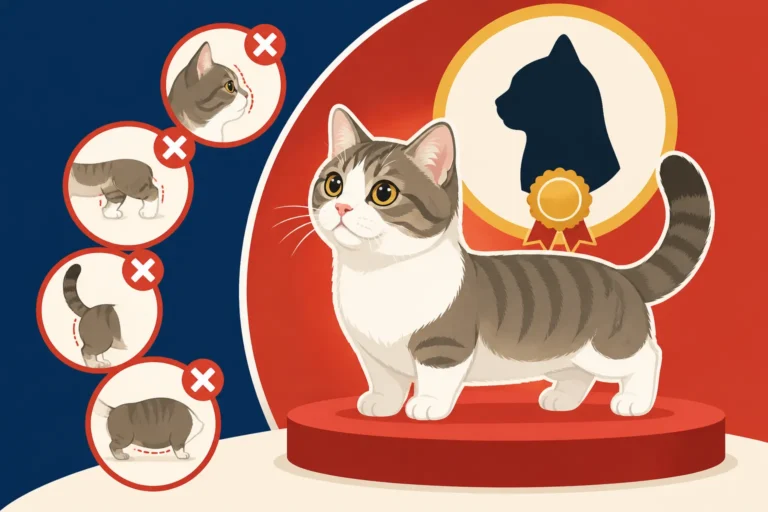
The Munchkin’s appeal is not only about appearance. Owners and viewers may enjoy watching a cat play, investigate objects, or move around the home. The cat is still a cat with individual preferences and abilities; short legs do not make every Munchkin behave in exactly the same way. What the TICA Munchkin Standard Asks For provides more detail on the breed’s described appearance, while How a Munchkin's Legs Are Judged covers the way leg conformation is considered in the show context.
A recognizable look also makes marketing easy. That can be a mixed blessing. A striking kitten photo may draw attention before a prospective owner has learned about movement, health, breeding practices, or the needs of an adult cat. It is worth looking beyond the image and asking what kind of life the cat will have in a real home.
Cat culture does not equal breed ownership
Japan has a strong public interest in cats, expressed through everything from cat-themed goods to cafés and online communities. But that broader cultural visibility says little on its own about the number of Munchkins kept as pets. A country can be enthusiastic about cat imagery while most households own domestic mixed-breed cats or other breeds.
There is also a difference between interest in a breed and practical access to one. Prospective owners may encounter a Munchkin in a video or listing yet have no nearby ethical breeder, clear pedigree information, or reliable local health guidance. How Popular the Munchkin Is Worldwide gives a broader frame for considering international interest without treating visibility in one country as a precise count.
If you are comparing the Munchkin’s appeal with other short-legged breeds, it helps to understand how breed labels and crossbreeding are used. A cat advertised with an additional breed name may have a different background from a standard Munchkin. Why Munchkin Crosses Worry Veterinarians explains why adding another distinctive trait can raise separate welfare questions.
What can be said about Munchkin ownership in Japan
The most responsible description is that Munchkins appear to have public visibility and attract interest in Japan, but exact ownership figures and a defensible national ranking should not be assumed without clear, comparable data. This is not an evasive answer: it distinguishes what can be observed from what would require a reliable count.
That distinction matters for anyone considering buying, adopting, or breeding a Munchkin. Popularity does not tell you whether a particular kitten has been well cared for, whether its background is documented, or whether the household is suited to its needs.
Availability does not establish responsible breeding
A kitten listing is evidence that someone is offering a cat, not proof that demand is high or that the breeder follows sound practices. Listings can be duplicated, remain online after a kitten has been placed, or use broad breed descriptions that are difficult to verify.
A prospective owner should ask for clear information about the kitten’s parents, veterinary care, socialization, and the terms of sale. It is sensible to see the kitten move rather than judging only from a still photograph. A responsible seller should be willing to discuss the cat’s background without pressuring you to make a fast decision. What a Munchkin Breeder Should Be Able to Show You is a useful checklist for those conversations.
Be cautious of claims that use exaggerated labels or promise that a particular kitten is unusually tiny, especially when the seller cannot explain its health and family history. Popularity can create demand for eye-catching descriptions, but a catchy label does not guarantee responsible care. The same caution applies whether you find a breeder locally, through a referral, or through an online marketplace.
Ownership requires more than admiration for the look
A Munchkin needs the same everyday care as any cat, along with thoughtful attention to how it moves around its home. Furniture, litter boxes, and favorite resting spots may need to be arranged so the cat can reach them comfortably. The right setup depends on the individual cat and its home, not on a social media image of what Munchkin ownership looks like.
This practical side can get lost when a breed becomes known for a distinctive appearance. Someone who loves watching a Munchkin online may not have considered whether their home has repeated high jumps, slippery flooring, or places the cat cannot reach without assistance. Which Household a Munchkin Fits explores the kinds of home situations prospective owners should think through.
If you live outside Japan and are researching supplies, remember that retailers serve different markets and product availability varies by location. In the United States, owners may use Chewy to browse ordinary pet-care items, but that does not make it a source of Japanese ownership statistics or a substitute for local veterinary advice. Chewy is one example of a retailer an American owner might consult when comparing basic supplies; a Japanese owner should check what is available through local shops and services. When planning equipment, focus on fit, stability, and the cat’s comfort rather than buying something because it is marketed specifically for a breed.
How to interpret claims about the breed’s popularity
When you see a post or article calling the Munchkin “very popular in Japan,” ask what the claim means. Does it refer to online attention, breeder availability, registration, or household ownership? A clear answer should name the measure and explain its limitations.
A little skepticism is useful, but it does not mean dismissing the interest people genuinely have in the breed. It simply keeps a striking appearance, a popular video, or a seller’s claim from being mistaken for a national count.
Questions to ask before trusting a popularity claim
Look for a defined time period, a clear population, and a transparent method. For example, a count of registrations from a particular registry would not include every cat called a Munchkin, while a search trend would measure interest rather than pets in homes. Those are different facts, not competing versions of the same fact.
Also check whether the statement separates Japan from wider international interest. A breed may have a lively online presence among Japanese viewers even if the number of registered cats there is unknown. Why Japan Buys So Many Munchkins is a related topic, but even a discussion of buyer interest should not be treated as a substitute for documented ownership data.
Be especially careful with precise claims that appear without an explanation of how they were collected. A number can sound authoritative while omitting unregistered cats, duplicated listings, or differences between registries. If a claim does not say what it counts, it cannot reliably answer how popular the breed is.
A balanced way to describe the Munchkin in Japan
For casual conversation, it is reasonable to say that the Munchkin is recognizable and attracts interest in Japan, particularly because its appearance is distinctive and easy to share visually. It is more difficult to say how many Japanese households own one or to rank the breed against others without well-defined data.
That balanced description also avoids turning popularity into a recommendation. A breed’s visibility does not establish that it is right for every home, that every breeder is responsible, or that the breed’s welfare questions are settled. Whether Buying a Munchkin Is an Ethical Decision offers a broader way to think through those questions before making a decision.
For anyone considering a Munchkin, the most useful next step is not to chase a popularity ranking. It is to learn about the individual cat, ask careful questions about its history and care, and consider whether you can provide a safe, comfortable home for the whole of its life.
Disclaimer
This article is for general informational purposes only and does not constitute professional advice. Laws, prices and regulations vary by location and change over time. Consult a qualified professional for guidance on your specific situation.