What Britain Recorded Before the Munchkin Existed
When we talk about the Munchkin cat, most people immediately think of its modern origins in the United States in the 1980s, often picturing the adorable short-legged felines that became popular. However, the idea of a cat with uniquely short legs isn't actually a brand-new phenomenon cooked up in recent decades. In fact, if you dig into the history books and old veterinary records, you'll find fascinating accounts from across the pond, specifically in Britain, that predate the modern Munchkin by quite a significant margin. This guide is going to take you on a journey back in time to explore these lesser-known, intriguing records of short-legged cats that roamed British lands long before the Munchkin became a recognised breed.
Early Accounts of Short-Legged Cats in Britain
It’s easy to assume that any cat with unusually short legs must be a Munchkin, but history tells us a different story. Long before the term "Munchkin" was ever coined, there were reports and even formal documentation of cats exhibiting the very same characteristic: legs that were remarkably shorter than those of their long-limbed counterparts. These early sightings weren't just folklore; some were actually recorded by veterinary professionals, providing a tantalising glimpse into the genetic diversity that has always existed within the feline population.
Anecdotal Observations and Local Lore
Before scientific studies and formal breed registries, observations of unusual animals often started as local stories and anecdotes. Imagine a small English village decades ago, where one particular cat stands out because its legs are noticeably shorter, giving it a distinctive waddle or a low-slung appearance. Such a cat would undoubtedly become a talking point among neighbours, perhaps even earning a unique nickname. These were the kinds of casual observations that, over time, built a picture of naturally occurring variations within the domestic cat population. People might have seen these cats as simply "different" or "quirky," not necessarily as precursors to a new breed.
These anecdotal accounts, while not scientific, are crucial because they suggest that the spontaneous mutation causing short legs wasn't a one-off event tied to a specific lineage or geographic location. Instead, it hints at a broader potential for this genetic trait to manifest randomly. Without photographic evidence or detailed anatomical descriptions, we can only speculate about the precise nature of these cats, but the consistent theme of unusually short legs is compelling. They were cats that simply existed within the regular feline population, navigating their world with a slightly different stride.
The 1944 Report from Dr. H.E. Williams-Jones
One of the most significant pieces of evidence for short-legged cats in Britain comes from an official report published in 1944 by Dr. H.E. Williams-Jones, a British veterinarian. This wasn't just a casual observation; it was a detailed clinical description of several short-legged cats living in the United Kingdom. Dr. Williams-Jones described these cats as having normal-sized bodies but unusually short, robust legs, a description that is strikingly similar to the modern Munchkin. This report, published during wartime, suggests a degree of scientific interest even amidst pressing global concerns, highlighting that these cats were distinct enough to warrant medical attention and documentation.
The cats in Dr. Williams-Jones's report were not specifically bred for their short legs; they appeared spontaneously within litters of otherwise normal domestic cats. This fact is vital because it underscores the natural occurrence of the genetic mutation responsible for pseudoachondroplasia, the form of dwarfism seen in Munchkins. He noted their normal agility and playful nature, despite their unique physical structure, challenging any immediate assumptions of disability. This report stands as a testament to the fact that the genetic trait for short legs was present and observed in the European cat population decades before the American Munchkin breed gained recognition. It's a key historical document that often surfaces in discussions about Whether Short Legged Cats Existed Before the Munchkin.
Descriptions of the "Stalingrad Cats"
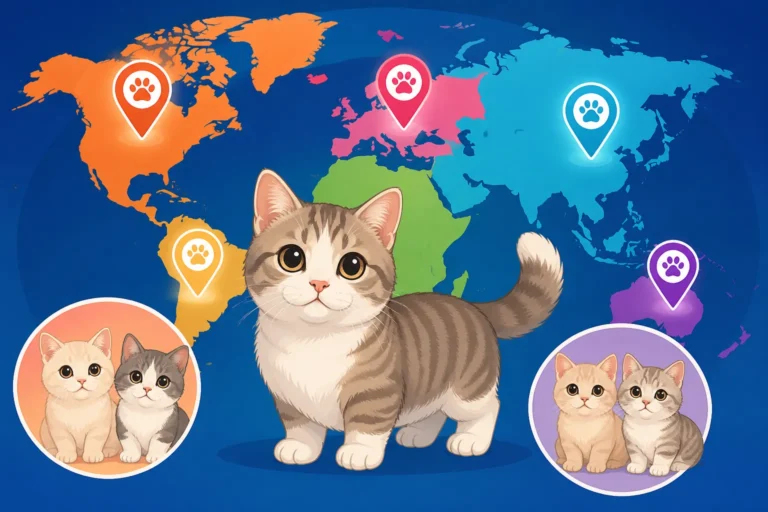
While Dr. Williams-Jones's report specifically documented cats in Britain, it's worth noting that similar reports of short-legged cats emerged from other parts of Europe around the same period, particularly from Russia. These cats, sometimes referred to as "Stalingrad cats," were observed after World War II. They were described as having short legs and a stocky build, much like their British counterparts, and were also noted for their agility and survival instincts in harsh conditions. While not directly British, the existence of these cats across the continent strengthens the argument that the short-leg mutation was a naturally occurring phenomenon, not limited to a single geographical pocket.
These European accounts collectively paint a picture of a world where short-legged cats occasionally appeared, captivating observers with their unique gait and proportions. The fact that these cats were seen thriving in various environments, from British homes to war-torn Russian cities, suggests a robust genetic trait that allowed them to live full, active lives. These historical snippets are often brought up when discussing What Britain Recorded in 1944 That Resembled a Munchkin, providing context for how naturally occurring genetic variations can appear globally.
The Characteristics of These Early Short-Legged Cats
When we look back at the descriptions of these historical short-legged cats, it's natural to compare them to the Munchkin cat we know today. Were they truly the same? Did they share the distinctive traits that make a Munchkin a Munchkin, or were there subtle differences that set them apart? Understanding these nuances helps us appreciate the consistent nature of this particular genetic mutation.
Similarities to Modern Munchkins
The most striking similarity, of course, is the short legs themselves. Dr. Williams-Jones's descriptions align remarkably well with what we now consider the hallmark of a Munchkin: a normal-sized body with disproportionately short limbs. He noted that the cats moved and played like any other cat, which is a common observation among modern Munchkin owners. This agile, playful nature, despite the shorter stature, suggests that the mutation primarily affected limb length without necessarily compromising overall mobility or vitality. You see this same resilience in today's Munchkins, whether they're scrambling up a specially designed cat tree or chasing a wand toy across the floor.
Furthermore, the observations suggested that these cats displayed an autosomal dominant inheritance pattern, meaning that only one copy of the gene was needed for the trait to be expressed. This is exactly how How Munchkin Dwarfism Is Inherited is understood today. The normal body length, coupled with the shortened legs, is characteristic of pseudoachondroplasia, which is the specific type of dwarfism seen in the Munchkin breed, distinct from other forms of dwarfism that might affect overall body size or head shape.
Differences and Unresolved Questions
While the physical similarities are compelling, there are naturally many unanswered questions about these early cats. For instance, detailed health records like those we strive for today simply didn't exist. We don't have extensive veterinary histories documenting potential predispositions to conditions such as lordosis or pectus excavatum, which are sometimes debated in modern Munchkins. Lordosis Is the Spinal Curve the Munchkin Argument Is About and Pectus Excavatum and the Munchkin's Sunken Chest are complex health considerations that weren't likely to have been thoroughly investigated in the 1940s.
Another difference lies in the breadth of genetic understanding. While Dr. Williams-Jones observed the inheritance pattern, the specific gene responsible for the short-leg trait in Munchkins has still not been identified, even today. This means that comparing the exact genetic makeup of the 1940s cats to modern Munchkins remains a challenge. We also lack extensive information on their breeding practices, if any, beyond their spontaneous appearance. There were no formal breeding programs tracking lineage, health, or temperament in the same way modern breeders meticulously document their cats and litters, often using online platforms like Chewy to order specific health-focused foods.
The Mystery of Their Disappearance
One of the biggest mysteries surrounding these early short-legged cats in Britain and Europe is why they didn't lead to a widespread, recognised breed at the time. Unlike the Munchkin, which gained significant attention and eventually championship status with TICA in the US, these earlier lines seemingly faded from public consciousness. There are several contributing factors to this disappearance.
Firstly, there wasn't a concerted effort to perpetuate the trait through selective breeding. These were often isolated occurrences, and without dedicated breeders actively working to maintain and expand the lineage, the trait would naturally become diluted in the broader cat population over generations. Secondly, the societal context of the mid-20th century was vastly different. Post-war Britain had other priorities, and the idea of deliberately breeding a cat for a physical anomaly, especially one that might be perceived as a 'defect' rather than a 'feature,' wasn't as prevalent or accepted as it became decades later. Finally, the individuals who observed and documented these cats may not have had the resources, connections, or inclination to establish a breeding program. The idea of a formal "breed" was still evolving, and the concept of deliberately isolating and promoting a genetic mutation was far less common. This explains Why Earlier Munchkin Type Cats Died Out.
Why These Early Discoveries Didn't Lead to a Formal Breed
The existence of short-legged cats in Britain in the 1940s raises a pertinent question: if these cats were observed and even documented, why didn't they become a recognised breed then and there, rather than waiting until the 1980s in Louisiana for the Munchkin to emerge? The answer lies in a complex interplay of scientific understanding, societal attitudes, and the structure of the cat fancy at the time.
The State of Cat Fancy in the Mid-20th Century
The world of cat fancy in the mid-20th century, especially in Britain, was quite different from what we know today. While there were certainly established breeds like Persians and Siamese, the focus was often on preserving existing standards rather than introducing radical new genetic mutations. There was a more conservative approach to what constituted an acceptable "breed." Many cat organisations, particularly in Europe, held a strong belief that any trait considered a physical deformity or a potential health compromise should not be intentionally perpetuated. This philosophy often led to skepticism, if not outright rejection, of breeds based on unusual physical traits.
Unlike modern registries that sometimes accept experimental breeds, the cat fancy then was less open to novel mutations that might challenge traditional notions of feline health and conformation. A cat with unusually short legs, despite its apparent health and agility, would likely have been viewed with caution. The emphasis was on traits that enhanced the cat's natural abilities or aesthetic beauty within well-defined, long-standing parameters, rather than on unique genetic variations.
Lack of Genetic Understanding and Breeding Programs
Another significant factor was the limited understanding of genetics compared to today. While basic Mendelian inheritance was known, the intricacies of specific genetic mutations and their long-term health implications were not as thoroughly studied or understood. Without a clear scientific grasp of how the short-leg trait was inherited, what health risks it might carry, or even how to consistently reproduce it, establishing a formal breeding program would have been incredibly challenging.
Furthermore, the infrastructure for systematic breeding programs was not as developed. Breeders didn't have the extensive networks, genetic testing capabilities, or widespread media attention that can help launch a new breed in the modern era. The initial short-legged cats in Britain were likely isolated cases, and without a dedicated group of individuals committed to preserving and promoting the trait, it simply couldn't gain traction. This is in stark contrast to the concerted efforts that eventually led to Blackberry and Toulouse Are the Two Cats Behind Every Munchkin and the formal establishment of the Munchkin breed in the US.
World Events and Societal Priorities
It’s also crucial to consider the broader historical context. The 1940s were a period dominated by World War II and its immediate aftermath. Resources were scarce, and societal priorities were focused on recovery, reconstruction, and basic necessities. The idea of dedicating time, effort, and resources to developing a new cat breed based on a genetic anomaly would have been far down the list of public concerns.
People were more focused on survival and rebuilding than on leisure activities like cat breeding. This era simply wasn't conducive to the kind of long-term, focused commitment required to take a naturally occurring mutation and elevate it to breed status. The focus was on practicality, not on novelty or unique aesthetics in companion animals.
Connecting the Past to the Present Munchkin Debate
The historical records of short-legged cats in Britain, while fascinating, aren't just historical curiosities. They play a significant role in the ongoing discussions and debates surrounding the modern Munchkin cat breed. These past observations lend weight to certain arguments while also highlighting the evolution of our understanding and ethics in animal breeding.
The Argument for "Natural" Occurrence
One of the main points often made by proponents of the Munchkin breed is that the short-leg mutation is a natural, spontaneous occurrence, not something artificially created or engineered by humans. The 1944 British report, and similar accounts from other parts of Europe, provides strong evidence for this claim. These cats appeared in regular litters without intentional breeding for the trait, demonstrating that the genetic variation can arise spontaneously in the domestic cat population.
This historical context helps to counter the narrative that the Munchkin is an entirely "unnatural" breed, suggesting instead that it represents the perpetuation of a naturally occurring genetic trait. For those who argue that the breed is simply capitalising on a natural genetic variation that has appeared throughout history, these old records are invaluable. It shows that cats with short legs have always been part of the feline genetic tapestry, even if they weren't always singled out for special attention.
The Counter-Argument: Intentional Breeding vs. Spontaneous Mutation
However, the existence of naturally occurring short-legged cats in the past doesn't fully resolve the modern ethical debate. Critics of the Munchkin breed argue that while the mutation itself might be natural, the intentional breeding and commercialisation of a trait that could potentially lead to health issues is where the ethical line is crossed. They point out that in the 1940s, these cats were simply observed; they weren't systematically bred to create a specific "look" or for profit.
The core of the modern debate often revolves around the difference between a spontaneous mutation in a small population and the deliberate, large-scale breeding of animals with a known genetic anomaly. The critics highlight concerns about potential spinal issues, joint problems, and the overall welfare implications of emphasising a conformational trait that deviates significantly from the typical feline anatomy. This leads to questions like What Welfare Bodies Say About the Munchkin and why some organisations like CFA refuse to recognise the breed, as discussed in Why CFA Will Not Register a Munchkin.
The Importance of Documented Breeding
The contrast between the historical records and modern Munchkin breeding also underscores the critical importance of documented breeding practices. Today, responsible breeders maintain meticulous records of their cats' lineages, health screenings, and temperaments. They use genetic tests where available, adhere to breed standards, and often provide health guarantees for their kittens. This level of transparency and accountability simply didn't exist in the 1940s.
Modern breeding, when done responsibly, aims to mitigate potential health risks by carefully selecting breeding pairs and monitoring offspring. This is especially true for breeds with unique physical traits. The discussions around Munchkin health, such as Why the Frequency of Munchkin Spinal Problems Is Disputed, rely heavily on data and documented observations that were unavailable for the early British short-legged cats. Access to quality pet supplies, like those available at Chewy, also helps modern owners provide the best possible care, from joint supplements to specialised litter boxes.
The Legacy of Britain's "Forgotten" Short-Legged Cats
Even though the short-legged cats of Britain from the 1940s didn't become a formal breed, their recorded existence leaves an important legacy. They serve as a crucial piece of the puzzle in understanding feline genetics and the history of cat breeding, influencing how we view and discuss breeds like the Munchkin today.
Contributing to the Wider Dialogue on Feline Dwarfism
The British reports offer undeniable proof that the specific genetic mutation leading to pseudoachondroplasia in cats has appeared spontaneously and independently across different geographical locations and time periods. This deepens our understanding of feline dwarfism, demonstrating it's not a singular event but a recurring genetic variation. By acknowledging these historical instances, we gain a broader perspective on the genetic diversity within the domestic cat species.
This historical context is invaluable for researchers and enthusiasts alike, providing a richer backdrop for scientific studies on feline skeletal conditions. It shifts the discussion from solely focusing on the creation of the Munchkin breed to understanding the natural prevalence of the short-leg gene. This helps clarify distinctions, such as How a Munchkin Differs From a Dwarf Cat, emphasizing the specific type of dwarfism at play.
A Reminder of Genetic Diversity and Spontaneous Mutations
Ultimately, the story of Britain's forgotten short-legged cats is a powerful reminder of nature's endless capacity for genetic diversity. Mutations occur all the time, leading to variations in coat color, eye shape, and, yes, even leg length. Not all mutations are harmful; some are benign, and others can even be beneficial depending on the environment. The existence of these cats years before the formal Munchkin breed highlights that the short-leg trait is part of this natural spectrum of genetic variation.
However, it also brings into focus the human element: what we choose to do with these mutations. Do we simply observe them? Do we actively select for them and create breeds? The answer to these questions continues to shape the ethics and practices of the cat fancy worldwide. While a long-legged cat might be able to jump to the top of the pantry for its favorite Chewy treat, a short-legged cat still finds ways to navigate its world with grace and ingenuity, often with the help of dedicated owners who provide ramps and accessible furniture. The historical accounts tell us that short-legged cats are not new, but how we care for and breed them is a constantly evolving conversation.
| Characteristic | Early British Short-Legged Cats (1940s) | Modern Munchkin Cats (Post-1980s) |
|---|---|---|
| Origin | Spontaneous mutation in domestic cats | Spontaneous mutation, then selective breeding |
| Geographic Location | Primarily Britain (and parts of Europe) | Louisiana, USA, then worldwide |
| Leg Length | Unusually short, robust | Unusually short, robust (pseudoachondroplasia) |
| Body Size | Normal-sized body | Normal-sized body |
| Agility/Temperament | Noted as active and playful | Known for agility and playful temperament |
| Breed Recognition | No formal breed status | Recognised by TICA (The International Cat Association) |
| Documented Health | Limited, anecdotal observations | More extensive, ongoing veterinary studies |
| Breeding Program | None | Dedicated selective breeding programs |
| Genetic Understanding | Basic Mendelian inheritance observed | Advanced genetic study, though gene not yet identified |
Disclaimer
This article is for general informational purposes only and does not constitute professional advice. Laws, prices and regulations vary by location and change over time. Consult a qualified professional for guidance on your specific situation.