What a Skookum Is and How It Relates to the Munchkin
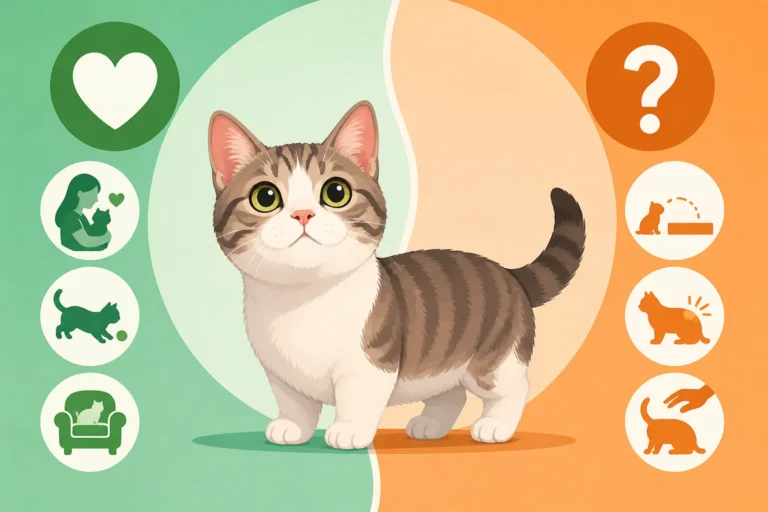
A Skookum is a short-legged, curly-coated cat developed by crossing Munchkins with LaPerms. That combination can make the breed hard to identify from a photo alone, and its name, traits, and registry status can be confusing too. This guide explains how a Skookum relates to the Munchkin, what traits may vary, and what to consider when meeting or choosing one.
What a Skookum cat is
The Munchkin and LaPerm connection
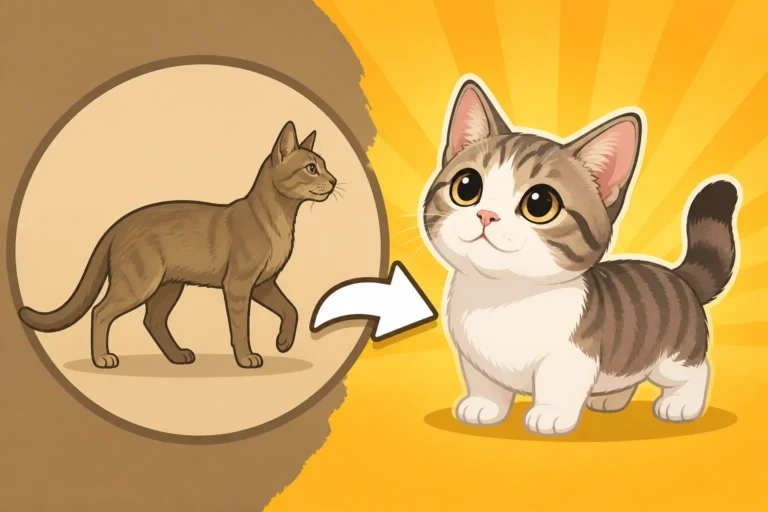
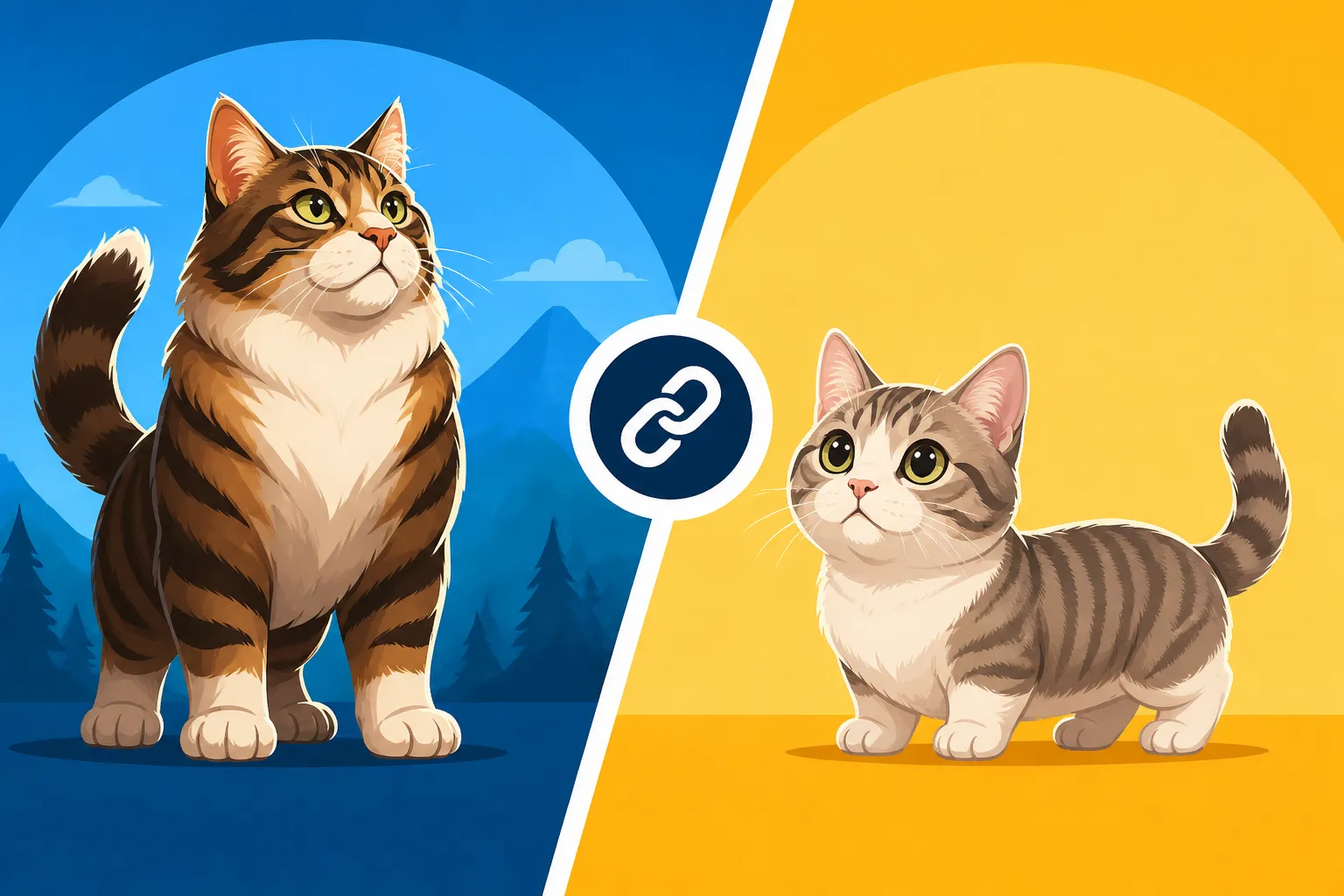
The Skookum was developed by crossing the Munchkin with the LaPerm. The Munchkin contributes the short-legged trait, while the LaPerm is associated with a distinctive curly or wavy coat. A Skookum is therefore not simply another name for a Munchkin: it is a separate crossbred type with a different combination of features.
Those signature traits do not make every Skookum look exactly alike. Cats can vary in coat texture, coat length, leg length, body shape, and facial features. Some may have noticeably springy curls; others may have looser waves. A kitten may also inherit one recognizable feature more strongly than the other. Appearance alone is not enough to confirm a cat’s ancestry or registration.
The Munchkin’s short legs are a result of a heritable skeletal trait. The LaPerm’s curly coat comes from a separate inherited trait. They are different characteristics, and combining the two does not guarantee that every kitten will display both in the same way. To understand why “short-legged” does not mean the cat’s whole body is proportionally smaller, see Why a Munchkin's Legs Are Short but Its Body Is Not.
What the name means and what it does not prove
“Skookum” is a word associated with Chinook Wawa, a historical trade language of the Pacific Northwest, and is commonly glossed as strong, capable, or impressive. The name reflects an appealing breed identity, but it is not a health certification, a guarantee of temperament, or evidence that a cat comes from a particular registry.
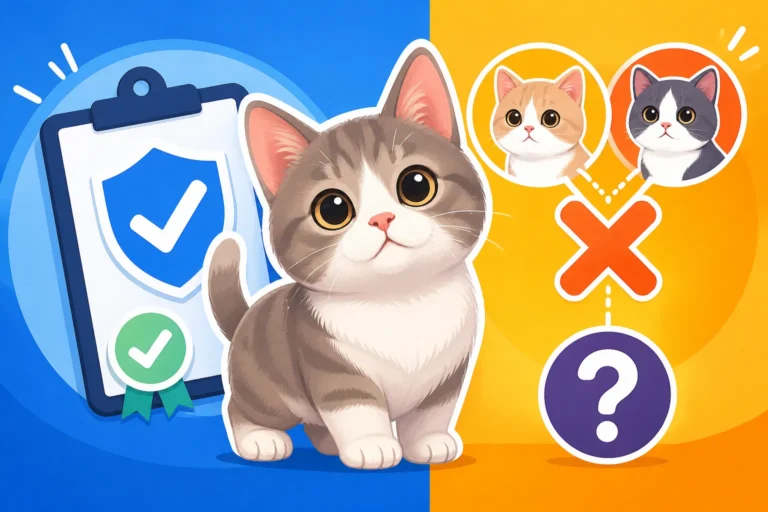
Likewise, labels such as “dwarf cat,” “curly Munchkin,” or “rare breed” can be used informally in advertisements. They may describe a seller’s idea of the cat rather than a formally documented breed classification. If registration or pedigree matters to you, ask which registry issued the paperwork and what the paperwork actually records. Registry recognition can differ, so check the registry’s own current rules rather than relying on a listing’s wording.
A kitten’s visible traits also do not tell you everything about its health or needs. A responsible conversation should include the kitten’s veterinary history, the parents’ health, the breeder’s approach to mating, and what support is available if questions arise after the cat comes home. The broader debate about crossing Munchkins with other breeds is explored in What Munchkin Crosses Worry Veterinarians.
How a Skookum differs from a Munchkin
Shared short legs, different breed background
The most obvious overlap is that both a Skookum and a Munchkin may have short legs. A Munchkin is identified primarily by that trait, while a Skookum combines the Munchkin background with LaPerm ancestry and may have a curly or wavy coat. A straight-coated, long-legged, or less visibly curly cat may not fit the image people expect, but appearance by itself cannot settle questions of parentage or registration.
Their family histories matter because a crossbred cat may inherit traits from both sides. The Munchkin’s leg length is not the same characteristic as the LaPerm’s coat texture, and one should not be used to make assumptions about the other. A Skookum may also resemble other short-legged crosses, so a photograph is a poor substitute for a clear pedigree.
The Munchkin itself is not simply a cat with a generally reduced body size. Its proportions and short limbs are distinct from conditions that affect the entire skeleton, a difference discussed in How a Munchkin Differs From a Dwarf Cat. For Skookums, the practical point is to evaluate the individual cat’s movement, comfort, and health rather than assuming that a cute or unusual silhouette tells the whole story.
Coat care and everyday needs
A curly coat can need regular attention, but the amount of grooming depends on the individual cat’s coat length, density, and tendency to tangle. Check gently for knots, especially in areas that rub against the body or are harder for the cat to groom. Avoid tugging at curls or trying to cut out a tight mat close to the skin; a veterinarian or experienced groomer can advise if a mat is painful or difficult to remove.
Munchkin ancestry can also make the home layout worth thinking through. Some short-legged cats can get onto furniture by using intermediate surfaces, while others may prefer a low resting spot. Watch how the particular cat moves instead of assuming it can manage every jump—or that it should be prevented from all climbing. Stable steps, a reachable bed, and clear floor routes can help an individual cat move around comfortably. For related ideas about designing accessible spaces, see Which Household a Munchkin Fits.
A basic grooming kit might include a suitable comb or brush, nail trimmers, and supplies for cleaning the cat’s usual resting and eating areas. If you shop online, Chewy is one place owners may browse for routine pet-care supplies; choose tools that suit the cat’s coat and handling tolerance rather than buying a product solely because it is marketed for a particular breed. A local veterinary team or groomer can help you decide what is appropriate.
| Feature | Munchkin | Skookum |
|---|---|---|
| Breed background | Short-legged cat type | Developed from Munchkin and LaPerm ancestry |
| Commonly recognized feature | Short legs | Short legs and often a curly or wavy coat |
| Coat | Can vary in length and appearance | May show LaPerm-like curls or waves, with individual variation |
| What to verify | Health history, movement, and any registration claims | Pedigree, registry details, health history, and the traits of the individual cat |
Health, welfare, and responsible questions
Avoid assuming that a distinctive look predicts health
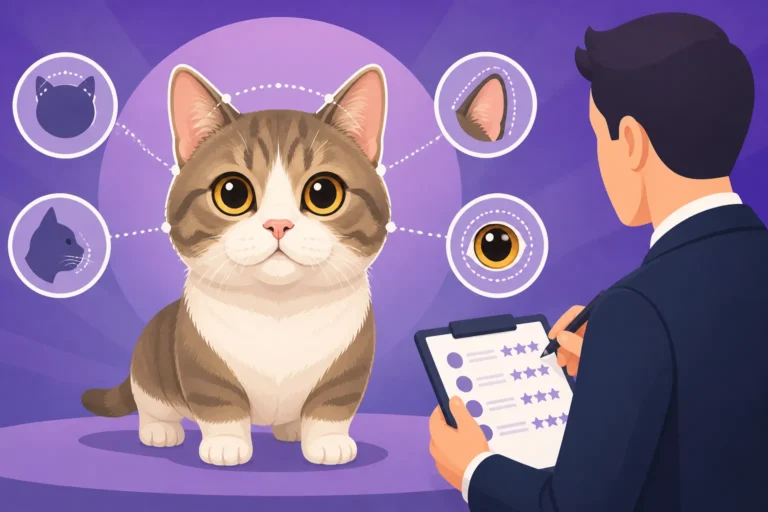
A cat’s short legs or curly coat do not, on their own, reveal whether it is healthy, comfortable, or likely to develop a particular condition. Nor does a breed label remove the need for ordinary veterinary care. Ask about the cat’s health history and have a veterinarian assess its movement, body condition, breathing, skin, teeth, and general development.
Because the Skookum combines ancestry from two types of cats, it is sensible to ask what health considerations the breeder monitors on both sides of the pedigree. Request a clear explanation of the parents’ health records and any screening performed. Be wary of broad assurances such as “perfectly healthy” if they are not backed by specific records and a willingness to answer follow-up questions.
Watch the cat move naturally on a level, nonslip surface. Notice whether it walks and turns comfortably, uses its legs evenly, and can get to food, water, litter, and resting places. If you are considering a Munchkin-related cat, these observations are useful alongside—not instead of—a veterinary examination. For more context on the wider discussion of crossbreeding and inherited traits, read Why Munchkin Hybrids Stack Two Mutations.
Questions to ask a breeder or rescue
Ask for the names and backgrounds of the parents, an explanation of how the kitten is described and registered, and copies of relevant veterinary records. If the seller says a kitten is a Skookum, ask what they mean by that term and whether they can document the Munchkin and LaPerm ancestry. A confident, responsible answer should be specific; it should not depend on pressure to pay a deposit quickly.
Ask to see the kitten moving, not only posed for photographs. If possible, observe the mother and other cats in the home or visit by live video. Look for clean living areas, cats that appear alert and comfortable, and a seller who asks about your household and prepares you for ongoing care. What Munchkin Breeders Say About the Welfare Objection provides context for the arguments people raise around Munchkin breeding and welfare.
If you are adopting rather than buying, the same practical questions still matter, but records may be incomplete. A rescue or shelter can tell you what is known about the cat’s history and arrange a veterinary assessment. Focus on the individual cat’s needs and personality, not on whether it matches a precise breed label. If you are comparing a Skookum with a Munchkin as a companion, Whether a Munchkin Is the Right Cat for You can help you think through the broader lifestyle fit.
Living with a Skookum
Set up for the cat you actually bring home
Before bringing a Skookum home, prepare the essentials at an easy-to-reach height: food, water, a resting place, scratching options, and a litter box the cat can enter without struggling. A low-entry box may be useful for a short-legged cat, but it should still provide enough room for comfortable turning and digging. Keep the box in a quiet, accessible location rather than requiring the cat to climb stairs to reach it.
Offer safe ways to explore without making every destination a leap. A low step beside a sofa or a stable route to a favorite perch can give a cat choices. Keep pathways clear, secure unstable furniture, and provide nonslip surfaces where the cat regularly turns or lands. These are practical adjustments, not a claim that every Skookum has mobility problems.
For grooming, begin with brief, calm sessions and reward tolerance. Check the coat regularly for tangles and the underside for debris, particularly if the cat has a low belly or longer curls. Chewy may be a convenient place to compare ordinary grooming supplies, but the right brush is the one that works gently with your cat’s specific coat and does not distress it. If mats keep forming, ask a groomer or veterinarian for help rather than making grooming a struggle.
Make decisions based on temperament and daily care
Breed descriptions can suggest tendencies, but they cannot promise that a particular cat will be cuddly, energetic, quiet, or comfortable with children and other pets. Spend time observing how the cat reacts to handling, play, unfamiliar people, and everyday noises. A good match depends on the individual animal and the household’s ability to provide patient, consistent care.
Consider how you will manage routine veterinary visits, grooming, and gradual changes as the cat ages. Keep a record of appetite, weight, litter habits, coat condition, and movement. A noticeable change—such as reluctance to walk, a shift in grooming, or difficulty reaching familiar places—is worth discussing with a veterinarian rather than dismissing as a personality quirk.
A Skookum can be an appealing companion, especially for someone drawn to its unusual mix of short legs and curls. The thoughtful approach is to look past the novelty: verify the cat’s background where possible, assess its comfort and health, and prepare a home around its actual abilities. Those steps matter more than a breed name on an advertisement.
Disclaimer
This article is for general informational purposes only and does not constitute professional advice. Laws, prices and regulations vary by location and change over time. Consult a qualified professional for guidance on your specific situation.