What a Minuet Is and How It Relates to the Munchkin
A Minuet can look like a Munchkin with a rounder face and a fuller coat, so it is easy to assume the names mean the same thing. They do not. The Minuet is a distinct breed developed using Munchkins and Persian-type cats. This guide explains the relationship, the visible differences, and what to consider when assessing a Minuet’s background and care needs.
What a Minuet is
A separate breed built from Munchkin ancestry
The Minuet is a cat breed developed by crossing Munchkins with Persian-type cats. It was originally known as the Napoleon; the name Minuet was adopted later. The breed combines the Munchkin’s short-legged trait, which some kittens inherit, with features associated with Persian-family cats, such as a rounded head and a plush coat.
That ancestry matters because a Minuet is not simply another name for a Munchkin. A Munchkin is defined primarily by its short-legged body type and may have a range of coat lengths, colors, and patterns. A Minuet has its own breed identity and appearance, even though Munchkin ancestry is central to how the breed was developed. For a closer look at the breed’s origins, see How the Minuet Was Made From a Munchkin.
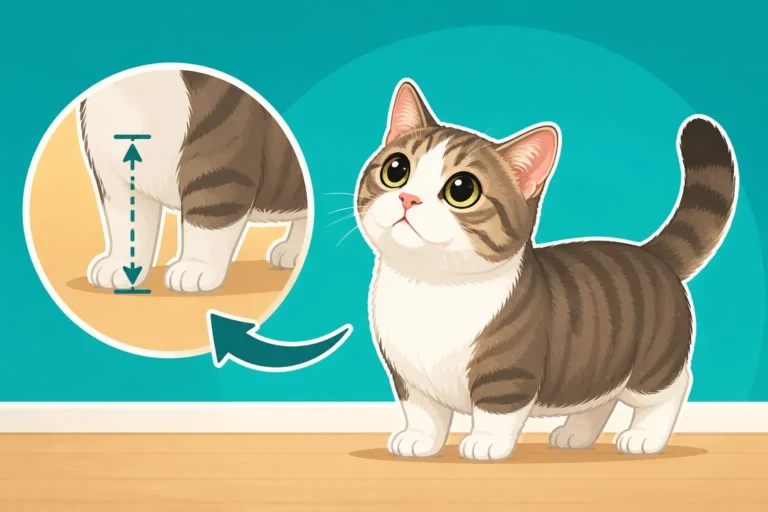
Not every Minuet has short legs. As with Munchkins, leg length can vary among kittens, and a long-legged Minuet can still belong to the breed. Short legs are a recognizable trait, not a guarantee that every kitten in a litter will have them. That’s one reason photographs alone can be misleading when you’re trying to understand a cat’s breed background.
Why the Minuet was first called the Napoleon
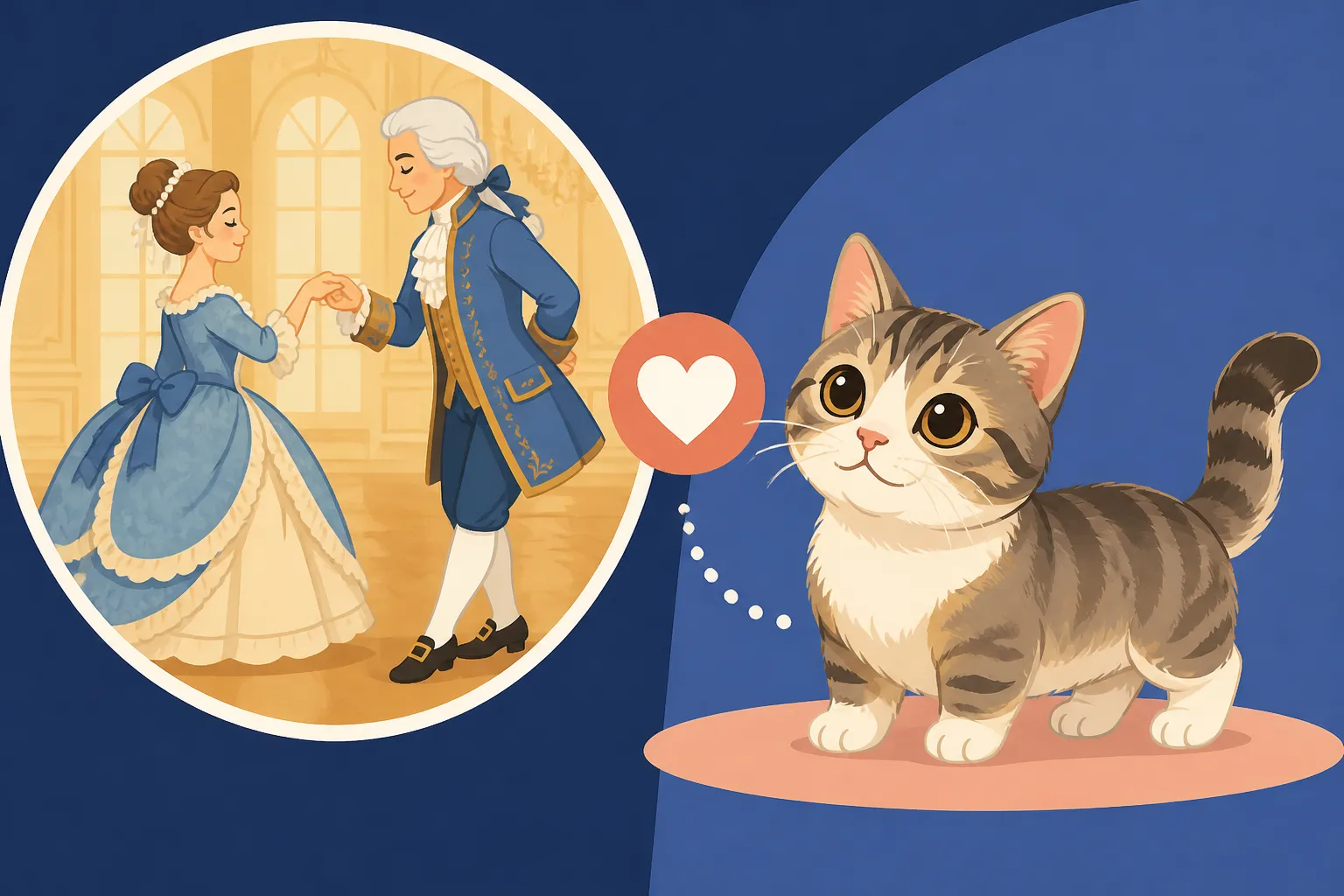
The breed’s original name was Napoleon, a reference to Napoleon Bonaparte’s short stature. The name was later changed to Minuet, but the underlying idea remained: create a distinct breed that combined Munchkin ancestry with Persian-type characteristics. You may still encounter the former name in older articles, pedigrees, or casual conversations.
The Persian connection is also why the Minuet may have a different overall impression from a Munchkin. A Minuet’s rounded features and coat can be especially noticeable, while Munchkins vary widely in appearance because they may be outcrossed with different domestic cats. To understand the naming history in more detail, read Why the Munchkin Persian Cross Was Called the Napoleon.
When looking at a kitten advertised as a Minuet, ask what the seller means by the label and what the pedigree records. Breed names used in listings are not a substitute for documentation. A clear explanation of the cat’s lineage is more useful than a claim that it “looks like” a particular breed.
How a Minuet relates to the Munchkin
The shared short-legged trait
The most obvious link between the two breeds is the Munchkin-derived short-legged trait. A short-legged Minuet may look low to the ground, with a body that remains relatively long rather than being shortened along with the legs. But short legs do not tell you the whole story: body shape, coat, head type, and documented ancestry also help distinguish a Minuet from a Munchkin.
The trait is inherited in a way that means a litter can include kittens with different leg lengths. A long-legged kitten is not necessarily a different breed or a mistake; its status depends on the breed’s rules and pedigree, not just its appearance. The same general point applies when considering Munchkin litters, where short-legged and normal-legged kittens may occur. Why Half a Munchkin Litter Has Normal Legs explains that variation in more detail.
This is also why “short-legged” should not be treated as a complete breed description. A cat with short legs could have Munchkin ancestry, Minuet ancestry, or another background. A shelter cat with short legs, for example, cannot reliably be identified as a Minuet just by looking at its proportions. See How to Tell a Munchkin From a Cat With Injured Legs for why appearance alone can be an unreliable guide.
The Persian-type influence
Minuets are associated with Persian-type features, but individual cats can differ in how strongly those traits appear. Some have a very rounded face and dense coat; others may look less exaggerated. Coat length can vary, and a long coat brings its own practical grooming needs, especially around the hindquarters and belly.
Those features are more than cosmetic. A thick coat can collect litter or form tangles in spots a low-bodied cat may not easily reach. If a Minuet has a longer coat, regular gentle combing and checks under the belly and around the rear can help catch knots before they tighten. A Munchkin’s grooming needs can also depend on coat length and mobility, as described in What a Munchkin Cannot Reach to Groom.
A responsible conversation about Minuet ancestry should include health and welfare, not just looks. The Munchkin-derived body type raises questions about mobility and breeding choices, while Persian-type ancestry may bring other considerations that depend on the individual cat’s family line. For broader context on the debate about combining traits, see Why Munchkin Crosses Worry Veterinarians.
Minuet and Munchkin compared
A practical comparison
The two breeds share ancestry, but they are not interchangeable labels. Use the comparison below as a starting point, not as a way to identify an individual cat without records or a knowledgeable professional.
| Feature | Minuet | Munchkin |
|---|---|---|
| Breed relationship | A distinct breed developed using Munchkin and Persian-type ancestry | A breed associated with the short-legged trait and a wider variety of domestic-cat appearances |
| Legs | May be short or long | May be short or long |
| Typical visual impression | Often associated with rounded features and a fuller coat | Appearance varies widely by coat, color, and outcross background |
| Coat | May be short or long | May be short or long |
| What confirms identity | Pedigree and applicable registry records | Pedigree and applicable registry records |
| What appearance cannot establish | Breed status, lineage, or health | Breed status, lineage, or health |
A cat’s face or coat can suggest ancestry, but neither confirms it. Two cats can look similar while having different pedigrees, and two cats from the same breed can look noticeably different. If you are comparing a particular animal to a breed description, start with records and ask how the breeder or rescue arrived at the identification.
The Munchkin’s appearance is described within its own breed framework; What a Munchkin Looks Like Against the TICA Standard offers a closer look at those characteristics. Keep in mind that a standard describes a breed ideal. It does not guarantee an individual cat’s health, temperament, or ability to move comfortably.
Questions to ask about a Minuet
If you are considering a Minuet, ask for the kitten’s pedigree and a straightforward description of its parentage. Find out whether the kitten is short-legged or long-legged, how the breeder records that distinction, and what health information is available for the parents and close relatives. A responsible breeder should be willing to discuss both the traits they are selecting for and the risks they are trying to avoid.
Ask to see the kitten moving on a non-slip surface, not just posed for a photograph. Watch whether it walks, turns, plays, and gets up smoothly. If possible, observe the parents too. A video can be useful, but it should not replace direct questions and an opportunity to see the cat move. For a broader checklist, read What a Munchkin Breeder Should Be Able to Show You.
Also ask what happens if a kitten’s adult appearance differs from what was expected. Leg length and coat can affect how a kitten looks as it grows, and an ethical breeder should explain what is known rather than promising a precise adult look. Be cautious if the seller emphasizes extreme shortness or unusual features as proof of superior quality.
Living with a Minuet
Set up a comfortable home without assuming every cat has the same limits
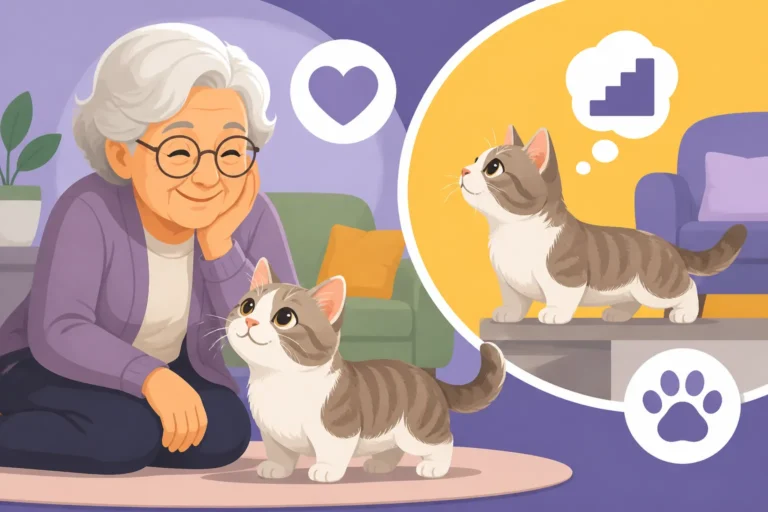
A short-legged Minuet may need a little more help reaching favorite places, but it is still an individual cat. Some cats use furniture as a series of low steps; others prefer a ramp or a floor-level resting spot. Arrange routes that are stable and easy to navigate, and avoid expecting the cat to make repeated high jumps just because it is eager to follow you.
For example, if your Minuet likes sitting beside you on the sofa, a low, sturdy step can offer a safer route than repeated leaps from the floor. Try the setup while supervising and adjust it if the cat slips, hesitates, or avoids it. Rugs or other secure surfaces can make a difference on slick flooring. The goal is not to restrict normal play but to make access less demanding.
A low-entry litter box, reachable food and water, and comfortable beds at floor level are useful starting points. If you are comparing equipment, Chewy’s catalog can help you browse options such as low-entry boxes, pet steps, and grooming tools; check each item’s dimensions and stability before choosing. A product described as “small” or “senior-friendly” is not automatically the right fit for your cat.
Grooming and daily observation
Coat care depends on the individual Minuet’s coat length and texture. A short-haired cat may need less frequent brushing than a long-haired one, but both benefit from regular checks. Pay attention to the belly, inner legs, and rear, where tangles or litter may be easy to miss. If a knot is tight or close to the skin, avoid pulling at it; ask a veterinarian or experienced groomer for help.
The cat’s build can make some areas harder to reach, particularly if it is stiff, overweight, or has a dense coat. Chewy can be one place to compare combs and brushes, but choose a tool that feels gentle on the skin and is suited to the coat rather than buying a large assortment. Introduce grooming gradually, with short sessions and breaks, so handling does not become a daily struggle.
Notice changes in movement and routine. Reluctance to use a step, difficulty entering the litter box, reduced play, or a new change in gait deserves attention rather than being written off as a quirky breed trait. A veterinarian can assess what is going on and advise on the right next step. If grooming or mobility becomes harder over time, Chewy’s product listings may also help you compare practical aids, but product choice does not replace veterinary guidance.
Feeding and weight management
Food needs are individual, and a Minuet’s ideal weight cannot be determined from leg length alone. Ask a veterinarian to assess body condition and recommend a feeding plan. Keeping a cat at a healthy weight supports mobility and makes everyday movement more comfortable, while frequent unmeasured treats can quietly add up.
Use the cat’s body condition and weight trend rather than judging by appearance alone. A low-slung body may look round even when a cat is in good condition, so ask your veterinarian to show you how to feel for the ribs and assess the waist. Measure meals consistently and revisit portions if the cat’s weight changes. A food label or breed label cannot replace an individual feeding plan.
Making sense of the breed label
A Minuet is a distinct breed developed using Munchkin and Persian-type ancestry. It is related to the Munchkin, but the two names do not mean the same thing, and short legs alone do not confirm either breed. If you are evaluating a specific cat, look beyond its appearance: ask about pedigree, health history, movement, coat care, and the breeder’s approach to welfare.
At home, focus on the cat in front of you. Make key areas reachable, keep grooming manageable, and discuss any mobility or health concerns with a veterinarian. Those practical steps matter more than whether a cat neatly matches a photograph or a sales description.
Disclaimer
This article is for general informational purposes only and does not constitute professional advice. Laws, prices and regulations vary by location and change over time. Consult a qualified professional for guidance on your specific situation.