Why the Munchkin Persian Cross Was Called the Napoleon
The name “Napoleon” can make the Munchkin-Persian cross sound like a miniature version of the French emperor, but that is not quite the story. The name referred to the cross’s short-legged appearance, while its Persian ancestry shaped its rounded face and plush coat. Here’s how the name arose, what the cross became known as, and why the terminology can still be confusing.
Why the Munchkin-Persian Cross Was Called the Napoleon
The name pointed to short legs, not a tiny emperor
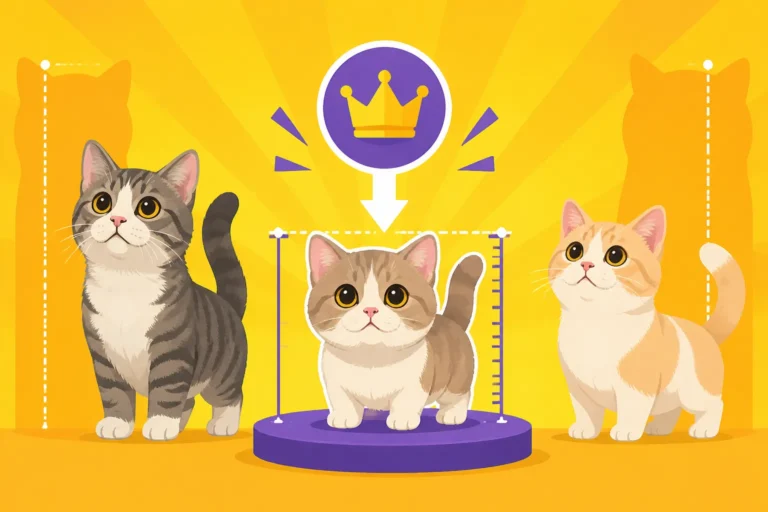
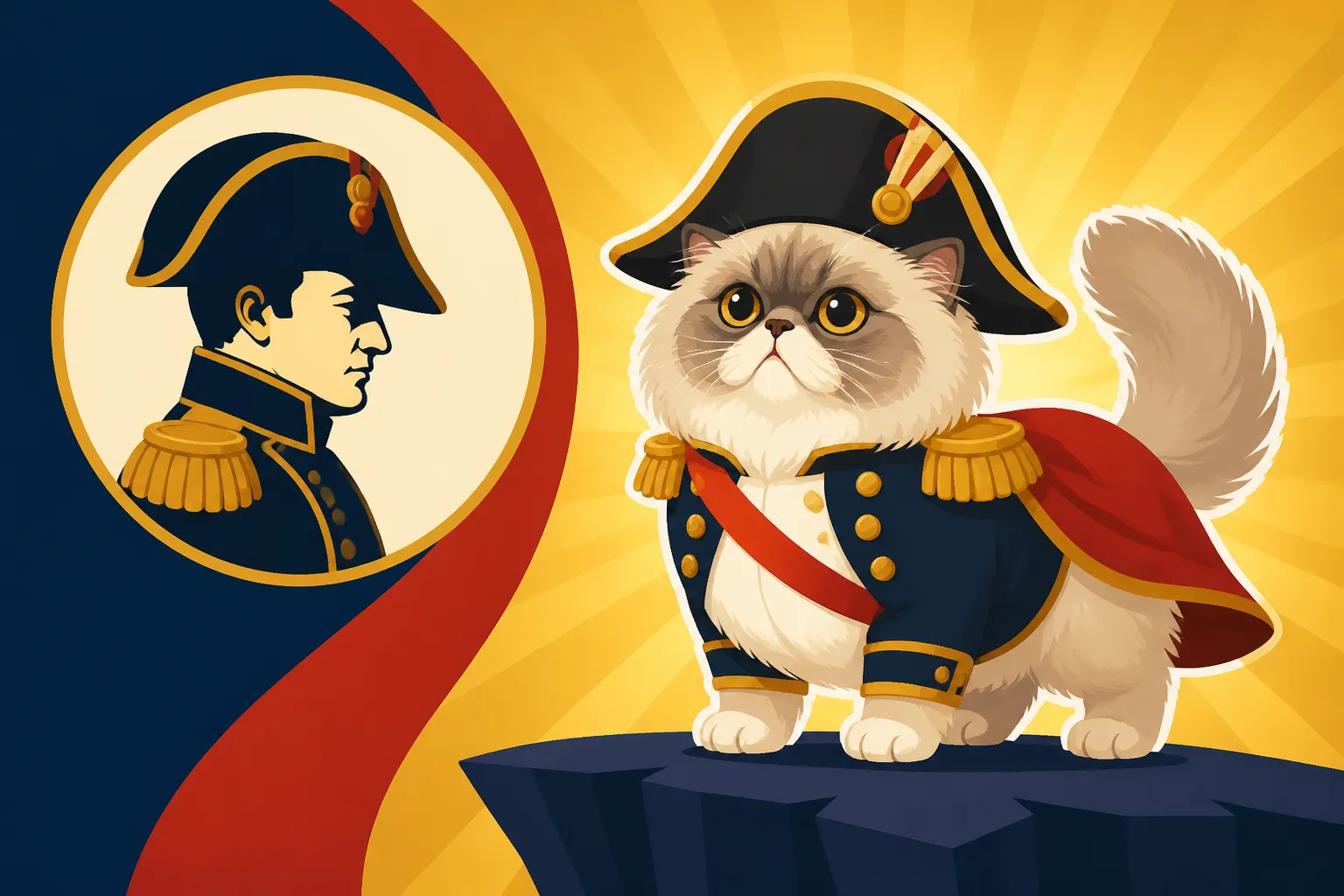
The Napoleon was developed by crossing Munchkin cats with Persian-type cats. The Munchkin contributed the short-legged trait, while Persian ancestry contributed features such as a rounded head, large eyes, and a fuller coat. The name “Napoleon” was a playful allusion to Napoleon Bonaparte, whose name is often associated with being short.
That association is more legend than reliable description of the historical figure. Napoleon was not necessarily unusually short for his time; differences between French and British measuring systems, along with later caricatures, helped fuel the familiar image. The breed name drew on the popular story rather than on a precise historical comparison.
In other words, “Napoleon” was a catchy label for a cat with a low-slung body and Persian-like appearance. It was not a formal statement that the cat was a miniature Persian, nor did it mean that every cat in the developing breed had the same leg length.
Persian ancestry shaped the look, but did not make it a Persian
The name could also lead people to imagine a Persian cat simply bred at a smaller scale. That is misleading. The Munchkin-Persian cross combined traits from different backgrounds; it was not just a Persian whose legs had been shortened through ordinary size selection.
Persian-type cats contributed a characteristic rounded look, but the Munchkin’s short-leg trait came from a distinct inherited variation. A cross could also have a long-legged kitten, so the breed’s name did not guarantee a particular leg length in every individual.
This distinction matters when people are comparing cats or reading old listings. A cat described as a Napoleon may be discussed today under a different breed name, and the label alone does not tell you its exact ancestry, leg length, or registration status. For a closer look at the original breed, see How the Minuet Was Made From a Munchkin and What a Minuet Is and How It Relates to the Munchkin.
The name was memorable, but it carried baggage
“Napoleon” had an obvious marketing appeal: it was distinctive, easy to remember, and hinted at the cat’s short stature. But the reference could also invite misunderstandings. People might assume it described a tiny cat overall, or that the breed was simply a novelty version of the Persian.
A breed name is not a health assessment or a guarantee of appearance. Cats within a cross or developing breed can differ in coat, face shape, and leg length. A name may describe the inspiration behind a breed without accurately describing every cat that carries it.
That is one reason older names can remain in use informally even after registries and breeders adopt a different one. Searching for “Napoleon cat” may turn up material about the same general Munchkin-Persian development as searching for “Minuet,” but the terms are not always used consistently.
How the Napoleon Became Known as the Minuet
The breed’s name changed as it developed
The Napoleon name was later replaced by “Minuet” in the breed’s formal identity with The International Cat Association. The new name was intended to distinguish the breed and give it a fresh identity, rather than relying on a reference to Napoleon Bonaparte.
The change is why readers may encounter both names in older articles, breeder material, or online discussions. “Napoleon” generally refers to the earlier name, while “Minuet” is the name used for the recognized breed. When checking information, it helps to look for both terms, especially when reading older descriptions.
The naming shift does not mean that the cats suddenly changed. It was a change in terminology. The breed’s development still involved Munchkin ancestry and Persian-type cats, and the name change did not remove the need to understand inherited traits or individual variation.
The Minuet name is not a guarantee of short legs
A Minuet may have short legs or standard-length legs. The short-legged form reflects the Munchkin-associated trait; a longer-legged cat may still be part of the breed’s lineage or breeding program, depending on the registry’s rules and the individual’s pedigree.
So it is useful to separate three questions: What name is being used? What ancestry does the cat have? And what does the cat’s own body look like? A listing that says “Napoleon” or “Minuet” answers only the first question unless it provides further details.
| Term | How it is generally used | What the term alone does not tell you |
|---|---|---|
| Napoleon | Earlier name for the Munchkin-Persian-derived breed | The cat’s exact leg length, health, or pedigree |
| Minuet | Later formal breed name used by TICA | Whether an individual cat has short or standard-length legs |
| Munchkin-Persian cross | A descriptive phrase for ancestry or development | Whether the cat is registered as a Minuet |
| Persian | A separate breed name that may describe ancestry in a cross | That the cat has Munchkin ancestry or short legs |
For broader background on the breed behind the cross, Why the Munchkin Was Named After the Wizard of Oz explains another example of how a memorable name became part of Munchkin history. The name itself can be charming, but it should not replace careful attention to a cat’s records and individual needs.
Historical descriptions may use different labels
If you are reading an older source, you may see “Napoleon” used where a newer source says “Minuet.” That does not automatically mean the writer is describing a different cross. It may simply reflect when the material was written or which naming convention the author follows.
The reverse can also happen: a seller may use an older or informal name without providing enough evidence to establish a cat’s lineage. In that situation, ask what the cat’s registration papers say, if any, and which breeds appear in its pedigree. A label in an advertisement is not the same thing as documented ancestry.
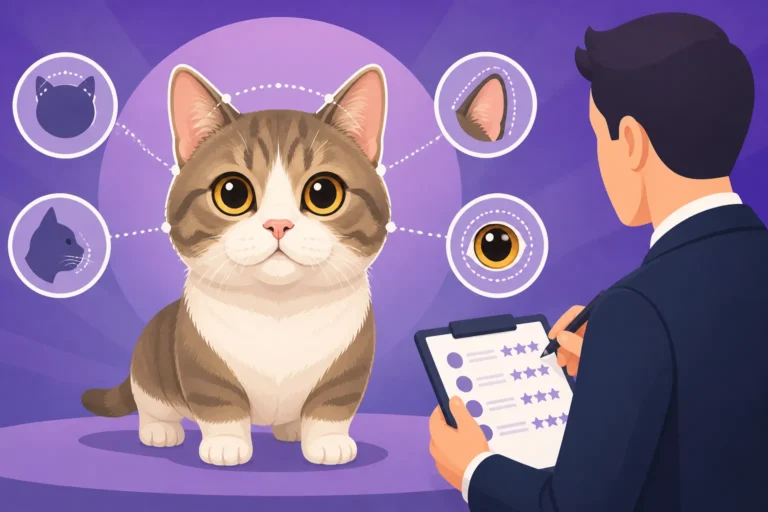
If you are comparing breed descriptions, look for the actual details rather than relying on a single word. A useful description should clarify the cat’s parentage, leg type, coat, and any relevant health screening. What a Munchkin Looks Like Against the TICA Standard offers context on the Munchkin side of the story, while Which Breed Was Crossed With a Munchkin to Make the Minuet focuses on the cross itself.
What the Munchkin and Persian Mix Means for the Cat
Different inherited traits can show up in one litter
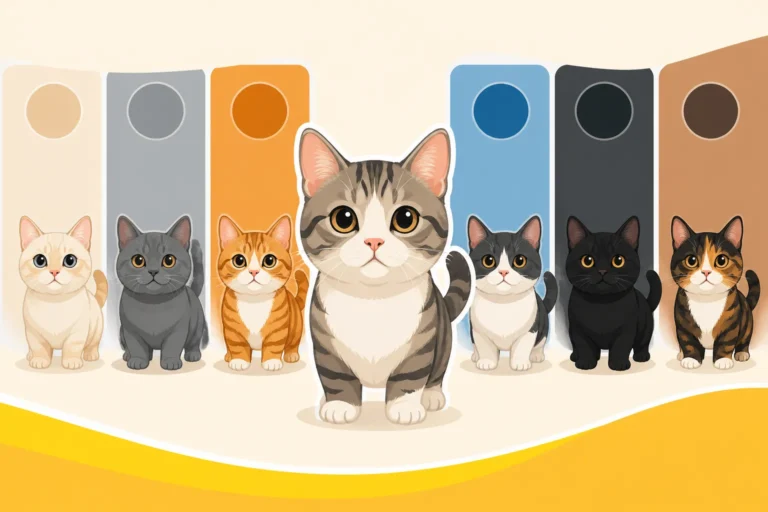
The Munchkin-associated short-leg trait does not make every kitten in a litter short-legged. When one parent carries the trait and the other does not, kittens can inherit different combinations, and their leg length may vary. That is why descriptions of a breed or cross should not be treated as a promise that every kitten will look alike.
Persian ancestry can also contribute variation. Depending on the parents and their lines, a cat’s coat, face, and body features may not match a neat image of a “short-legged Persian.” Breeding history and the individual cat matter more than the catchy older name.
If you are looking at a particular kitten, ask to see the parents and the pedigree information available. A breeder should be able to explain how they describe the cat, what they know about its ancestry, and what health checks have been done. General background on how Munchkin traits are inherited is covered in How the Munchkin Differs From a Dwarf Cat.
Persian ancestry deserves its own health questions
Persian-type ancestry can make it especially important to ask about the health of the lines involved. Persian cats can have inherited concerns associated with their breed, and a cross does not automatically erase the possibility of inherited risk. The right questions depend on the specific family history and the cat’s features.
Ask the breeder which health screenings are appropriate for the breeds in the pedigree, what results are available, and whether any health conditions have occurred among close relatives. It is also reasonable to request veterinary records and ask your own veterinarian to review them before or soon after bringing a kitten home.
The aim is not to assume that every Napoleon or Minuet will be unhealthy. It is to avoid treating a cute name or a mixed ancestry as proof that health concerns do not apply. A useful discussion of the broader concerns around combining breed traits is available in Why Munchkin Crosses Worry Veterinarians.
A breed label cannot tell you whether an individual cat is thriving
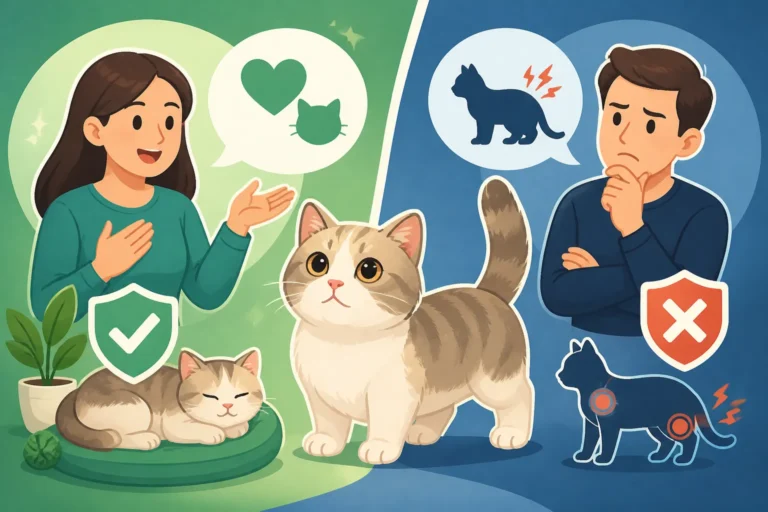
Whatever name is used, watch the cat in everyday movement. Notice whether it walks comfortably, gets around its environment, plays, and can reach essential resources such as food, water, bedding, and a litter box. A still photograph can show appearance, but it cannot show how a cat moves or manages its home.
For a kitten, ask whether it has been examined by a veterinarian and whether the breeder will discuss any observed concerns openly. For an adult cat, look at its movement and grooming, and ask about its medical history. If you already have a cat and notice a change in mobility or behavior, talk with a veterinarian rather than trying to diagnose the cause from breed descriptions.
The short legs associated with Munchkin ancestry are a subject of ongoing discussion, and views about breeding them differ. For a broader look at that debate, see Whether Buying a Munchkin Is an Ethical Decision and Why Stacking Mutations on a Munchkin Is Criticized. These topics are relevant to the cross because adding Persian ancestry does not make the welfare questions disappear; it makes careful attention to the full pedigree and the individual animal more important.
How to Make Sense of the Name Today
Use both names when researching older information
When searching for breed history, try both “Napoleon” and “Minuet.” Older material may use Napoleon, while newer breed references may use Minuet. Searching only one term can leave gaps or make it seem as though the sources are describing unrelated cats.
As you compare information, separate historical naming from present-day breed terminology. The name change explains why both terms appear; it does not, by itself, confirm that a particular cat is a registered Minuet or that its ancestry is documented.
Ask precise questions if you are considering a cat
If a breeder or seller uses the name Napoleon, ask what they mean by it. Is it being used as an older name for a Minuet, as a general description of a Munchkin-Persian cross, or simply as a sales label? Ask for the cat’s pedigree and registration details, and request an explanation of the parents’ breed backgrounds.
It is also worth asking to see the cat move and to review its veterinary records. A responsible conversation should cover both appealing features and potential concerns. If answers are vague, or if a seller relies on the name as proof of quality, take your time before making a decision.
Remember what the name can and cannot explain
The Napoleon name came from a popular association between short stature and Napoleon Bonaparte. It described the look that breeders wanted people to notice, not a scientific category or a complete account of the cat’s health and ancestry.
Today, Minuet is the formal name most readers will encounter for the breed that developed from Munchkin and Persian-type cats. Knowing the history makes older references easier to understand. For an individual cat, though, its actual pedigree, movement, health records, and care needs matter far more than whether someone calls it a Napoleon or a Minuet.
Disclaimer
This article is for general informational purposes only and does not constitute professional advice. Laws, prices and regulations vary by location and change over time. Consult a qualified professional for guidance on your specific situation.