Which Munchkin Holds the Shortest Cat Record
A tiny Munchkin standing beside an ordinary chair can look almost impossibly short, but record claims depend on exactly what is measured and how it is documented. This guide explains which Munchkin is associated with the shortest-cat record, what that measurement means, how it differs from other “shortest cat” titles, and why a record does not tell you everything about a cat’s health or everyday life.
The Munchkin associated with the shortest-cat record
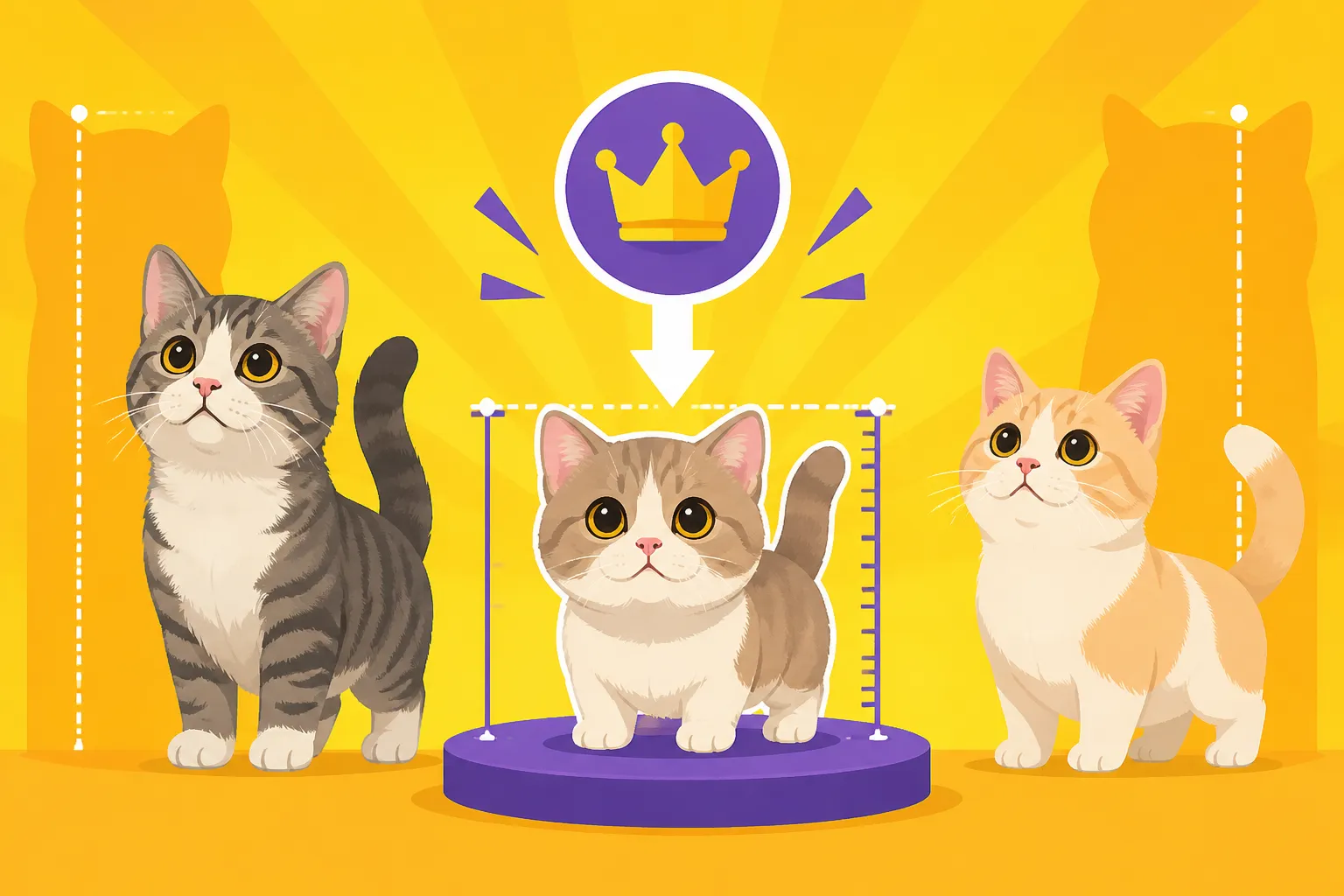
The Munchkin most commonly connected with the record for shortest living domestic cat is Lilieput, a female cat from Napa, California. Guinness World Records recognized her for a height of 5.25 inches, measured from the floor to the top of her shoulders.
That detail matters: the record measurement was not the length of her body, the height of her head, or the distance from her paws to her ears. It was a standing height measurement to the shoulders. Lilieput’s record is therefore best understood as a documented example of a very short adult cat—not as a general measurement for the Munchkin breed.
What Lilieput’s record actually measured
When people picture the “shortest cat,” they may imagine a cat measured from nose to tail or from the floor to the top of its head. Those are different measurements, and they can produce very different rankings. A cat’s posture, head position, and the point used as the top of the measurement all matter.
Lilieput’s reported height was measured from the ground to her shoulders while she was standing. This is a practical way to compare the height of one cat with another, but it does not describe every dimension of her body. It also does not mean that all Munchkins are close to that height. Individual cats vary, and a record-holder is, by definition, exceptional.
If you see a social post claiming that a cat is “the shortest ever,” look for the full wording of the title and the measurement method. “Shortest living cat,” “shortest cat ever,” and “shortest cat of a particular breed” are not interchangeable claims. A headline may leave out those distinctions, even when the original record entry is more precise.
For related background on how this breed’s proportions are described, see What a Munchkin Looks Like Against the TICA Standard and How a Munchkin's Leg Length Is Measured. Those topics help separate a record-breaking individual from the broader range of Munchkin body types.
Why the title is not the same as “shortest cat ever”
The phrase “shortest cat” can refer to more than one record category. A record for the shortest living cat is not automatically the same as a record for the shortest cat in history. One title concerns a living animal at the time it was assessed; another may refer to a cat that has died and whose record was documented earlier.
There are also records about height, length, and breed-specific traits. A Munchkin could be unusually short without holding a general domestic-cat record, and a cat from another breed could hold a different record based on a different measurement. Always read the category, not just the bold headline.
This is why Lilieput is a useful answer to the question “Which Munchkin holds the shortest-cat record?” with a small qualification: she is the Munchkin associated with a documented shortest-living-cat title. It is safer to describe her by that specific achievement than to say she is unquestionably the shortest cat ever in every possible category.
| Record wording | What it generally describes | Why the distinction matters |
|---|---|---|
| Shortest living cat | A cat measured while alive and recognized in that category | The title can change as new records are assessed |
| Shortest cat ever | A historical category that may include cats no longer living | It is not necessarily the same title as shortest living cat |
| Shortest Munchkin | A comparison limited to cats identified as Munchkins | The eligible group is narrower than all domestic cats |
| Shortest by shoulder height | Floor-to-shoulder measurement | It does not equal head height or body length |
How a record claim is assessed
A formal record claim is more than a photograph beside a ruler. A record organization may require a particular measurement procedure, evidence that the cat is eligible for the category, and documentation that the result can be reviewed. The exact requirements depend on the record and organization.
That distinction is useful for readers because perspective can make a small cat look smaller or larger. A photo taken beside a tall sofa, a person’s shoe, or a kitchen cabinet can create a striking impression, but it cannot reliably establish a measurement. A ruler held at an angle or a cat crouching instead of standing can also make a casual comparison misleading.
If you are evaluating a record story, look for the named record category, the stated measurement, and an explanation of where and how the measurement was taken. A reputable account should make clear whether the number refers to shoulder height, total height, or another dimension. If those details are missing, treat the claim as a fun anecdote rather than a verified record.
What makes a Munchkin look so short
A Munchkin’s characteristic appearance comes from shorter-than-usual legs paired with a body that is generally normal in length. The overall effect is a low-slung profile: the cat’s torso sits closer to the floor, while its head, body, and tail may otherwise look familiar to someone who has lived with domestic cats.
That appearance is part of why record stories attract attention. A short-legged cat standing beside a standard chair or a person’s lower leg can look remarkably compact. But photos can exaggerate the difference, and a record-holder’s exceptional stature should not be treated as the expected height of every Munchkin.
Short legs do not mean a miniature body in every respect
People sometimes assume a very short Munchkin is simply a tiny version of a typical cat. That is not always a helpful way to think about the breed. The defining visual feature is the leg length, while adult body size and proportions can vary. A cat may have a normal-length torso carried relatively close to the ground.
It is also important not to confuse short legs with a general lack of growth. A small frame, a young kitten, and a fully grown short-legged cat are different situations. If someone is selling a kitten as a “teacup” or promising that it will stay unusually tiny, the label deserves careful scrutiny. The breed overview How a Munchkin Differs From a Dwarf Cat offers helpful context for separating breed appearance from marketing language.
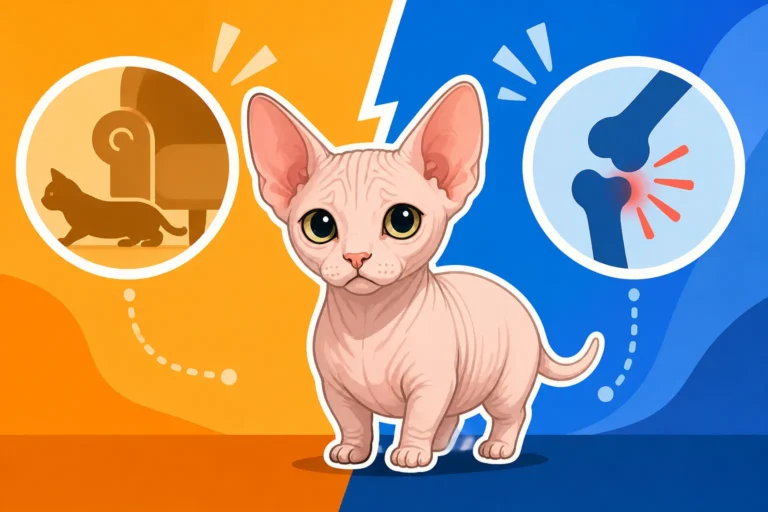
A cat’s height alone says little about its comfort, movement, or overall wellbeing. One Munchkin may move confidently around a home, while another may have a health or mobility concern that needs veterinary attention. A record number cannot substitute for observing the individual cat.
Why record pictures can be misleading
A picture is a moment, not a full assessment. A cat may be standing squarely in one image and crouching in another. Camera angle can flatten or stretch proportions, and a close-up can make the animal appear much smaller than it would beside a familiar object.
Even the comparison object may be misleading. A couch seat can vary in height, a person may be leaning, and a ruler may not start precisely at floor level. That is why a formal measurement is more meaningful than a viral image, however convincing the image may look.
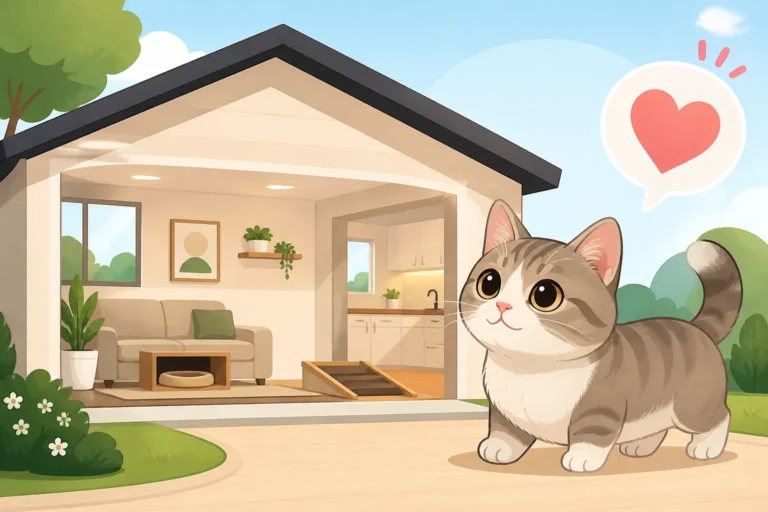
For everyday owners, a record-style measurement is rarely useful in caring for a pet. More practical observations include whether the cat can get to its food, water, litter box, favorite resting place, and safe play areas. If a Munchkin needs help reaching a sofa or window perch, stable low steps or a ramp may be more useful than trying to compare its height with a record-holder. Whether a Munchkin Prefers a Ramp or Steps discusses how to think about those access choices.
What the record does and does not tell you
A shortest-cat record is a fun and memorable fact, but it does not establish that every Munchkin is healthy, that shorter legs are always harmless, or that a particular cat will have the same abilities as Lilieput. Records describe an individual and a category. They are not a veterinary evaluation or a complete picture of a breed.
This distinction can be frustrating for prospective owners. A striking record story may make a breed seem simple to understand: “That cat was tiny, so all Munchkins must be tiny and live the same way.” In reality, a cat’s body condition, movement, temperament, home environment, and health history matter far more to daily care than a record label.
Height is not a health assessment
A measurement tells you how tall a cat is under the conditions in which it was measured. It does not reveal whether the cat has pain, how easily it moves, whether it can groom itself, or what its veterinary examinations show. Those questions call for observation and appropriate veterinary care.
If you are considering a Munchkin, ask about the individual cat rather than focusing only on the shortest-record story. Watch how the cat walks and turns. Notice whether it moves comfortably across the floor and whether it can reach ordinary essentials without repeated awkward efforts. Ask the breeder or rescue for relevant health records and arrange a veterinary examination.
The breed’s distinctive proportions also make it sensible to discuss movement and weight with a veterinarian. Extra body weight can make mobility more difficult for any cat, and a low body may have different practical needs around furniture and litter access. For more on the breed’s debated health questions, read Which Health Problems the Munchkin Actually Has and Whether Munchkin Spinal Problems Are More Common Than in Other Cats. These topics provide context without treating a record as proof of a health outcome.
A record-holder is not a care template
It is tempting to copy the setup shown in a record story or assume the cat’s routines reveal what every Munchkin needs. But one cat’s home, habits, and abilities cannot be used as a universal care plan. Some cats are enthusiastic climbers; others prefer ground-level play or benefit from carefully placed steps.
A practical home setup starts with the cat in front of you. Keep food and water easy to reach, choose a litter box with an accessible entry, and make favorite resting places reachable without risky jumps. Chewy may be one place owners browse for pet stairs, ramps, grooming supplies, or litter-box options, but check that any product is stable, appropriately sized, and suitable for your cat rather than relying on a breed label alone.
Grooming is another individual consideration. A cat’s coat length and flexibility affect how much help it may need reaching its hindquarters or belly. Regular gentle checks can catch tangles or debris before they become uncomfortable. For more detail, see What a Munchkin Cannot Reach to Groom and Why a Munchkin's Hindquarters Mat First.
How to evaluate claims about the shortest Munchkin
Online stories often compress complicated record categories into a catchy sentence. If you want to share the fact accurately, or you are simply trying to understand what you have read, use a few simple checks before repeating a claim.
Check the category and measurement
First, identify whether the story is about the shortest living cat, the shortest cat ever, a breed-specific record, or a different measurement altogether. Then find out what was measured. A shoulder-height figure should not be repeated as total height, and a body-length record should not be described as a height record.
Next, see whether the account names the cat and identifies the record organization. For Lilieput, the important context is that she is associated with a Guinness World Records title for shortest living domestic cat, with a reported shoulder height of 5.25 inches. Keeping the wording specific avoids turning a documented achievement into a broader claim than the evidence supports.
If a post gives no measurement method or record category, avoid presenting it as a verified fact. You can still enjoy the photo or story; just phrase it as an unconfirmed claim rather than a formal record.
Keep the breed story in perspective
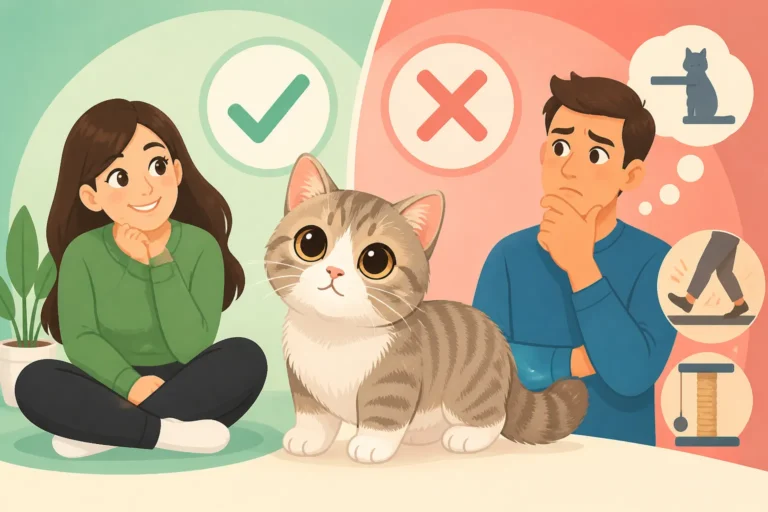
The Munchkin breed has a distinctive short-legged appearance, and that feature has prompted both public fascination and serious discussion about welfare. A record can make a cat famous, but it does not settle questions about breeding practices or the care needs of other cats. For that, look at the individual animal and seek balanced, specific information.
If you are researching the breed, consider reading Whether Buying a Munchkin Is an Ethical Decision alongside practical care topics such as Ramps and Steps Are Munchkin Equipment, Not Luxuries. The first helps frame the broader decision; the second focuses on how to make a home more accessible for a cat with shorter legs.
For prospective owners, it is reasonable to ask a breeder or rescue how a cat moves, what veterinary care it has received, and what support it may need at home. A responsible conversation should be about the kitten or adult cat’s real condition—not simply about how short its legs look in a photo. A record may start your curiosity, but thoughtful questions and careful observation are what help you understand the cat in front of you.
Lilieput remains the Munchkin most closely associated with the documented shortest-living-cat record. The clearest way to describe the achievement is to name the category and the shoulder-height measurement, rather than treating “shortest cat” as a single universal title. And whether or not a cat holds a record, its comfort, mobility, health, and ability to navigate its home are the details that matter most in everyday life.
Disclaimer
This article is for general informational purposes only and does not constitute professional advice. Laws, prices and regulations vary by location and change over time. Consult a qualified professional for guidance on your specific situation.