What a Munchkin Kitten Looks Like at Eight Weeks
An eight-week-old Munchkin kitten is still a very young cat: small, curious, wobbly at times, and not yet finished growing. Its short legs may already be noticeable, but photos and quick impressions can’t tell you whether it’s healthy or well cared for. This guide explains what you can expect to see, what deserves a closer look, and why eight weeks is usually too young to take a kitten home.
What an eight-week-old Munchkin kitten looks like
Size, coat, eyes, and overall proportions
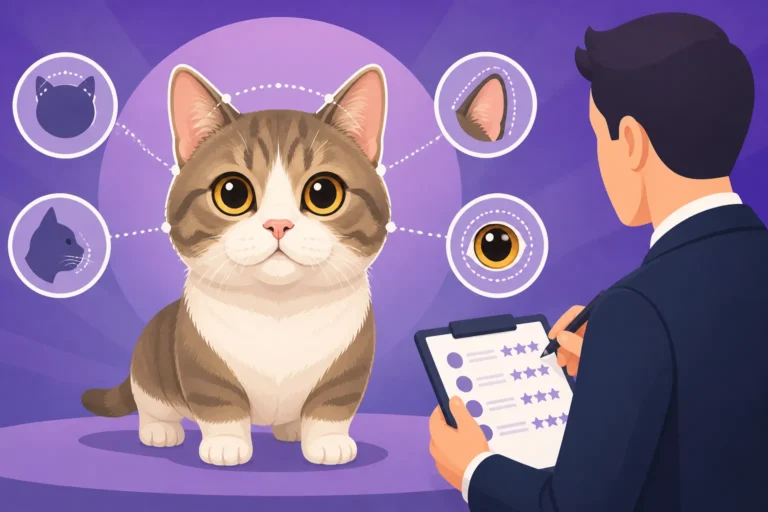
At eight weeks, a Munchkin kitten should look like a kitten—not a miniature adult. Its head may seem large beside its body, its paws may look oversized, and its movements can still be a little uncoordinated. There’s no single weight or body shape that defines a healthy eight-week-old kitten; litter size, individual growth, and inherited traits all play a part.
The coat may be short or long, and the kitten may show almost any color or pattern. Its eyes are open and alert, and its ears should be upright and responsive to ordinary sounds. Eye color can still change as the kitten matures, so the shade you see at eight weeks may not be the permanent one.
A healthy kitten should look bright and engaged, with a clean face and a coat that isn’t persistently dirty or greasy. A round belly right after eating can be normal, but a swollen-looking abdomen that stays distended, especially with diarrhea, poor growth, or lethargy, is worth raising with a veterinarian. Appearance alone can’t confirm that a kitten is healthy, but it can help you notice questions to ask.
When the Munchkin’s short legs become noticeable
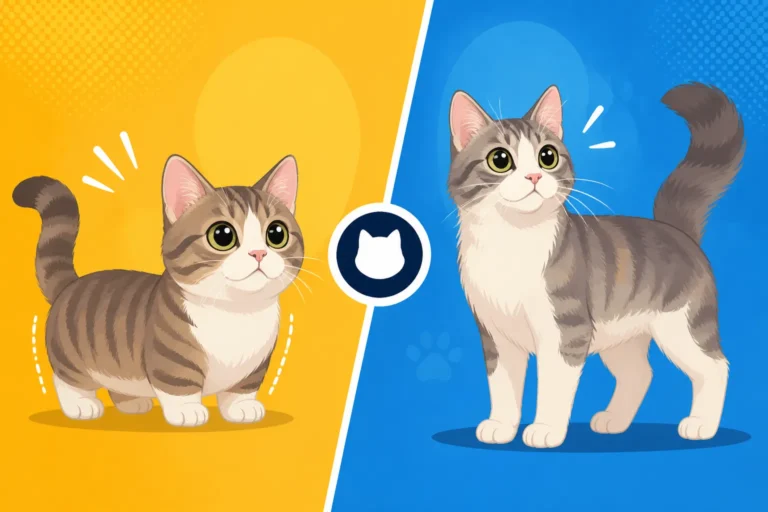
By eight weeks, the difference between a short-legged kitten and a normal-legged kitten in the same litter may be visible. A short-legged Munchkin generally has a typical-length body with noticeably shorter limbs. The kitten may stand closer to the floor and take quick, compact steps, while still moving around eagerly.
Not every kitten’s proportions are easy to judge in a photograph. Perspective, posture, fur, and a kitten’s stage of growth can all change how its legs look. A clear video of the kitten walking on a level, nonslip surface is more useful than a posed image: you can see whether it moves evenly, puts weight on all four limbs, and explores without obvious difficulty.
Short legs alone don’t establish the kitten’s health or quality of life. Look at the whole animal: its movement, alertness, breathing, appetite, and comfort being handled. For background on the breed’s limb proportions, see How a Munchkin Differs From a Dwarf Cat and How a Munchkin's Legs Are Judged.
Typical kitten behavior at this age
An eight-week-old kitten is often busy in short bursts. It may chase a toy, wrestle with littermates, investigate a new sound, then fall asleep hard in a warm spot. It may also use its mouth and claws during play; gentle redirection to a toy is more useful than scolding a very young kitten for normal kitten behavior.
Munchkin kittens still need accessible places to rest, eat, drink, and use the litter box. Their short legs can make some ordinary kitten equipment less convenient, so watch how the individual kitten manages its surroundings rather than assuming it can reach every platform or climb every obstacle. A safe, low setup helps you see its natural movement without asking it to attempt risky jumps.
People often notice the breed’s unusual posture or low-to-the-ground movement, but one moment in a photo doesn’t tell you what a kitten is like day to day. For more on its early development and activity, read What a Munchkin Kitten Looks Like at Eight Weeks—if you’re already reading this article, the related guide A Munchkin Kitten's First Year of Learning Its Limits offers a useful next step—and How Hard a Munchkin Kitten Plays on the Floor.
How to assess a kitten’s health and movement
Observe the kitten walking and playing
Ask to see the kitten walking freely on a flat surface. Watch from the side and from behind if possible. Its gait may look different from that of a long-legged cat, but it should still be able to move around and play. Notice whether it favors one leg, repeatedly stumbles, cries when moving, or seems reluctant to walk.
A kitten may pause or move awkwardly when it is sleepy, startled, or distracted. Give it time to settle and watch again rather than making a decision from a single stumble. If you can, observe the kitten during ordinary play with its littermates. That shows more than repeatedly encouraging it to jump for a toy or climb onto furniture.
Ask the breeder what veterinary checks the kitten has received and whether any concerns have been noted. A responsible person should be able to discuss the kitten’s health history plainly, provide records, and welcome reasonable questions. The article What a Munchkin Breeder Should Be Able to Show You covers the records and observations worth asking about.
Check the eyes, nose, ears, coat, and breathing
Look for eyes that are open and reasonably clear, without ongoing discharge or crusting. The nose should not be persistently blocked or dripping, and breathing should appear comfortable when the kitten is resting. Occasional sneezing can have different causes, but repeated sneezing alongside discharge or reduced energy deserves veterinary attention.
The ears should not have heavy debris, a strong odor, or persistent scratching. Check that the coat looks reasonably clean and that the skin doesn’t show obvious sores, bald patches, or heavy flea dirt. Don’t try to diagnose a skin or ear problem by appearance alone; ask what the kitten’s veterinary records say and have a vet assess anything concerning.
A kitten’s general behavior matters just as much as its features. If it is difficult to rouse, consistently hides and won’t engage, or seems uncomfortable when handled gently, ask the caregiver about the change and arrange veterinary advice. A kitten can be shy in a new setting, so look for patterns rather than treating one quiet moment as proof of illness.
Ask about the chest, spine, and veterinary examination
At eight weeks, a kitten should have had appropriate veterinary attention, and its caregiver should be able to tell you what was examined. Ask whether the vet checked the kitten’s chest, spine, and limbs, and whether any follow-up was recommended. A buyer cannot reliably assess internal or structural health by looking at a kitten across a room.
A visibly sunken chest, unusual spinal curve, or breathing difficulty should not be waved away as a harmless breed feature. These signs need a veterinarian’s assessment. The guides What a Munchkin Kitten's First Exam Should Cover and What a Sunken Chest Feels Like on a Munchkin Kitten explain why a careful examination matters.
Keep your questions specific and calm. “Has a veterinarian examined the kitten, and can I see the records?” is more helpful than asking whether the kitten is “perfect.” No kitten can be promised to stay free of every future health problem, but clear records and an open conversation make it easier to make an informed decision.
Why eight weeks is usually too young to bring a kitten home
Weaning is not the same as being ready to leave
Many kittens begin eating solid food before eight weeks, but eating independently doesn’t mean they have finished learning from their mother and littermates. During this period, kittens continue developing social skills, confidence, and bite inhibition through repeated interaction. A kitten that has just started eating on its own may still rely on familiar routines and support.
Leaving too early can make a transition harder for the kitten and the new household. It may be more unsettled, less practiced at interacting appropriately, or still getting used to food and litter routines. The exact needs vary by kitten, but eight weeks should not be treated as an automatic “ready to go” date.
Ask the breeder what the kitten is eating, how consistently it uses the litter box, and how it responds to ordinary handling and household sounds. You should also ask when the kitten is expected to leave and why. A careful breeder will prioritize the kitten’s readiness rather than rushing a handover to fit a convenient date.
What a responsible handover should include
Before taking a kitten home, ask for veterinary records, vaccination information, details of parasite treatment, and written instructions for its current food and routine. Confirm the kitten’s identification and registration details if applicable, and make sure you understand what the sale agreement says about health concerns and follow-up.
Plan a veterinary appointment after the kitten comes home, following the timing advised by the breeder and your clinic. Keep the first days quiet: set up a small, safe room with food, water, a low-entry litter box, bedding, and places to hide. A kitten that can find everything easily is less likely to spend its first night anxiously searching the house.
A practical shopping list can be simple: suitable kitten food, a stable bowl, a low-sided litter tray, safe toys, a carrier, and a brush appropriate for the coat. Whether you shop locally or use a retailer such as Chewy, compare product descriptions and choose items the kitten can actually access. Avoid buying a tall cat tree or complicated climbing setup before you know how this kitten moves and what it prefers.
A simple comparison of what to expect
| What you observe | Often expected at eight weeks | Worth asking about |
|---|---|---|
| Movement | Curious walking and short bursts of play | Limping, persistent stumbling, or reluctance to move |
| Eating | Interest in solid kitten food, with an established routine | Poor appetite, difficulty eating, or unexplained weight concerns |
| Eyes and nose | Eyes open and alert; no persistent discharge | Ongoing crusting, discharge, congestion, or repeated sneezing |
| Social behavior | Play, rest, curiosity, and some caution in a new place | Ongoing lethargy, apparent pain, or extreme withdrawal |
| Adoption timing | Still developing and benefiting from care with its litter | Pressure to take the kitten home immediately at eight weeks |
Preparing for the kitten’s next stage
Set up a safe, reachable space
Before the kitten arrives, look at your home from floor level. Can it reach its food, water, litter box, and bed without climbing over obstacles? Are there slippery stretches of laminate or tile where a rug could give it better traction? Put everyday essentials close together at first, then expand its access as it settles in.
A low-entry litter box can be easier to use than a tall-sided tray. A simple, stable arrangement is more useful than a collection of high platforms that the kitten cannot comfortably navigate. See How to Set Up a Home for a New Munchkin Kitten and How to Arrange a Munchkin's Room in One Plane for more ideas on building an accessible space.
Keep windows secure, remove small objects that could be swallowed, and block access to cords, household chemicals, and unstable furniture. Supervise play with other pets, and give the kitten a place to retreat where children and dogs cannot follow. A safe room also makes it easier to notice whether the kitten is eating, drinking, urinating, and settling in normally.
Keep food and care consistent at first
For the first several days, use the kitten’s familiar food and feeding routine unless a veterinarian advises otherwise. If you plan to change its diet, make the change gradually with veterinary guidance rather than switching abruptly during the stress of moving. Keep fresh water available, and monitor how much the kitten eats and whether it seems comfortable at meals.
Record the kitten’s weight when your veterinarian recommends it, and note changes in appetite, stool, energy, or movement. Those details can help your vet identify a developing issue sooner than memory alone. If you order food or basic supplies through Chewy, check that the products are specifically suitable for kittens and match the care plan you discussed with the breeder and veterinarian.
Make grooming and gentle handling part of a calm routine. Short, positive sessions help the kitten become comfortable with being checked, brushed, and placed in a carrier. For breed-specific care considerations as it grows, With a Munchkin the House Changes, Not the Cat is a helpful companion guide.
Look beyond the cutest photograph
An eight-week-old kitten can be irresistibly small, but cuteness is not a health assessment. Ask to see it move, meet the caregiver, review records, and give the kitten time to reach an appropriate age before bringing it home. If you’re comparing kittens, focus on their welfare and care rather than choosing solely by the shortest legs or most dramatic proportions.
A thoughtful decision also means being prepared for the practical side of life with a low-to-the-ground cat. You may need to adapt litter access, resting places, grooming routines, and play spaces over time. If you’re gathering those basics in advance, Chewy may be one option for finding everyday supplies, but the right setup depends on your home and the individual kitten—not a shopping list alone.
At eight weeks, the best signs are a kitten that is alert, comfortable moving around, receiving attentive care, and still being given the time and support it needs. Ask questions, trust clear veterinary records, and avoid a rushed handover. That gives you a much better starting point than trying to judge health from a single cute picture.
Disclaimer
This article is for general informational purposes only and does not constitute professional advice. Laws, prices and regulations vary by location and change over time. Consult a qualified professional for guidance on your specific situation.