How to Tell a Munchkin From a Minuet
A short-legged cat with a round face can be difficult to identify at a glance. Munchkins and Minuets share short legs and can have similar coats, but their breed histories and typical features differ. This guide explains what to look for, what photographs cannot tell you, and how to check a cat’s background without relying on a seller’s label alone.
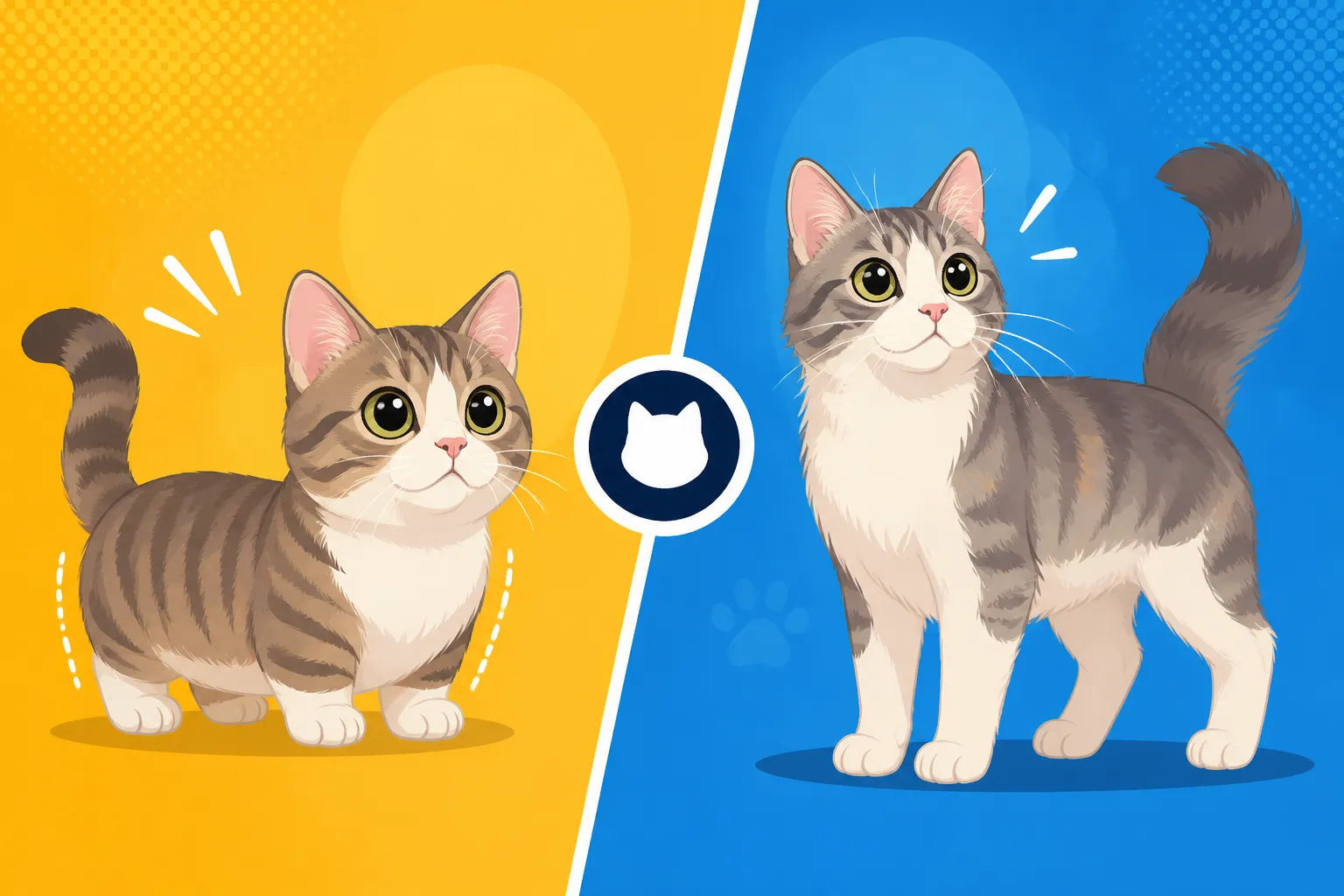
The main difference between a Munchkin and a Minuet
Breed history and ancestry
The Munchkin is a short-legged cat breed developed from domestic cats carrying a naturally occurring trait that affects leg length. Its overall look can vary: Munchkins may have different coat lengths, colors, patterns, and facial shapes. A round face or plush coat is not required to make a cat a Munchkin.
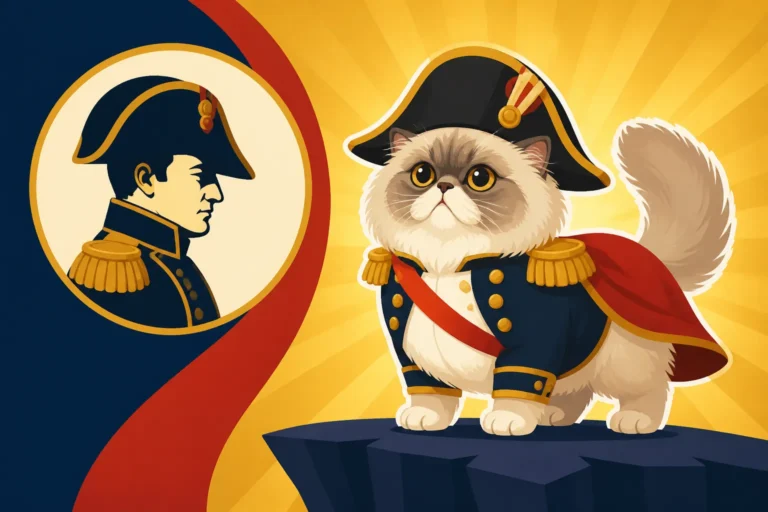
The Minuet, which was formerly known as the Napoleon, was developed using Munchkin and Persian ancestry. That history helps explain why Minuets often have a more rounded, plush appearance than Munchkins. Their heads may look rounder, their eyes prominent, and their muzzles shorter. These are tendencies, not a reliable checklist that identifies every individual cat.
The two breeds are related in the sense that Munchkin ancestry is part of the Minuet’s development, but they are not simply two names for the same cat. If you want the background in more detail, What a Minuet Is and How It Relates to the Munchkin explains the relationship, while Which Breed Was Crossed With a Munchkin to Make the Minuet focuses on how the Minuet was developed.
What their faces and bodies may look like
A Munchkin’s appearance is not limited to one narrow body type. You may see a cat with a more ordinary domestic-cat face and a short, low-set profile, or one with rounder features. Coat texture and length vary too. Some Munchkins have short coats; others have longer, fuller coats.
Minuets often show more of the Persian influence in their overall expression: a round head, large eyes, and a shorter-looking muzzle. Many have a dense or luxurious coat, though coat length can vary. Their body may look compact and substantial, but that impression alone does not confirm breed.
This overlap is why a photo is rarely enough to tell the breeds apart with confidence. A close-up can make a Munchkin’s face appear rounder than it does in person, while a fluffy coat can make either breed look more solid. A side view may show short legs clearly, but short legs are shared by both breeds and do not establish whether a cat is a Munchkin, a Minuet, or a mixed-breed cat.
| Feature | Munchkin | Minuet |
|---|---|---|
| Breed background | Developed from domestic cats with the short-legged trait | Developed using Munchkin and Persian ancestry |
| Leg length | May be short-legged or standard-legged | May be short-legged or standard-legged |
| Face | Can vary widely | Often rounder, with large eyes and a shorter-looking muzzle |
| Coat | Short or long, with many colors and patterns | Short or long; a fuller coat may be common |
| What confirms identity | Reliable pedigree or registry records | Reliable pedigree or registry records |
Shared short legs do not prove shared identity
Short legs are the most noticeable feature people associate with both breeds, but they are not enough to tell you which breed a cat belongs to. Munchkins and Minuets can both have short legs, and a cat’s leg length may also be affected by ancestry that is not fully documented. A short-legged appearance by itself does not verify a pedigree.
It is also important not to confuse a breed label with a medical assessment. A cat’s movement, limb shape, and comfort should be considered separately from its supposed breed. If the legs appear unusually bowed, the cat seems reluctant to move, or its gait changes, ask a veterinarian rather than assuming the feature is simply “part of the breed.” How a Munchkin's Legs Are Judged describes the breed-standard perspective, while How to Tell a Munchkin From a Cat With Injured Legs discusses why appearance alone can be misleading.
How to identify a cat more reliably
Look at the whole cat, not one feature
If you are comparing a Munchkin and a Minuet, start with the overall impression. Does the cat have the rounder head, prominent eyes, and shorter-looking muzzle often associated with Minuets? Or does it have a less distinctly Persian-like face and a broader range of typical domestic-cat features? These clues can help you form a reasonable guess, but they are not proof.
Next, look at the coat and body without treating either as decisive. A long, dense coat may fit the appearance many people expect from a Minuet, but longhaired Munchkins exist too. Similarly, a short coat does not rule out a Minuet. Which Coat Lengths a Munchkin Comes In is useful background if the coat is shaping your impression.
Pay attention to how the cat moves, but don’t use a video to make a diagnosis. A relaxed walk across a level floor can show whether the cat appears comfortable and coordinated. It cannot establish breed ancestry, and an unusual gait deserves a conversation with a veterinarian, not a confident breed label from a social-media clip.
Ask for records that support the label
If a breeder, rescue, or seller calls a cat a Munchkin or Minuet, ask what documentation supports that description. A pedigree should show the cat’s recorded ancestry, and registry paperwork may help clarify how the breeder identifies the breed. Ask to see records for the specific kitten or adult cat, not just documents for its parents or a general claim about the cattery.
You can also ask the breeder to explain the difference between the two labels in that cat’s family line. A clear answer should cover the cat’s ancestry and the basis for its registration or breed description. Be cautious if the explanation relies only on short legs, a round face, a popular nickname, or a claim that a particular color “proves” the breed.
Online listings should be treated as advertisements, not pedigree evidence. A listing on Chewy or another retail site may use breed terms to describe a product, but that does not verify the ancestry of a particular cat. If you are researching a breeder, look for records and direct answers rather than using retail descriptions or search results as confirmation.
What a DNA test can and cannot tell you
People often hope a DNA test will settle the question, especially when a cat has no papers. A test may provide information about genetic traits or ancestry depending on the test, but it should not be treated as a guaranteed substitute for a documented pedigree. Breed identification is not as simple as checking whether a cat has short legs.
In particular, don’t assume that a test result can confirm a cat’s registry status or prove that it meets a breed standard. The appearance of a short-legged trait and the breed name used for a cat are related questions, but they are not identical. For more context, see How a Munchkin Differs From a Dwarf Cat and Why Munchkin Crosses Worry Veterinarians.
If a seller advertises a cat as a “purebred Minuet” or “purebred Munchkin” but cannot show meaningful lineage documentation, ask what exactly they mean by the label. A careful, transparent answer is more useful than a confident claim that a test, photo, or short-legged appearance settles everything.
Common mix-ups when comparing the breeds
Mistaking a round face for proof of a Minuet
The Minuet’s Persian ancestry can make its face look round and distinctive, so facial shape is a useful clue. But cats vary, and photographs can exaggerate roundness through camera angle, lighting, fur, or the cat’s expression. A Munchkin with a round face is still possible, and a Minuet may not match every familiar image of the breed.
Try comparing several clear views rather than making a decision from one portrait. A side view can help you see the muzzle profile; a front view can show the head shape and eyes; a full-body view can reveal proportions and coat. Even then, you are gathering clues, not confirming identity.
A breeder’s explanation of lineage should make sense alongside the cat’s appearance. If the seller says “Minuet” but describes no Persian ancestry or cannot explain the pedigree, ask follow-up questions. The goal is not to challenge a cat’s worth; it is to know what you are being told before making a decision.
Assuming every short-legged cat is one of these breeds
A short-legged cat without records may be a mixed-breed cat, a cat with ancestry that is unknown, or a cat whose appearance has another explanation. Breed labels are often used loosely online, especially when a striking physical trait attracts attention. A short-legged shelter cat should not automatically be called a Munchkin or a Minuet just because it resembles one.
If you are adopting, the most useful questions may be about the cat’s health, behavior, mobility, and care needs rather than its exact breed. Ask what the shelter knows about the cat’s history, whether a veterinarian has examined it, and whether staff have noticed difficulty jumping, grooming, or using the litter box. Whether a Short Legged Shelter Cat Is a Munchkin offers more detail on why a shelter description may remain uncertain.
For a breeder purchase, evaluate the information you are given with the same care you would use for any cat. A responsible breeder should be willing to discuss health and ancestry, and not pressure you to decide based on an unusual look or a trendy label. You can also read What the TICA Munchkin Standard Asks For and What a Munchkin Looks Like Against the TICA Standard to understand how a Munchkin’s formal description differs from casual internet shorthand.
Overlooking care needs while focusing on breed names
Whether a cat is a Munchkin, a Minuet, or a short-legged mixed-breed cat, practical care still matters. Think about how the cat gets onto furniture, whether it can reach its food and water comfortably, and whether its litter box is easy to enter. A low-entry box, secure steps, and a comfortable resting place may be useful depending on the individual cat’s mobility.
Grooming needs also depend on the cat’s coat and ability to keep itself clean. A long coat may need regular brushing, and some cats may need help reaching areas around the hindquarters. Chewy can be one place to browse for basic grooming tools or pet steps, but the cat’s comfort and fit matter more than a product’s breed label. If you are unsure what equipment makes sense, ask your veterinarian or a groomer familiar with cats.
Most importantly, watch the individual cat rather than assuming its breed tells you everything. A cat that struggles to move, appears painful, or stops using a route it once managed should be assessed. Chewy’s product descriptions can help you compare supplies, but they cannot determine whether a cat’s gait or posture is healthy. Whether Buying a Munchkin Is an Ethical Decision explores broader questions people may want to consider when choosing a short-legged cat.
A practical way to make your decision
When you meet a cat, take a calm, evidence-based approach:
- Notice the overall appearance. Consider face shape, coat, body proportions, and leg length together, while remembering that these are clues rather than proof.
- Watch the cat move naturally. Look for ease and confidence on a level surface. Don’t prompt repeated jumps just to test what the cat can do.
- Ask about ancestry. Request the specific cat’s pedigree or other relevant documentation, and ask how the breeder arrived at the breed label.
- Separate identity from health. Breed paperwork does not replace a veterinary exam, and an attractive appearance does not establish comfortable movement.
- Consider daily care. Ask whether the cat needs help with grooming, access to furniture, or a more accessible litter setup.
- Take time before committing. If the seller’s claims are unclear or you feel rushed, pause and seek another opinion.
The clearest answer is usually that a cat’s appearance can suggest whether it resembles a Munchkin or a Minuet, but its documented background is what supports the breed identification. When records are missing, it is more honest to say the cat is short-legged or Minuet-like than to present a guess as a confirmed fact.
Disclaimer
This article is for general informational purposes only and does not constitute professional advice. Laws, prices and regulations vary by location and change over time. Consult a qualified professional for guidance on your specific situation.