How to Tell a Munchkin From a Cat With Injured Legs
A cat with short or uneven-looking legs can be worrying, especially if you do not know its history. Munchkins have a characteristic pattern of short limbs, but injury, pain, and other health problems can also change how a cat stands or walks. This guide explains what to look for, what not to test at home, and when a veterinarian should take a closer look.
Start with the pattern, not the label
What Munchkin leg proportions usually look like
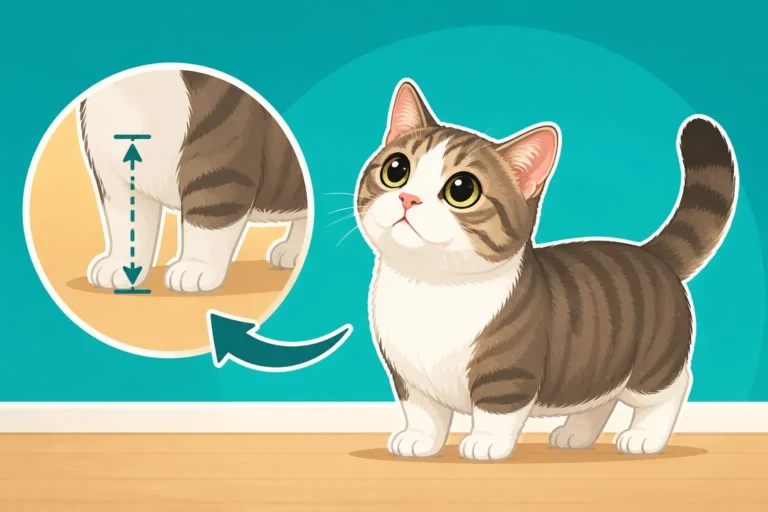
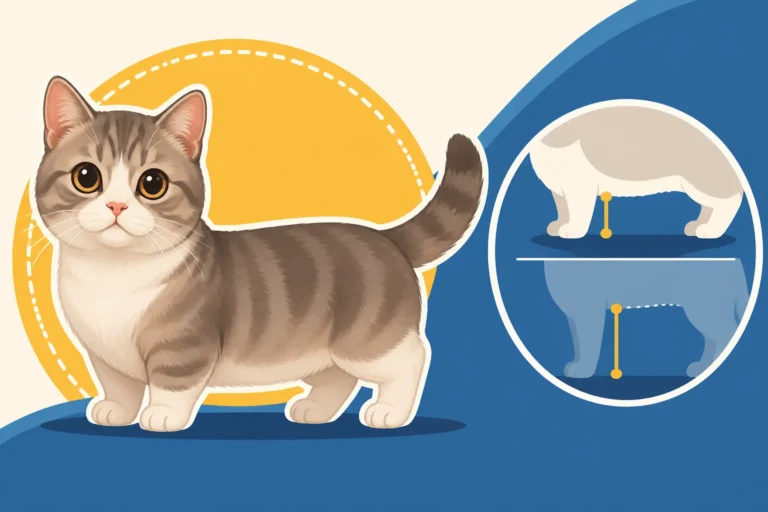
A Munchkin’s short-legged appearance is generally a body-wide pattern, not a single limb suddenly becoming shorter. The legs are shortened in relation to the torso, while the body itself is typically of ordinary length. The difference is often easiest to see when the cat is standing on a level surface and all four legs are visible. For more on that shape, see Why a Munchkin's Legs Are Short but Its Body Is Not.
The amount of shortening can vary. Some Munchkins have legs that look only somewhat shorter than those of an average domestic cat; others have a more pronounced low-to-the-ground outline. Their front legs may have a slight bow or turn, but appearance alone cannot tell you whether a particular cat has a healthy, typical build. A veterinarian needs to assess limb alignment, movement, and comfort together. Whether a Munchkin's Bowing Is a Fault or a Defect explains why the word “bowed” should not be used as a diagnosis.
A cat that is crouching, sitting unevenly, or moving cautiously may look shorter on one side even when its bones are not. Pain in a paw, shoulder, hip, or back can change posture and make the legs seem different in length. A cat’s coat, body weight, and camera angle can also exaggerate or disguise proportions. If possible, observe the cat standing and walking naturally on a flat, nonslip floor rather than judging it from a single photograph.
How an injury can make a leg look different
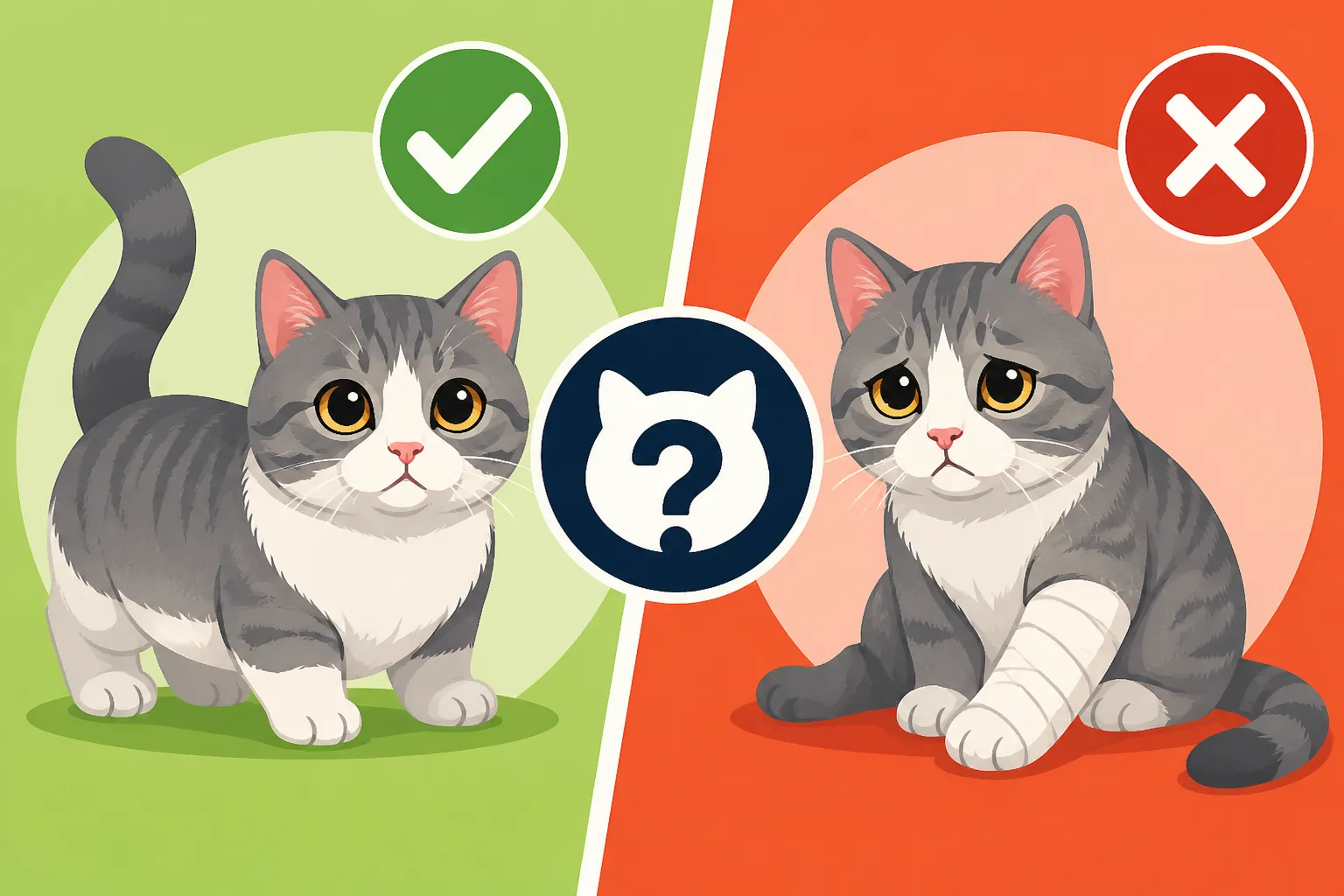
Injury is more likely to create a change that is uneven, localized, or new. One leg may be held up, placed down gingerly, turned outward, or used less than the others. A swollen joint or paw can alter the silhouette, while an old injury may leave a lasting change in how a limb is positioned or how the cat bears weight. A fracture involving a growth plate in a young cat can also affect how a limb develops.
Not every limp is caused by a dramatic accident. A cat may have a sore paw pad, a damaged claw, a bite wound, joint pain, or an injury that happened when no one was watching. Cats often hide discomfort, so a mild limp, hesitation before jumping, or a new reluctance to use stairs may be the only clue. A cat can also have an inherited short-legged build and an injury at the same time; one does not rule out the other.
A sudden change deserves particular attention. If a cat walked normally yesterday and now will not put a leg down, looks distressed, or has visible swelling, do not assume it is simply “built that way.” Contact a veterinarian promptly. If the cat is struggling to breathe, bleeding heavily, unable to stand, or in severe pain, seek emergency veterinary care.
Compare the clues carefully
Typical breed pattern versus possible injury
The pattern can help you decide what to observe, but it cannot confirm a breed or diagnose an injury. A short-legged cat found in a shelter or on the street may not have a known pedigree. Likewise, a cat with papers can still develop a medical problem. A short-legged appearance by itself is not proof that a cat is a Munchkin; see Whether a Short Legged Shelter Cat Is a Munchkin for why identification from appearance has limits.
| What you notice | More consistent with a typical short-legged build | More concerning for injury or a medical problem |
|---|---|---|
| Onset | The short-leg appearance has been present as long as the cat has been observed | A leg, stance, or gait changed suddenly or recently |
| Symmetry | The overall low stance appears broadly consistent on both sides | One limb looks newly shorter, swollen, turned, or less weight-bearing |
| Walking | The cat moves comfortably in its usual way | Limping, toe-touching, stumbling, or avoiding a leg |
| Touch and handling | No obvious reaction during ordinary, gentle handling | Flinching, crying, guarding, growling, or trying to escape when a region is approached |
| Activity | The cat plays and moves much as usual | It becomes withdrawn, stops jumping, hides, or has difficulty getting to food or the litter box |
| Visible changes | No new swelling, wound, or unusual heat is apparent | There is swelling, bleeding, a wound, a damaged claw, or a visibly abnormal limb position |
These are clues to report, not a home checklist that settles the question. Some cats with pain continue eating and playing; others act subdued for reasons that have nothing to do with their legs. A cat may also move differently because of fear, slick flooring, excess weight, or an unrelated illness. If the change is new or persistent, a veterinary examination is the safer way to distinguish possibilities.
Why gait is useful but easy to misread
A short-legged cat may walk with a different silhouette from a long-legged cat. Its body sits closer to the ground, and its stride can look unusual to someone who has not seen a Munchkin move before. That does not automatically mean the gait is painful. At the same time, “that’s just how the breed walks” should not be used to dismiss a new limp or a change in activity. Why a Munchkin's Gait Looks Different offers more context about normal movement differences.
Watch the whole cat rather than focusing only on the legs. Does it place each paw down? Does it shift weight away from one side? Does it hesitate before turning, rising, or walking across a room? Is the movement different after resting, or does it worsen with activity? These observations can help a veterinarian understand what you are seeing, but they cannot identify the underlying cause on their own.
If you can safely do so, take a brief video of the cat walking naturally on a level, grippy surface. Film from the side and from behind, without chasing or startling the cat. Do not make it jump, climb stairs, or walk over slippery flooring to “prove” anything. A video taken during ordinary movement can be more useful than repeated attempts to provoke a limp. For practical guidance on gait evaluation, see How a Vet Assesses a Munchkin's Leg Conformation.
What to do if you are unsure
Record the change and arrange an examination
Write down when you first noticed the difference, whether it came on suddenly or gradually, and what the cat was doing beforehand if you know. Note changes in appetite, litter-box use, grooming, play, jumping, or willingness to be touched. If the cat is newly adopted, ask the shelter, rescue, or previous owner what is known about its medical history, but do not delay care for a cat that seems acutely painful.
At the appointment, describe what has changed rather than starting with a guess such as “I think the legs are malformed.” For example: “She has been holding up her left front paw since this morning,” or “He used to climb onto the sofa, but for the past week he has been stopping halfway.” Specific observations help the veterinarian decide which areas to examine and whether imaging or other tests may be appropriate.
A kitten should also receive an early veterinary check even when it appears lively and comfortable. Growth, limb alignment, and chest or spinal concerns are easier to discuss when the veterinarian can establish a baseline. Why a Munchkin Kitten Needs an Early Vet Check and What a Munchkin Kitten's First Exam Should Cover explain the value of that early assessment.
What a veterinarian may assess
The veterinarian may ask about the cat’s age, how long the legs have looked this way, any known falls or accidents, and whether the movement has changed. The physical examination can include watching the cat stand and walk, checking the paws and claws, feeling along the limbs and joints, and assessing comfort and range of motion. The clinician may also examine the back and hips if the history or gait suggests those areas could be involved.
X-rays or other imaging may be recommended when the examination raises a concern about a fracture, bone alignment, a joint, or an older injury. Not every short-legged cat needs imaging simply because it is short-legged, and imaging is not a substitute for the veterinarian’s full assessment. The next step depends on what the cat’s history and examination show.
Try not to compare your cat’s legs with online photographs and decide that a certain shape must be normal. Pictures do not show pain, past injury, or how the cat moves outside the frame. Even experienced owners can miss subtle changes, especially when they happen gradually.
Avoid risky home tests and make movement easier
What not to do with a sore or unusual-looking leg
Do not pull, twist, straighten, or press firmly on a limb to see whether it “goes back into place.” Do not try to measure leg length by forcing the cat to stand still, and never make it jump from a counter or bed for comparison. These tests can hurt the cat and may worsen an injury.
Avoid giving human pain medicines unless a veterinarian specifically directs you to use a medication. Some common human medicines are dangerous to cats. If you suspect pain, call a veterinary clinic for instructions instead of trying a remedy from a household medicine cabinet.
While arranging care, keep the cat in a quiet, comfortable area and limit access to high furniture or stairs if movement seems painful. Put food, water, and a litter box within easy reach. A low-entry box can be helpful for a cat that struggles to step over a high edge; related advice is available in Which Litter Box a Munchkin Can Actually Enter. If you need supplies, Chewy may be one place to look for a low-entry litter box or nonslip mat, but choose based on your cat’s size and the veterinarian’s advice.
Support comfortable movement without assuming a diagnosis
For a cat with an established short-legged build and no signs of pain, thoughtful home setup can make daily movement easier. Keep frequently used resources accessible, use stable surfaces with traction, and avoid expecting the cat to make repeated high jumps. A small ramp or steps may help with a favorite sofa, but only if the cat uses them willingly and they are secure. Ramps and Steps Are Munchkin Equipment, Not Luxuries discusses ways to think about access around the home.
If the cat’s movement has recently changed, accessibility adjustments are supportive—not a replacement for an examination. A ramp may reduce the effort needed to reach a resting place, but it will not tell you whether the cat has a sprain, fracture, joint problem, or another condition. Keep track of whether the cat is eating, drinking, grooming, and using the litter box normally, and share any change with the veterinarian.
Once a veterinarian has assessed the cat, you can ask whether specific home modifications are appropriate. Chewy may be useful for browsing practical items such as pet steps, washable bedding, or nonslip rugs, while a local pet shop may let you assess stability and surface texture in person. For grooming or litter supplies, Chewy can also be a convenient option, but the right choice is the one your cat can use safely and comfortably. If the cat stops using a ramp or suddenly avoids a familiar route, treat that as a possible change in health rather than simply stubbornness.
Disclaimer
This article is for general informational purposes only and does not constitute professional advice. Laws, prices and regulations vary by location and change over time. Consult a qualified professional for guidance on your specific situation.