Which Breed Was Crossed With a Munchkin to Make the Minuet
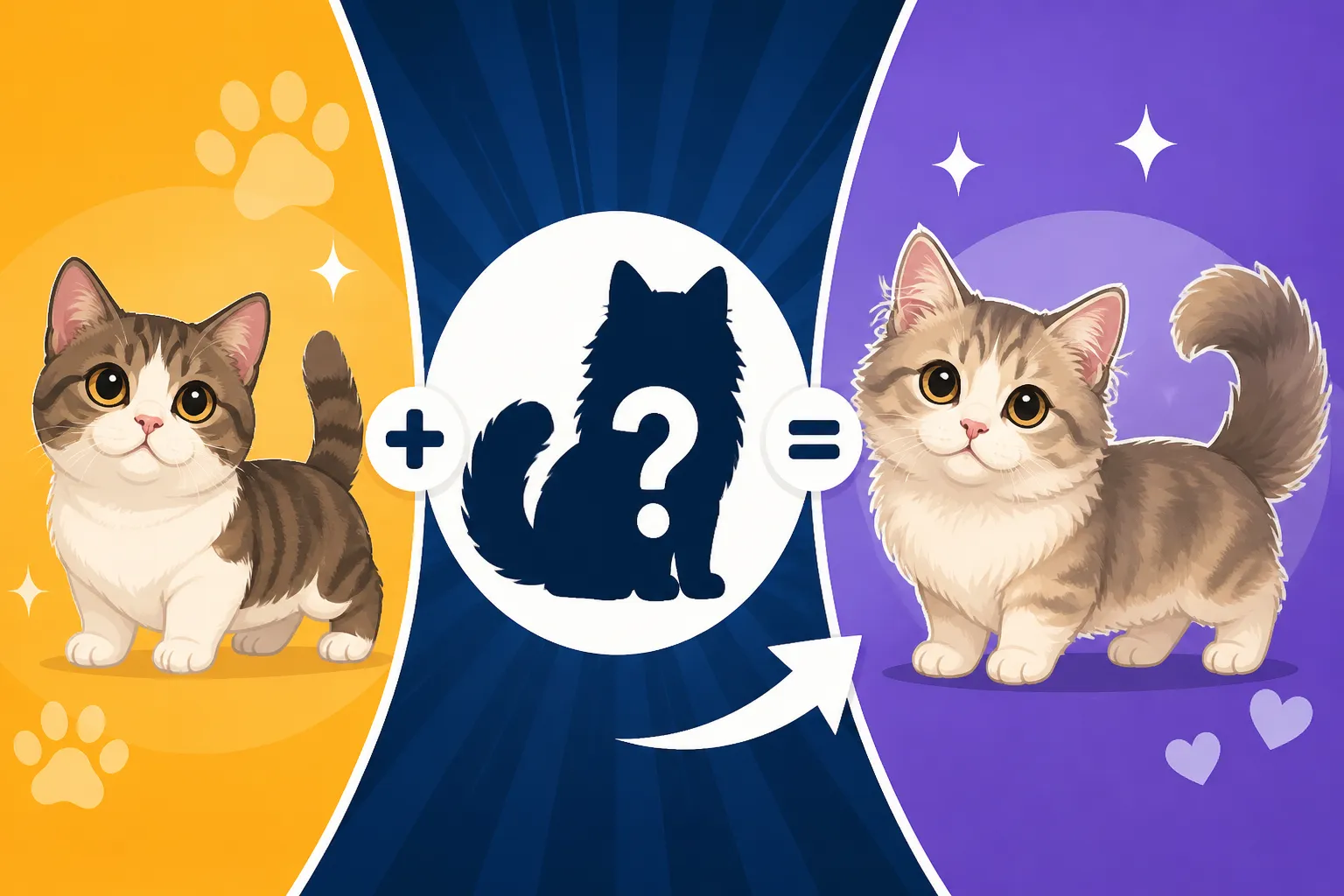
A Minuet is not simply a Munchkin with a different coat: it was developed by crossing Munchkin cats with Persian-type cats. That Persian ancestry helps shape the Minuet’s rounded face, substantial coat, and compact appearance. If you are trying to understand which breed contributed what, this guide explains the pairing, the terminology, and what responsible buyers should ask about health and ancestry.
The Persian is the breed crossed with the Munchkin
The short answer is Persian
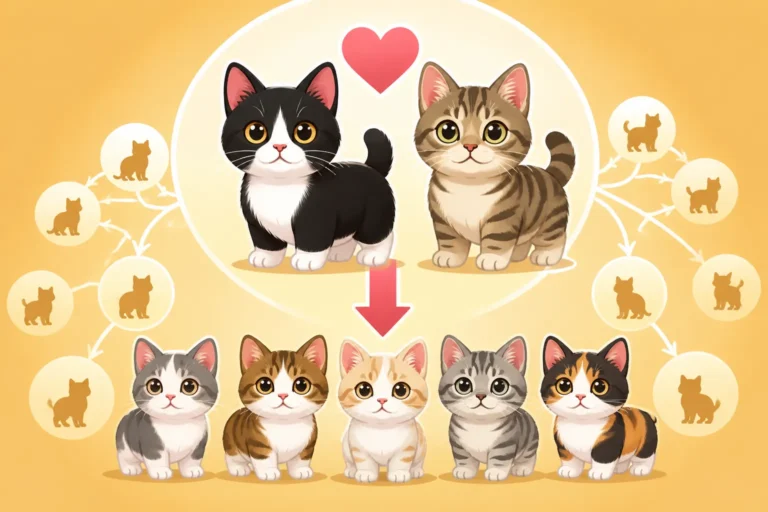
The Minuet was developed from two main sources: the Munchkin and the Persian. The Munchkin contributes the short-legged trait associated with the breed, while Persian ancestry contributes much of the Minuet’s rounded, plush look. The result is a cat with a distinct breed identity, rather than a Munchkin that has simply been given a new name.
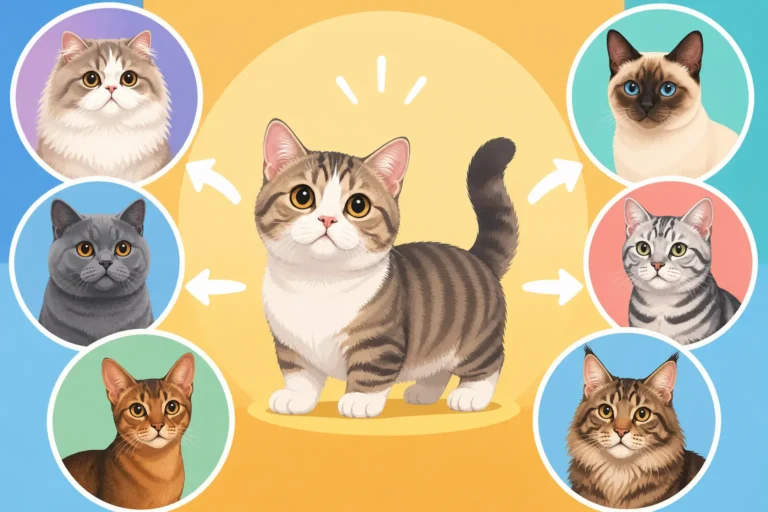
The name “Persian” can be a little less straightforward in breed descriptions than it sounds. Depending on the registry’s rules and the breeding line, Persian-type cats may include related varieties such as the Himalayan or Exotic Shorthair. So if you are looking at a particular Minuet’s pedigree, ask the breeder which specific cats and recognized breeds appear in its ancestry. The broad answer remains Persian, but a pedigree can show a more detailed picture.
The Minuet was previously known as the Napoleon. That older name still appears in some discussions and listings, which can make a search feel as though it has turned up two different breeds. In many cases, it refers to the same breed under its earlier name. For the broader background, see How the Minuet Was Made From a Munchkin and What a Minuet Is and How It Relates to the Munchkin.
What each breed contributes
The Munchkin side is associated with the Minuet’s short legs. A Minuet can also have normal-length legs, so not every kitten in a litter will necessarily have the short-legged appearance people expect. Leg length is one visible feature, but it does not tell you everything about a cat’s ancestry, health, temperament, or suitability for your household.
The Persian side contributes to the Minuet’s characteristic rounded expression and fuller coat. Depending on the line, coat length and texture can vary. That variation matters in daily life: a long coat needs regular attention to prevent tangles, while a shorter coat may be simpler to maintain but still benefits from routine brushing.
| Ancestry | Common contribution to the Minuet | What a prospective owner should clarify |
|---|---|---|
| Munchkin | Short-legged trait in some cats | Whether the kitten has short or normal-length legs and how it moves |
| Persian | Rounded appearance and Persian-type features | Which Persian-related cats appear in the pedigree |
| Other permitted outcrosses | May contribute variation depending on registry rules and the line | Which breeds are present and what health screening was done |
Breed appearance is not a substitute for documented ancestry. A cat may look “Persian-like” without having a verifiable Persian pedigree, and a short-legged cat is not automatically a Munchkin or Minuet. If lineage matters to you, ask for registration and pedigree records rather than relying on photographs or a seller’s label.
How the Minuet differs from a Munchkin
A Minuet is a developed breed, not just a crossbreed label
The Munchkin is the source breed associated with short legs, while the Minuet was developed by combining Munchkin and Persian ancestry. Over time, a recognized breed is described by its own standard and breeding rules. That means a Minuet is not simply any Persian-Munchkin mix; its identity depends on its documented background and the relevant registry’s definitions.
This distinction can be confusing when listings use “Minuet,” “Napoleon,” and “Munchkin Persian” loosely or interchangeably. A seller’s wording alone cannot confirm that a cat is registered as a Minuet. Ask which registry, if any, recognizes the cat and what documentation accompanies it. The names may help you understand the general ancestry, but records are what support a specific claim about a kitten.
It also helps to separate appearance from breed identity. A round face does not prove Persian ancestry, and short legs do not prove that a kitten belongs to a particular breed. A responsible breeder should be able to explain both parents’ backgrounds and show how the kitten fits the claimed lineage. For a comparison of the related breed, How to Tell a Munchkin From a Minuet offers another useful angle.
Leg length can vary within the breed
Because the short-legged trait is inherited from the Munchkin side, kittens in a litter may not all have the same leg length. A normal-legged kitten can still have Munchkin ancestry; leg length alone does not tell you whether the kitten is a Minuet, nor does it settle what the kitten may pass on genetically.
Ask the breeder how kittens are described and registered when their legs are normal length. Also ask whether the kitten’s movement has been observed in person or on video. A kitten should be able to walk, turn, play, and rest comfortably. If you notice an unusual gait, reluctance to move, or difficulty getting around, that deserves a veterinary conversation rather than an assumption that it is simply “how the breed moves.” The related explanation Why a Munchkin's Legs Are Short but Its Body Is Not can help clarify the Munchkin trait without treating every short-legged cat as identical.
Do not let a dramatic leg-length label become the main measure of a kitten’s quality. A very short appearance may attract attention, but health, comfort, socialization, and transparent breeding practices matter far more in everyday life. If you are considering a Munchkin-related cat, What a Munchkin Breeder Should Be Able to Show You is a useful companion topic for evaluating what a breeder can document.
What to ask about ancestry and health
Request the pedigree and the parents’ health information
Ask to see the kitten’s pedigree or other records that support its claimed ancestry. A good breeder should be able to explain which cats are Munchkin and Persian-type ancestors, which registry rules apply, and whether any other breeds were used in the line. If the answer is vague, changes from one conversation to another, or relies only on a kitten’s appearance, slow down before making a commitment.
Ask about health screening for both parents and any relevant inherited conditions in the lines. Persian ancestry can make some screening questions especially important, but the exact tests depend on the individual cats and their family histories. Ask what was tested, who performed the testing, and whether results can be reviewed. A test mentioned in an advertisement is not the same as a result you can examine.
For example, if the pedigree includes Persian ancestry, ask whether the breeder has considered screening relevant to that line, including the question raised in Why a Munchkin From a Persian Cross Needs a PKD Test. That title points to a screening topic, not a diagnosis: ancestry does not mean a particular kitten has a disease. A veterinarian can help interpret records and advise what checks are appropriate for the cat in front of you.
Watch the kitten move and ask about the breeding choices
If you can visit, watch the kitten walking across a level surface, turning, and playing at its own pace. A short video can help if an in-person visit is not possible, though it should show natural movement rather than only posed photographs. Ask to see the parents move as well, if that can be arranged. A breeder who welcomes reasonable questions is generally easier to work with than one who pressures you to decide quickly.
Ask why the pairing was chosen and how the breeder avoids combining traits in ways that could compromise welfare. The Munchkin trait is inherited, so responsible breeding choices and clear records matter. A useful related read is Why a Munchkin Is Always Bred to a Normal Legged Cat. It helps explain why a pairing plan is more than a matter of choosing two attractive cats.
Be cautious around sellers who advertise extreme features as the main selling point, refuse to share parent information, or offer confident health guarantees without meaningful records. The Minuet’s Persian and Munchkin ancestry should be something the breeder can discuss plainly—not a mystery you are expected to accept because the kitten looks the part.
What Persian ancestry may mean for everyday care
Coat care depends on the individual cat
A Minuet’s coat may be short or long, depending on its ancestry. Long-haired cats often need frequent, gentle brushing, especially around areas where fur rubs together or catches debris. If brushing is postponed until a mat is tight, grooming can become uncomfortable and stressful. Getting a kitten used to short, calm grooming sessions early can make care much easier later.
Even a cat that can groom itself may need help with routine coat checks. Look over the belly, hindquarters, and areas behind the legs, where tangles or litter can be easy to miss. If you shop for grooming supplies through a retailer such as Chewy, choose a comb or brush that suits the coat and use it gently; a tool that pulls can make a kitten wary of being handled. Ask a groomer or veterinarian for help if you find a tight mat rather than cutting close to the skin yourself.
Coat care is only one part of preparation. Think about accessible sleeping spots, a litter box the cat can enter comfortably, and safe routes to favorite furniture. A Minuet with short legs may not reach the same places as a long-legged cat, so steps or a low ramp can be helpful. Chewy and other pet retailers may carry ramps, pet steps, or low-entry litter boxes, but check the product dimensions and stability before bringing one home.
Plan for the cat in front of you
It is easy to prepare for the breed label and overlook the individual kitten. Ask what the kitten eats now, how it has been socialized, what kind of handling it is comfortable with, and whether it has used a ramp or steps. A gradual transition at home is usually less unsettling than changing food, routine, and surroundings all at once.
For a short-legged cat, look at your home from floor level. Can the kitten reach its food and water without climbing? Is the litter box easy to enter? Are there tall jumps it is likely to attempt because a favorite person or sunny window is out of reach? Simple changes—such as a stable step beside the sofa—can make daily life easier without limiting normal play.
If you are comparing breeds or researching the Munchkin side of the Minuet, keep the distinction clear: the Persian contributed to the Minuet’s development, while the Munchkin contributed the short-legged trait associated with some Minuets. A careful breeder should be able to show the ancestry behind that explanation and discuss the health and care needs of the particular cat you may bring home.
Disclaimer
This article is for general informational purposes only and does not constitute professional advice. Laws, prices and regulations vary by location and change over time. Consult a qualified professional for guidance on your specific situation.