Whether a Munchkin’s Leg Length Is Scored in the Ring
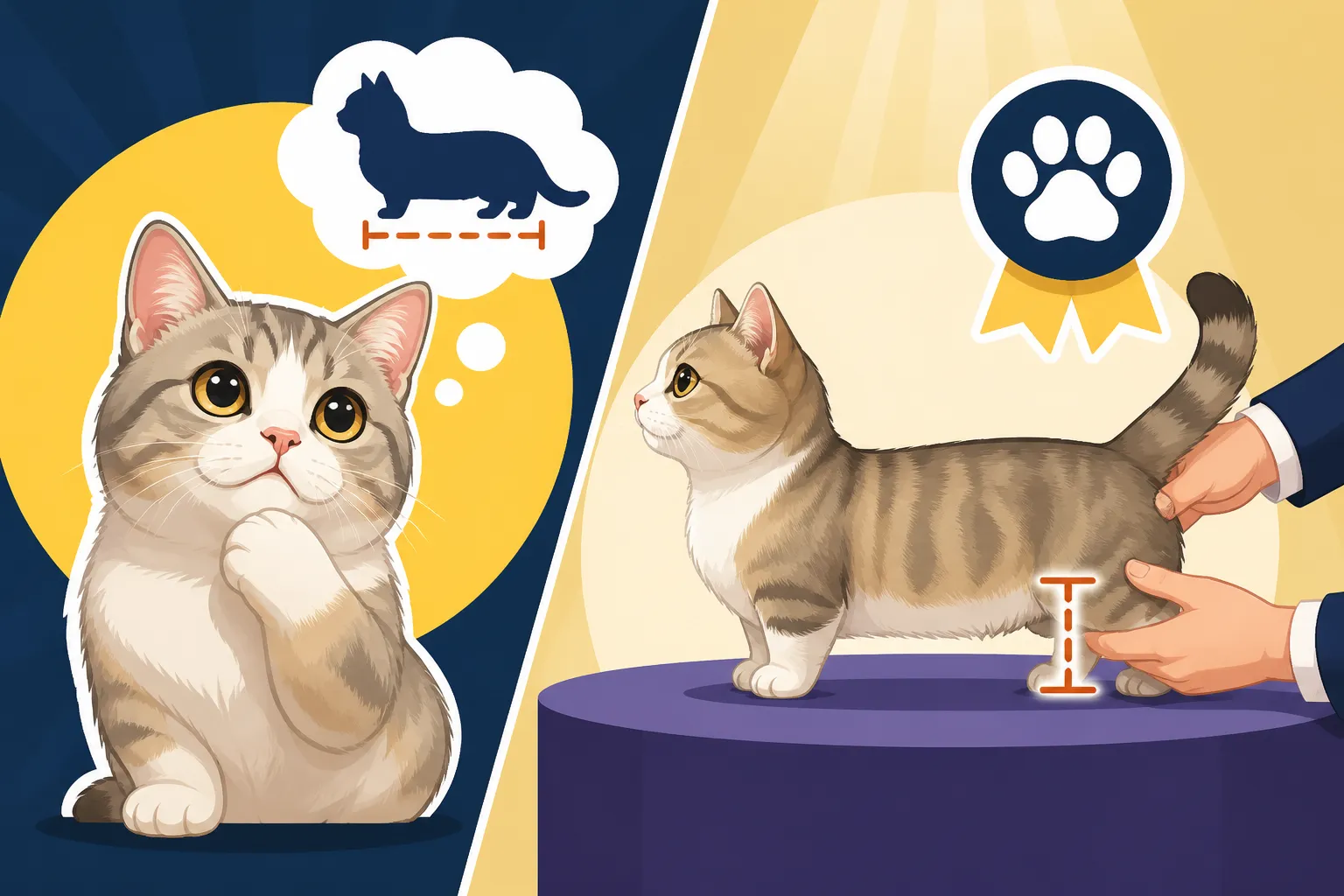
A Munchkin’s short legs are central to its appearance, but that does not mean a judge simply measures them and awards points for the shortest pair. In the show ring, leg length is considered as part of the cat’s overall type, balance, movement, and condition. This guide explains what judges assess, what they do not, and how to check the rules that apply to a particular show.
How leg length fits into Munchkin judging
The breed standard describes type, not a shortest-legs contest
A breed standard gives judges a shared description of the features a cat should have. For a Munchkin, short legs are a defining part of breed type, but they are considered alongside the rest of the cat: its body, head, coat, and general condition. The aim is not to identify the cat with the least clearance from the floor.
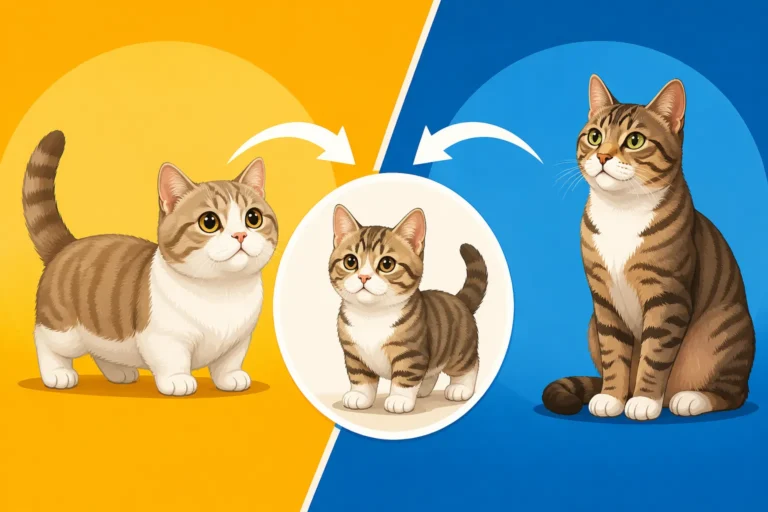
That distinction matters because photos can make the shortest-looking cat seem like an obvious winner. A low camera angle, a crouched pose, or a particularly fluffy coat can change how leg length appears. In the ring, a judge assesses the cat in person and considers whether its overall conformation fits the applicable standard. A dramatic silhouette by itself does not tell you how the cat will be judged.
The standard also describes a cat as a whole rather than as a single feature. You can learn more about the breed’s general conformation in What the TICA Munchkin Standard Asks For. The specific language and show rules to follow depend on the registry and the event.
There is no simple ruler test for the winner
A judge is not choosing the Munchkin whose legs measure the fewest inches. Leg length contributes to whether a cat presents the expected breed type, but a very short appearance does not automatically outweigh other considerations. Judges assess the cat within the framework of the standard, not by ranking cats from shortest to longest.
This is one reason online claims about “show-length” legs can be misleading. A seller’s description, a posed photo, or a casual measurement at home is not the same thing as an official show assessment. Even two cats that look similar in a photograph may differ in proportion, stance, movement, coat, or condition when seen on the judging table.
The phrase “shortest legged Munchkin” can also be confused with language about show categories or informal breeder descriptions. If a listing suggests that an especially short cat is automatically superior in the ring, ask what registry standard and show rules the claim refers to. The article How a Munchkin's Legs Are Judged offers a related look at how leg features are assessed as part of conformation.
Short legs are judged in proportion to the rest of the cat
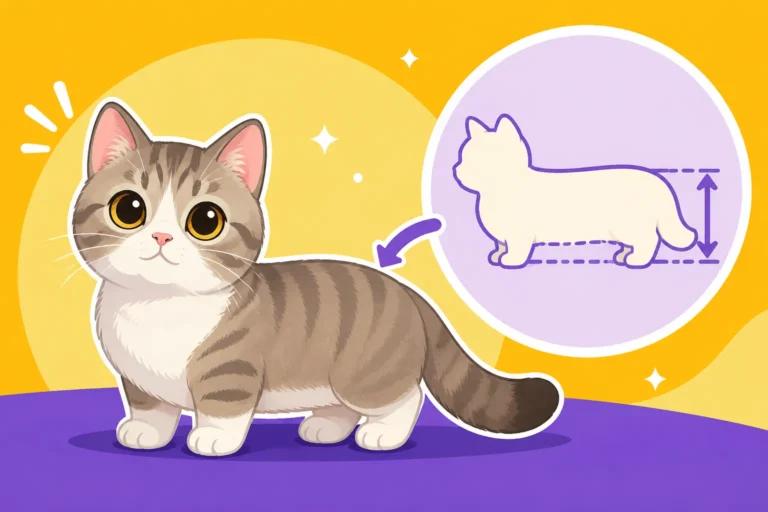
Judges do not assess leg length in isolation from body structure. They look at how the cat’s legs relate to its body and overall outline, while also considering other standard features. The relevant question is not only “Are the legs short?” but whether the cat’s complete presentation fits the breed description.
A cat that is posed with its legs tucked under may look lower than one standing naturally. Likewise, a long coat can obscure the outline, while a tense or uncomfortable cat may not stand or move as it normally would. Judges need to assess the animal in front of them, not a single frozen impression.
That whole-cat approach helps explain why show judging cannot be reduced to a leg-length score. A breed standard is a guide to type, and the judge applies it to the cat’s overall presentation. For a broader account of the physical outline, see What a Munchkin Looks Like Against the TICA Standard.
What judges may assess alongside the legs
Overall balance and breed type
Munchkin type includes more than short legs. A judge considers whether the cat’s body and other features create the overall look described by the relevant standard. The legs matter because they are a defining trait, but they do not erase the importance of the rest of the cat.
This can be frustrating for exhibitors who expect a single standout feature to decide the result. Imagine two Munchkins: one appears especially low to the ground, while the other has a more even presentation and stands comfortably. The judge is not required to place the first cat higher simply because its legs look shorter. The complete standard-based assessment is what counts.
Registry standards can differ, and so can the terminology used to describe features. If you are considering entering a show, read the current standard for the registry that sanctions it and ask the show organizer how eligibility is handled. A useful companion topic is Whether a Munchkin's Leg Length Is Scored in the Ring, which focuses on the distinction between a breed feature and a separate point category.
Movement, stance, and comfort
A cat may be viewed standing and moving, as well as while the judge examines it. Movement can help show how the cat uses its body and whether it appears comfortable. It is not a cue to push a cat into repeated jumps or strenuous activity for a better-looking presentation.
Exhibitors should allow the judge to handle the cat according to show procedure, while paying attention to the cat’s comfort and behavior. A cat that is frightened, fatigued, or unwilling to cooperate may not show its usual posture. That does not mean its legs have changed; it means the judge is assessing the animal under the conditions of that moment.
If you are preparing a cat, a short video of its natural walk at home can help you notice changes in gait before an event. It is not a substitute for an official evaluation, but it can be useful information to share with a veterinarian if you see stiffness, limping, or reluctance to move. See How a Vet Watches a Munchkin Walk for a related discussion of gait observation.
Condition and presentation
A show result is not only about conformation. General condition and presentation also matter under the rules of the event. A clean, well-groomed coat helps a judge see the cat clearly, while a calm and healthy appearance makes handling easier. Good preparation should never mean trying to alter the cat’s body or restrict its normal movement.
For coat care, use tools suited to the individual cat rather than forcing a grooming routine that causes distress. Some owners pick up a comb or brush from a local pet shop or a retailer such as Chewy; the useful choice depends on coat length and how the cat tolerates grooming. Chewy is also one option for ordinary grooming supplies, but no product can change how the breed standard is applied.
Before a show, confirm what grooming and handling practices are allowed. Avoid last-minute experiments with unfamiliar products or equipment. If your cat is not accustomed to being handled, gentle practice at home is more sensible than expecting it to tolerate a long examination on show day.
What a ring result does and does not tell you
A placement is not a measurement certificate
A ribbon or placement reflects the judge’s assessment within a particular class, at a particular event, under particular rules. It does not certify an exact leg length, guarantee that every future judge will rank the cat the same way, or serve as a medical evaluation.
Show results can vary because cats are compared in a live setting and judges apply the standard to the entries before them. A cat may place differently at another event without any change in its physical structure. That is normal in competitive judging and is one reason not to treat a single result as proof that one leg length is objectively ideal.
The distinction is important for prospective buyers, too. If a breeder describes a kitten as “ring quality,” ask what they mean and whether they are referring to a specific registry’s eligibility, their personal opinion, or a previous judge’s assessment. For a related discussion of what official recognition means, read What Championship Status Changed for the Munchkin.
A show assessment is not a health screening
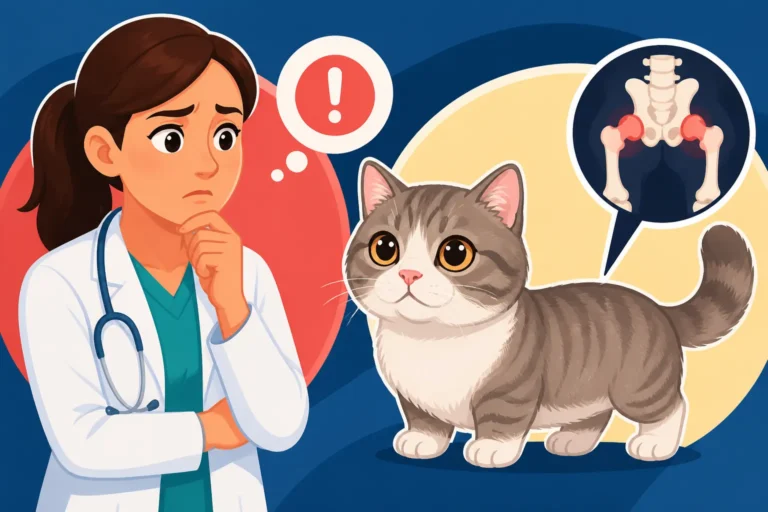
A judge evaluates the cat for the purpose of the show. That process is not the same as a veterinary examination, diagnostic imaging, or a complete assessment of future health. A cat’s show performance cannot establish that it has no underlying condition, just as an unusual-looking stance does not by itself establish a diagnosis.
If you are buying a kitten, ask about veterinary care, the kitten’s family history, and the breeder’s approach to health and welfare. You can also ask what documentation is available and whether you can see the kitten moving naturally. Avoid relying on a show title as a substitute for health information. The guide Whether a Munchkin Can Be Screened Before Purchase covers questions that are more directly relevant to screening.
People sometimes confuse a breed’s short-legged appearance with particular skeletal or spinal diagnoses. Those are separate questions that require appropriate veterinary assessment. For context on the broader health discussion, see Why the Frequency of Munchkin Spinal Problems Is Disputed and Why Vets Disagree About the Munchkin.
How to verify the rules for a specific show
Check the registry and event documents
Before entering, identify which registry or organization sanctions the show. The standard and entry rules for one organization should not automatically be assumed to apply to another. Look for the current breed standard, class descriptions, and eligibility requirements for the event you plan to attend.
If anything is unclear, contact the show secretary or organizer. Ask whether the event accepts Munchkins, which class applies, and whether there are specific rules about presentation or registration. This is more reliable than relying on an old social media post or a breeder’s summary of a rule they may not have checked recently.
Registry recognition is a separate issue from whether a judge scores leg length as a standalone item. For background on the organizations involved, see Which Registries Accept a Munchkin and Why CFA Has Never Accepted the Munchkin.
Prepare the cat without trying to engineer the result
A sensible preparation routine focuses on comfort and familiar handling. Help the cat get used to being gently examined, keep grooming calm, and use a carrier the cat can enter safely. A familiar blanket in the carrier can make travel less stressful; some owners look for carrier and grooming supplies through local shops or Chewy. Chewy may be convenient for basic supplies, but the important point is choosing items that fit the cat and are safe to use.
Avoid attempting to make the legs look shorter through posture, restrictive equipment, or stressful handling. A judge needs to assess the cat naturally. Do not withhold food or water to change its appearance, and do not push it into movement that seems uncomfortable. If a cat shows pain, a new limp, or reluctance to walk, speak with a veterinarian rather than treating the issue as a show-preparation problem.
| Question | What to keep in mind |
|---|---|
| Does a judge reward the shortest legs? | Not as a simple ruler-based contest; short legs are considered as part of breed type. |
| Is leg length the only feature assessed? | No. The judge considers the whole cat under the applicable standard. |
| Does a ribbon confirm the cat’s health? | No. Show judging is not a veterinary health screening. |
| Do all registries use identical rules? | No. Check the standard and entry requirements for the specific organization and event. |
| Can a photo predict the result? | Not reliably. Pose, angle, coat, movement, and the live comparison all affect what the judge sees. |
Keep expectations realistic
If your goal is to enjoy showing, treat the result as one assessment rather than a verdict on your cat’s worth. A Munchkin can be a beloved companion whether or not it wins a class. Showing may also help owners learn how judges interpret breed standards, but it should not become a reason to prioritize a particular silhouette over the cat’s comfort.
For prospective owners, the more useful questions are whether the cat’s needs fit your home, whether you can provide suitable care, and whether the source is transparent about the animal’s background. A show ring can offer information about conformation under a particular standard, but it cannot answer every question about day-to-day life or long-term welfare.
Understanding this distinction makes the title question easier to answer: leg length matters because it is part of Munchkin type, but it is not a simple standalone score where the shortest legs automatically win. Judges assess the cat as a whole, using the rules and standard that apply to that show.
Disclaimer
This article is for general informational purposes only and does not constitute professional advice. Laws, prices and regulations vary by location and change over time. Consult a qualified professional for guidance on your specific situation.