What a Super Short Munchkin Is
A “super short” Munchkin can sound like a precisely defined type of cat, but the phrase is usually informal breeder or seller language, not a universally agreed measurement. That can make listings confusing: one person may mean an especially low-slung cat, while another uses the label to emphasize appearance. This guide explains what the term may mean, what it does not tell you, and how to assess a cat beyond leg length.
What “super short Munchkin” usually means
An informal description, not a separate breed
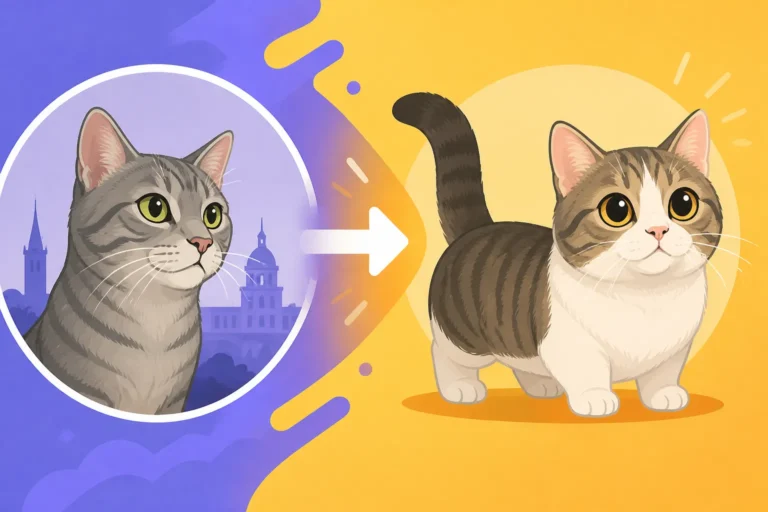
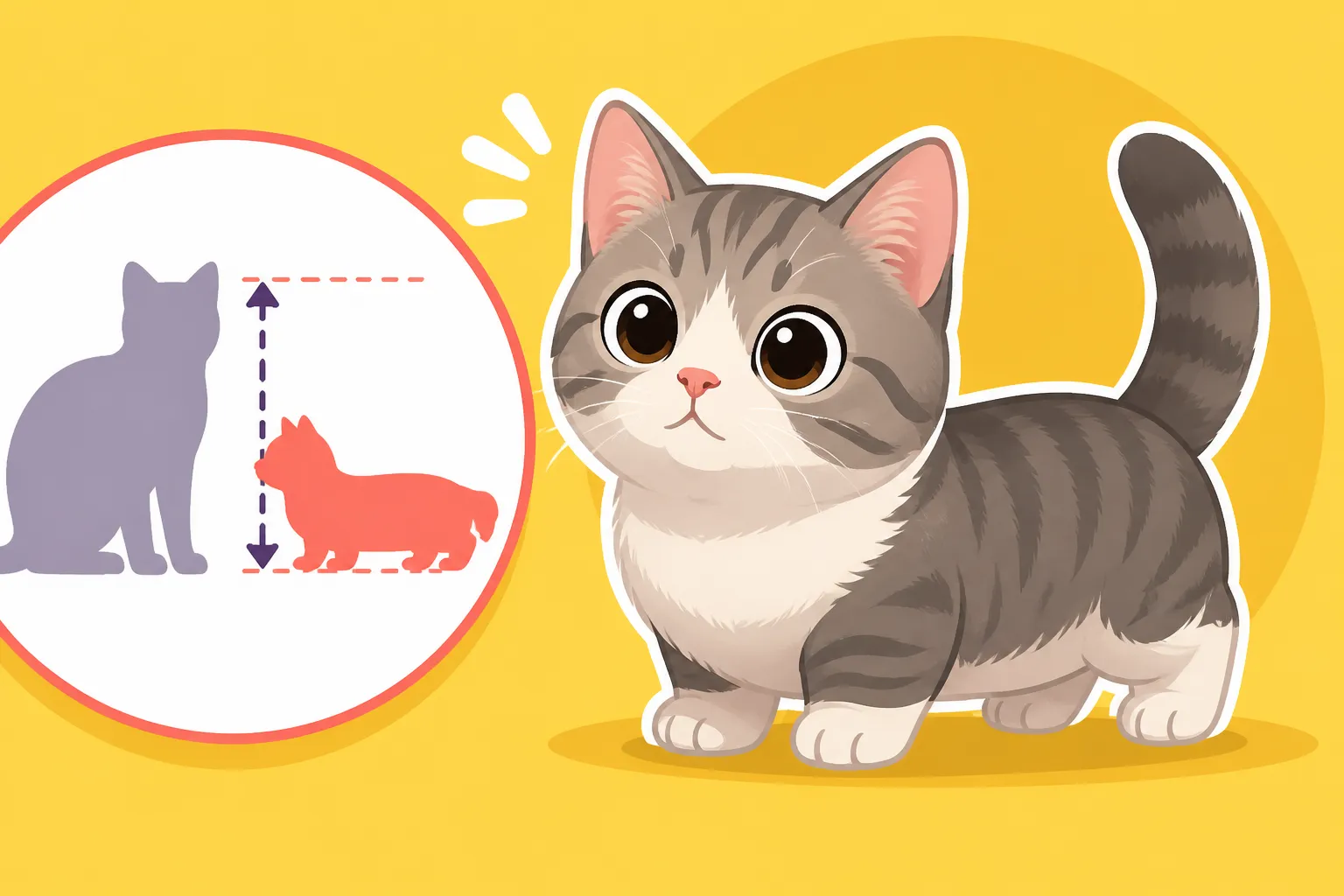
A super short Munchkin is generally a Munchkin described as having especially short legs. The phrase does not identify a separate breed, and it does not by itself establish a cat’s health, pedigree, adult size, or quality of movement. It is best understood as a visual description that a breeder or seller may use.
There is no single, universally accepted measurement that makes a cat “super short.” Different people may use the phrase differently, and photos can make the distinction look more dramatic or less obvious depending on camera angle, posture, coat, and the surface the cat is standing on. A kitten’s proportions also change as it grows, so an early impression may not match its adult appearance.
You may also encounter labels such as “standard,” “rug hugger,” or “super short.” These can be useful shorthand within a particular breeder’s program, but they do not necessarily describe categories used consistently by registries or across the cat community. For more on the informal label What a Rug Hugger Munchkin Is, it helps to separate marketing language from formal breed terminology.
How the label differs from a formal breed description
A breed standard describes the general features expected of a breed for registration or showing. It is not the same thing as a seller’s adjective, and a label like “super short” does not automatically mean a cat meets any particular standard. For background on the formal description, see What the TICA Munchkin Standard Asks For.
Even within Munchkins, leg length is only one aspect of a cat’s appearance. Body proportions, head shape, coat, and overall condition also contribute to how a cat looks. Two cats with similarly short legs can have quite different builds, and a cat that looks lower to the ground in a photograph may not be the shortest in person.
The word “super” can also carry a sales implication. A seller may use it to make a kitten sound rare or especially desirable. That does not prove the claim is false, but it is a reason to ask what the seller means in practical terms and whether they can show the kitten moving naturally. What a Standard Munchkin Is provides a useful comparison when a listing uses several labels without explaining them.
What to check beyond leg length
Watch the cat move on level ground
A still photo cannot show whether a kitten walks comfortably, changes direction smoothly, or uses its legs evenly. If you are considering a Munchkin, ask for an unedited video of the cat walking and playing on a flat, non-slippery surface. Watch from the side and from the front if possible. The goal is not to judge a kitten from a short clip, but to get a clearer sense of its everyday movement.
Look for a steady gait, willingness to move, and natural use of all four legs. A kitten may pause, play in bursts, or move awkwardly while distracted; one moment is not a diagnosis. But repeated limping, reluctance to walk, obvious difficulty rising, or a marked difference between the way the legs are used deserves follow-up with a veterinarian.
If you can meet the kitten, notice how it gets around in an ordinary room. Does it explore, walk to a toy, and turn without seeming distressed? Does it appear unusually hesitant or repeatedly avoid putting weight on a limb? These observations are more useful than trying to decide whether its legs fit a seller’s “super short” category. See How a Munchkin's Legs Are Judged for a related look at appearance and evaluation.
Ask for health history and veterinary records
Leg length alone cannot tell you whether a kitten is healthy. Ask what veterinary examinations the kitten has had, whether any concerns were noted, and whether the breeder will share the records. A responsible breeder should be willing to discuss health openly and explain what they know about the kitten and its parents.
A short-legged appearance should not be treated as proof of a particular diagnosis. Likewise, a healthy-looking kitten is not a guarantee that it will never develop a medical problem. A veterinary examination after adoption gives your own veterinarian a chance to assess the kitten’s overall condition, movement, and development.
It is reasonable to ask how the breeder evaluates the spine, chest, and limbs, and whether a veterinarian has examined the kitten rather than relying on a visual check alone. For a broader discussion of the questions to ask, read What a Munchkin Breeder Should Be Able to Show You and How a Vet Assesses a Munchkin's Leg Conformation.
What the label does and does not tell you
It does not predict temperament or exact adult size
“Super short” refers to appearance, not personality. A kitten’s confidence, sociability, play style, and comfort with handling are shaped by many factors, including individual temperament and early experiences. The label does not tell you whether a cat will be cuddly, energetic, quiet, or suited to a particular household.
It also does not provide a dependable forecast of adult size. Kittens grow at different rates, and body size is not determined by leg length alone. If you are trying to understand how the cat may develop, ask about the parents and the kitten’s growth history, while remembering that neither offers a precise prediction.
A seller should be able to describe the individual kitten rather than leaning on a label to answer every question. Ask how it responds to people, what kinds of play it enjoys, and how it behaves around routine handling. For a more general sense of the breed’s household fit, see Whether a Munchkin Is the Right Cat for You.
It does not establish that shorter is better
A particularly low profile may appeal to some people, but “shorter” is not automatically a sign of better health, better temperament, or better breeding. Treat claims that a cat is exceptional solely because its legs are especially short with caution. A sound decision should consider health information, the breeder’s practices, the cat’s movement, and the home’s ability to meet its needs.
A very low body can also affect practical day-to-day experiences. Some cats may have a harder time reaching high surfaces or navigating tall furniture. That does not mean every Munchkin will struggle in the same way, but it is worth thinking about the home layout before bringing one home. Whether an Apartment Suits a Munchkin and Why a Single Story Home Suits a Munchkin Best can help you consider access and safety.
If you are comparing kittens, a simple checklist can keep the conversation grounded:
| What you are evaluating | Useful question or observation | What it can tell you |
|---|---|---|
| Meaning of the label | “How do you define super short?” | Whether the seller uses a clear, consistent description |
| Movement | Watch the kitten walk and turn on a level surface | How it moves during that brief observation |
| Veterinary history | Ask to see examination records | What has been assessed and documented |
| Parent information | Ask about the parents’ health and movement | What the breeder can share about the family |
| Home suitability | Consider routes to food, litter, resting places, and play areas | Whether the space is manageable for this cat |
| Sales claims | Ask what supports claims about rarity or quality | Whether claims are explained rather than simply asserted |
Choosing and caring for a Munchkin described as super short
Make the home easy to navigate
Before adopting, look at the rooms from a cat’s height. A sofa, bed, or window perch that another cat reaches in one jump may be difficult for a short-legged cat to access. Stable steps or a gently sloped ramp can provide an alternative, while rugs can offer better footing on slippery floors. Secure these aids so they do not shift when the cat uses them.
Keep daily essentials easy to reach. A low-entry litter box, accessible food and water, and a comfortable resting place on the floor can reduce the need to climb. You do not need to turn every room into a special setup; start with the spots the cat will use most and adjust based on what it actually does.
When shopping for supplies, pay attention to dimensions and stability rather than relying on a product’s general label. Chewy listings may include a range of pet steps, ramps, and litter boxes, but check measurements and customer-use details carefully so the item suits your cat and your space. The same principle applies when arranging furniture: observe which routes your cat uses rather than assuming a particular accessory will solve every access problem.
Keep grooming, body condition, and mobility in view
Some Munchkins may have difficulty reaching parts of their back half, especially if they have a longer coat or gain excess weight. Regular brushing and gentle checks of the belly, hindquarters, and area under the tail can help you notice tangles or soiling early. If grooming is uncomfortable or mats are close to the skin, ask a veterinarian or professional groomer for safe help rather than pulling at them.
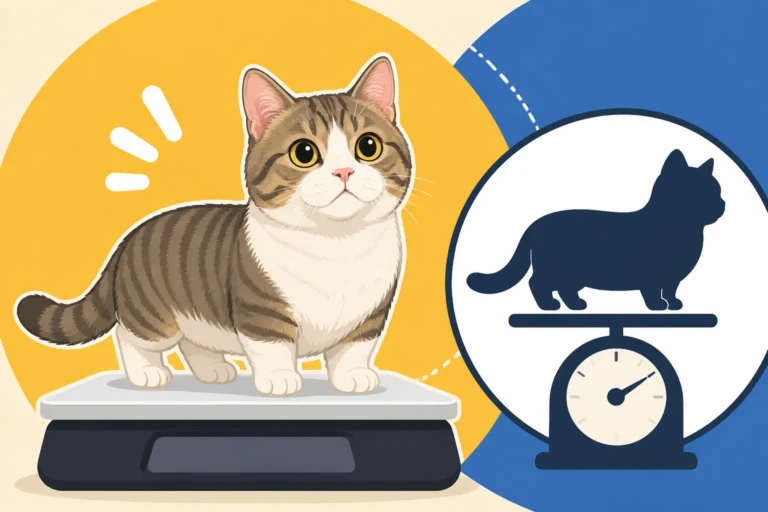
Body condition matters because extra weight can make movement and grooming more demanding. Ask your veterinarian to help you determine an appropriate feeding plan and healthy body condition for your individual cat. A weekly weigh-in at home can help you notice gradual changes, especially when paired with attention to appetite, activity, and how easily the cat moves.
Chewy may be one place owners browse for grooming tools or measured-feeding supplies, but equipment is not a substitute for regular observation and veterinary advice. If your cat becomes less active, stops using a ramp it previously managed, begins avoiding jumps, or shows a new change in gait, arrange a veterinary check rather than assuming it is simply getting older or “acting like a Munchkin.” For more on home adjustments, read Ramps and Steps Are Munchkin Equipment, Not Luxuries.
The practical meaning of “super short Munchkin” is therefore limited: it usually signals that someone considers the cat’s legs especially short, but it does not provide a standardized measurement or a complete picture of the cat. Ask what the seller means, assess the kitten’s movement and records, and make your decision around the individual animal rather than the label. Chewy can be useful when comparing basic care supplies, but the best choices are the ones that fit your cat’s actual size, mobility, and routine.
Disclaimer
This article is for general informational purposes only and does not constitute professional advice. Laws, prices and regulations vary by location and change over time. Consult a qualified professional for guidance on your specific situation.