Whether an Apartment Suits a Munchkin
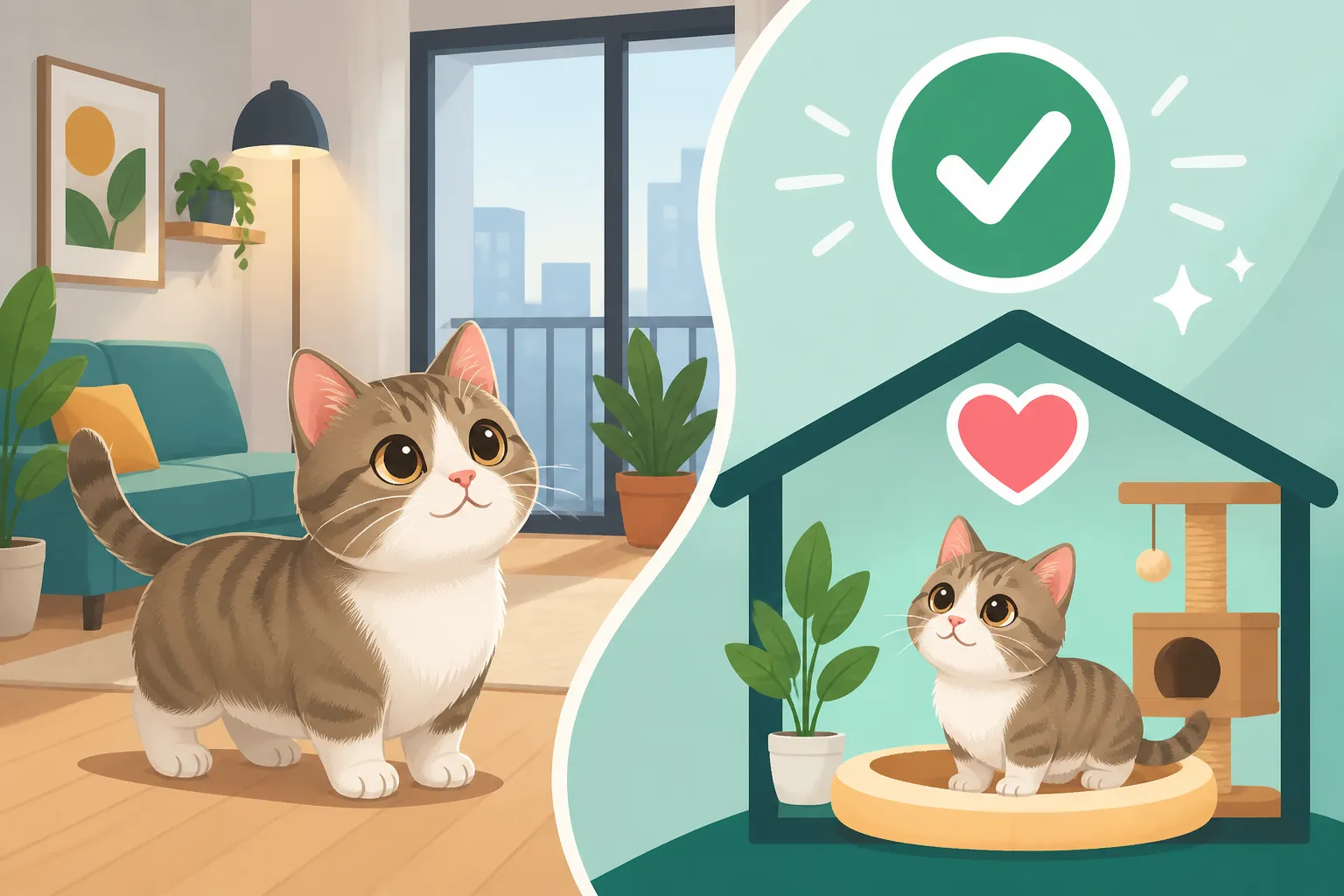
A Munchkin can live happily in an apartment, but a small floor plan is only part of the question. The bigger challenge is whether the cat can reach its litter box, food, favorite resting spots, and play areas without repeated high jumps or being trapped behind obstacles. This guide explains how to assess your layout and make everyday apartment life work.
Is an apartment suitable for a Munchkin cat
There is no single apartment size that guarantees a good fit. A compact, thoughtfully arranged home may be easier for a Munchkin to navigate than a larger apartment with steep stairs, slippery floors, and essentials scattered across several levels. Look at the route the cat must travel, not just the number of rooms.
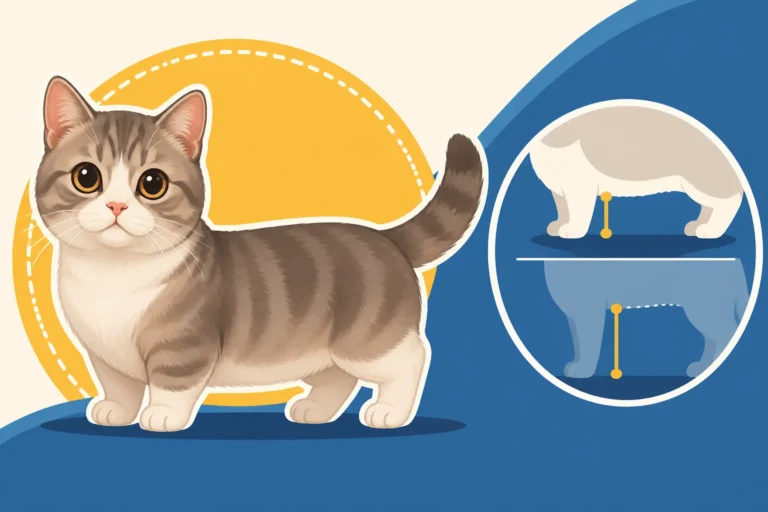
Munchkins are cats with short legs, not cats who need to be carried everywhere. Their movement and abilities vary, and many enjoy active play. Still, short legs can make certain jumps and escapes more difficult. A suitable home gives the cat safe ways to get where it wants to go and places to retreat when it wants quiet.
Think about access rather than square footage
Walk through your apartment at the cat’s height, metaphorically speaking. Can your cat get from its bed to its litter box without negotiating a tall threshold, slippery hallway, or flight of stairs? Can it reach a window to watch the street? Can it get onto the sofa if that is where the family spends the evening?
A studio apartment may offer a simple, easy-to-learn layout, but it can also leave a cat with few quiet places. A larger apartment may provide more enrichment and separate resting areas, yet include obstacles such as staircases or high furniture. The practical question is whether the cat can move comfortably between the areas it uses most.
This is why Whether an Apartment Suits a Munchkin is less about a minimum number of square feet and more about how the space works. A home with clear routes, low-access essentials, and a few safe places to perch can be more suitable than a much larger home that expects the cat to leap onto everything.
Consider stairs and changes in level
A few steps between rooms or a full staircase to a second-floor apartment can affect day-to-day access. Some Munchkins may manage stairs, but repeated climbing can be tiring, and a cat that is stiff, unwell, or getting older may find them harder. If the litter box, food, or water is on another level, the cat may have to make that trip many times each day.
If your apartment has stairs, consider keeping the most important resources on the same level where your cat spends most of its time. For a duplex or loft, provide a complete set of essentials on the cat’s main level rather than assuming it will always want to climb. Think ahead about nighttime, when a cat may not want to cross a dark or unfamiliar staircase to reach its box.
A Munchkin’s comfort can change with age, weight, injury, and health. A layout that works for a playful young cat may need adjustment later. For ideas on making movement safer, see How a Munchkin Gets Where It Wants Without Jumping and Why a Single Story Home Suits a Munchkin Best.
Set up the apartment around everyday needs
The most useful adjustments are often small: a low-entry litter box, nonslip flooring along a regular route, or stable steps beside the sofa. You do not need to turn every room into a special cat space. Start with the places your cat uses most, then watch where it hesitates, slips, asks for help, or gives up trying.
Make litter, food, and water easy to reach
Choose a litter box with a low entrance that your cat can step over comfortably. High sides can help contain litter, but the entry point should not require a jump. Put the box somewhere quiet and accessible, away from noisy appliances and heavy foot traffic. In a multi-level apartment, consider providing a box on the level where your cat spends most of its time.
Food and water should also be reachable without a climb. Some cats are comfortable eating from a floor-level bowl; others may prefer a modestly raised bowl that lets them eat without an awkward posture. Watch your cat rather than assuming that a particular bowl height is right. If it stretches, shifts repeatedly, or seems uncomfortable, ask your veterinarian about a more suitable arrangement.
When comparing accessible litter boxes, mats, and feeding supplies, Chewy can be one place to browse options. Check measurements and entry height carefully instead of relying on a product label alone. A low front that looks convenient in a listing may still be too high or narrow for your particular cat.
For more detail on choosing a box, see Which Litter Box a Munchkin Can Actually Enter. If you are setting up a new home, Why a Munchkin Needs a Litter Box It Can Walk Into covers why easy access matters in an ordinary daily routine.
Add steps or ramps to favorite places
If your cat wants to join you on the sofa or bed, provide a stable route rather than encouraging repeated leaps. Pet steps can work well when the steps are close together, wide enough for the cat to place its paws, and steady on the floor. A ramp can be useful for a longer, gradual route, but a steep or slippery one may be ignored.
Place the aid where your cat naturally approaches the furniture. Secure it so it does not wobble, and use a surface with enough grip. Introduce it patiently: reward investigation and use treats or a favorite toy to make the route inviting. Do not force your cat onto a ramp or assume it will understand the purpose immediately.
For a window view, create a safe, reachable perch using furniture or a purpose-built platform with gradual access. Make sure the window itself is secure and that the cat cannot push through a loose screen. Chewy may have ramps, steps, and window-access products to compare, but evaluate stability, footprint, and surface texture before ordering. The best item is one your cat can use confidently, not simply the tallest or most elaborate option.
Keep the apartment engaging and safe
Apartment living can be enriching for a cat, especially when the home offers play, observation, rest, and interaction. A Munchkin does not need every activity to involve climbing. Floor-level games and easy-to-reach resting places can provide variety without turning the home into an obstacle course.
Offer play at floor level
Use wand toys, soft balls, and toys that move along the floor to encourage chasing and pouncing. Keep sessions short enough that your cat stays interested, and let it catch the toy occasionally. Puzzle feeders can add mental activity, provided the openings and compartments are easy for the cat to reach.
Rotate toys rather than leaving every option out at once. A cardboard box, a paper bag with handles removed, or a tunnel can become an appealing hideaway, as long as it is safe and supervised when needed. A perch or bed near a window can offer stimulation even when there is no room for a large cat tree.
A compact apartment can also feel bigger to a cat when it has distinct zones: a quiet sleeping spot, a place to observe, a scratching surface, and a play area. For a Munchkin, these do not have to be high up. You can build useful variety across the floor and use low, stable furniture as part of the layout.
Prevent falls, slipping, and blocked exits
Check for slick surfaces where your cat turns, runs, or lands. Small rugs with secure backing can improve traction on laminate or tile, but loose rugs that bunch up may create a different hazard. Keep walkways clear of bags, laundry, and boxes, especially around the litter box and feeding area.
Think carefully about balconies, open windows, and shared hallways. A short-legged cat may have difficulty climbing out of a dangerous situation or escaping a dog or another animal. Do not assume that a cat will stay safely on a balcony because it has not tried to climb before. Use secure barriers and supervise access.
If you have children, visitors, or a dog, create a retreat the cat can reach without being cornered. A low bed tucked under a table or a quiet room with an open route can help. Apartment doors also deserve attention: cats can slip into hallways quickly, so plan how you will prevent an accidental dash when carrying groceries or welcoming guests.
Decide whether your particular apartment and routine fit
A suitable apartment is not just one with the right furniture. It is also a home where the people can keep the setup consistent. If you travel often, work long hours, or expect to move soon, consider how the cat’s access and routine will be maintained during those changes.
Match the home to your cat’s needs
Before adopting or bringing home a Munchkin, make a simple access checklist:
- Identify the cat’s likely sleeping, feeding, litter, and play areas.
- Note stairs, high furniture, slippery floors, and narrow routes.
- Add a safe way to reach any favorite surface that would otherwise require a large jump.
- Place essentials where the cat can reach them without crossing a difficult route.
- Reassess after the cat has settled in, since its preferences may differ from what you expected.
If the apartment has a staircase, ask yourself whether the cat can access everything it needs without having to use it constantly. If the home is small, make sure there is still a quiet place where the cat can withdraw. If you rent, check that any installed shelves, gates, or window protections are permitted and can be secured safely.
Watch for signs that the setup needs changing
Pay attention if your cat stops using a ramp, avoids a favorite room, begins eliminating outside the box, or asks to be lifted more often than usual. Those changes can reflect a problem with the layout, but they can also indicate pain or illness. A sudden change in movement, appetite, grooming, or litter-box habits deserves a conversation with a veterinarian rather than a furniture fix alone.
Keep an eye on weight as well. Extra weight can make movement more demanding, and an indoor cat may have fewer opportunities to exercise spontaneously. Use measured meals, offer daily play, and ask your veterinarian to help assess body condition and an appropriate feeding plan. For a broader look at what home adjustments involve, see With a Munchkin the House Changes, Not the Cat and How to Arrange a Munchkin's Room in One Plane.
A well-planned apartment can suit a Munchkin, including a modest one, when the cat can reach essentials, move without repeated risky jumps, and enjoy safe activity and company. The best test is not whether the home looks perfectly adapted on day one. It is whether your cat can use it comfortably—and whether you are willing to adjust the setup when its needs change.
Disclaimer
This article is for general informational purposes only and does not constitute professional advice. Laws, prices and regulations vary by location and change over time. Consult a qualified professional for guidance on your specific situation.