Why a Single Story Home Suits a Munchkin Best
A split-level home can turn ordinary cat routines into a daily obstacle course: the litter box is upstairs, the food is downstairs, and the favorite sofa sits just out of reach. A single-story home makes those essentials easier to access for a Munchkin, while reducing the need to navigate stairs. Here’s how to judge whether your layout will feel comfortable, safe, and enriching for your cat.
Why a single-story layout can work well for a Munchkin
Everyday essentials stay within easy reach
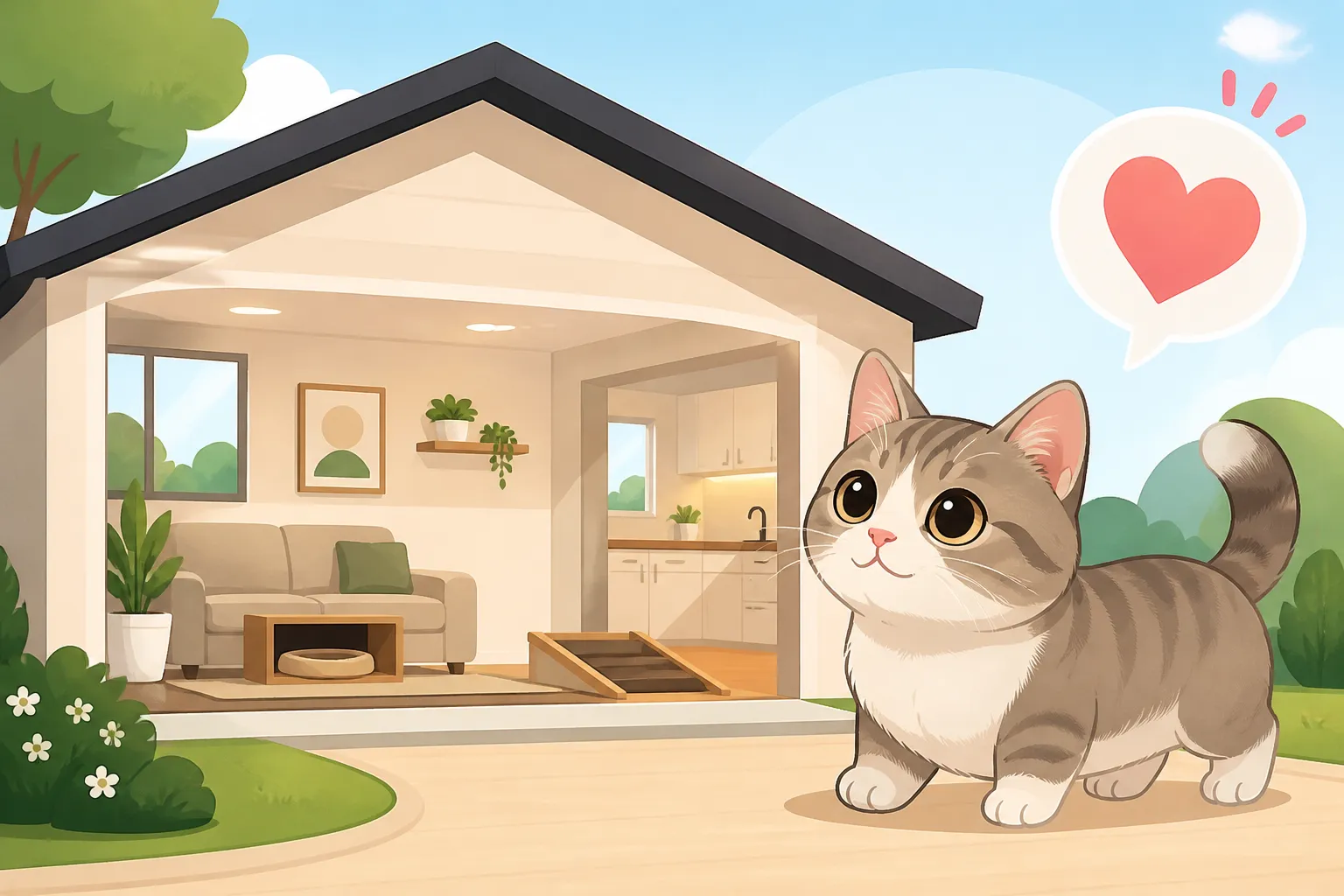
Munchkin cats have short legs and a body that is generally proportioned like a cat’s, but their lower stature changes how they get around. A route that a long-legged cat handles with one jump may require a Munchkin to use several smaller steps—or may not be manageable without help. On one level, food, water, resting places, and the litter box can be arranged without asking your cat to make a trip up and down a staircase throughout the day.
That convenience matters in small, ordinary moments. A cat that wakes up from a nap may want a drink, a meal, or a litter box without negotiating steps first. If those resources are far apart vertically, you may find yourself carrying the cat or moving essential items to make them accessible. A single-level floor plan can make the home easier to navigate without requiring you to monitor every trip.
A compact, accessible setup doesn’t mean putting every resource in one crowded corner. Cats often appreciate having separate locations for eating, resting, and toileting. Instead, think of arranging these spaces across the same floor, with clear routes between them. For ideas on making daily care more accessible, see With a Munchkin the House Changes, Not the Cat.
Less reliance on stairs and high jumps
A staircase can be an obstacle, but it isn’t automatically off-limits to every Munchkin. Some cats may manage familiar stairs at their own pace, while others avoid them, struggle with particular steps, or find the trip less appealing as they age. The important question is how your individual cat moves—not whether all Munchkins can or cannot use stairs.
Going down can be more challenging than going up because the cat must control each descent and manage the landing. A Munchkin that races down stairs, slips on a smooth surface, or hesitates at the top may need a safer route and a change in routine. If your home has stairs, watch how your cat uses them rather than assuming the cat is comfortable because it has made the trip once. Whether a Munchkin Can Manage a Flight of Stairs explores the issue in more detail.
A single-story home can also reduce the number of times a cat has to make that choice. It may be especially practical when the litter box, a favorite bed, or the family’s main living space would otherwise be on a different floor. That doesn’t mean you must avoid every raised surface. It means providing an accessible way to reach the places your cat enjoys, rather than expecting repeated leaps or stair climbs to do the job.
Easier routes can support changing mobility
A young, active cat may seem comfortable navigating a home that becomes harder to use later. As cats age, they can develop stiffness or other mobility changes, and it may become less comfortable to reach a sofa, bed, or upper floor. Keeping daily necessities on one level can make it easier to adapt without reorganizing the whole household in a hurry.
Pay attention to small changes. Your cat might stop following you upstairs, pause before jumping onto a familiar chair, or begin sleeping somewhere lower than usual. Those changes can be related to access, comfort, or health, so they are worth discussing with a veterinarian—especially if they appear suddenly. How a Munchkin's Behavior Changes After Eight and Caring for an Old Munchkin That Has Stopped Climbing offer more context for adapting as a cat’s needs change.
| Home feature | Why it can help a Munchkin | What to keep in mind |
|---|---|---|
| Food, water, and litter on one floor | Reduces the need to travel between levels for essentials | Keep resources in suitable, separate locations |
| Low resting spots | Gives the cat places to relax without a high jump | Include comfortable options in the rooms the family uses |
| Ramps or stable steps | Can make furniture and favorite perches more accessible | Choose a route the cat is willing and able to use |
| Clear, nonslip paths | Helps the cat move without scrambling over clutter | Check rugs and mats so they do not slide |
| A single-level main living area | Makes supervision and daily routines simpler | A home with stairs can still work with thoughtful planning |
How to make a one-story home comfortable
Place essential resources thoughtfully
Start by mapping where your cat spends time. If the household gathers in the living room, a litter box hidden in a distant utility area may be inconvenient even if it is technically on the same floor. A cat may also avoid a box that is difficult to enter, awkwardly positioned, or reached by crossing a busy path. Consider how far your cat actually has to walk and whether the route is clear.
A low-entry litter box can be useful because the cat can step in rather than lift itself over a tall side. At the same time, the sides need to contain litter and waste. A box should be easy for your cat to enter while remaining practical to keep clean. More guidance is available in Why a Munchkin Needs a Litter Box It Can Walk Into.
Put food and water where your cat can approach them without squeezing past furniture or climbing onto a platform. If your cat seems uncomfortable bending or reaching, ask your veterinarian whether a different bowl position or shape may help. Don’t assume that every Munchkin needs raised bowls; comfort and posture vary. For more on arranging feeding areas, see Why a Munchkin's Food and Water Belong at Floor Level.
Make favorite furniture reachable without forcing jumps
A single-story home can still contain tall beds, sofas, windowsills, and chairs. The floor plan removes the need to travel between levels, but it doesn’t automatically make every spot accessible. If your cat wants to join you on the sofa, a sturdy ramp or low steps can create a gradual route. Place the access point where the cat naturally approaches, and make sure it cannot slide or wobble.
Introduce new steps or a ramp patiently. Let your cat investigate them before expecting it to use them. A treat or favorite toy can encourage exploration, but avoid placing the cat on a ramp and forcing it to remain there. If the cat turns away, slips, or repeatedly jumps beside the equipment instead, the angle, surface, or placement may not suit it. Ramps and Steps Are Munchkin Equipment, Not Luxuries covers how to think about these access aids.
Reachable furniture also supports choice. Rather than lifting your cat onto every preferred surface, provide a safe route where practical and keep comfortable resting spots at floor level too. Some cats enjoy climbing; others prefer a cushion or bed they can enter without help. The goal is not to restrict movement, but to give the cat more than one comfortable option.
Keep movement interesting at floor level
A single-story home should not become a space with nothing to explore. Munchkins can play, investigate, and move around without needing access to high shelves or tall furniture. Wand toys, food puzzles the cat can reach, tunnels, and low scratching surfaces can make the environment engaging while keeping play accessible.
Rotate toys or move a few objects from time to time to give familiar rooms a fresh feel. A window can also offer stimulation, but the perch or viewing spot should be reachable by a stable route. If the sill is too high, place a low bench or cat platform nearby and make sure the setup is secure. How to Set Up Floor Level Enrichment for a Munchkin has ideas for building variety without relying on height.
Watch how your cat moves during play. A cat that runs, changes direction, and rests comfortably is giving you different information from one that repeatedly attempts a difficult jump, slips, or becomes reluctant to play. If there is a sudden change in movement or activity, consult your veterinarian rather than treating it as a simple furniture problem.
When a home with stairs can still work
Separate necessary travel from optional climbing
Many people do not get to choose a single-story home. A two-story house, apartment with stairs, or split-level layout may still be workable if the cat’s essential needs are available on the level where it spends most of its time. For example, keeping a litter box, water, food, and a resting place together on the main level means the cat does not have to climb stairs just to meet basic needs.
If the cat enjoys spending time on another level, assess the route and supervise its use until you understand its habits. Avoid encouraging repeated trips simply for convenience if the cat is hesitant or appears uncomfortable. A gate can help manage access when there are hazards, but it should not leave the cat stranded away from food, water, or a litter box. The safest arrangement depends on your floor plan and your cat’s behavior.
There may also be household reasons to limit stair access temporarily, such as a recovery period after veterinary care or a slippery staircase. Ask your veterinarian for guidance about movement restrictions if your cat is injured or recovering from a procedure. For routine access, How to Rearrange a Room So a Munchkin Can Climb may help you create a more manageable route within the rooms your cat uses.
Reduce slipping and awkward landings
Stairs and hard floors can be slippery, especially if a cat is moving quickly or turning. Secure rugs or runners can improve traction, provided they stay flat and do not bunch up underfoot. Keep toys, laundry, and other clutter off stair treads so the cat has an unobstructed path.
Check where your cat lands after jumping down from a chair or low platform. A soft, stable surface may be more comfortable than a slick floor, but loose cushions or sliding mats can create a different hazard. If your cat repeatedly misses a landing or seems reluctant to jump down, offer a lower route instead of coaxing it to try again and again. How to Pad a Munchkin's Landing Spot discusses ways to make common landing areas more forgiving.
A video of your cat walking at home can be useful if you have questions about its gait. Cats may move differently in a clinic than they do in familiar surroundings, so a short recording of an unusual movement can help your veterinarian understand what you have noticed. Don’t wait for a video, however, if your cat appears to be in pain or suddenly cannot move normally.
Choosing a home and adapting it to your cat
Compare the layout, not just the number of floors
A single-story house is often convenient because it can make essential routes simpler, but the floor count alone does not determine whether a home suits a Munchkin. A cluttered, slippery one-story home may be harder to navigate than a well-planned multilevel home with accessible resources on the main floor. Consider doorways, floor surfaces, furniture heights, litter-box placement, and the distance between the spaces your cat uses.
If you are deciding between homes, walk through the layout from your cat’s perspective. Can the cat get from its resting place to water and the litter box without navigating a difficult jump? Are there calm places to retreat from visitors or children? Can you create a low route to the sofa or a window? These practical questions are often more helpful than trying to find a perfect house with no obstacles at all.
Also consider who lives in the home. A busy household with a dog, young children, or frequent visitors may need clear safe zones where the cat can rest undisturbed. A compact, single-level space can make supervision easier, but it does not replace careful introductions and respectful handling. Whether a Munchkin Is the Right Cat for You can help you weigh the broader match between a cat’s needs and your household.
Budget for small changes and observe what works
Many useful adaptations are simple: moving a box to a more accessible location, securing a rug, adding a low step, or choosing a bed that sits close to the floor. Other changes may take more planning, particularly if you need a stable ramp or want to adapt several rooms. Before buying equipment, measure the space and consider whether your cat will actually use the route. A sturdy, well-placed option is more useful than a larger setup that blocks a walkway or wobbles when touched.
When browsing supplies at Chewy, compare the dimensions, stability, surface, and return details rather than choosing solely by a product label. A ramp listed for pets may still be too steep or narrow for your cat’s approach. Chewy can also be one place to browse low-entry litter boxes and basic grooming supplies, but check that any item fits your home and your cat’s body comfortably.
Introduce one change at a time so you can tell whether it helps. If you add a ramp, observe whether your cat approaches it, uses it confidently, or avoids it. If you move the litter box, watch for any change in use. Chewy listings may offer a range of household options, but the best choice is the one that is stable, accessible, and accepted by your individual cat. For everyday mobility and care, Why Weight Control Is the Whole Munchkin Care Plan is also worth reading: maintaining a healthy body condition can make movement easier, although diet decisions should be tailored with veterinary advice.
Disclaimer
This article is for general informational purposes only and does not constitute professional advice. Laws, prices and regulations vary by location and change over time. Consult a qualified professional for guidance on your specific situation.