Why Stacking Mutations on a Munchkin Is Criticized
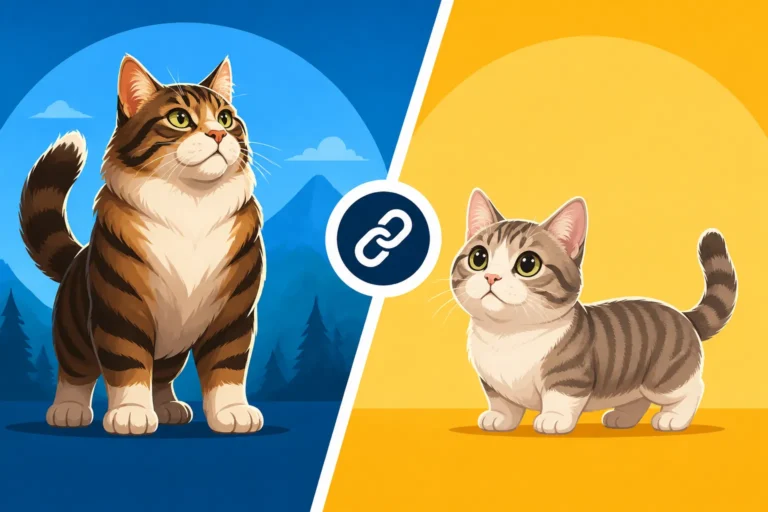
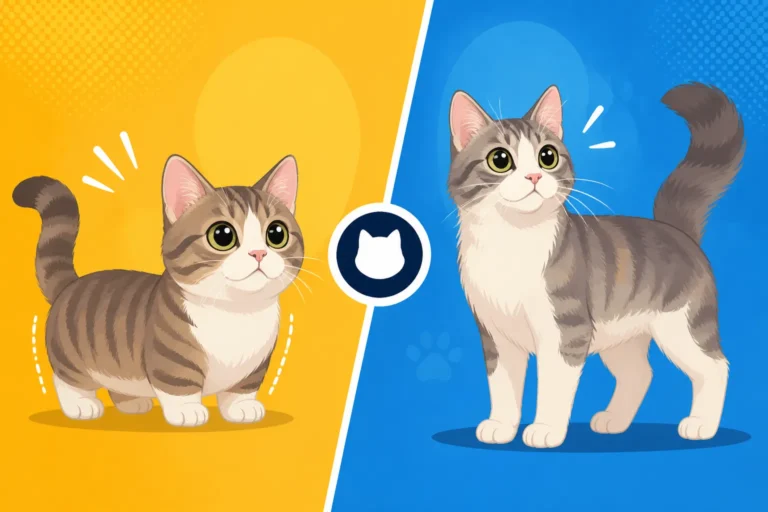
A Munchkin’s short legs come from a heritable skeletal trait. When breeders combine that trait with another mutation—such as the folded-ear trait associated with Scottish Folds—critics worry that kittens may inherit more than an unusual appearance: they may face overlapping health and mobility concerns. This guide explains what mutation stacking means, why it draws scrutiny, and what questions a prospective owner can ask.
What mutation stacking means in Munchkin cats
A mutation changes a trait, not just a cat’s appearance
A genetic mutation is a change in DNA that can affect a particular feature or body system. Some mutations alter coat color or hair length; others affect the skeleton, cartilage, or other structures. A cat with one visible trait can still carry other inherited variants, and the effects depend on which traits are involved.
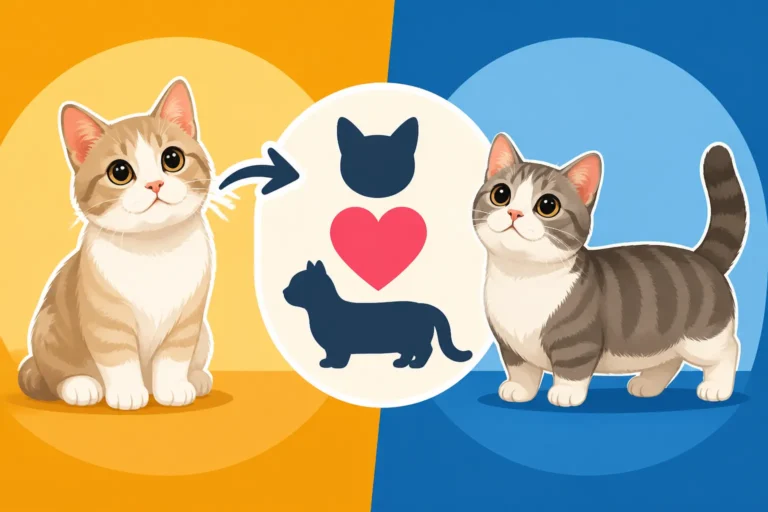
In the Munchkin, the defining short-legged appearance is associated with a heritable skeletal trait. Breeders may cross Munchkins with other cats to introduce different coat types or traits, and some resulting crosses are marketed as distinct breeds. The concern arises when a breeding program deliberately combines the short-leg trait with a second mutation that also affects the skeleton or joints.
“Stacking” is a critical description of that choice, not a precise medical diagnosis. It suggests that breeders are combining inherited traits with potential welfare consequences in the same animal. It does not, by itself, prove that every kitten from such a pairing will be ill or that two traits will necessarily make each other worse. The question is whether the combination creates avoidable risks—and whether selecting for a particular look is worth those risks.
For background on how the Munchkin relates to other cats and recognized breed types, see What a Munchkin Is and How It Relates to the Munchkin.
Why a second mutation can change the welfare picture
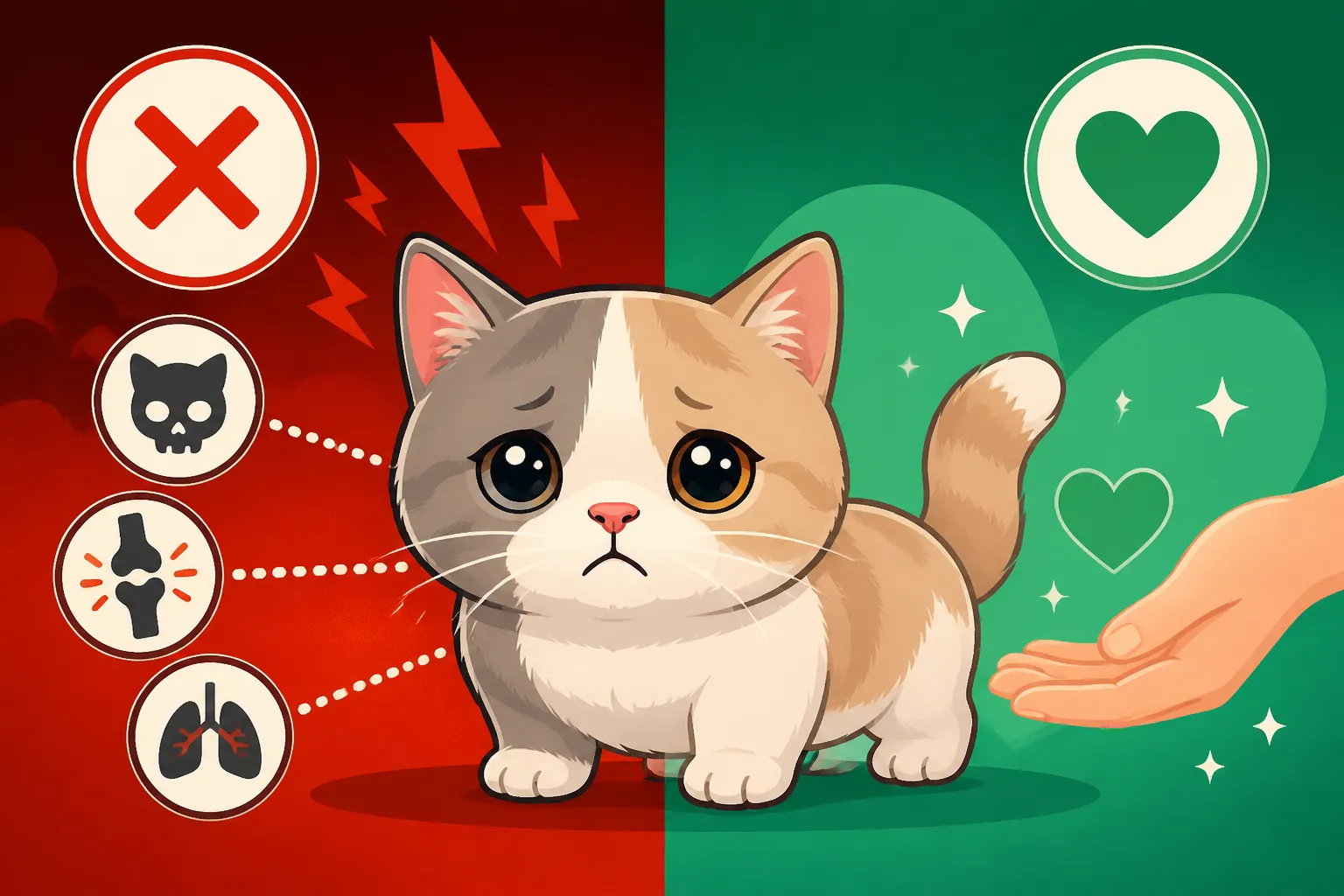
A mutation that affects one body system may bring its own care needs. If another inherited trait affects a related system, the kitten could face overlapping challenges. For example, two traits that influence limb shape, cartilage, or joint function may raise concern about movement and comfort, even when the precise combined effect has not been established.
That distinction matters. A genetic combination should not automatically be described as a guaranteed disease. At the same time, a lack of definitive evidence about a particular cross is not proof that it is harmless. If a breeding choice adds a plausible risk without a clear welfare benefit for the cat, that uncertainty is a reasonable part of the ethical debate.
Mutation stacking also shifts attention from a single trait to the breeding decision as a whole. A responsible discussion asks not only what a kitten looks like, but what inherited traits the parents carry, what health concerns have appeared in their families, and whether the mating was designed to prioritize the animal’s wellbeing.
The broader debate over these crosses is covered in Why Munchkin Crosses Worry Veterinarians. The concern is not simply that a cat looks different. It is whether breeding for multiple unusual traits could make a cat’s life harder or increase the chance of preventable problems.
Why particular Munchkin crosses raise concern
Munchkin and Scottish Fold combinations
Scottish Folds are known for folded ears associated with a cartilage-related mutation. That mutation can also affect cartilage and bone development elsewhere in the body. Because the Munchkin’s short legs are also tied to skeletal development, combining the two traits prompts concern about placing two potentially relevant inherited traits in one cat.
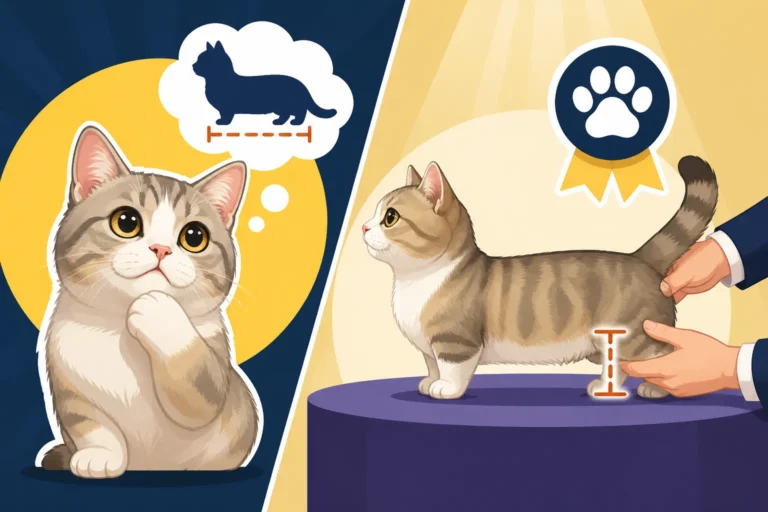
The possible consequences are not limited to whether a kitten can walk as a young animal. Owners and veterinarians may need to consider joint comfort, limb movement, spinal and skeletal development, and how any problems might change over time. The severity of effects can vary, and appearance alone cannot reliably tell a family what an individual cat’s future will be.
This is why a seller’s assurance that a kitten “looks fine” is not a complete answer. A young cat may not yet show signs of discomfort, and a photograph cannot establish the health of its joints or the details of its inherited risks. Prospective owners should ask what traits are present in both parents and what health information is available for the family line.
For a focused discussion of this pairing, read Whether a Scottish Fold Munchkin Should Be Bred. To understand why two skeletal traits in the same cat raise a separate set of questions, see What Two Skeletal Mutations Do to One Munchkin.
Munchkin and Sphynx combinations
The Bambino is commonly described as a Munchkin–Sphynx cross. The Sphynx’s hairlessness is a different kind of trait from the Munchkin’s short legs; it does not mean the two mutations affect the same body structure. That difference is important: not every cross involving a Munchkin automatically combines two skeletal mutations.
Still, a different mutation can bring its own welfare and care considerations. Hairlessness, for instance, changes the cat’s relationship with temperature and skin care. When a cat has more than one distinctive inherited trait, owners should look at the needs associated with each one rather than assuming that the combination is simply a new look with no added responsibilities.
The ethical question is therefore broader than “Are both traits skeletal?” It includes whether each trait is being bred responsibly, whether the cat’s health needs can be met, and whether the breeding program has a credible way to monitor outcomes. A cross may raise concern for one set of reasons without being medically equivalent to a cross involving two skeletal traits.
The breed relationship is explained in What a Bambino Is and How It Relates to the Munchkin. The comparison also shows why it helps to ask exactly which traits are involved, rather than treating all Munchkin hybrids as genetically or medically identical.
| Breeding combination | Main concern raised | What a prospective owner should clarify |
|---|---|---|
| Munchkin with another short-legged Munchkin | Potential inheritance concerns associated with the short-leg trait | How the mating was planned and what the breeder says about inheritance |
| Munchkin with a Scottish Fold | Two traits associated with skeletal or cartilage concerns may be combined | Whether both parents carry the relevant traits and what health records are available |
| Munchkin with a Sphynx | A short-leg trait is combined with hairlessness and its distinct care needs | What health and daily-care needs are expected from each trait |
| Munchkin with a non-mutant domestic cat | The Munchkin trait remains relevant, while the other parent may add genetic diversity | The parent cats’ health histories, lineage, and the breeder’s screening practices |
This table is a way to organize questions, not a prediction of an individual cat’s health. The exact risks depend on the traits, the parents, and the information available about their families.
What the criticism does and does not claim
Concern is not the same as certainty
Critics of mutation stacking often argue that intentionally combining unusual traits can put appearance ahead of welfare. That is a concern about breeding choices and possible outcomes, not a claim that every cat from a particular cross will experience pain or disability. A fair discussion should avoid both extremes: declaring all affected cats unhealthy based on appearance alone, or treating the absence of obvious symptoms in a kitten as proof that a breeding choice was risk-free.
For an individual cat, a veterinarian can assess movement, comfort, and health needs. A breeder’s general statement about a line is not a substitute for an examination, and an examination cannot guarantee how an inherited condition might develop later. These limits are part of why records, honest disclosure, and thoughtful breeding decisions matter.
It also helps to distinguish the shape of a cat from its quality of life. A short-legged cat may be playful and engaged, but its daily movement and physical comfort should still be considered. Likewise, folded ears or hairlessness do not tell you the full story of a cat’s health. Breed labels are not a medical assessment.
The wider questions about welfare and the breed are discussed in What Welfare Bodies Say About the Munchkin and Whether Buying a Munchkin Is an Ethical Decision. Those questions are especially useful when a seller focuses heavily on how rare or distinctive a kitten looks.
Why lack of clear data is not a free pass
For some crosses, public information about long-term health outcomes may be limited. This makes it difficult to make confident claims about how often a specific problem occurs or whether a combination produces a particular effect. It also makes it harder for buyers to compare breeding programs using consistent evidence.
Limited data cuts both ways. It would be unfair to state that a particular cross inevitably causes a specific condition without support. But it is equally weak reasoning to say a cross is safe simply because a breeder has not seen a problem in a small number of kittens. Families may not remain in contact with breeders, health issues can appear later, and informal observations may not capture every outcome.
A careful breeder should be willing to talk about that uncertainty. They should be able to explain why they chose a pairing, what health history they track, what veterinary care kittens receive, and what they do if a kitten has a concern. If the answers rely only on reassurance, rarity, or demand for a certain look, ask for more detail.
The ethical debate is connected to the wider question of how the breed is defined and assessed. How a Munchkin Differs From a Dwarf Cat offers useful context for separating a breed label from a description of a physical trait.
Questions to ask before choosing a kitten
Ask about parents, health records, and breeding decisions
Start by asking what traits each parent has and what the breeder knows about the parents’ health and close relatives. If a second mutation is involved, ask what it affects and what care or health concerns are associated with it. A responsible answer should be specific enough to help you understand the decision, not just a confident statement that the pairing is “perfectly safe.”
Ask whether the breeder has veterinary records for the kittens and what concerns have been observed in previous litters or related cats. Ask how they handle a kitten that shows a health issue, and whether they remain available to support new owners. You can also ask whether they can explain the lineage without relying on a marketing name to do the explaining.
Pay attention to how the conversation feels. A careful breeder should welcome reasonable questions and should not pressure you to place a deposit before discussing health and welfare. Be wary if they dismiss all concerns as prejudice, refuse to identify the parents, or cannot explain which mutations the kittens may have inherited.
For a broader look at what is involved in evaluating a breeder, see Which Munchkin Crosses Vets Object To Most. The point is not to expect certainty about every future health outcome. It is to look for transparency and a clear willingness to put the cat’s welfare first.
Consider the day-to-day needs as well as the genetics
If you adopt a Munchkin or a Munchkin cross, plan for the individual cat in front of you. Make important resources easy to reach, observe how the cat moves, and arrange veterinary care when you notice a change in gait, activity, grooming, or willingness to jump. A cat that suddenly avoids a familiar step or becomes less active deserves attention rather than being dismissed as lazy or simply getting older.
Practical adjustments may include accessible litter-box entry, stable steps or ramps, and places to rest that do not require repeated jumps. Some owners browse retailers such as Chewy for basic cat-care equipment, but the right choice depends on the cat’s size, movement, and comfort. A ramp that wobbles or has a slippery surface may be less useful than a lower, secure route the cat will actually use.
Chewy is one option some households consider when looking for accessible litter boxes or grooming supplies; a local pet shop or veterinary team may also help you assess whether an item fits your home. If the cat has trouble reaching its hindquarters, grooming tools or help from a groomer may be part of the routine. Chewy listings can help you compare general product styles, but they cannot determine what medical or mobility support a particular cat needs.
If you are preparing a home, focus on safe access rather than trying to make the cat perform like a long-legged cat. A household with a suitable layout, attentive care, and regular veterinary check-ins can better respond to an animal’s needs. For further context on the inherited trait itself, see How a Munchkin Differs From a Dwarf Cat.
Disclaimer
This article is for general informational purposes only and does not constitute professional advice. Laws, prices and regulations vary by location and change over time. Consult a qualified professional for guidance on your specific situation.