How Many Breeds Descend From the Munchkin
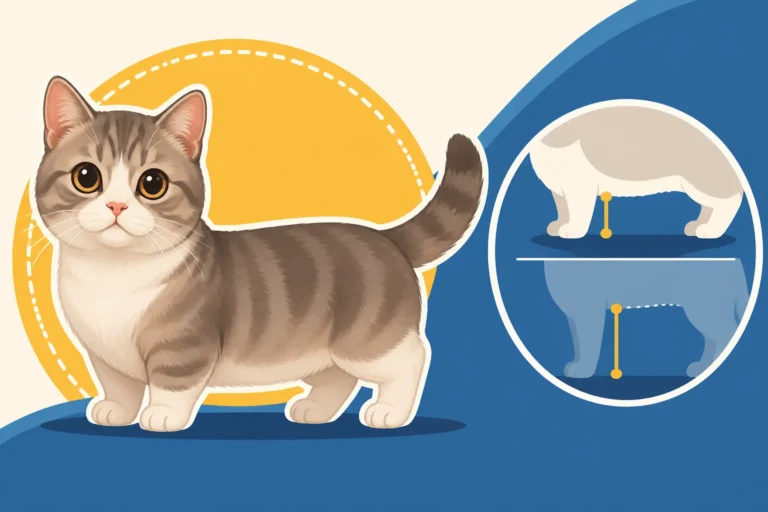
A Munchkin’s short legs have inspired several named cat types, but there isn’t one official count of breeds that descend from it. The answer depends on whether you mean formally recognized breeds, developing breed programs, or simply cats produced by crossing a Munchkin with another breed. Here’s how to tell those categories apart—and what the distinction means for prospective owners.
How many breeds descend from the Munchkin
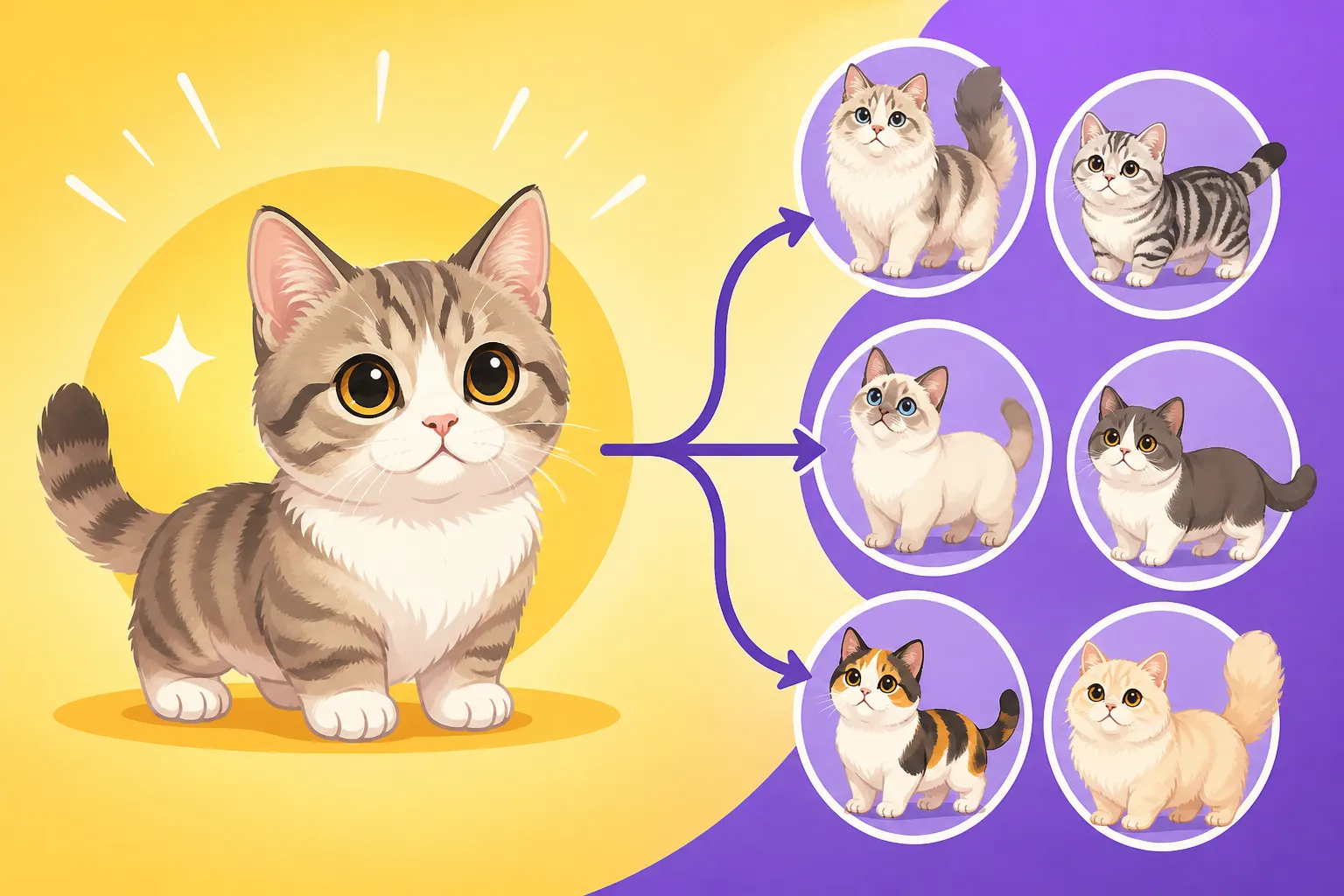
There is no single registry-wide list that settles the number. A practical answer is that roughly eight named breeds or breed types are commonly described as having Munchkin ancestry, though not all are established or recognized as breeds by major registries. The count changes depending on whether experimental lines and multi-breed hybrids are included.
That distinction matters. A cat can have Munchkin ancestry without belonging to a widely recognized breed, and a name used by breeders does not automatically mean there is a consistent standard or broad registry recognition behind it.
The short answer depends on what you count
If you count named crosses and developing breed types, the list commonly includes the Minuet, Bambino, Minskin, Lambkin, Skookum, Kinkalow, Genetta, and Dwelf. Some have a clearer and longer-running identity than others. Their histories, other parent breeds, and recognition status differ.
If you count only breeds with established registry recognition, the number is smaller. The Minuet, formerly called the Napoleon, is a notable example with a more formal breed identity. Other Munchkin-derived types may be described by breeders as breeds while remaining experimental, uncommon, or accepted by only some organizations.
So “eight” is best understood as a working count of named Munchkin-derived types, not a claim that eight universally recognized breeds all descend from the Munchkin. For background on how this short-legged breed came to be, see Every Short Legged Breed Descends From the Munchkin.
What “descends from” means in cat breeding
In this context, “descends from” usually means that breeders used Munchkins in a deliberate crossbreeding program to introduce short legs, then crossed those cats with cats of another breed or type to develop a particular look. It does not mean every cat in a named breed has the same immediate parents, or that the line has been bred in exactly the same way everywhere.
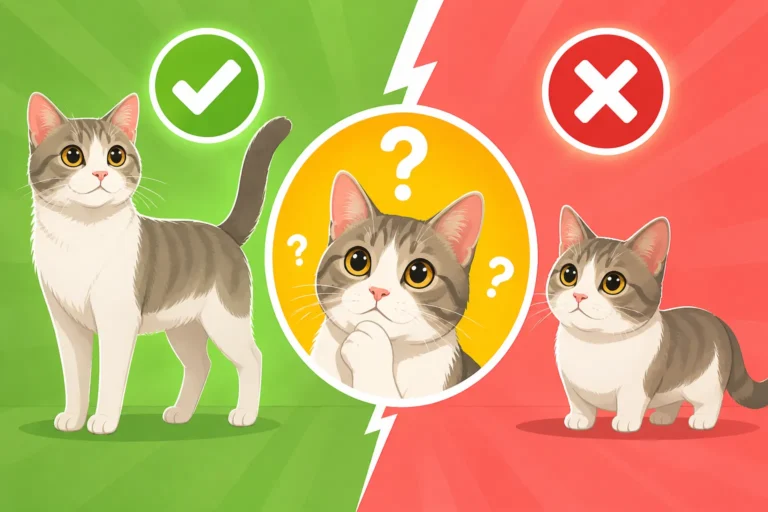
A Munchkin cross can also be a one-off pairing rather than part of a sustained breeding program. A kitten from a Munchkin and another breed may have short legs and an identifiable family history, but that alone does not make it a member of an established breed. A stable breed identity generally involves a continuing population, agreed breeding aims, and some form of registry or association recognition.
This is why discussions sometimes produce different totals. One person may count only names accepted by a particular registry; another may include developing hybrids that are advertised or described under a breed name. The difference is not just semantics: it affects how much documented history, health information, and consistent pedigree information a buyer can expect.
The best-known Munchkin-derived breeds and types
The names below are among the ones most often connected with Munchkin ancestry. Their other parent breeds can bring very different coat, body, ear, or facial traits into the mix, so they should not be treated as interchangeable variations of one cat.
Minuet and Bambino
The Minuet, previously known as the Napoleon, combines Munchkin ancestry with Persian-type cats. The aim is a short-legged cat with a rounded appearance and a coat that may be short or long. Its development is more formally documented than that of many Munchkin crosses. For more detail on its origins, see How the Minuet Was Made From a Munchkin.
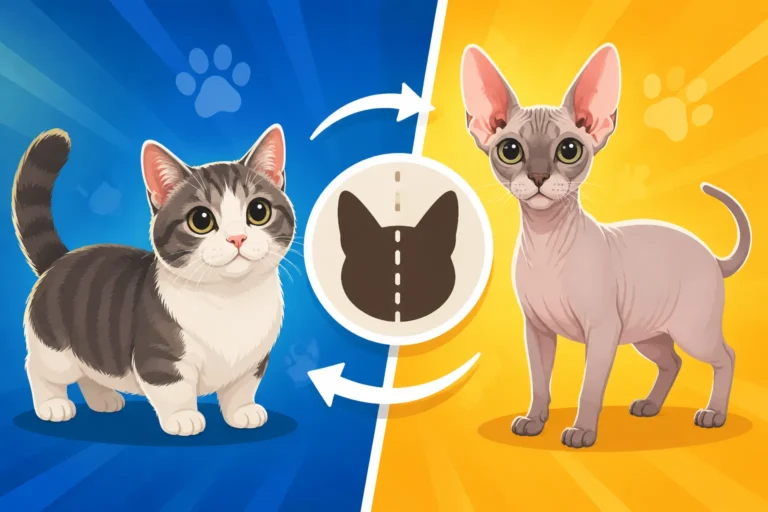
The Bambino combines Munchkin and Sphynx ancestry. It is usually associated with short legs and a hairless or nearly hairless appearance, although individual cats can vary. Its combination of traits makes it especially important to look beyond the name and ask what health screening and veterinary care the breeding program prioritizes. See How the Bambino Was Made From a Munchkin for more on this cross.
Neither name by itself guarantees that a cat is registered, has a complete pedigree, or has been bred under consistent standards. If you are considering either type, ask for the parents’ information and records, and ask what the breeder does if a kitten has a structural or health concern.
Minskin, Lambkin, Skookum, and Kinkalow
The Minskin is associated with Munchkin and Sphynx ancestry, with other breeds, including Burmese- and Devon Rex-type cats, also appearing in accounts of its development. It is often described as having short legs and a sparse or patchy coat. Because it is a developing and less commonly encountered type, descriptions and recognition can vary.
The Lambkin is associated with Munchkin and Selkirk Rex ancestry, bringing short legs together with a curly or plush coat. Learn more about its development in How the Lambkin Was Made From a Munchkin. The Skookum is linked with Munchkin and LaPerm ancestry and is also described as a short-legged, curly-coated type.
The Kinkalow combines Munchkin ancestry with American Curl ancestry and is associated with short legs and curled ears. Those distinctive traits make it particularly important to ask about the breeding goals and health considerations involved. How the Kinkalow Was Made From a Munchkin explains that cross in more detail.
Genetta and Dwelf
The Genetta is generally described as a Munchkin cross developed to have a spotted, wild-cat-inspired appearance, often through Bengal ancestry. Names and descriptions can be used inconsistently, so it is sensible to ask for the cat’s actual pedigree rather than assume the name tells you exactly which breeds are behind it.
The Dwelf is commonly described as combining Munchkin, Sphynx, and American Curl ancestry. That means its identity is tied to multiple inherited traits, including short legs, hairlessness, and curled ears. The more traits a breeding program deliberately combines, the more important it is to ask how breeders evaluate welfare rather than focusing only on appearance.
| Name | Commonly described Munchkin cross | Traits often associated with the type | Important distinction |
|---|---|---|---|
| Minuet | Persian-type cats | Short legs and rounded features | Has a more formal breed identity than many crosses |
| Bambino | Sphynx | Short legs and little or no hair | A named hybrid; check health screening and records |
| Minskin | Sphynx and other breeds | Short legs and a sparse or patchy coat | Descriptions and recognition can vary |
| Lambkin | Selkirk Rex | Short legs and curly or plush coat | A named cross, not universally recognized |
| Skookum | LaPerm | Short legs and curly coat | Often treated as a developing breed type |
| Kinkalow | American Curl | Short legs and curled ears | Ask how ear and leg traits are monitored |
| Genetta | Often Bengal | Short legs and spotted markings | Breed descriptions and pedigrees may differ |
| Dwelf | Sphynx and American Curl | Short legs, hairlessness, and curled ears | Combines multiple distinctive traits |
The table is a guide to commonly reported ancestry, not a guarantee about any individual cat. A pedigree is the way to establish the parentage of a specific kitten.
Why Munchkin crosses raise questions
Breeding a Munchkin with another breed can broaden a line’s ancestry, but it can also bring together traits that deserve careful consideration. A striking appearance does not tell you whether the cat moves comfortably, can groom itself easily, or has inherited concerns from either side of its family.
Outcrossing and inherited traits
Munchkin breeding programs have used cats without short legs as outcrosses. Outcrossing can help maintain genetic diversity, and it means not every kitten in a Munchkin litter will necessarily have short legs. It does not, by itself, establish that every breeding choice is responsible or that a particular cross is free of inherited problems.
The other breed matters, too. Persian ancestry, for example, calls for questions about relevant family health history; Sphynx ancestry brings different care considerations, including skin and temperature management. With any cross, ask the breeder which conditions are relevant to the specific parents and what screening or veterinary checks have been done. A general statement that the kittens are “healthy” is not a substitute for clear records.
Some crosses combine more than one distinctive physical trait. When a program aims to produce short legs alongside hairlessness or curled ears, ask how the breeder assesses comfort, movement, and overall health—not just whether the desired look appears in a kitten. These concerns are explored in Why Munchkin Crosses Worry Veterinarians and Why Munchkin Hybrids Stack Two Mutations.
Questions to ask before choosing a kitten
Before putting down a deposit, ask what breed names the breeder uses and whether the kittens are registered with a named organization. Request the parents’ pedigrees and ask which breeds appear in them. If the answer is vague, or the breeder cannot explain why a particular cross was chosen, it is reasonable to pause.
Ask how the kittens move and whether you can see them walking and playing on a level, non-slippery surface. Ask what veterinary examinations have taken place, what concerns have appeared in previous litters, and how the breeder handles a kitten that does not meet the planned appearance. For a Munchkin-focused checklist, see What a Munchkin Breeder Should Be Able to Show You.
A responsible conversation should make room for uncomfortable questions. A breeder should be able to explain the goals and trade-offs of the cross without dismissing concerns about welfare. If the main sales pitch is that a cat is unusually tiny, extra short-legged, or rare, shift the conversation back to health, temperament, and documented ancestry. Whether Buying a Munchkin Is an Ethical Decision offers more context for weighing those questions.
What this means for a future owner
Knowing the number of Munchkin-derived types is less useful than understanding what each cat may need. A short-legged cat may have different routes around the home, while a hairless or curly-coated cat may need additional grooming or skin care. Those needs depend on the individual cat, not just the label on its listing.
Look at the individual cat, not just the breed name
A breed or hybrid name cannot tell you how easily a particular cat gets onto a sofa, uses a litter box, or keeps its coat clean. Watch the kitten move, and ask about everyday care as well as ancestry. A cat that seems lively in a brief meeting may still need a home layout that makes food, water, resting places, and litter accessible without repeated difficult jumps.
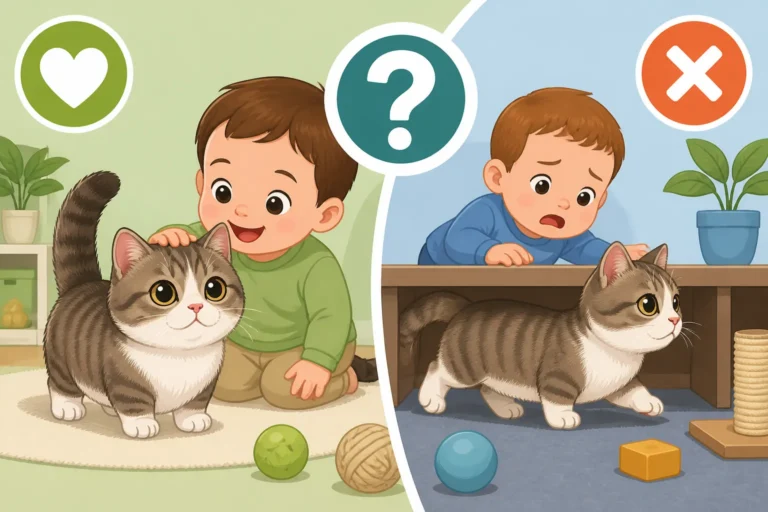
Think through the household, too. Are there stairs the cat would need to use several times each day? Is there a large dog, a toddler, or a high-sided litter box that could create practical problems? The answers can help you decide whether the cat’s needs fit your home. Which Household a Munchkin Fits can help you consider that match more broadly.
Some owners use pet retailers such as Chewy to compare practical supplies, such as low-entry litter boxes, washable bedding, or grooming tools. Check the measurements rather than relying on product names: a box described as “accessible” may still have an entry that is awkward for a small, short-legged cat. The best setup is the one your individual cat can use comfortably.
Plan for ongoing care and ask your veterinarian
Set up the home before bringing a kitten home. Keep essential resources easy to reach, offer stable surfaces for movement, and avoid assuming the cat will be able or willing to jump wherever a longer-legged cat might. If a ramp or steps are useful, make sure they do not wobble and have a surface the cat can grip. Ramps and Steps Are Munchkin Equipment, Not Luxuries covers the practical side of making access easier.
A veterinarian can help you assess the kitten’s movement, body condition, and general health, then advise on checkups as the cat grows. Bring the pedigree and any health records you receive. If you have concerns about a limp, reluctance to jump, difficulty reaching the litter box, or changes in grooming, describe what you have observed rather than assuming it is simply part of the breed.
For grooming supplies, Chewy and other retailers may offer combs, brushes, and cleaning products, but the right tool depends on the coat and the cat’s tolerance. Start gently, and ask a veterinarian or experienced groomer how to handle tangles or sensitive areas. A third useful Chewy comparison is simply checking whether a tool’s size and design suit your cat; a product marketed for all cats may not be comfortable for every individual.
Ultimately, the Munchkin has been used in several named crossbreeding programs, but there is no universally agreed count of officially recognized descendant breeds. Treat the commonly cited list of about eight as a guide to named types, then evaluate any individual cat by its documented ancestry, health, behavior, and daily needs.
Disclaimer
This article is for general informational purposes only and does not constitute professional advice. Laws, prices and regulations vary by location and change over time. Consult a qualified professional for guidance on your specific situation.