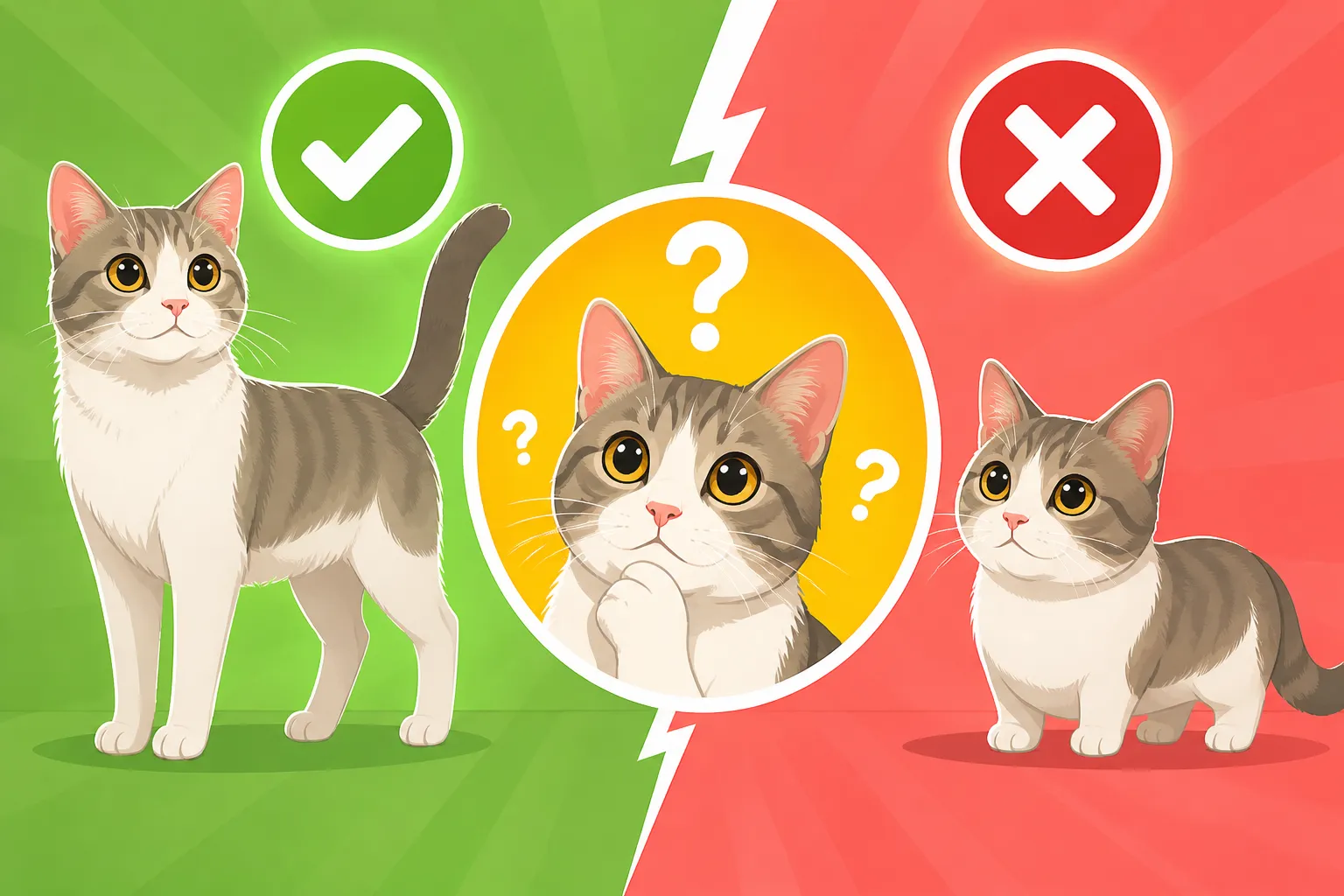
Whether a Long Legged Munchkin Can Be Shown
A long-legged Munchkin can usually be shown as a household pet, but that does not automatically make it eligible for the Munchkin breed class. The key distinction is between being shown at a cat event and being judged as a breeding-standard Munchkin. Registration, leg length, and the show’s rules all matter, so check the specific registry and event before entering.
What “shown” means for a long-legged Munchkin
A cat show has different ways to participate
People often use “show” to mean one thing: entering a cat and competing for a breed title. In practice, cat shows may offer different classes, and eligibility depends on the class. A cat that does not meet the breed standard may still be welcome in a general pet class, even if it cannot compete for awards as a Munchkin.
That distinction matters for a long-legged cat from a Munchkin litter. If its legs do not match the Munchkin breed standard, it may not qualify for the Munchkin class. But that does not necessarily mean the cat is barred from every show. Some events have classes intended for household pets, where cats are assessed as individual pets rather than against a particular breed’s conformation standard. The event’s rules determine whether a particular cat can enter and what, if anything, it can compete for.
It helps to ask the show organizer a precise question: “Can this cat enter a household-pet class, and is it eligible for any Munchkin breed class?” That is more useful than asking only whether “long-legged Munchkins can be shown,” because the answer can differ by class and registry.
Breed-class eligibility is a separate question
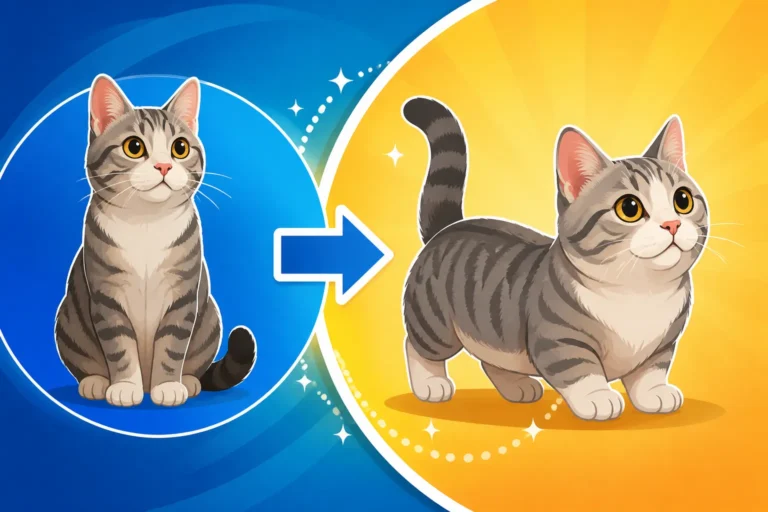
A breed class is judged against that breed’s standard. For a Munchkin, leg length is a defining feature, so a cat with ordinary-length legs would generally not fit the short-legged conformation expected in the Munchkin class. Its Munchkin ancestry does not, by itself, make it a standard example of the breed for judging purposes.
This is not a judgment on the cat’s health, temperament, or value as a companion. A long-legged kitten may be an affectionate, active pet and still be unsuitable for Munchkin breed competition. Show eligibility is about the rules and the class, not a verdict on whether the cat is a good animal.
If you are new to the distinction between breed type and ancestry, Whether a Long Legged Munchkin Is Still a Munchkin explains why the everyday label and the show-ring category may not line up neatly. The breed standard itself is also useful background: What the TICA Munchkin Standard Asks For describes the traits a judge considers when evaluating a Munchkin in the breed class.
Ask about the exact event, not just the breed
A registry may recognize a breed while an individual show offers limited classes, applies its own entry requirements, or has rules that differ by class. Likewise, a cat’s registration record does not guarantee that it is eligible for every category at every event. Before paying an entry fee or making travel plans, read the event’s current show rules and contact the show secretary if any part is unclear.
Ask about the cat’s age, registration status, neuter status if relevant to the class, and whether the show accepts household pets. If the cat has papers, ask what those papers establish—and what they do not. A pedigree may document ancestry, but it does not necessarily mean the cat qualifies for breed competition.
How leg length affects Munchkin registration and judging
Papers and show eligibility are not interchangeable
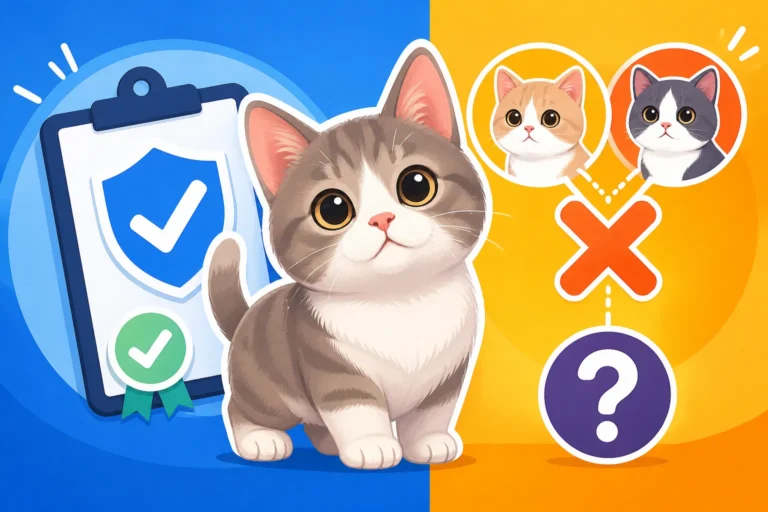
Registration, pedigree, and show eligibility are related, but they are not the same thing. Registration records a cat within a registry’s system under that registry’s rules. A pedigree provides information about ancestry. Show eligibility depends on the requirements for the specific class and event.
That means a cat can have documented Munchkin ancestry yet be ineligible for the Munchkin breed class because its appearance does not meet the standard. Conversely, an owner should not assume that a seller’s use of the word “registered” means the cat can compete as a Munchkin. Ask which registry issued the paperwork, how the cat is recorded, and whether the registry’s show rules permit entry in the class you have in mind.
A useful follow-up is whether the papers explicitly record leg length or simply list the cat’s breed and relatives. The distinction is covered in Whether a Munchkin's Papers Record Its Leg Length. For a broader look at the paperwork issue, see How to Verify a Munchkin Is Registered at All.
A long-legged kitten may be placed as a pet
Munchkin litters can include kittens with different leg lengths. Breeders may place a long-legged kitten as a companion rather than as a show or breeding prospect. That placement does not mean the kitten is defective or unlovable; it may simply mean the kitten does not have the short-legged appearance expected in the Munchkin breed class.
Before choosing a kitten, ask the breeder how they describe the cat in the contract and registration documents. Find out whether the kitten is being sold as a pet, whether breeding is permitted, and what the breeder means by “show quality.” Those words can be used casually in listings, so ask for a clear explanation rather than relying on a label.
A long-legged kitten from a Munchkin litter may still be registered under a registry’s rules, but registration alone does not settle whether it can be shown in the breed class. Whether a Long Legged Munchkin Can Be Registered looks at that separate question. For context on why long-legged kittens are often placed as pets, see Why a Long Legged Munchkin Is Sold as a Pet.
Breed recognition differs among registries
Different cat registries do not necessarily recognize the same breeds or apply identical policies. A show opportunity available through one organization may not exist through another. Before assuming that a Munchkin can enter a particular competition, confirm that the organization recognizes the breed and check the rules for the specific show.
The registry landscape is part of the reason owners sometimes receive conflicting answers online. Someone may be describing one registry’s rules while another person is talking about a different organization or a household-pet class. Which Registries Accept a Munchkin offers a starting point for understanding those differences, while What TICA Championship Status Gives a Munchkin explains what breed recognition can mean within a registry’s show system.
| What you want to know | What to check | Why it matters |
|---|---|---|
| Can the cat attend a show? | Whether the event accepts the cat’s proposed class | Breed-class and household-pet rules can differ |
| Can it compete as a Munchkin? | The breed standard and leg-length requirements | Ancestry alone may not qualify a cat for breed judging |
| Are its papers useful for entry? | The issuing registry and the cat’s recorded status | Registration does not guarantee eligibility in every class |
| Is a household-pet class an option? | The event’s entry rules and any class-specific conditions | A cat excluded from breed competition may still have another route |
| Is the breeder’s claim reliable? | Written paperwork and confirmation from the registry or show secretary | Informal descriptions can be vague or misleading |
How to find out whether your cat can enter
Start with the cat’s paperwork
Gather the registration certificate, pedigree if available, and any transfer or ownership documents before contacting a registry or show organizer. Note the cat’s registered name, date of birth, and the registry that issued the papers. If the paperwork does not clearly describe the cat’s status, ask the issuing organization how it is recorded.
Do not rely on a social media post, a breeder’s verbal assurance, or a listing that says “show quality” without defining the term. Ask for the exact class the breeder believes the kitten can enter and the basis for that claim. If the breeder means household-pet participation rather than Munchkin breed competition, that should be made clear.
If the cat has no papers, that does not automatically answer whether it can attend a show. Some events may have household-pet classes with their own entry requirements, while breed competition typically involves additional documentation and eligibility rules. Whether a Munchkin Without Papers Is Still a Munchkin helps separate a cat’s identity and ancestry from what documents can establish.
Contact the show secretary with specific details
Once you know which event you are considering, contact its show secretary or the organization responsible for entries. Give a straightforward description: the cat is long-legged, has Munchkin ancestry, and you want to know which classes, if any, it may enter. If the cat has registration papers, identify the registry and ask whether the cat’s recorded status affects eligibility.
It is worth asking for a written answer, especially if you are arranging transport or lodging. Keep the reply with your entry information so you can refer to it later. If the answer is unclear, ask whether the question should go to the registry, the show manager, or a specific class coordinator.
A practical checklist:
- Identify the registry shown on the cat’s papers, if any.
- Find the event’s entry rules and available classes.
- Ask whether the cat can enter a household-pet class.
- Ask separately whether it can compete in the Munchkin breed class.
- Confirm any documentation or health requirements before submitting an entry.
- Keep confirmation and entry instructions together.
Prepare the cat for the experience, not just the ring
A show can be busy, noisy, and unfamiliar. If your cat is eligible to attend, think about whether it is comfortable being handled, traveling in a carrier, and spending time around unfamiliar people and animals. A cat that is anxious in those situations may not enjoy the event, even if the rules allow entry. You do not need to show a cat simply because it is eligible.
For practice at home, make short, gentle handling sessions part of ordinary life. Let the cat explore its carrier without being rushed into it, and use a secure, familiar setup for travel. A non-slip surface can also help a cat feel steadier during grooming or handling. If you shop for routine supplies through Chewy, compare the product dimensions and return conditions with your cat’s actual needs rather than choosing an item just because it is marketed for shows.
Grooming should be calm and appropriate to the cat’s coat. A soft brush and familiar treats may help make short sessions more pleasant; Chewy is one place owners may look for everyday grooming supplies, but your cat’s comfort matters more than buying specialized show equipment. If your cat dislikes being handled or seems distressed, stop and ask your veterinarian or a qualified groomer for guidance instead of trying to force a show routine.
Choosing what is best for your cat
Consider the cat’s temperament and comfort
A show can be a fun outing for a confident, well-socialized cat, but it is not a necessary achievement. Some cats tolerate travel and handling easily; others find unfamiliar settings overwhelming. Watch how your cat responds to the carrier, gentle handling, and new environments before deciding whether an event is a good fit.
For example, a cat that hides for hours after a short car ride may be better suited to a quiet home routine than a crowded event. Another cat might calmly explore its carrier and accept gentle handling, making a brief, well-planned outing more realistic. Neither response says anything about the cat’s worth. It simply helps you make a choice with the cat’s wellbeing in mind.
If you do attend, plan for a quiet place to rest and follow the event’s instructions for keeping cats secure. Bring familiar items if allowed, and do not let curiosity or pressure to compete override signs that your cat needs a break.
Keep the goal clear
If your goal is to earn Munchkin breed awards, a long-legged cat is generally not the right candidate for that class because it does not have the leg conformation the standard calls for. If your goal is to enjoy an event with your pet, ask whether a household-pet class is available and whether your cat meets its entry rules. These are different aims, and being clear about yours makes the next steps much easier.
If your goal is simply to learn whether your cat’s ancestry is documented, focus on the pedigree and registry records rather than show eligibility. If your goal is to find a companion, look beyond leg length and ask about temperament, veterinary care, and the breeder’s practices. Show labels should not be the only measure of a cat’s health or suitability as a pet.
For practical supplies, everyday items are often more useful than a collection of specialized accessories. Chewy may be convenient for comparing carriers, brushes, and other basic pet products, but check sizing and safety details carefully. The most important preparation is a cat that is comfortable, secure, and not pushed into an experience it cannot manage.
Disclaimer
This article is for general informational purposes only and does not constitute professional advice. Laws, prices and regulations vary by location and change over time. Consult a qualified professional for guidance on your specific situation.