How a Munchkin Compares to a Normal Legged Cat as a Pet
A Munchkin can be affectionate, playful, and wonderfully companionable, but short legs change the everyday details of sharing a home. A sofa, litter box, staircase, or energetic dog may be easy for a normal-legged cat to manage and a real obstacle for a Munchkin. This guide compares the two so you can picture the practical differences before choosing a pet.
What Daily Life With a Munchkin Is Like
Personality is individual, but access is not
Munchkins are cats, not a separate kind of companion with a guaranteed personality. You may meet a confident, busy kitten who follows you from room to room, or a quieter cat who prefers a soft spot near the action. Normal-legged cats are just as varied. Breed tendencies can offer clues, but they cannot promise that any particular cat will be cuddly, sociable, or easygoing.
The clearest difference is physical: a Munchkin has shorter legs, while its body is generally normal length. That affects how it moves through a home, even if it is otherwise curious and playful. A Munchkin might chase a toy across the living room with enthusiasm but take a roundabout route to reach the couch. A normal-legged cat may make the jump in one go.
This is why comparisons can feel a little unfair. A Munchkin may seem just as interested in a windowsill as another cat, but need an intermediate step to get there. If you want a fuller sense of what the breed’s day-to-day life involves, A Munchkin Is a Normal Cat That Cannot Reach is a useful companion topic.
The home becomes part of the care plan
With a normal-legged cat, you may not think twice about whether its bed is on a chair or its food is up on a counter. With a Munchkin, small setup choices can determine whether everyday resources are comfortably accessible. A bed, water bowl, scratching surface, and litter box should be easy to reach without demanding a climb or repeated leap.
You do not have to turn your whole home into a project. Often, the practical changes are modest: a stable ramp to a favorite sofa, a low-entry litter box, a nonslip mat on a slippery floor, or a cozy resting place at ground level. The aim is to give the cat choices, rather than making it depend on you to lift it whenever it wants to settle somewhere.
It is also worth thinking about the places a cat should not reach. A Munchkin may be less able to access high surfaces than a normal-legged cat, but that does not make kitchens, open windows, or unstable shelves safe. Food, hot surfaces, cords, and breakable objects still need sensible protection. The difference is less “this cat cannot get there” and more “its routes and abilities may not match your assumptions.”
Comparing Mobility, Play, and Home Setup
Movement is often about routes, not willingness
Short legs do not automatically mean a cat is inactive. Many Munchkins enjoy chasing toys, exploring, and playing at floor level. They may use furniture as a series of steps rather than making a single high jump. That can be entertaining to watch, but it also means you should notice whether the route is secure and whether the cat is repeatedly attempting a jump that looks uncomfortable.
A normal-legged cat may have more options for getting away from a startling noise, reaching a high perch, or climbing out of a busy area. A Munchkin may rely more on hiding spots and clear paths at floor level. In a home with a large dog, a crowded play space, or small children, that difference matters. The cat needs somewhere quiet and reachable where it can retreat without being cornered.
For furniture access, try to picture the specific places your cat will want to go: your bed, a favorite chair, a sunny window, or the spot beside you on the couch. A ramp or a sequence of low, stable steps can help. How a Munchkin Gets Where It Wants Without Jumping explores those everyday workarounds in more detail.
| Everyday situation | Normal-legged cat | Munchkin cat | What an owner can do |
|---|---|---|---|
| Getting onto a sofa | May jump directly or use nearby furniture | May need a lower intermediate step or ramp | Provide a stable, nonslip route |
| Reaching a window | Often climbs or jumps to a perch | May need a low perch or safe access steps | Put a resting place within easy reach |
| Using the litter box | Usually manages a standard entry height | A high entry may be awkward | Choose a low-entry box with enough room |
| Playing | May enjoy floor play and higher leaps | Often benefits from toys and play at floor level | Keep active play accessible and safe |
| Moving around slippery floors | Usually has more reach for scrambling or climbing | May have fewer ways to navigate a slick patch | Add rugs or mats where the cat travels |
| Sharing space with a dog | Can often climb to a high escape spot | May have fewer elevated escape options | Provide a protected, dog-free retreat |
A Munchkin can still need thoughtful enrichment
A cat’s life should not revolve around avoiding movement. Play, scratching, exploration, and comfortable resting spots all matter, whether the cat has short legs or normal-length legs. For a Munchkin, the helpful adjustment is to make enrichment reachable: floor-level puzzle feeders, wand toys that move along the ground, and scratching surfaces the cat can use without having to stretch high.
Watch how your own cat uses the room rather than assuming that a product marketed for cats will suit it. A tall cat tree with widely spaced platforms may be a poor fit if the steps are difficult to reach. A shorter, stable layout with close-set platforms may be more useful. If you shop for equipment at Chewy or another pet retailer, check measurements and stability carefully; a product’s general “cat” label does not tell you whether its height or spacing will work for your cat.
Avoid turning every movement into a restriction. The goal is not to discourage all jumping or to carry the cat everywhere. Instead, offer safe routes and let the cat choose among them. If you notice new reluctance to move, a change in gait, or difficulty using a ramp it previously managed, speak with a veterinarian rather than assuming it is simply getting older.
Care, Safety, and the Human Commitment
Routine care may take a little more hands-on attention
A normal-legged cat often handles its own grooming without much help, although coat length and age make a difference. A Munchkin’s shorter legs can make some areas harder to reach, particularly the hindquarters and underside. Some cats groom themselves thoroughly; others need their person to check for tangles, litter, or debris more often. Long coats may call for extra brushing, but coat care varies from cat to cat.
Litter-box access is another practical detail. A cat that cannot comfortably step over the box’s edge may avoid it, even if the box is otherwise clean. That can look like a behavior problem when the real issue is simply access. A low-entry box with higher sides can sometimes contain litter while keeping the entrance manageable. Watch how the cat enters and turns around; the box needs to be both reachable and roomy enough.
You can find low-entry boxes, brushes, and other basic supplies through retailers such as Chewy, but the useful question is whether a particular item suits your cat’s size, coat, and movement. If you are unsure whether grooming difficulty or a movement change is normal for your cat, ask your veterinarian. What a Munchkin Cannot Reach to Groom offers more detail on the areas that may need owner help.
Safety depends on the whole household
A single-story home can make it easier to keep food, water, litter, and resting places on one level. That does not mean a Munchkin cannot live in a multilevel home, but stairs and access between floors deserve a plan. For example, if the litter box is upstairs and the cat spends most of the day downstairs, the trip may become inconvenient or difficult. Keeping essential resources easy to reach is a practical place to start.
Children and dogs also change the comparison. A normal-legged cat may be able to climb away from a toddler or reach a high surface when play becomes too intense. A Munchkin may have fewer ways to create that distance quickly. Children should be taught to approach gently and leave the cat alone when it retreats. Dogs need supervision and calm introductions, with a separate space the cat can access and the dog cannot.
Think about ordinary household routines, too. A door left open, a slippery hallway, or a frequently used staircase can shape the cat’s options. You may need rugs along a regular route or a gate that keeps a dog away from the cat’s resting area. For an overview of home suitability, Which Household a Munchkin Fits and Why a Single Story Home Suits a Munchkin Best can help you weigh these practical considerations.
Choosing Between a Munchkin and a Normal-Legged Cat
Consider your expectations as much as your floor plan
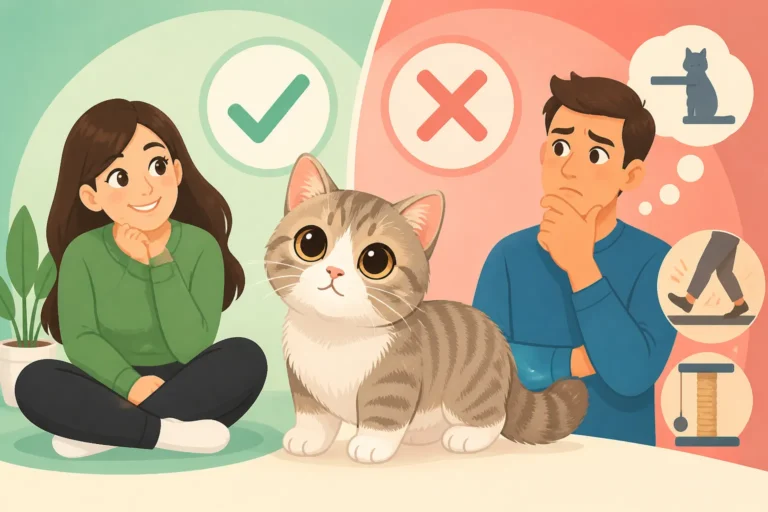
A Munchkin may suit you if you enjoy adapting a home thoughtfully, are comfortable checking whether the cat can reach its essentials, and want a companion whose play can happen close to the ground. It may be a less straightforward fit if you expect a cat to navigate every shelf and staircase independently, or if your household cannot provide a quiet retreat away from young children or larger pets.
A normal-legged cat may be easier to accommodate in a home where furniture access, high perches, and stairs are part of daily life. But normal-legged cats are not maintenance-free or immune to mobility problems. Age, injury, weight, and health can affect any cat’s ability to jump or climb. A home that is accessible and safe at ground level can benefit either type.
It may help to write down your actual routine before deciding. Where will the litter box go? Will the cat be allowed in the bedroom? Are there stairs between its food and favorite resting place? Do you travel often, or will someone else care for the cat? If a Munchkin needs a different route to a bed or a little grooming help, are you willing to build that into your day? Those specific answers are more useful than choosing based on appearance alone.
Look beyond looks and ask careful questions
If you are considering a Munchkin, ask about the individual cat’s health, movement, grooming needs, and temperament. Spend time observing the cat walk and play on a nonslip surface. Ask what the breeder or caregiver has noticed about jumping, climbing, and accessing the litter box. A short video can help you see movement, but it does not replace a conversation or veterinary assessment.
It is also reasonable to think about the ethical questions around deliberately breeding for short legs. People disagree about the balance between a cat’s quality of life and a physical trait selected for appearance. A thoughtful decision means taking that debate seriously, asking how the cat’s welfare is prioritized, and being prepared to meet its needs for its whole life. Whether Buying a Munchkin Is an Ethical Decision addresses that wider question without reducing it to a simple yes or no.
If you are not committed to a particular breed, consider meeting cats with different builds and backgrounds before deciding. An adult cat’s observed behavior and mobility may be easier to assess than a kitten’s future needs. For either a Munchkin or a normal-legged cat, choosing for a good match means looking at the animal in front of you, not relying on a label to predict exactly what life together will be like. For a broader decision-making checklist, see Whether a Munchkin Is the Right Cat for You and What Munchkin Owners Wish They Had Known.
Chewy and other pet retailers can be useful places to compare ramps, low-entry boxes, and grooming tools, but no shopping list can substitute for observing how a particular cat moves in your home. A good setup is one the cat actually uses, remains stable, and keeps essential resources comfortably accessible.
Disclaimer
This article is for general informational purposes only and does not constitute professional advice. Laws, prices and regulations vary by location and change over time. Consult a qualified professional for guidance on your specific situation.