Which Breed Was Crossed With a Munchkin to Make the Bambino
A Bambino is the short-legged, hairless cat associated with crossing a Munchkin with a Sphynx. That combination brings together two distinctive inherited traits, but it also raises practical questions about health, skin care, and responsible breeding. Here’s what the cross means, how the breed developed, and what to consider before choosing a Bambino.
The breed crossed with the Munchkin to make the Bambino
The Sphynx contributed the hairless coat
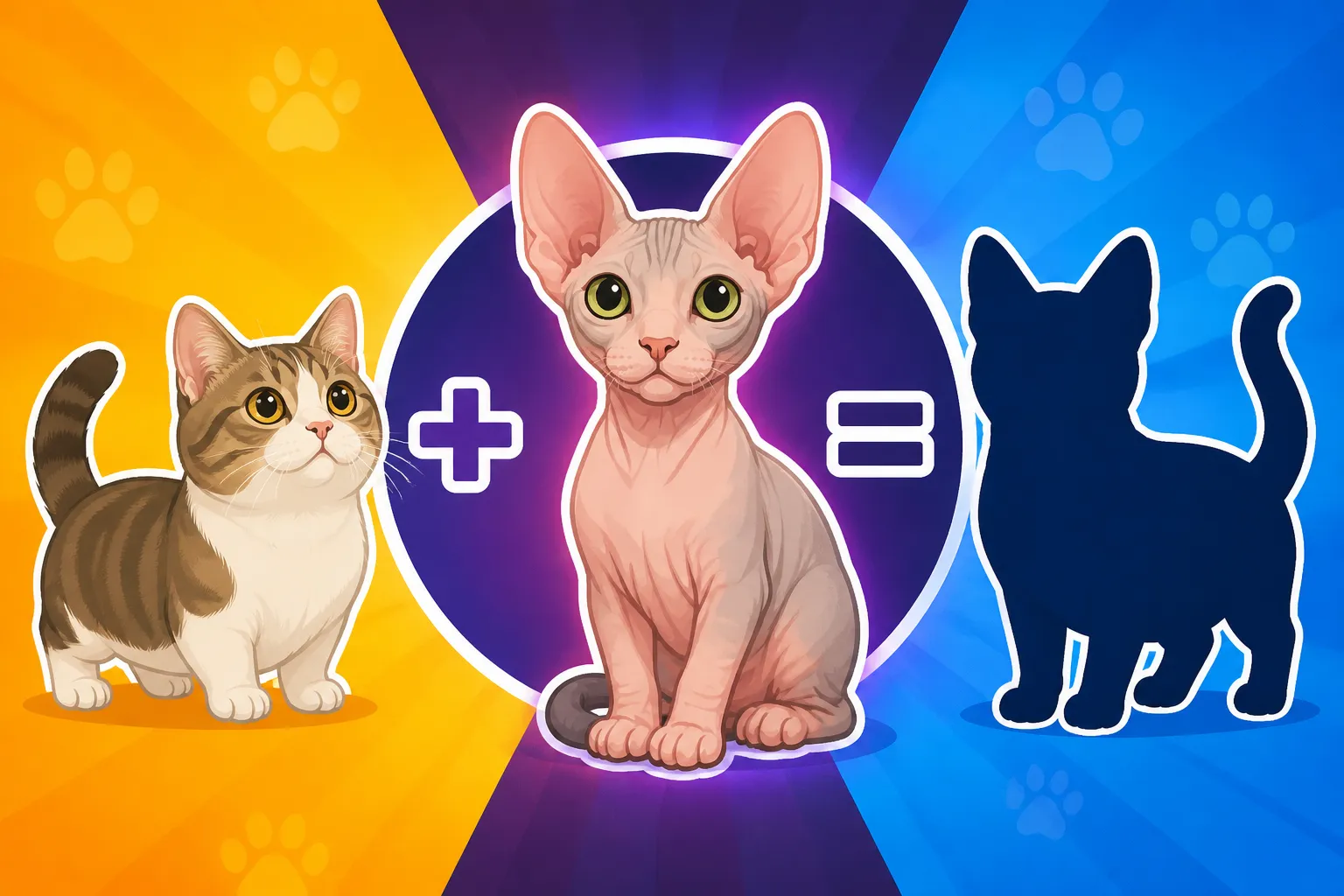
The Bambino was developed from the Munchkin and the Sphynx. The Munchkin is associated with shortened legs, while the Sphynx is known for its hairless or nearly hairless appearance. The Bambino brings those traits together in one cat: a compact-looking, short-legged body with little to no coat.
“Hairless” does not always mean completely bare. Some Bambinos have a fine layer of down, and their skin may feel warm or soft to the touch. Individual cats can vary in appearance, so a kitten’s coat and overall look may not match every photo in a breeder’s listing.
The word Bambino means “child” in Italian, a name often linked to the breed’s small, kitten-like appearance. The name is not a separate genetic explanation, though. The important point is that the Bambino’s defining features come from two different breed backgrounds, rather than from a single Munchkin trait.
The cross combines two separate inherited traits
The Munchkin’s short legs and the Sphynx’s hairlessness are distinct traits. A cat can inherit one without inheriting the other, and the genetics behind them should not be treated as interchangeable. For example, a short-legged cat is not automatically hairless, and a hairless cat does not automatically have short legs.
That distinction matters when you’re trying to understand what a breeder means by “Bambino.” Ask which breeds appear in the kitten’s pedigree and what traits the parents show. A pedigree and a conversation with the breeder can clarify whether the cat comes from the Munchkin–Sphynx background, rather than simply being a short-legged or hairless cat described with a fashionable label.
The Bambino is also not just a Munchkin with its coat removed. The Sphynx contribution affects appearance and care needs, while the Munchkin contribution affects leg length and physical proportions. To understand the Munchkin side of the cross, see What a Munchkin Looks Like Against the TICA Standard.
A Bambino is not necessarily a first-generation cross
The phrase “Munchkin crossed with Sphynx” describes the combination that established the breed. It does not necessarily mean every Bambino kitten is the direct offspring of one Munchkin parent and one Sphynx parent. Once a breed line exists, later generations may be produced from Bambinos or through other breedings allowed by the relevant registry or breeding program.
That’s why it’s worth asking about a specific kitten’s parents and ancestry rather than relying on the breed name alone. A responsible breeder should be willing to explain the pedigree, describe the traits they’re selecting for, and talk plainly about health considerations. A useful companion read is How the Bambino Was Made From a Munchkin.
What the Bambino’s two breed backgrounds mean for care
Short legs can affect movement and access
A Bambino with Munchkin-type short legs may get around energetically, but the height and distance of everyday surfaces can still be a challenge. A sofa, deep-sided litter tray, tall scratching post, or high window perch may be harder to reach than it is for a longer-legged cat. Watch how the individual cat moves rather than assuming that a playful kitten has no access needs.
A thoughtfully arranged home can make ordinary routines easier. Low-entry litter boxes, stable steps, and resting places that don’t require a big jump can help a cat reach the things it uses every day. The best setup depends on the cat’s size, mobility, and confidence. For broader background on this trait, see Why Munchkin Crosses Worry Veterinarians.
Also notice changes over time. A cat that suddenly avoids a step, hesitates before jumping, or moves differently may be uncomfortable or unwell. Those changes deserve attention from a veterinarian rather than being dismissed as part of the breed’s normal appearance.
Hairless skin needs regular attention
Without a full coat, a Bambino’s skin is more exposed to everyday dirt and oils. Some cats may need regular, gentle cleaning, but the right routine depends on the individual. Ask a veterinarian or experienced breeder how to care for the cat’s skin, ears, and any areas that collect oil or debris. Avoid assuming that frequent baths or household skincare products are automatically appropriate.
Temperature and sun exposure are also worth considering. A hairless cat may need a warm, comfortable indoor resting place, but clothing should fit safely and should not rub or restrict movement. Keep the cat out of strong direct sun, and ask a veterinarian before applying any sunscreen or topical product; products made for people may not be safe for cats.
For practical supplies, Chewy is one place owners can compare washable bedding, gentle grooming tools, and other cat-care basics. Check product materials and instructions, and ask your veterinary team before using a cleanser or topical item on your cat. A second option is to ask a local pet-supply shop what it carries and compare labels in person.
Daily care should reflect the individual cat
A Bambino’s care plan should not be based on appearance alone. Some cats may need more help with skin maintenance; others may need closer attention to how they move, groom, or use their litter box. Keep an eye on eating, activity, skin changes, and willingness to move through the home. If something changes, record what you’ve noticed and share it with the vet.
You can also make grooming and handling less stressful by introducing brief, gentle sessions early. Let the cat get used to being touched around the paws, ears, and body, and reward calm behavior. If a task causes discomfort or the skin looks irritated, pause and seek veterinary guidance rather than trying to solve it with more frequent bathing or stronger products.
Health questions to ask before choosing a Bambino
Ask about both sides of the cross
Because the Bambino combines traits from two breeds, it is sensible to ask about concerns relevant to both backgrounds. On the Munchkin side, discuss leg structure, gait, mobility, and any observed spinal or joint issues in the family. On the Sphynx side, ask what health screening and veterinary follow-up have been done, and whether the breeder has information about health concerns in the line.
No breed label can tell you exactly how healthy an individual cat will be. A kitten’s parents, family history, veterinary examination, and living conditions all matter. Ask for clear answers about what the breeder knows and what remains uncertain. If you want to think more broadly about combining distinctive physical traits, Why Stacking Mutations on a Munchkin Is Criticized explains why the topic can be contentious.
It can also help to ask how the breeder evaluates kittens before placing them. What does the kitten’s first veterinary examination cover? Has anyone assessed its movement and general development? What follow-up care does the breeder recommend? A breeder should not promise that a kitten will never develop a health problem; a more credible conversation is specific, documented, and candid.
Be cautious about claims that sound like guarantees
Statements such as “these cats never have joint problems” or “hairless means hypoallergenic” should prompt follow-up questions. No cat breed can be guaranteed free of health issues, and a hairless coat does not mean a cat cannot trigger allergies. People can react to proteins in a cat’s saliva and skin as well as to fur.
Ask to see the kitten walking and playing on a safe, nonslip surface. If possible, observe the parents too. Video can be useful when an in-person visit isn’t practical, but it should show the cat moving naturally rather than only posing for a photo. For a broader checklist of breeder questions, read What a Munchkin Breeder Should Be Able to Show You.
Some breed combinations raise particular welfare concerns. If a Bambino’s ancestry includes additional traits beyond the Munchkin and Sphynx background, ask what those traits are and how they may affect the cat. Whether a Sphynx Munchkin Faces Two Problems explores the concern about combining these features.
Make the decision around the cat’s needs
A Bambino may suit a household prepared for hands-on skin care, a warm and safe indoor environment, and thoughtful adjustments that make everyday spaces accessible. That is different from deciding based only on a striking appearance. Consider whether you can keep up with routine grooming, make changes if the cat’s mobility needs shift, and arrange veterinary care when concerns arise.
If you’re comparing a Bambino with a Munchkin, remember that the coat and care needs differ even when both cats have short legs. You may also want to read Whether Buying a Munchkin Is an Ethical Decision and Which Household a Munchkin Fits as part of a wider decision about lifestyle and welfare. The right choice is the one that fits the animal’s needs and the care you can realistically provide.
Practical questions to ask a Bambino breeder
| Question | What a useful answer should clarify |
|---|---|
| Which breeds appear in this kitten’s pedigree? | The kitten’s background and how the breeder uses the Bambino name |
| What health checks have the kitten and parents had? | Which examinations or screenings were completed and what they found |
| Can I see the kitten move naturally? | How it walks, plays, and navigates a safe space |
| What skin-care routine does this line need? | How the breeder manages bathing, cleaning, and skin concerns |
| What home setup does the kitten use? | Whether it has accessible litter, resting, and play areas |
| What support is available after adoption? | Who to contact with questions about care or health |
A useful answer should be clear and specific, not a rushed reassurance. If the breeder cannot explain the kitten’s ancestry, avoids discussing health, or refuses to show how the cats move, take time before making a decision. Chewy and other pet retailers can help you compare basic supplies once you know what the cat needs, but a shop’s product listing is not a substitute for advice from a veterinarian who knows your cat.
Ask about the kitten’s routine, too. What food is it eating? How is it used to being handled? Has it encountered ramps, low-entry litter boxes, or grooming sessions? If you use Chewy to browse for supplies, check sizing and return details before ordering, especially for items such as beds, litter boxes, or steps that need to fit a particular room and cat.
Chewy may also be a convenient place to compare everyday items such as washable blankets and litter accessories, while a local shop can let you inspect some materials before buying. In either case, prioritize safe, easy-to-clean products and a layout that lets the cat reach essentials without repeated high jumps.
Disclaimer
This article is for general informational purposes only and does not constitute professional advice. Laws, prices and regulations vary by location and change over time. Consult a qualified professional for guidance on your specific situation.