What a Minskin Is and How It Relates to the Munchkin
A Minskin can look like a tiny, nearly hairless Munchkin, so it is easy to assume the names describe the same cat. They do not. A Minskin is a distinct, deliberately developed breed type that combines Munchkin ancestry with other breeds, including the Sphynx. This guide explains what that means for appearance, genetics, care, and the questions to ask before bringing one home.
What a Minskin is
A breed developed from Munchkin ancestry
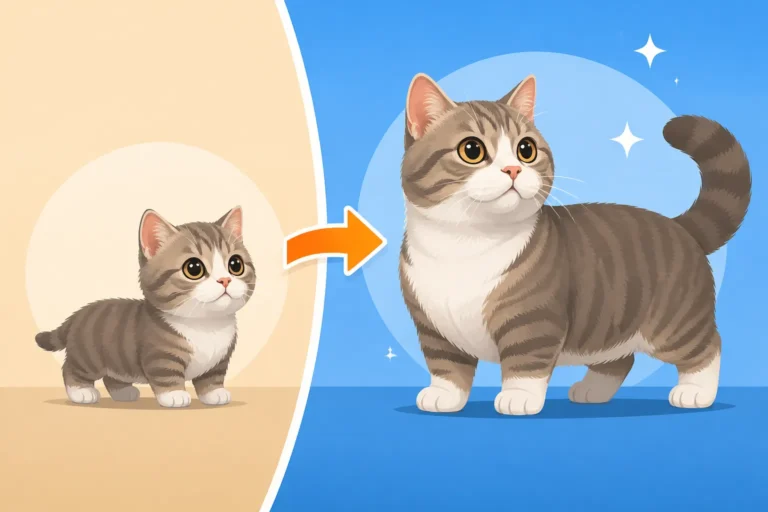
The Minskin was developed in the Boston area in the late 1990s by breeder Paul McSorley. The idea was to create a cat with the Munchkin’s short legs and a distinctive coat pattern: relatively sparse fur on much of the body, with denser fur at points such as the face, ears, legs, and tail. The Sphynx was part of the development, along with breeds including the Burmese and Devon Rex.
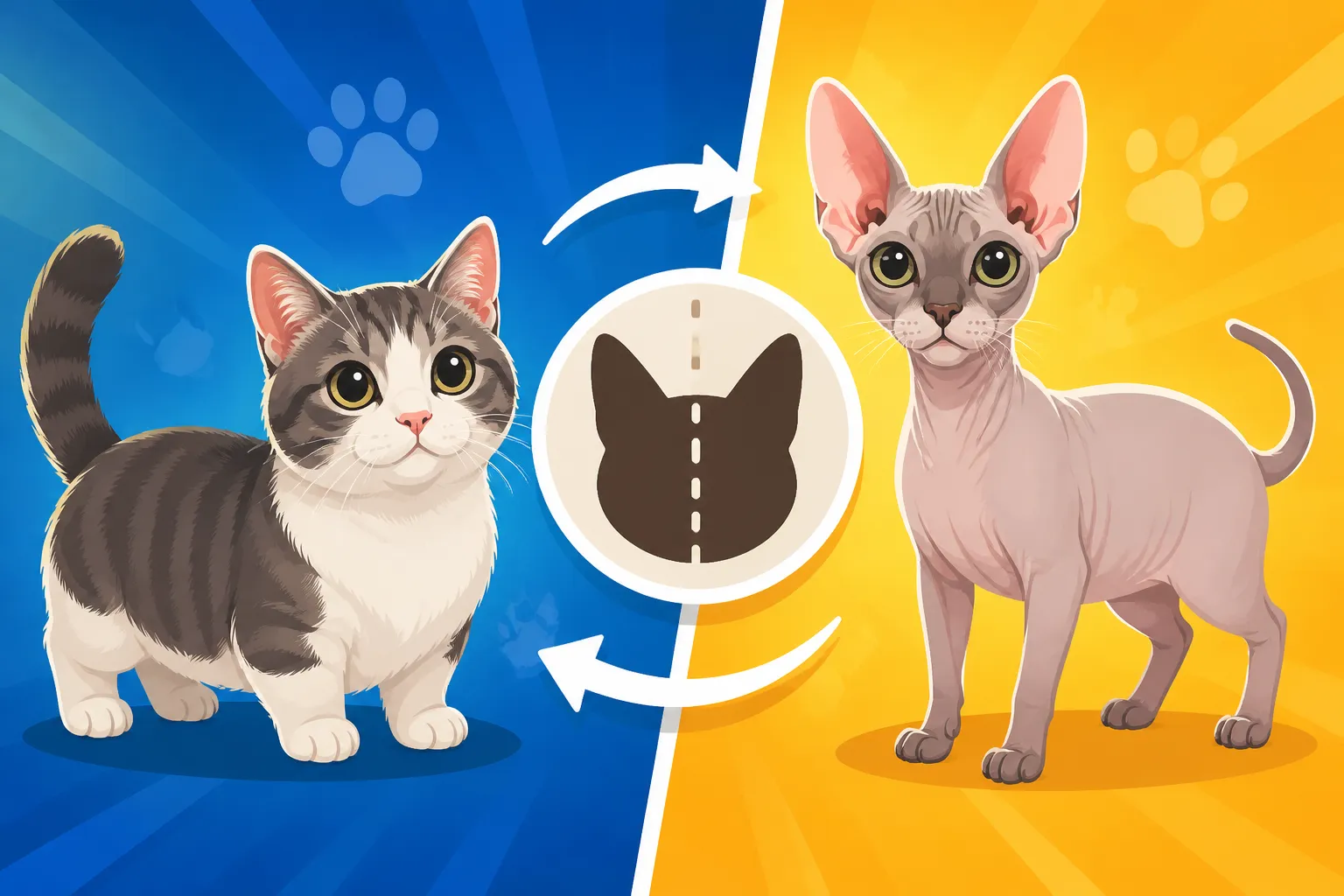
That combination is why the Minskin is often described as a short-legged, partly hairless cat. “Partly hairless” is more accurate than assuming every Minskin has completely bare skin. Coat coverage can vary, and some cats have a soft, fine layer of fur over areas that look nearly hairless in photographs.
The breed’s name and appearance can make it sound like a variation of the Munchkin. It is better understood as a separate breed type with Munchkin ancestry, rather than another name for a Munchkin. For background on the original breed, see How a Munchkin Differs From a Dwarf Cat.
How a Minskin differs from a Munchkin
The most obvious difference is the coat. A Munchkin can have a conventional short or long coat, while a Minskin is associated with sparse fur and points of denser growth. Their body shapes may also look different: a Minskin’s coat can make its skin contours more visible, while a furry Munchkin’s outline is softened by its coat.
Their relationship is genetic and historical, not interchangeable. Munchkins are defined by their short-legged trait, which arose in domestic cats and was used in developing the Minskin. A Minskin may inherit short legs through that Munchkin ancestry, but the Minskin’s other breed influences contribute to its appearance and background too. Conversely, most Munchkins are not Minskins.
| Feature | Munchkin | Minskin |
|---|---|---|
| Breed relationship | The short-legged breed used in developing the Minskin | A distinct breed type with Munchkin ancestry |
| Coat | May be short or long and generally covers the body | Often sparse, with more fur on the points; coverage varies |
| Appearance | Short legs with a typically furry body | Short legs and a distinctive, often partly hairless coat |
| Care considerations | May need help with mobility, grooming, or both | May need mobility-aware care plus attention to exposed skin and warmth |
If you are comparing several short-legged cats, it may help to read What a Bambino Is and How It Relates to the Munchkin as well. A Bambino is another Munchkin-related cross, but it is not the same as a Minskin.
What the Munchkin connection means
The short-legged trait is only one part of the picture
A Minskin’s short legs come from the Munchkin side of its ancestry. That does not mean every cat will have identical leg length or movement. As with other inherited traits, kittens can vary, and a kitten’s appearance alone cannot tell you everything about its health or future mobility.
Munchkin dwarfism is generally described as a dominant inherited trait. In Munchkin breeding, short-legged cats are paired with normal-legged cats rather than with another short-legged cat, because inheriting two copies of the short-leg variant is understood to be lethal during development. Responsible breeding discussions should explain how a particular Minskin line manages the trait and which cats are used in a pairing. For more background, see How Munchkin Dwarfism Is Inherited.
A short-legged cat is not automatically in pain, and appearance alone is not a diagnosis. At the same time, a charming gait or playful personality should not be used to dismiss concerns about joint movement, the spine, or the chest. Ask for veterinary records and an honest account of what has been examined. Why Munchkin Crosses Worry Veterinarians explores why combining breed traits can prompt welfare questions.
The Sphynx influence brings separate care questions
Munchkin ancestry explains the short legs; Sphynx ancestry helps explain the Minskin’s sparse coat. These are separate traits, and each may bring different practical considerations. Less fur can mean less natural protection from cold, sun, and rough surfaces. A nearly hairless cat may also need routine skin checks, and bathing or wiping should follow advice suited to the individual cat rather than a one-size-fits-all schedule.
It is easy to underestimate the everyday work because the cat may look low-maintenance in a photo. In reality, an owner may need to keep the cat comfortably warm, provide soft places to rest, and check exposed skin for irritation or dirt. Ask a veterinarian how to protect the cat from temperature extremes and whether any skin-care routine is appropriate. Do not apply human lotions or sunscreen unless your veterinarian specifically recommends a product that is safe for cats.
The combination of short legs and a coat trait is one reason to ask about the full pedigree, not just the kitten’s appearance. Some Munchkin-related crosses combine more than one distinctive inherited trait, a concern discussed in Why Munchkin Hybrids Stack Two Mutations. That does not mean every individual cat will develop a problem, but it does make careful, transparent breeding and veterinary follow-up especially important.
Living with and caring for a Minskin
Make the home comfortable at floor level
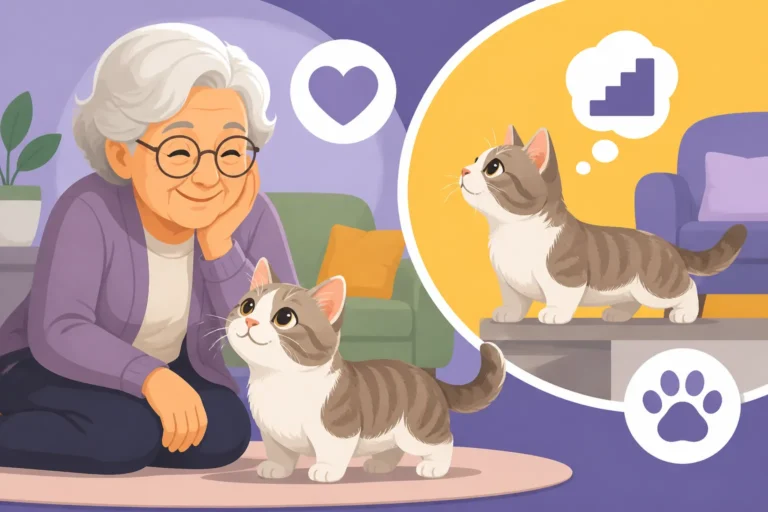
A Minskin may be lively and curious, but short legs can make some everyday routes harder than they are for a long-legged cat. Think about how the cat will reach a favorite sofa, bed, window, or quiet resting place. Low, stable steps or a gently sloped ramp can help, while slippery floors may make running and turning less secure. Keep food, water, litter, and a comfortable bed easy to reach without requiring repeated jumps.
Observe what the individual cat chooses to do rather than assuming it needs to be carried everywhere. Some cats will use a ramp readily; others may need patient encouragement and a gradual introduction. For Munchkin-focused home planning, Which Household a Munchkin Fits offers useful considerations, though a Minskin’s coat and skin needs add another layer.
Supplies should suit the cat’s actual body and habits. For example, choose a litter box with an entry the cat can step through comfortably, and make sure any bed or ramp is stable. Retailers such as Chewy can be one place to compare basic supplies, but product descriptions do not replace checking the item’s dimensions, sturdiness, and ease of cleaning for your particular cat.
Keep grooming and skin checks practical
A sparse coat does not mean there is nothing to maintain. Check the skin regularly for redness, scratches, dry patches, or dirt, especially around folds and areas where fur is denser. If the cat has enough coat to mat, brush gently as needed. If skin looks sore or the cat persistently licks or scratches, arrange a veterinary assessment rather than trying several grooming products in a row.
Use gentle handling and make grooming brief and predictable. A cat that dislikes being held can often be more comfortable with short sessions on a secure, low surface. Gather supplies before starting, pause if the cat becomes distressed, and ask your veterinarian or a qualified groomer to demonstrate safe handling if you are unsure. Chewy may offer grooming tools and washable bedding, but choose products based on the cat’s coat and skin needs rather than assuming that a tool marketed for hairless cats is automatically suitable.
Keep the cat’s weight in a healthy range, too. Extra weight can make movement more demanding for a short-legged cat, and a rounded body can be difficult to assess by sight alone. Your veterinarian can help you track body condition and adjust portions if needed. Why Weight Is More Dangerous on a Munchkin explains why weight management is a particularly useful topic for owners of Munchkin-related cats.
Choosing a Minskin and asking the right questions
Look beyond cute photos and breed labels
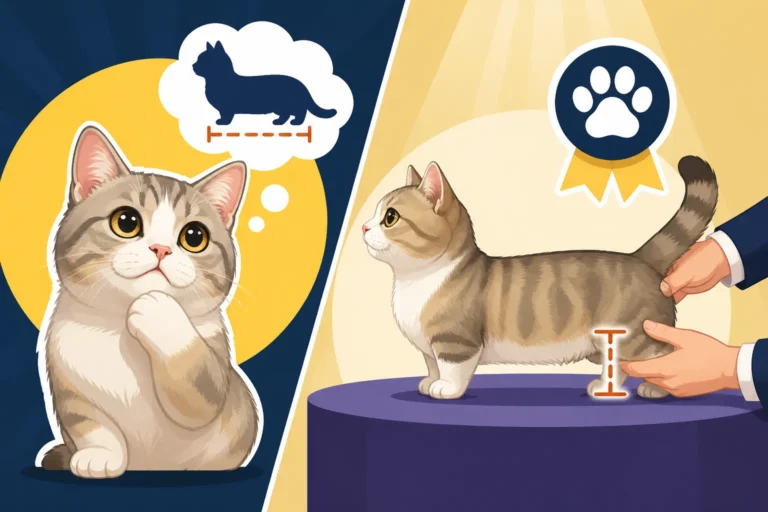
A listing may focus on short legs, a nearly hairless coat, or an unusual color. Those details do not establish that a kitten is healthy, well socialized, or responsibly bred. Ask to see the kitten moving naturally on a level surface, and ask whether you can meet the parents or see clear videos of them walking. A breeder should be willing to discuss the cats’ health history, veterinary care, temperament, and the reasoning behind the pairing.
Ask what the breeder means by “Minskin,” which breeds appear in the kitten’s background, and what records are available. Request veterinary documentation and details about any examinations or concerns, not just a verbal assurance that the kitten is healthy. A responsible breeder should welcome sensible questions and should not pressure you to pay a deposit before explaining the kitten’s background and care needs. What a Munchkin Breeder Should Be Able to Show You offers a useful framework for evaluating breeder transparency.
Also ask what support is provided after the kitten comes home. Find out what food it currently eats, how it has been socialized, and whether the breeder has noticed any mobility, skin, or grooming concerns. If the answers are vague or the seller treats health questions as an insult, slow down. A kitten’s unusual appearance should never be the reason to skip basic due diligence.
Decide whether the care needs fit your household
Before committing, picture an ordinary day rather than only the first week with a kitten. Can you keep the cat warm and protect exposed skin? Can you set up a litter box and resting spots that are easy to access? Are you prepared to monitor movement and seek veterinary advice if the cat starts avoiding a jump, ramp, or favorite route? Those practical questions matter as much as whether you find the breed appealing.
It is also worth considering your household’s layout and other pets. A steep staircase, slick flooring, or a large, excitable dog may create challenges that need planning. If you are comparing a Minskin with a standard Munchkin, consider the combined care picture: short-legged access needs plus the coat and skin routine associated with sparse fur. Whether a Munchkin Is the Right Cat for You can help you think through fit, while remembering that a Minskin has additional breed influences.
If you already have a Minskin, the most useful next step is an ongoing relationship with a veterinarian who can assess the individual cat rather than relying on breed assumptions. Keep notes about appetite, grooming, skin changes, gait, jumping, and play. A small change—such as stopping use of a familiar ramp or becoming reluctant to enter the litter box—can be more informative than a single snapshot of how the cat looks.
Disclaimer
This article is for general informational purposes only and does not constitute professional advice. Laws, prices and regulations vary by location and change over time. Consult a qualified professional for guidance on your specific situation.