Whether a Munchkin Can Be Any Pattern
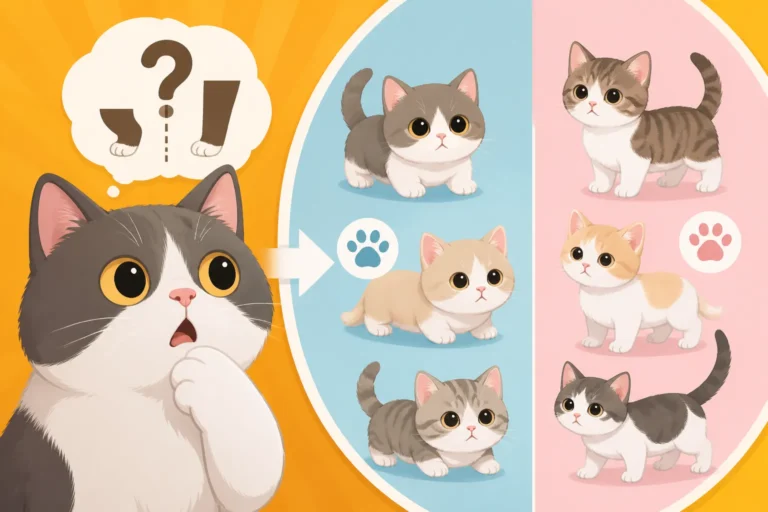
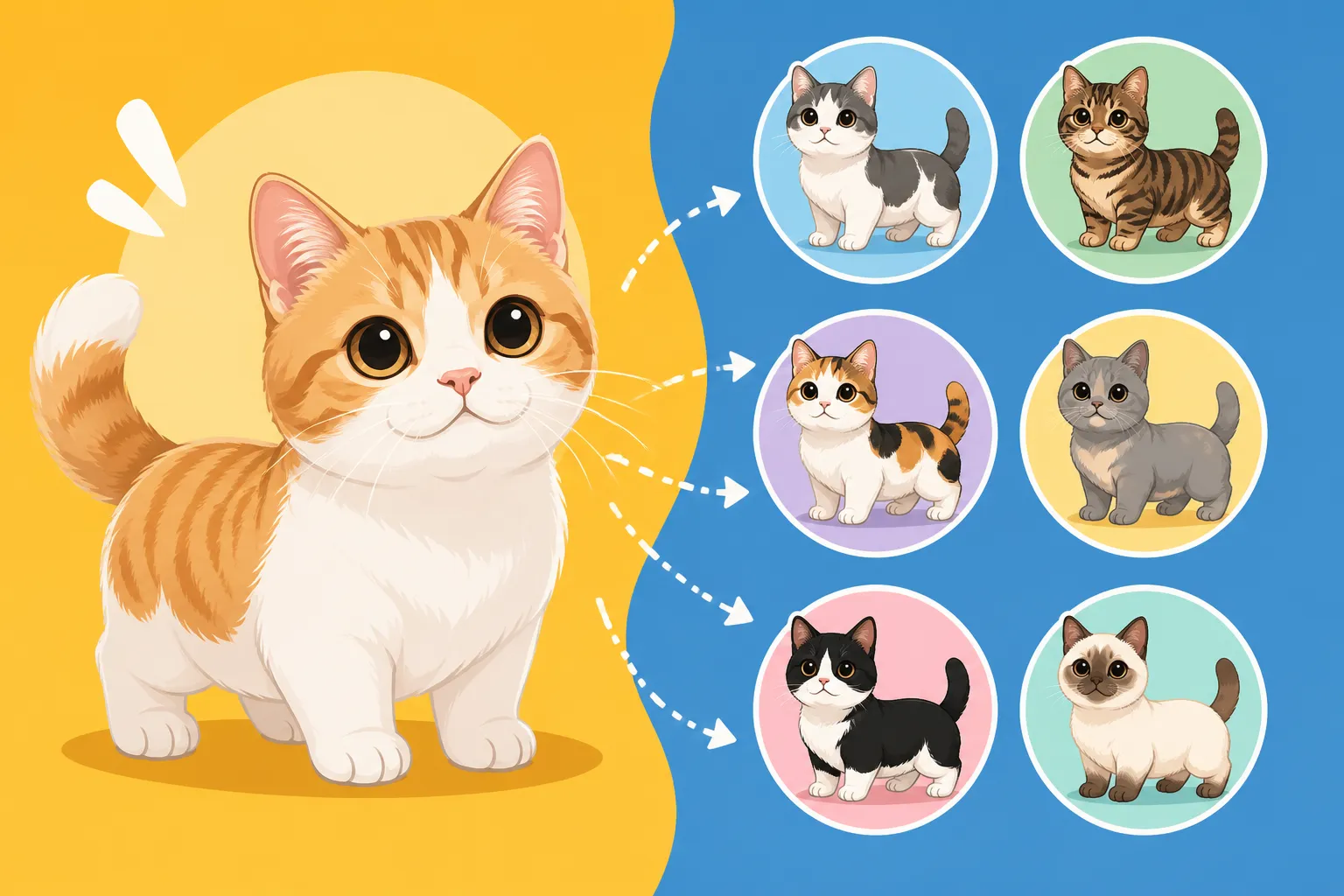
A Munchkin’s short legs do not limit its coat color or pattern: these cats can appear in many familiar combinations, from solid coats and tabby stripes to tortoiseshell, bicolor, and colorpoint markings. The confusing part is that a kitten’s appearance, a breeder’s label, and a registry’s rules are not always the same thing. This guide explains how to tell them apart.
Can a Munchkin Be Any Coat Pattern
In general, Munchkins are not defined by one particular coat pattern. Their distinctive feature is their short-legged build, while coat color and markings can vary widely. A Munchkin may have a pattern commonly seen in domestic cats, including tabby, solid, bicolor, tortoiseshell, calico, or colorpoint.
That broad variety does not mean every registry or breeding program uses precisely the same descriptions. If you are checking a particular kitten’s registration or pedigree, use the relevant registry’s terminology and ask the breeder how the coat is recorded. The quick answer to “Can a Munchkin be any pattern?” is usually yes, but the details depend on the cat and the paperwork.
Coat pattern is separate from leg length
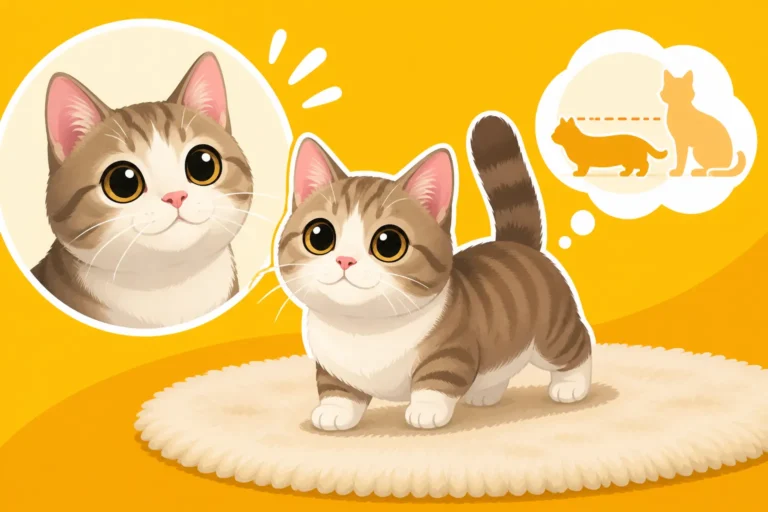
A Munchkin’s short legs and its coat pattern are separate inherited traits. The genes that influence whether a cat has stripes, patches, or a pointed pattern do not determine whether its legs are short. A kitten may have the short-legged Munchkin trait and a tabby coat, or longer legs and the same tabby markings.
This distinction matters when you are comparing kittens in a litter. Coat appearance does not tell you whether a kitten has short legs, and short legs do not predict a particular color. A litter can include siblings with different leg lengths and different coat colors or patterns.
For more on the breed’s physical features, see What a Munchkin Looks Like Against the TICA Standard and How a Munchkin's Legs Are Judged. Those topics help separate the features used to describe the breed from the coat details that can vary from cat to cat.
What “any pattern” means in practice
The phrase generally means that Munchkins may have a wide range of coat appearances rather than one required pattern. It does not mean that every individual cat can show every pattern, or that a breeder can guarantee a particular marking before a kitten is born. The possible appearance of a litter depends on the cats’ inherited traits.
A breeder may use specific terms such as “classic tabby,” “mackerel tabby,” “tortoiseshell,” or “bicolor.” These are descriptions of visible markings, not separate Munchkin varieties. Two cats described as tabbies, for instance, may have noticeably different stripe shapes and color combinations.
If you are looking at a kitten listing, treat the pattern name as a useful starting description, not proof of pedigree or health. Clear photos in natural light, a written description, and registration paperwork answer different questions. None of those details should be used as a substitute for evaluating the kitten’s welfare and veterinary care.
Common Munchkin Colors and Patterns
Coat color describes the visible color or colors on the fur. Pattern describes how those colors are arranged. A cat may therefore be described using both: for example, a brown tabby, a black-and-white bicolor, or a red-and-white patched cat.
| Coat description | What you may see | A useful distinction |
|---|---|---|
| Solid | One main color across the coat | Minor shading or a few stray white hairs may affect appearance |
| Tabby | Stripes, swirls, spots, or agouti banding | “Tabby” covers several different marking styles |
| Bicolor | Two colors, often including white | The amount and placement of white can vary |
| Tortoiseshell | A mix of dark and red-based colors | The colors may be blended or appear in larger patches |
| Calico | Distinct patches of colors with white | White is a visible part of the pattern description |
| Colorpoint | A lighter body with darker color on the face, ears, legs, and tail | Point color can become more noticeable as the cat matures |
These are broad visual descriptions, not a complete genetic guide. A cat’s coat can combine features, and different people may describe the same markings in slightly different ways. For registry-specific questions, check the rules used by the registry named on the cat’s paperwork. Which Colors a Munchkin Comes In offers a closer look at the range of coat colors.
Tabby markings
“Tabby” is an umbrella term rather than one exact pattern. A tabby Munchkin might have narrow stripes, broader swirls along the sides, spots, or ticked fur in which individual hairs have bands of color. Many tabbies also have facial lines and an “M”-shaped marking on the forehead.
The underlying color can change the overall impression. A brown tabby may look very different from a silver, red, or blue tabby, even if the markings follow a similar arrangement. Lighting, coat length, and the age of the cat can also make stripes appear more or less distinct in photographs.
When a breeder calls a kitten “tabby,” ask what kind of tabby pattern they mean if that distinction matters to you. You can also ask for clear pictures of the kitten’s sides and face. A single close-up may show color but not enough of the body to make the pattern easy to identify.
Tortoiseshell and calico coats
Tortoiseshell coats usually mix dark and red-based colors, with the colors either interwoven or arranged in larger patches. Calico coats are also patchy, but the description generally includes white alongside the other colors. In everyday conversation, people sometimes use these names loosely, so it is reasonable to ask what the breeder means by the label.
These coats are often associated with female cats because of how the relevant color traits are inherited. Male cats with tortoiseshell or calico coloring are uncommon, but coat appearance alone is not a dependable way to confirm a cat’s sex, health, or ancestry. If any of those details matter, rely on the breeder’s records and a veterinary examination.
A kitten’s patches may be easier to see as the coat grows in and changes. That is one reason a very young kitten’s markings can look less crisp than an adult cat’s. A breeder should be able to explain what is visible now and what may become clearer with maturity, without promising an exact future appearance.
Colorpoint coats
A colorpoint cat typically has a paler body with darker color on the cooler parts of the body, such as the face, ears, legs, and tail. The contrast may be subtle in a young kitten and become more apparent as the cat matures. Temperature-sensitive coat coloring can also mean that the intensity of the points varies.
Colorpoint is a pattern description, not a claim that the cat belongs to a different breed. A Munchkin’s short legs and a colorpoint coat can occur together. If you need to know whether a particular colorpoint description is accepted under a specific registration system, check the applicable standard rather than assuming all organizations use the same criteria. See Whether a Colorpoint Munchkin Is Recognized for that registry-focused question.
How to Identify a Munchkin’s Pattern
It is easy to mislabel a coat when you are working from one photo, especially if the image has warm indoor lighting or strong filters. A little care makes it easier to describe what you see without overclaiming.
Look at the whole coat in natural light
Start with photographs taken in even, natural light. Try to see the cat’s face, back, sides, legs, and tail rather than relying on a close-up of one patch. A black-and-white cat may look mostly white in a cropped image, while a tabby’s stripes may disappear in a dim photograph.
Pay attention to the arrangement of colors, not just their names. Is there one main color throughout? Are there stripes or swirls? Are there separate patches? Is white mixed into the pattern? These observations can help you narrow down a description before you decide whether a technical label is appropriate.
If a color looks different in person than it does in the listing, ask for additional photos or a short video. The goal is not to judge the cat’s value by its markings. It is to understand what the seller means and make sure the description matches the kitten you are considering.
Ask what the breeder’s label refers to
A breeder may use one label for the overall coat and another for its color. Ask them to spell out the description and explain how it appears on the kitten. If the cat is registered, ask how the registry records the coat and request the paperwork that supports the claim.
Registration, appearance, and breed standards are related but distinct. A photograph can show visible markings, but it cannot establish a pedigree. A pedigree may record ancestry and other details, but it does not guarantee that every pattern label in an advertisement is being used consistently. What the TICA Munchkin Standard Asks For is useful background when you are trying to understand the role of a breed standard.
For a prospective owner, practical questions often matter more than fine distinctions between pattern terms. Ask about the kitten’s age, veterinary checks, socialization, and the parents’ health. A striking coat should not distract you from checking whether the breeder is transparent and whether the kitten appears comfortable and well cared for.
Remember that kitten coats can change
A kitten’s coat may change in appearance as it grows. The fur can become longer or denser, markings may become easier to distinguish, and point coloration can deepen. Seasonal shedding and changes in coat condition can also affect how the pattern looks.
That does not mean every kitten will undergo a dramatic transformation. Some markings are clear early, while others are harder to read until the coat develops. If you are choosing a kitten for a particular pattern, ask the breeder what is already visible and whether the description is tentative.
Photos taken over time can be helpful. They let you compare how the coat develops without treating a seller’s prediction as a guarantee. Be especially cautious of claims that a kitten will have a rare or unusually precise appearance when the seller offers no clear evidence or documentation.
Choosing a Munchkin by Coat Without Overlooking Care
Pattern can be part of what draws you to a cat, but it should not be the main measure of whether a Munchkin is a good fit. Temperament, health, the breeder’s practices, and your ability to provide a suitable home deserve more attention than whether the coat is especially unusual.
Coat length affects grooming more than pattern does
A solid, tabby, or patched coat does not by itself tell you how much grooming the cat needs. Coat length and texture are more useful guides. A shorthaired cat may need a different brushing routine from a longhaired one, and some cats need extra help keeping the fur around their back end clean.
If you are choosing grooming tools, match them to the cat’s coat rather than buying something because it is marketed for a particular color. For a longhaired cat, a gentle comb can help you check for tangles. If you compare options at Chewy or another pet-supply shop, look for a tool that suits the coat and that you can use gently without pulling.
Regular, calm handling can make brushing easier. Start with brief sessions and stop if the cat becomes distressed. A groomer or veterinarian can advise you if mats are difficult to remove or if the cat’s skin looks irritated. More on coat care is covered in Which Coat Lengths a Munchkin Comes In and Grooming the Half of a Munchkin It Cannot Reach.
Treat unusual coat claims cautiously
Terms such as “rare,” “exclusive,” or “premium” are sometimes used to make a kitten sound more desirable. A particular pattern may be less common in a given litter, but a dramatic marketing label does not prove that a cat is healthier, better bred, or more suitable for a home.
Ask the breeder to explain the coat description in plain language and show you the kitten’s markings clearly. If a seller makes a claim about registration, ask which organization issued the paperwork and how you can confirm the details. A responsible conversation should not depend on pressure to pay quickly or on a promise that a particular coat pattern guarantees a certain personality.
The same caution applies when shopping for care supplies. A patterned coat does not require special food or a color-specific health product. If you browse Chewy for brushes, combs, or routine care items, choose based on the cat’s actual needs and check with your veterinarian before using medicated products or supplements.
Put welfare and individual fit first
A Munchkin with a beautiful coat is still an individual cat with ordinary needs for veterinary care, play, a clean litter area, and a safe home. Coat color cannot tell you whether the cat is comfortable moving, whether it has been examined, or whether its background is well documented.
When you meet a kitten, observe how it moves and interacts in a calm setting. Ask about its veterinary history and the health of its parents. A breeder should be willing to discuss the kitten’s care and answer questions about the family line, not just highlight the coat.
For broad background on the breed’s appearance and household fit, see How Big an Adult Munchkin Gets and Whether a Munchkin Is the Right Cat for You. If you are deciding between two kittens, let health, temperament, and responsible breeding practices outweigh small differences in color or markings. And when buying grooming supplies from Chewy, use the cat’s coat length and comfort—not its pattern name—to guide your choices.
Disclaimer
This article is for general informational purposes only and does not constitute professional advice. Laws, prices and regulations vary by location and change over time. Consult a qualified professional for guidance on your specific situation.