What a Lambkin Is and How It Relates to the Munchkin
A Lambkin is a curly-coated, short-legged cat developed from Munchkin and Selkirk Rex ancestry. That combination explains its distinctive look, but it also raises practical questions about inherited traits, grooming, health, and breed recognition. Here’s how a Lambkin relates to the Munchkin—and what to consider before choosing one.
What a Lambkin Is
The Lambkin combines two different breed traits
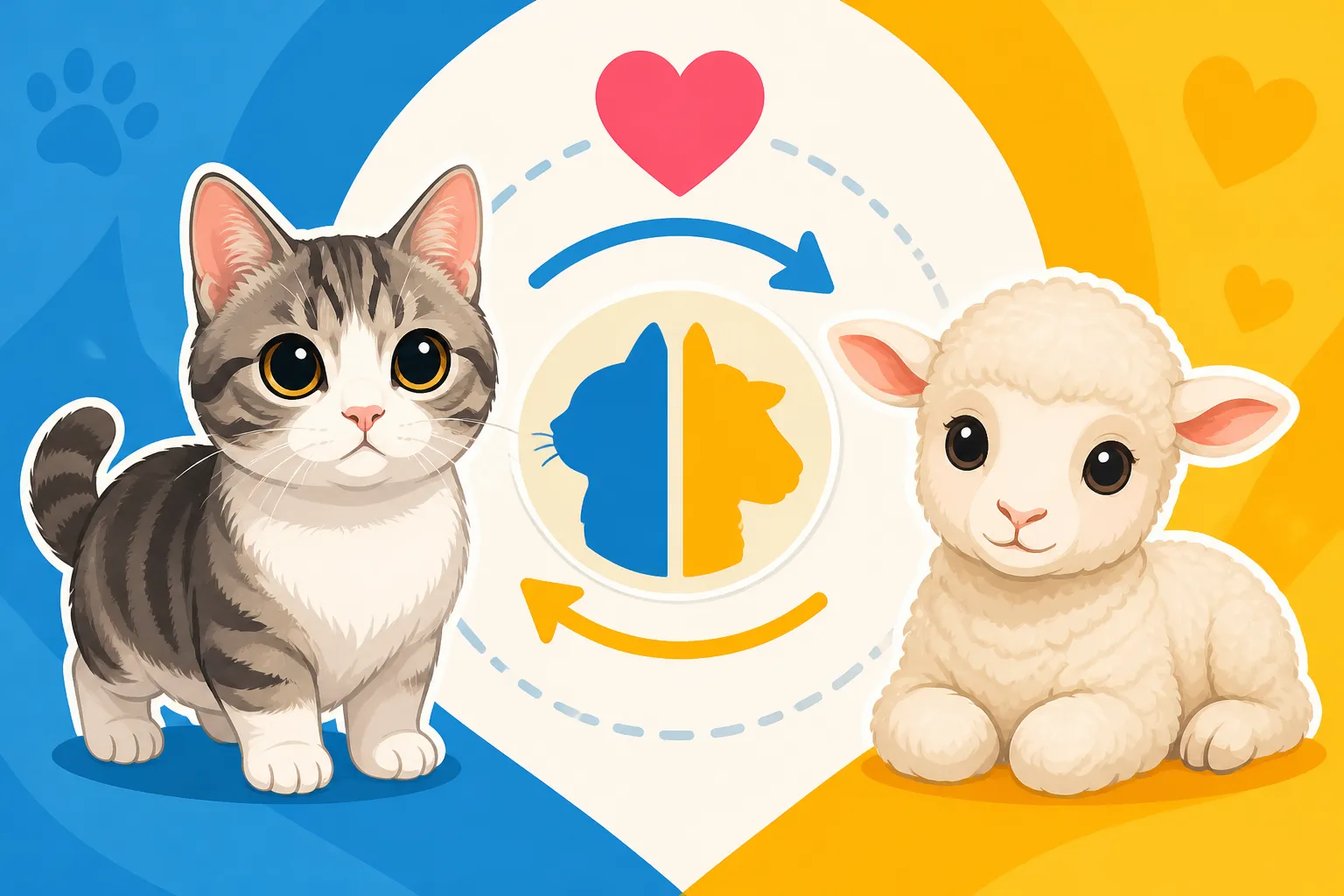
A Lambkin is generally described as a cross between a Munchkin and a Selkirk Rex. The Munchkin ancestry is associated with the cat’s short legs; the Selkirk Rex ancestry contributes the soft, curly or wavy coat that gives the Lambkin its name. The result is a cat with a look quite different from either parent breed.
Those traits come from separate parts of the cat’s ancestry. A Lambkin’s short legs and coat texture are not the same feature, and one does not explain the other. Even kittens in the same litter may not look identical: coat curl, length, and leg length can vary. A kitten’s appearance alone also cannot tell you everything about its health or genetic background.
The word “Lambkin” is used for this type of Munchkin–Selkirk Rex cross, but it does not guarantee that every cat advertised under the name has the same pedigree, predictable appearance, or registration status. If a breeder uses the label, ask which breeds are in the kitten’s documented ancestry and request clear information about the parents.
How a Lambkin differs from a Munchkin
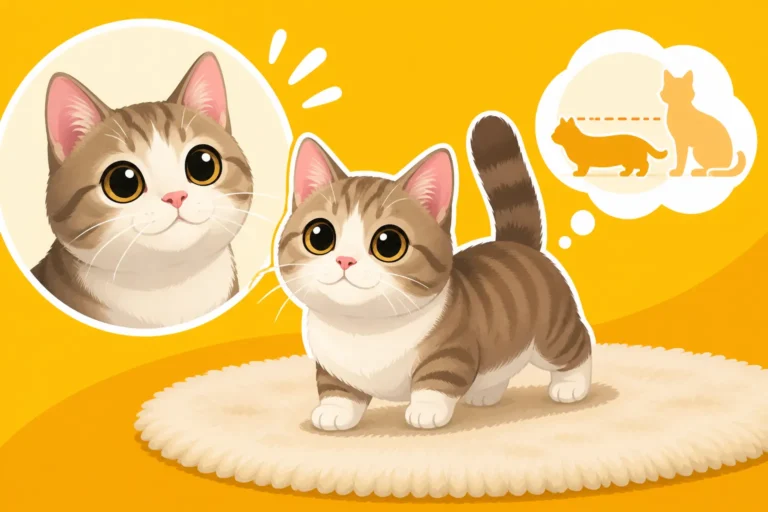
A Munchkin is best known for short legs, while its body is generally normal in length. Munchkins can have different coat lengths, colors, and patterns, but a curly coat is not what defines the breed. A Lambkin’s more noticeable signature is the combination of Munchkin-associated short legs with a Selkirk Rex-type coat.
| Cat type | Trait most associated with it | What to keep in mind |
|---|---|---|
| Munchkin | Short legs | Coat length, color, and pattern can vary |
| Selkirk Rex | Curly or wavy coat | Does not have Munchkin short legs by definition |
| Lambkin | Short legs and a curly or wavy coat | Appearance and ancestry can vary between individual cats |
A Lambkin is not simply a Munchkin with a perm. Its coat texture reflects Selkirk Rex ancestry, and its short-legged appearance reflects Munchkin ancestry. For a broader look at how these cats compare, see How to Tell a Munchkin From a Minuet and Which Coat Lengths a Munchkin Comes In.
The name can also be confused with names for other Munchkin crosses. A Minuet, for example, has Persian ancestry, while a Bambino combines Munchkin and Sphynx ancestry. Those crosses involve different traits and care questions. What a Minuet Is and How It Relates to the Munchkin and What a Bambino Is and How It Relates to the Munchkin explain those distinctions.
Is the Lambkin a recognized breed?
The term Lambkin is used in cat breeding, but recognition and registration can depend on the cat registry and its rules. A seller calling a kitten a Lambkin does not, by itself, establish that a particular registry recognizes it as a distinct breed or accepts its pedigree. Before paying a deposit, ask which organization—if any—will register the kitten and what the paperwork actually confirms.
It helps to separate three things that are often blended together in advertisements: a cat’s appearance, its recorded ancestry, and its formal breed status. A kitten may look short-legged and curly-coated without having a pedigree that a registry accepts. Conversely, paperwork may document ancestry without guaranteeing the exact coat or leg length an adult cat will have.
Ask for the names and breeds of both parents, the kitten’s veterinary records, and copies of any registration documents being promised. If the breeder’s answers rely mainly on phrases like “rare,” “miniature,” or “pure Lambkin” without explaining the lineage, pause and get clarification. For the registration questions around Munchkins, see Which Registries Accept a Munchkin.
How Munchkin and Selkirk Rex Ancestry Shape a Lambkin
Short legs are not the same as small overall size
A short-legged cat is not necessarily a tiny cat. Munchkin-type cats can have a body that is ordinary in length, while the legs are shorter. This can make a Lambkin appear close to the floor without meaning that its body, organs, or overall needs are those of a miniature animal.
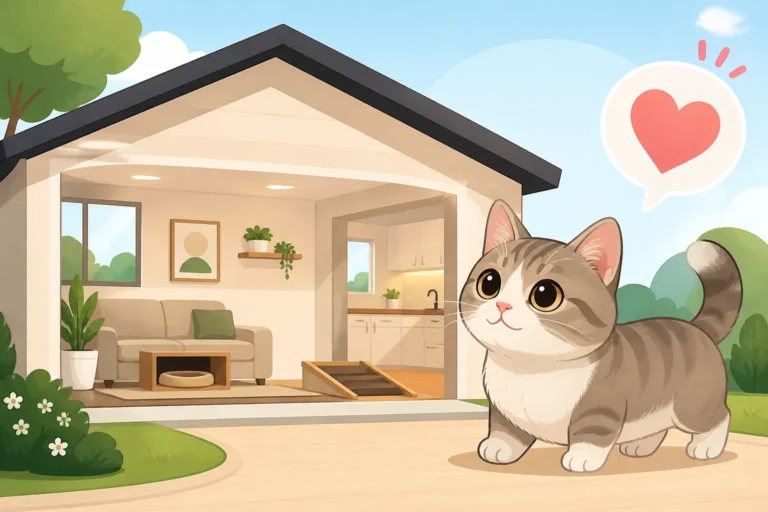
That distinction matters when choosing furniture, litter equipment, and places to rest. A cat that cannot comfortably reach a high-sided litter box may need a lower entry, while a bed placed on a tall platform may be difficult to access. A Lambkin’s proportions and abilities should be judged as an individual’s, not inferred from a cute label.
Short legs may also affect how a cat gets around the home. Some Lambkins may use intermediate steps or a ramp to reach favorite furniture; others may prefer floor-level spaces. Rather than expecting a cat to manage every jump, arrange safe routes and observe how it moves. For more on the breed trait itself, read What Pseudoachondroplasia Does to a Munchkin's Legs and Why a Munchkin's Legs Are Short but Its Body Is Not.
Curly coats need their own grooming routine
A Lambkin’s coat may look like a soft plush toy, but curls can tangle or mat, particularly in places the cat has difficulty reaching. The coat’s needs depend on its length, density, and curl pattern. Some cats may need frequent gentle combing; others may need a different schedule. Ask the breeder what grooming routine the kitten is used to, then have a veterinarian or experienced groomer show you how to maintain the coat without pulling on the skin.
Pay particular attention to the hindquarters, belly, and areas behind the ears. These are common spots to check in cats with dense or textured coats, and they may be harder for a short-legged cat to groom thoroughly. If you are gathering supplies at Chewy, focus on a comb or brush that suits the kitten’s coat and use it gently in short sessions. A tool that catches or tugs is not a good fit just because it is marketed for curly fur.
A grooming check is also a chance to notice changes early. Look for mats, irritated skin, litter caught in the coat, or spots the cat resists having touched. Don’t cut a tight mat with household scissors, because cat skin can be difficult to see beneath tangled fur. If the mat is close to the skin or the cat is uncomfortable, ask a veterinary professional or groomer for help. Grooming the Half of a Munchkin It Cannot Reach offers more detail on the extra attention some short-legged cats may need.
Individual kittens may not look alike
When two breeds are crossed, the appearance of the kittens is not a perfectly predictable recipe. A Lambkin kitten may have a more or less pronounced curl, a coat that changes as it matures, or leg length that differs from a sibling’s. A breeder should be able to discuss what they have observed in their own cats while being honest that appearance can vary.
That is why photos of one parent or a single especially curly kitten are not enough to judge a whole litter. Ask to see the kitten move on a non-slippery surface, and watch how it starts, turns, and stops. A short video can be useful if an in-person visit is not possible, but it should show ordinary movement rather than only posed pictures.
You can also ask how the breeder distinguishes coat variation from a skin or coat problem. Curly fur should not be used to dismiss bald patches, inflamed skin, or persistent scratching. When in doubt, have your veterinarian examine the kitten and explain what is normal for that individual.
Health, Welfare, and Choosing a Lambkin
Consider the welfare questions behind the short-legged trait
The appeal of the Lambkin’s appearance should not crowd out questions about welfare. Munchkin ancestry brings the short-legged trait, which is the subject of debate among cat fanciers and welfare advocates. People differ in how they assess the risks, and the available health evidence does not answer every question for every individual cat.
A responsible decision involves looking beyond whether a cat can walk around a room. Ask whether the kitten can move comfortably, play, groom itself, use a litter box, and reach essential resources. Ask what health checks have been done and whether the breeder tracks health issues in related cats. A kitten that appears lively during a brief visit still deserves a careful veterinary exam and ongoing observation as it grows.
Also consider the wider breeding choices involved in a cross. Some Munchkin crosses combine a short-legged trait with another conspicuous physical trait, which can raise additional questions about how breeding decisions are made. Why Munchkin Crosses Worry Veterinarians and Why Stacking Mutations on a Munchkin Is Criticized give more background on that debate.
Ask specific questions before choosing a kitten
A good breeder should welcome thoughtful questions and provide clear records. Before committing, ask:
- What are the kitten’s parents’ breeds and documented ancestry?
- Can I see the parents or a video of them walking and moving?
- What veterinary examinations, vaccinations, and treatments has the kitten received?
- What health problems have occurred in the parents, siblings, or close relatives?
- Which registry, if any, will accept the kitten’s paperwork?
- What grooming routine does the breeder recommend for this kitten’s coat?
- What happens if a veterinarian identifies a health concern after the kitten comes home?
Pay attention to how the breeder responds, not just whether they have paperwork. A seller who pressures you to decide quickly, avoids questions about health, or promises that a particular appearance guarantees a healthy cat is giving you reasons to slow down. A responsible breeder should be willing to discuss both the attractive features and the limitations of the cross.
If you are comparing options, consider whether an adult cat might suit your household better than a kitten. With an adult, you can see its established coat, movement, and temperament more clearly. Adoption organizations may also have cats with known care needs, though a short-legged cat’s exact ancestry may not be documented. Whether Buying a Munchkin Is an Ethical Decision can help frame the broader decision.
Prepare the home for the cat you actually bring home
A Lambkin does not need an elaborate makeover of your entire home, but small adjustments can make daily life easier. Choose a litter box the cat can enter without a difficult climb, keep food and water accessible, and provide resting places on the floor or reachable by stable steps. If you shop at Chewy for supplies, compare litter boxes by entry height and stability rather than by appearance alone.
For play, offer toys that work at floor level and let the cat choose how much to climb. If it likes a sofa or bed, add a secure route rather than encouraging repeated leaps down from a height. Rugs or nonslip mats can help in areas where the cat runs or turns, especially on smooth flooring.
Keep track of movement and grooming as the cat settles in. A change in willingness to jump, play, use a ramp, or tolerate brushing can be more informative than a single snapshot of its behavior. Chewy may be one place to look for basic grooming or enrichment supplies, but the best equipment is the one that fits your cat’s size, coat, and comfort. If you notice limping, difficulty getting into the litter box, skin irritation, or a sudden behavior change, contact your veterinarian rather than assuming it is simply part of being a Lambkin.
What to Remember About the Lambkin and the Munchkin
A Lambkin is generally described as a Munchkin–Selkirk Rex cross: Munchkin ancestry is associated with short legs, and Selkirk Rex ancestry with a curly or wavy coat. The name does not guarantee a uniform appearance or a particular registration status, and individual kittens can vary.
Before choosing one, look carefully at ancestry records, veterinary care, movement, grooming needs, and the breeder’s willingness to answer questions. Plan the home around the cat’s actual abilities, not the assumption that every short-legged cat will manage furniture or grooming in the same way. The most useful question is not simply whether a Lambkin looks appealing, but whether you can support that particular cat’s comfort and care throughout its life.
Disclaimer
This article is for general informational purposes only and does not constitute professional advice. Laws, prices and regulations vary by location and change over time. Consult a qualified professional for guidance on your specific situation.