How the Public Reacted to the First Munchkin Show
When Munchkin cats appeared before a broad public audience at a cat show in Madison Square Garden, their short legs were hard to miss—and hard for people to interpret neutrally. Some viewers found them charming; others questioned whether breeding for the trait was fair. Here’s what is known about that early response, why opinions split, and how the first show shaped the debate.
What happened at the first Munchkin show
A striking new look met a general audience
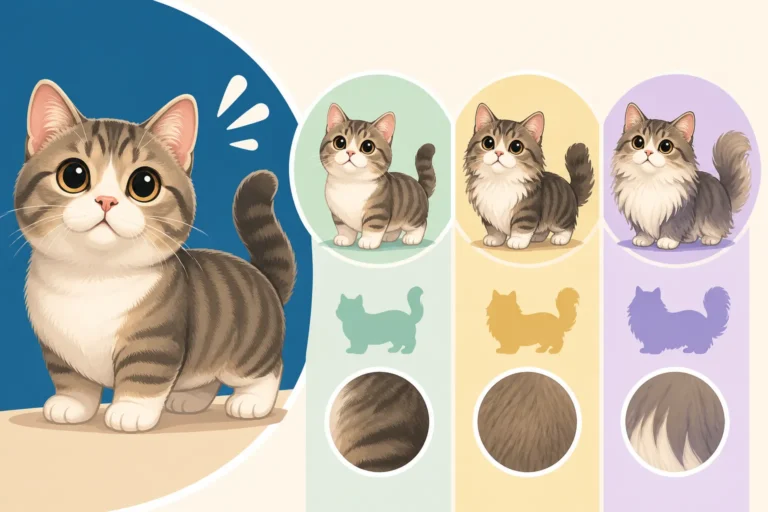
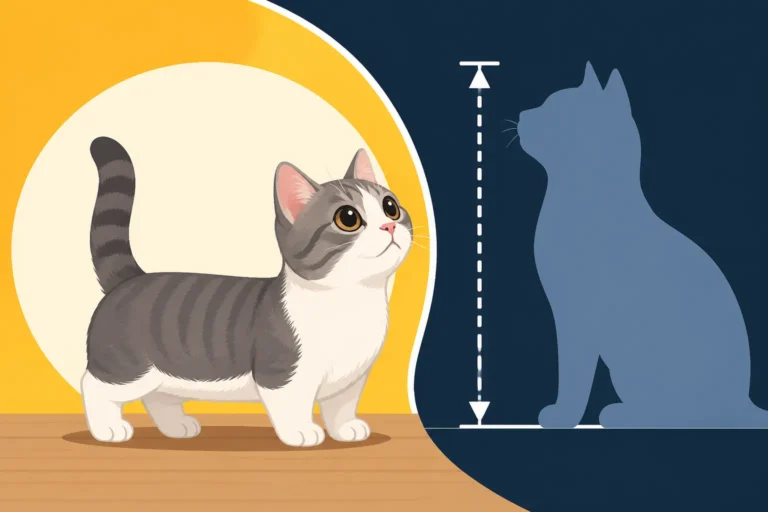
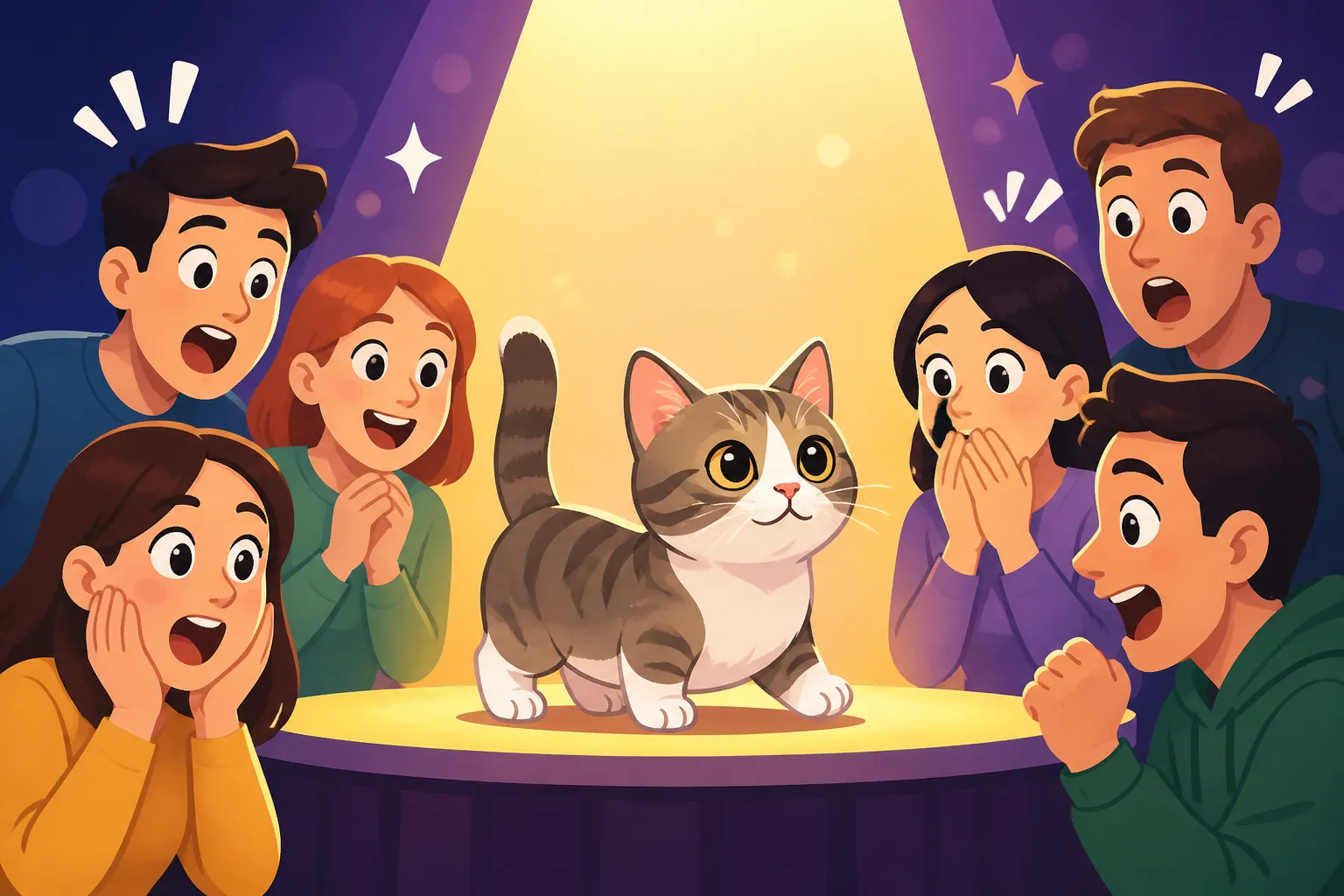
The Munchkin’s first widely noted public showing took place at Madison Square Garden in New York in 1991. For many people watching, the cats’ unusually short legs were the first thing they noticed. The contrast between a low-slung body and the familiar shape and behavior of a domestic cat made the breed instantly recognizable, even to people who had never heard the name “Munchkin.”
That visibility mattered. A cat seen in a show ring is not simply a pet encountered in someone’s home: it is presented as an example of a possible breed, inviting viewers to look closely and form opinions. Some people responded with affection or amusement. Others saw the same distinctive appearance and wondered whether a physical trait that altered a cat’s proportions might affect its well-being.
There is no reliable public poll or complete record of what every spectator thought at Madison Square Garden. It is more accurate to describe the response as a mix of curiosity, delight, and concern than to claim that the crowd reached one shared verdict. The event brought the cats into public view; it did not settle what people should think about breeding them.
For more context on the event itself, see Which Show the Munchkin Debuted At. The show’s importance lies partly in how it introduced a visually unusual cat to people well beyond the small circles already discussing the breed.
The cat’s appearance became the conversation
Munchkins drew attention because the short legs were immediately visible. People did not need a breed catalogue or a judge’s explanation to notice the difference. That made the cats easy to remember, but it also meant the first conversation often focused on appearance rather than on the individual animal’s temperament, health, or daily life.
The name added to the sense of novelty. “Munchkin” sounded playful to many people, and some viewers treated the cats as endearing or almost storybook-like. Others felt that the cute framing risked making a serious breeding question seem like a gimmick. Both responses could arise from the same first impression: these cats looked different, and people wanted to know why.
This is a familiar pattern when a new or unusual breed reaches a wider audience. A striking feature attracts attention quickly, while the details that would help people assess welfare take longer to explain. In the Munchkin’s case, the short-legged appearance became shorthand for a much broader debate about inherited traits, breeding choices, and what a cat’s body should be expected to do.
Why the public reaction split
Curiosity and affection were part of the response
Some people simply liked the cats. A Munchkin could look unusual without seeming unfamiliar in every other way: it was still a cat with a face, coat, and mannerisms people recognized. That mix of novelty and familiarity helped attract warm reactions. Viewers could admire a striking trait while imagining the cat as a companion rather than an abstract breeding question.
Public interest also grew because the breed was easy to talk about. People could describe the short legs in a sentence, ask how the trait was inherited, or compare a Munchkin with cats they already knew. In a noisy show environment, that visual clarity made the cats memorable. A distinctive silhouette can create an immediate emotional response before anyone has time to weigh competing evidence.
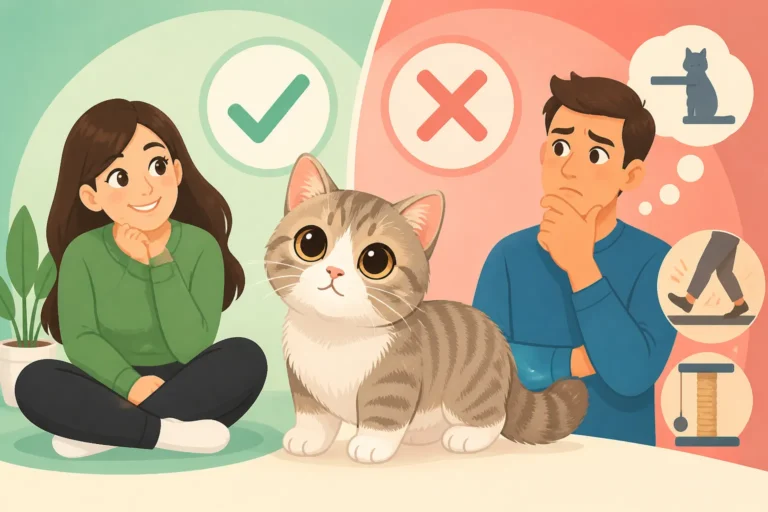
But affection alone cannot tell us whether a breeding practice is responsible. A visitor might find a cat charming and still wonder whether its body shape creates limits or discomfort. Conversely, someone concerned about breeding choices might still feel sympathy for the individual cats in front of them. Those reactions are not mutually exclusive.
Concern focused on breeding and welfare
The critical response was not simply “these cats look strange.” A deeper concern was whether intentionally breeding cats for short legs might prioritize an appearance over functional health. That question has stayed central to the Munchkin debate, and it helps explain why the show’s reception cannot be reduced to a cute-cat moment.
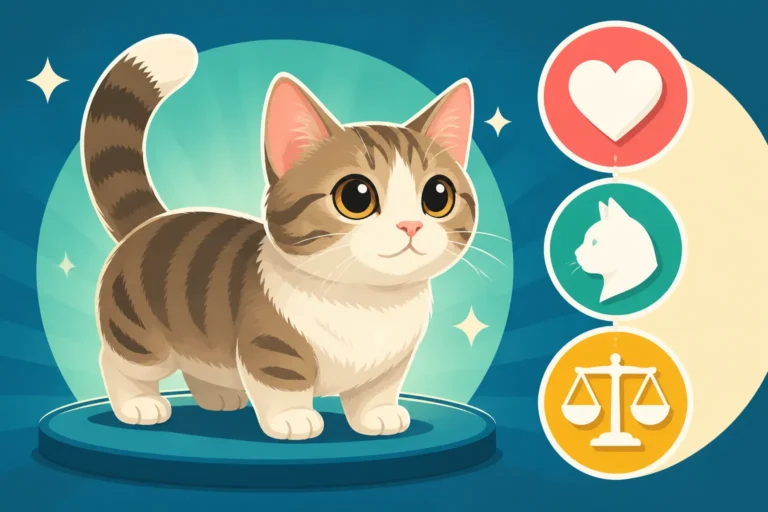
Supporters and critics have often disagreed about how much can be inferred from appearance alone, what health evidence is sufficient, and how to balance an individual cat’s quality of life against concerns about the breeding process. Those are difficult questions, especially when research is limited or findings are contested. A show can make a trait visible, but it cannot answer those questions on its own.
That tension became part of the breed’s public story. TICA’s later recognition and other organizations’ refusal to recognize the breed show that institutional views differed, too. For a closer look at that disagreement, see Why a Judge Resigned Over the Munchkin and Why CFA Refuses to Register the Munchkin. The public reaction was not an isolated burst of amusement; it was an early glimpse of a debate that would continue among cat enthusiasts, breeders, veterinarians, and welfare advocates.
| Part of the reaction | What people may have focused on | What that response could not establish |
|---|---|---|
| Curiosity | The cats’ short legs and distinctive shape | Whether the trait affects an individual cat’s health |
| Affection | A familiar cat with an unusual appearance | Whether breeding for that appearance is responsible |
| Skepticism | The possibility that appearance was being prioritized | The health outcome for every Munchkin |
| Debate | Different views about recognition and welfare | A final consensus among the public |
How the show shaped the Munchkin’s public image
Recognition made the debate more visible
A public show can help a breed move from an unfamiliar type of cat to a subject people discuss by name. Once spectators had seen Munchkins in a prominent setting, questions about their origin, breeding, and acceptance became easier to raise. People were no longer debating a hypothetical animal; they had a visible example in mind.
The show did not mean that every cat organization agreed to recognize the breed, nor did it mean that the public response was unanimous. Recognition involves standards and institutional decisions, while a visitor’s reaction is personal. These are related but separate kinds of acceptance. A person can enjoy seeing a Munchkin without supporting its breeding, and a registry’s decision does not dictate what every cat lover thinks.
The breed’s path after that initial exposure helps explain why the first reaction still matters. TICA later moved the Munchkin through its development process, while other organizations maintained different positions. You can read more in What TICA Registered the Munchkin As in 1994 and What Championship Status Changed for the Munchkin. Those developments gave the discussion a formal setting, but they did not erase the questions that spectators had first raised.
Media attention turned a first impression into a lasting story
A visually distinctive animal is easy to feature in photographs and television segments. That kind of exposure can introduce a breed to people who would never attend a show. It can also simplify a complicated subject: a short clip may show how a cat looks or moves, but it cannot explain a breeding program, describe a full veterinary assessment, or represent the experience of every cat in the breed.
This can leave viewers with two very different impressions. One person may remember an appealing, playful cat. Another may remember a physical trait that prompted concern. Neither brief impression is the same as careful evaluation. The most useful response is to treat media attention as a reason to ask better questions, not as proof that the breed is either harmless or inherently unhealthy.
The Munchkin story is also a reminder that public popularity and welfare discussions can grow together. As curiosity increased, the breed’s appearance became more familiar, while objections to breeding for short legs remained part of the conversation. For a broader view of how the argument has evolved, see What Forty Years Have Done to the Munchkin Argument.
What the first reaction can tell us today
Separate an individual cat from the breeding debate
It is possible to care about a Munchkin cat as an individual and still have questions about how the breed is produced. That distinction helps keep conversations fair. The cat in front of you did not choose its body, and a debate about breeding should not become an excuse to mock or dismiss an individual animal.
At the same time, finding a cat appealing is not enough to answer questions about health or ethics. Anyone considering a Munchkin should look beyond photographs and promotional language. Ask how the cat moves, what health checks have been performed, what information is available about its relatives, and how the breeder responds to welfare concerns. A responsible discussion makes room for evidence and uncertainty rather than relying only on a cute first impression.
It also helps to understand the broader background. Whether Buying a Munchkin Is an Ethical Decision explores the difficult choices behind that question, while Which Household a Munchkin Fits can help prospective owners think about day-to-day suitability. Those topics are more useful than treating public enthusiasm or criticism as a verdict on every cat.
Turn curiosity into practical, careful questions
If the first show—or a photo or video you saw later—made you curious, start by separating what you can observe from what you need to investigate. You can observe a cat’s visible proportions and behavior in a clip. You cannot determine from a still image alone whether it is comfortable, how its health has been assessed, or whether its breeder makes careful decisions.
For people who already own a Munchkin, practical care questions are different from the public debate about the breed. A household may need to consider accessible routes, comfortable resting places, and grooming needs based on the individual cat. Retailers such as Chewy may be one place to compare general pet supplies, but a shopping listing cannot assess a cat’s health or replace veterinary advice. The useful starting point is the animal’s actual needs, not the novelty that first caught a viewer’s attention.
The first public reaction at Madison Square Garden is best understood as an opening scene, not a final judgment. The cats attracted affection and attention because they looked different; that same difference raised questions that remain relevant. A thoughtful view can acknowledge both facts: people may be charmed by an individual Munchkin, and they may still want careful, honest discussion about breeding and welfare.
Disclaimer
This article is for general informational purposes only and does not constitute professional advice. Laws, prices and regulations vary by location and change over time. Consult a qualified professional for guidance on your specific situation.