The Munchkin Holds the Shortest Cat Record
It's quite a common thing to be captivated by the adorable, distinctive appearance of a Munchkin cat. Their famously short legs are a huge part of their charm, and it's natural to wonder just how short they actually are, especially when you hear whispers about world records for the shortest cat. This guide is here to dive deep into the fascinating world of the Munchkin's unique stature, exploring the genetics behind those little legs, the record-breaking felines, and what it truly means for their daily lives and care.
The Allure of the Munchkin's Stature
There's no denying that the Munchkin's short legs are their most defining feature. They are often described as "dachshunds of the cat world," and for good reason! This unique physical trait is what draws so many people to the breed, creating a widespread fascination. But beyond the immediate "aww" factor, there's a real science and history behind how these cats came to be, and how their physical characteristics are understood and even celebrated within the cat fancy.
Understanding the Munchkin's Unique Dwarfism
What we see as short legs in a Munchkin is actually a form of dwarfism, specifically known as pseudoachondroplasia. Unlike some forms of dwarfism that affect overall body size and health in profound ways, pseudoachondroplasia in Munchkins primarily impacts the length of the long bones in their legs. This means their bodies, heads, and tails are generally proportioned like any other domestic cat, just closer to the ground. It’s a crucial distinction, because it differentiates them from other dwarf breeds or health conditions that might affect their overall development or cause severe systemic issues. It's often misunderstood, leading to a lot of questions about their general well-being.
Many people worry that this means their internal organs are squashed or that they suffer from immense pain, but this isn't typically the case with the Munchkin's specific genetic mutation. Their torso and spine are a normal length, and their internal organs have ample space. The term "dwarfism" itself can sometimes conjure up images of widespread skeletal deformities, which is why it's so important to understand the specific type of dwarfism at play here. It’s about understanding What Pseudoachondroplasia Does to a Munchkin's Legs and how it differs from other genetic conditions.
The Genetic Basis for Short Legs
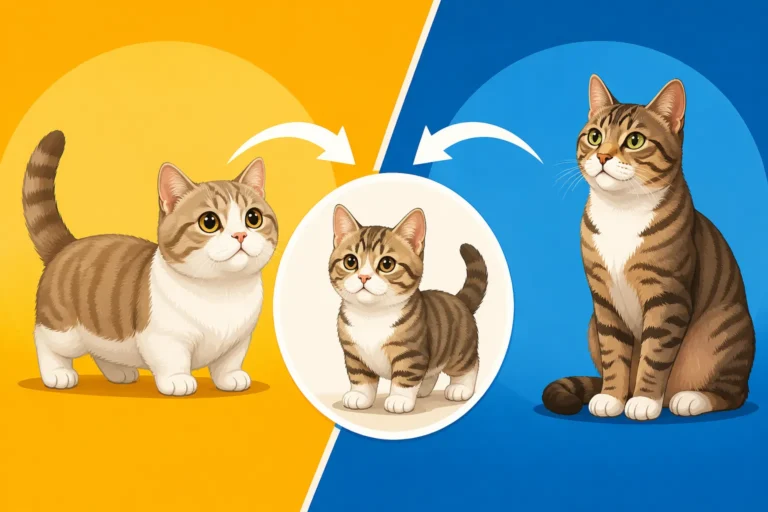
The short legs of a Munchkin cat are due to a spontaneous genetic mutation, an autosomal dominant gene. What does that mean in plain English? It means that a cat only needs one copy of this gene to have short legs. If a kitten inherits even one copy from a parent, it will have the characteristic short legs. If it doesn't inherit a copy, it will have normal-length legs, even if its parent was a Munchkin. This is why when you breed a Munchkin to a regular domestic cat, you'll get a mix of short-legged and normal-legged kittens in the litter.
There's another fascinating and sobering aspect to this gene: if a kitten inherits two copies of the short-leg gene (one from each parent), it’s considered lethal. These embryos typically do not survive past gestation. This is why responsible breeders will always outcross a Munchkin with a normal-legged cat, never breeding two short-legged Munchkins together. It's a critical ethical consideration and understanding that Munchkin Dwarfism Is Dominant and Lethal in Two Copies is fundamental to appreciating the breed's genetics. This practice ensures the health and viability of the litter, keeping the breed line strong and minimizing genetic risks.
How Short is "Short" in a Munchkin?
When we talk about Munchkin legs being "short," how short are we really talking about? It's not just a subjective observation; there are actual classifications and measurements involved, especially in the world of cat shows. Generally, their legs are significantly shorter than a typical domestic cat, often only about half the length. However, there's a spectrum even within the breed. Some Munchkins have what's called "standard" length legs for the breed, while others are referred to as "rug huggers" because their legs are even shorter, making their bellies appear to almost graze the ground.
This variation in leg length means that while all Munchkins share the core trait, their individual mobility and how they interact with their environment can differ slightly. A "rug hugger" might have a harder time with even slightly elevated surfaces than a "standard" Munchkin. It's not a precise measurement like inches often, but more of a classification based on their overall appearance and how close their body sits to the floor. These distinctions are important for both breeders aiming for a particular look (within ethical limits, of course) and for owners to understand their cat's specific needs and capabilities.
The Genesis of the Shortest Cat Record
The idea of a "shortest cat" record naturally brings the Munchkin breed into the spotlight. Their defining characteristic makes them prime candidates for such a title, and indeed, a Munchkin has held this prestigious (and sometimes controversial) honor. It highlights the extreme end of their unique physical trait and often sparks further debate about the breed itself.
Setting the Record Straight: The Guinness World Record
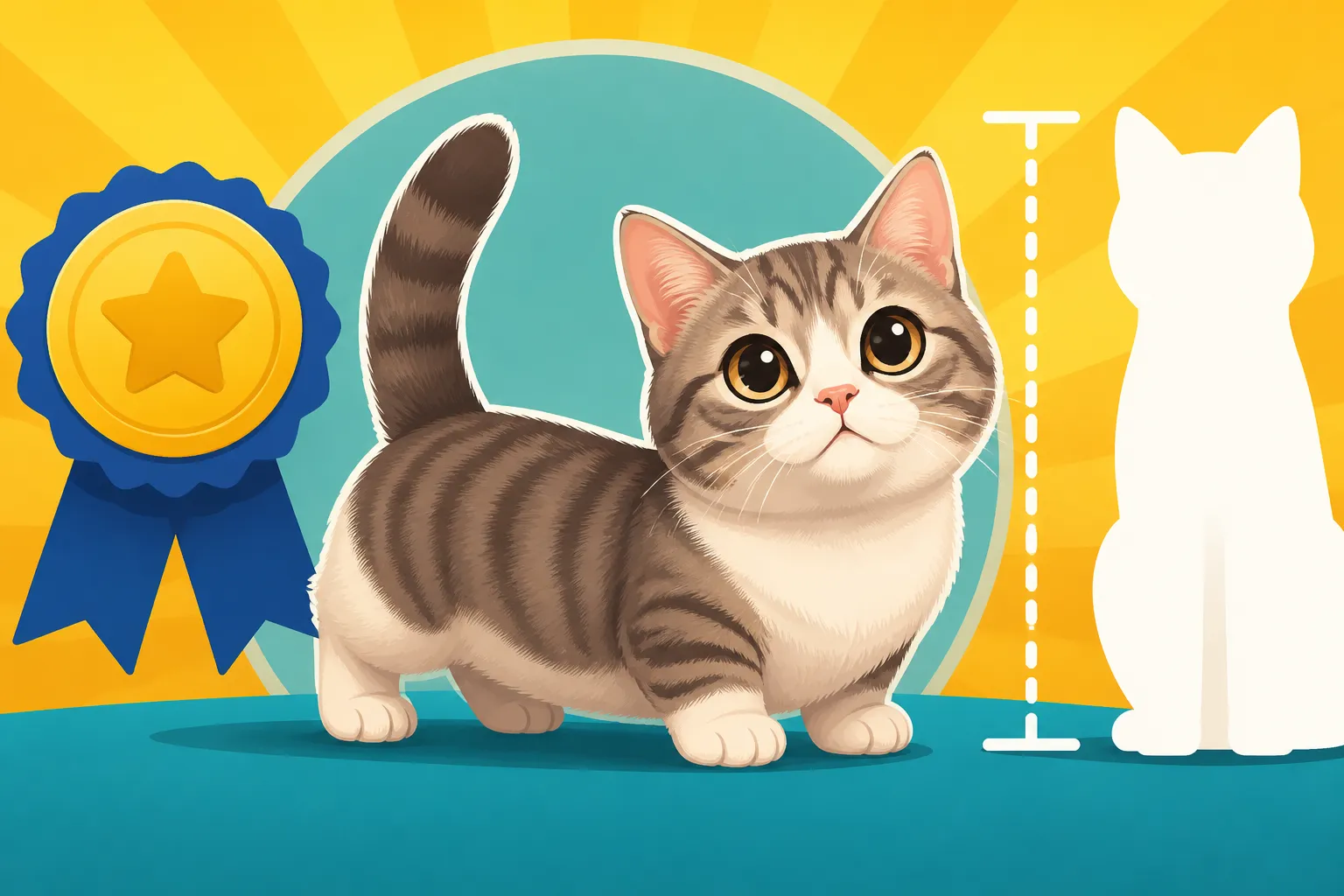
For many years, the Guinness World Records recognized "the shortest cat" as a specific category. This recognition, while exciting for owners and fans of the breed, also drew considerable attention, both positive and negative, to the Munchkin cat. The record itself wasn't just about finding any short cat; it had strict criteria, requiring official measurements and verification. This involved veterinarians and meticulous documentation to ensure the title was legitimately awarded. The existence of such a record inadvertently put the Munchkin cat on a global stage, introducing the breed to many who might not have heard of it otherwise and solidifying its image as the "cat with the short legs."
The record-setting Munchkins became ambassadors of sorts, albeit unintentionally, for the breed, igniting conversations about feline genetics, breed standards, and animal welfare. It brought a certain level of fame, but also scrutiny, to these already much-discussed cats. It’s a testament to the Munchkin's distinctiveness that it so easily fits into a category like this.
Who Was Lilieput? The Famous Record Holder
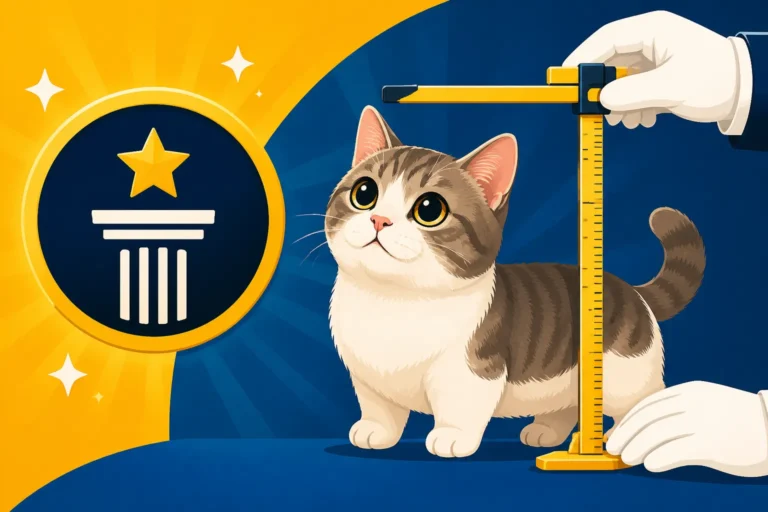
One of the most famous shortest cat record holders was a Munchkin cat named Lilieput. Hailing from Napa, California, Lilieput was a female Munchkin who held the Guinness World Record for the shortest living domestic cat from 2013. Her measurements were truly astonishing, confirming just how compact a Munchkin could be while still living a healthy, active life. Her shoulder height, which is the standard measurement point, was measured at just over 5.25 inches (13.34 cm).
Lilieput became quite the sensation, a poster child for the breed's unique physical characteristics. Her story helped illustrate that despite their unusual stature, Munchkins can be vibrant, playful, and well-adjusted pets. She showed the world that these cats are more than just their short legs; they are individuals with big personalities packed into small packages. Her fame brought both admiration and curiosity, encouraging people to learn more about the breed and its specific needs.
How Measurement Occurs for the Record
Measuring a cat for a world record isn't as simple as just holding a ruler next to them. It requires a precise, standardized method to ensure fairness and accuracy. For the "shortest cat" category, the measurement typically focuses on the cat's height from the shoulders to the floor. This needs to be done with the cat standing naturally on all fours, not crouched or stretched, to get an accurate representation of its true standing height. Often, multiple measurements are taken by different professionals, including veterinarians, to ensure consistency and minimize error.
Imagine trying to get a wiggly cat to stand perfectly still for this! It's definitely a challenge that requires patience and expertise. The process highlights the dedication of the owners and the rigorous standards of record-keeping organizations. This careful approach is essential, as the title itself generates so much public interest and discussion. It’s about validating the physical reality of the cat's unique conformation.
The TICA Standard and Leg Length Categories
When we talk about purebred cats, official breed standards are everything. These guidelines, set by registries like The International Cat Association (TICA), define the ideal characteristics of a breed. For Munchkins, leg length is, understandably, a central part of their standard, but it’s not just about being "short." There are nuances and specific descriptions that help guide breeders and judges.
What the TICA Standard Asks For in Leg Length
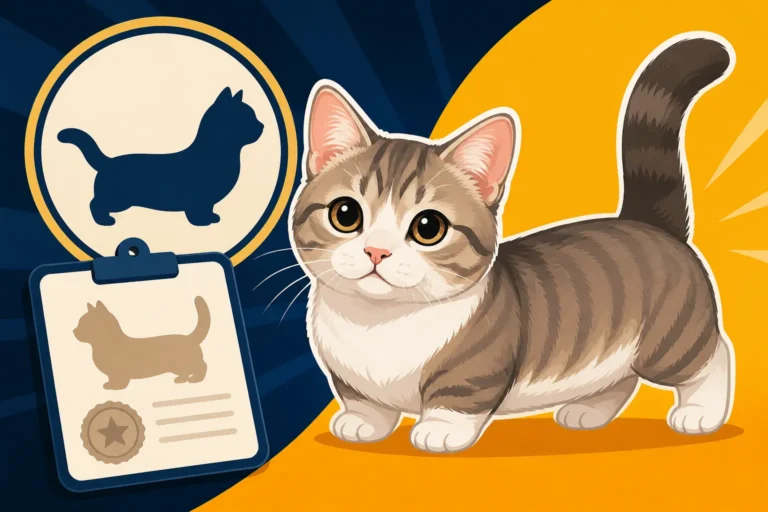
TICA, being the primary registry that accepts the Munchkin cat, has a detailed breed standard that describes the desired leg length. The standard doesn't ask for the absolute shortest cat possible, but rather for legs that are "proportionate to the body," albeit distinctly short. It emphasizes that the legs should be well-muscled and of equal length, creating a balanced appearance. The front legs may appear slightly bowed, which is often a characteristic of the breed, but severe bowing or conditions that impede movement are considered faults. The standard essentially seeks a functional, healthy short-legged cat, not one whose legs are so short they hinder its natural feline movements.
This careful wording in the TICA standard is a response to the ongoing ethical debates surrounding the breed. It aims to promote responsible breeding practices that prioritize health and mobility while celebrating the unique aesthetic of the Munchkin. A good breeder will always strive to meet this standard, ensuring their cats are not only beautiful but also well-structured.
The Difference Between "Standard" and "Rug Hugger"
Within the Munchkin breed, you'll often hear terms like "standard" and "rug hugger" (or sometimes "super short") used to describe leg length. These aren't official TICA classifications but rather common descriptors used by breeders and enthusiasts.
- Standard Munchkin: These cats have the characteristic short legs, but they are generally longer than what would be considered a "rug hugger." They still sit low to the ground, but they might have a bit more clearance underneath them, allowing for a slightly wider range of motion, though still very much a short-legged cat. They might manage low jumps to a sofa with a bit more ease. What a Standard Munchkin Is is quite specific in terms of its overall proportion.
- Rug Hugger / Super Short Munchkin: These Munchkins have exceptionally short legs, often with their bellies almost touching the ground. They truly "hug the rug." While adorable, their extreme shortness can mean a slightly more limited vertical reach and potentially a greater need for household adaptations, like ramps for low furniture. They are often highly sought after by those who prioritize the unique look, but this also places a greater responsibility on the owner to provide a fully accessible environment.
Here's a quick comparison of these informal categories:
| Leg Length Category | Description | Mobility Notes | Common Perception |
|---|---|---|---|
| Standard | Short, but proportionate; good clearance. | Can often manage low jumps to chairs/sofas. | "Regular" short-legged Munchkin. |
| Rug Hugger | Exceptionally short legs; belly close to the ground. | More limited jumping; relies heavily on ramps. | The "shortest" or "most extreme" Munchkin. |
Why Leg Length Is Judged in the Show Ring
In TICA cat shows, the Munchkin's leg length is a critical component of its judging. Judges are looking for cats that conform to the breed standard, which includes specific guidelines on how the legs should appear. They are checking for well-boned, well-muscled legs that are appropriate for the cat's body size. They'll assess the forelegs for any excessive bowing and observe the cat's gait to ensure it moves freely and without apparent discomfort. While the goal isn't necessarily to find the shortest cat, it is to find a cat whose short legs are a testament to healthy, balanced conformation.
A Munchkin that is too long-legged for the breed standard, or conversely, one with legs so disproportionately short that they cause an awkward gait or apparent difficulty in movement, might be faulted. It’s a fine balance, and judges are trained to spot both adherence to and deviation from the ideal. This meticulous judging process helps to maintain the integrity of the breed and encourages breeders to prioritize the health and functional mobility of their cats within the context of their unique dwarfism.
Life on Four Short Legs: Adaptations and Mobility
Living with a Munchkin cat means understanding and appreciating their unique physical capabilities and limitations. They are incredibly adaptable and resourceful, but their short legs do mean they navigate the world a little differently than their long-legged feline cousins. It's a wonderful journey of discovery for owners to learn how their Munchkin interacts with their environment.
How Munchkins Navigate Their World
Munchkins are not deterred by their short legs; they simply find alternative ways to get around! While they can jump, their vertical leap is significantly more limited than a normal-legged cat. Instead of soaring to the top of a tall cat tree in one bound, they become masters of creative climbing. They might use furniture as a staircase, hopping from a low footstool to a chair, and then to a sofa, strategically using every available surface to reach their desired height. They are surprisingly agile on the ground, often described as having a ferret-like gait, capable of bursts of speed and quick turns. A Munchkin Is a Normal Cat That Cannot Reach but it will find a way to get near what it wants.
This ingenuity is one of the most charming aspects of their personality. They are problem-solvers, constantly assessing their environment for the easiest, most efficient route. They'll often launch themselves repeatedly at a surface, figuring out the angle or intermediate step needed to get there. Their resilience and determination are truly inspiring, making them a joy to watch as they go about their day. It’s all part of their normal, playful exploration.
The "Prairie Dog Sit" and Its Purpose
One of the most endearing and unique behaviors of a Munchkin is what's affectionately known as the "prairie dog sit." You'll often see them sitting upright on their hind legs, with their short front paws dangling, resembling a prairie dog peering over tall grass. This posture allows them to get a better view of their surroundings, compensating for their low stature. It's their way of elevating themselves just enough to see what's happening on the kitchen counter, or to get a better look at a bird outside the window.
This behavior isn't just cute; it's a functional adaptation. They use it to survey their territory, observe new objects, or simply satisfy their natural curiosity. While it might look strenuous, most Munchkins do it effortlessly and hold the pose for surprising lengths of time. It's a clear illustration of how their body has adapted to their unique leg length. The Prairie Dog Sit Only a Munchkin Does is a distinctive characteristic that often captivates new owners and reminds us of their clever adaptations.
The Limitations and How Owners Compensate
Despite their incredible adaptability, Munchkins do have limitations due to their short legs, and responsible owners are always ready to compensate. High shelves, tall cat trees without closely spaced platforms, and even some standard litter boxes can be inaccessible or difficult for them. Owners often find themselves "Munchkin-proofing" their homes, much like one might child-proof. This means investing in things like pet steps or ramps for beds and sofas, ensuring all food and water bowls are easily reachable, and sometimes even modifying existing furniture.
One of the most important adaptations is providing a low-entry litter box. Many standard boxes have high sides that a Munchkin might struggle to climb over, potentially leading to accidents outside the box. A senior cat litter box or one with a specially designed low front is often ideal. Similarly, their favorite sleeping spots might need ramps or steps if they are on elevated surfaces. Ramps and Steps Are Munchkin Equipment, Not Luxuries for this breed, essential for their comfort and safety. Companies like Chewy offer a great selection of pet steps and ramps, making it easier for owners to adapt their homes and ensure their little ones can reach all their favorite spots without strain. These adaptations are not just for convenience; they help protect a Munchkin's spine and joints from repetitive stress injuries from jumping down from heights.
Health Considerations Related to Short Legs
Any breed with a unique physical characteristic like the Munchkin's short legs inevitably raises questions about health. It's crucial for prospective and current owners to be informed about potential issues and how to best care for their feline companions. While many Munchkins live perfectly healthy lives, awareness is key.
Spinal Health and Lordosis Concerns
One of the most frequently discussed health concerns for Munchkins is related to their spine, specifically a condition called Lordosis. Lordosis is a spinal deformity where the spine curves downwards, creating a visible dip behind the shoulders. While not exclusive to Munchkins, it's a concern due to their unique body structure. In severe cases, Lordosis can compress the internal organs, leading to breathing difficulties, digestive issues, and a significantly reduced quality of life. It’s important to remember that a Munchkin's spine is a normal length, and the issue is not with the length itself, but rather the potential for this abnormal curvature.
Not all Munchkins develop Lordosis, and many breeders actively screen their breeding cats to reduce its incidence. Reputable breeders will be transparent about their lines and any history of this condition. Early detection is key, and regular veterinary check-ups are essential, especially during kittenhood, to monitor spinal development. Understanding Lordosis Is the Spinal Curve the Munchkin Argument Is About helps owners ask the right questions and observe their cats for any signs.
Joint Stress and Arthritis in Munchkins
With their short legs, Munchkins naturally put different stresses on their joints compared to long-legged cats. Their leg bones, while strong, are under different leverage. This can potentially lead to earlier onset of arthritis, particularly in their shoulders, elbows, and hips. Think about how they land after a jump – the impact is absorbed by those shorter limbs, which bear the brunt of the force. Over a lifetime, this repetitive stress can contribute to wear and tear on the cartilage and joints.
Owners should be vigilant for signs of joint discomfort as their Munchkin ages, such as reluctance to jump, stiffness, or changes in gait. Providing joint-supporting supplements, often found at pet retailers like Chewy, can be beneficial, as can maintaining a healthy weight to reduce load on the joints. How Arthritis Shows in a Munchkin's Front Legs can be a subtle but important indicator of early joint issues. Creating a home environment that minimizes the need for high jumps is also paramount, using ramps and steps to ease their access to favorite spots.
The Importance of Weight Management
For any cat, maintaining a healthy weight is important, but for a Munchkin, it's absolutely critical. Every extra pound or even ounce places a disproportionate amount of stress on their already uniquely structured spine and joints. An overweight Munchkin is at a much higher risk of developing or exacerbating conditions like Lordosis and arthritis. Their short legs are simply not designed to carry excessive weight, and the consequences can severely impact their mobility and overall quality of life. Why Weight Is More Dangerous on a Munchkin is a fact every owner must take seriously.
A lean Munchkin moves with surprising agility and grace, but an overweight one will struggle with even simple movements, making jumps impossible and daily activities a chore. Regular weighing, careful portion control, and a high-quality diet are non-negotiable for Munchkin owners. Consulting with a vet to establish an ideal weight range and feeding plan is highly recommended. Active play, even if it's floor-level chasing wand toys, can also help keep them fit and prevent unnecessary weight gain.
Ethical Debates and Responsible Ownership
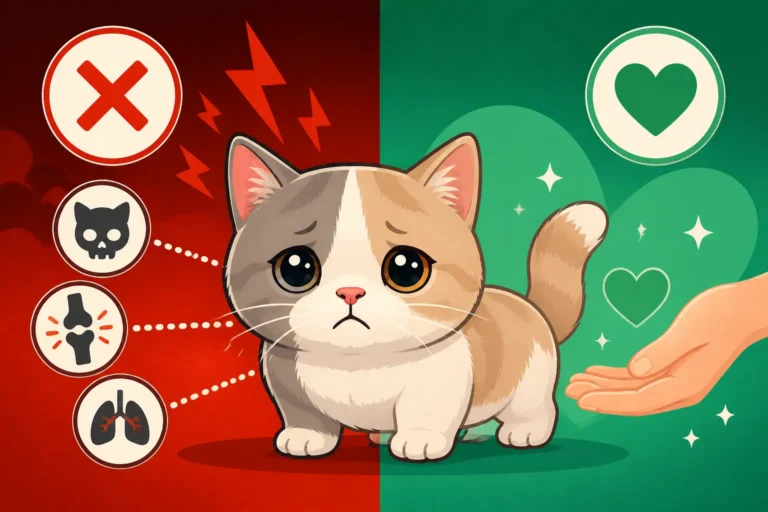
The Munchkin cat is undoubtedly one of the most controversial breeds in the feline world. Their unique appearance stems from a genetic mutation that many animal welfare organizations and some veterinary bodies deem detrimental. This doesn't mean Munchkin owners don't adore their cats, but it does mean responsible ownership comes with an added layer of consideration and a commitment to ensuring their cat's well-being above all else.
The Controversy Surrounding the Breed
The debate over the Munchkin cat centers on the ethics of breeding for a physical trait that is a genetic mutation. Opponents argue that breeding a cat with achondroplasia, even in its milder form, is inherently irresponsible as it potentially compromises the animal's health and natural mobility. They point to the risks of spinal issues like Lordosis and the potential for premature arthritis as evidence of welfare concerns. Some countries and cat registries, such as the GCCF in the UK, outright refuse to recognize or register the Munchkin breed due to these ethical considerations.
Proponents of the breed, including TICA, which granted the Munchkin championship status, argue that Munchkins are generally healthy, active, and suffer no more health issues than many other purebred cats. They emphasize responsible breeding practices, outcrossing with healthy domestic cats, and carefully monitoring for genetic conditions. This division within the cat fancy makes it a breed that truly Why the Munchkin Divides the Cat Fancy More Than Any Breed, often leaving prospective owners feeling caught in the middle.
Finding a Reputable Breeder
Given the ethical complexities, finding a reputable Munchkin breeder is paramount. A responsible breeder prioritizes the health and welfare of their cats above all else, not just their appearance. Here's what to look for:
- Health Screening: They should screen their breeding cats for genetic conditions and be transparent about the health history of their lines. They should have records of veterinary check-ups and clearances.
- No Double Doses: They will never breed two short-legged Munchkins together due to the lethal homozygous gene. They will always outcross with a normal-legged cat. Ask them to explain Why Two Short Legged Munchkins Are Never Bred Together.
- Environment: Their cats and kittens should be raised in a clean, stimulating, and adapted home environment. Look for ramps, low furniture, and easy-to-access litter boxes.
- Transparency: A good breeder will be open to answering all your questions, providing references, and allowing you to visit their cattery (or offer video tours if an in-person visit isn't possible). They should be able to tell you What a Munchkin Breeder Should Be Able to Show You regarding their practices and health records.
- Contracts & Guarantees: They should offer a written contract that outlines health guarantees and spay/neuter agreements, and they should be genuinely interested in your ability to provide a suitable, adapted home for their kitten.
Ensuring a Munchkin's Quality of Life
Ultimately, the quality of a Munchkin's life rests heavily on its owner. Providing an adapted, safe, and enriching environment is crucial. This means:
- Accessibility: Ensure all necessary surfaces (beds, sofas, window sills) are accessible via ramps or steps.
- Weight Management: Strict dietary control is essential to prevent obesity and reduce strain on their joints and spine.
- Regular Vet Care: Routine check-ups, with a vet who understands the breed's unique conformation, are vital for monitoring spinal and joint health. Ask your vet about Which Health Problems the Munchkin Actually Has.
- Grooming: Due to their low stature, some Munchkins, especially long-haired varieties, may struggle to groom their hindquarters thoroughly. Regular brushing and occasional "sanitary clips" might be necessary to prevent matting and skin issues. You can find excellent grooming tools on Chewy.
- Enrichment: Despite their limitations, Munchkins are playful and curious. Provide plenty of floor-level toys, puzzle feeders, and interactive playtime to keep them mentally and physically stimulated. A Munchkin Is a Normal Cat That Cannot Reach but can still have a rich, full life with the right provisions.
Beyond the Record: The Munchkin's Personality
While their short legs are the first thing people notice, the Munchkin's personality is truly what captures hearts. They are often described as confident, outgoing, and incredibly affectionate. Owners consistently rave about their playful nature and their ability to bring endless joy into a home.
Playfulness and Curiosity on a Low Profile
Munchkins are known for their perpetual kitten-like playfulness, which often extends well into their adult years. They love to chase, pounce, and bat at toys, exhibiting bursts of speed and agility that often surprise people who assume their short legs limit them. They are incredibly curious, exploring every nook and cranny of their home, often wiggling into spaces that larger cats wouldn't dream of. This low-profile exploration means they might discover forgotten dust bunnies or hidden treasures under furniture that normal-legged cats overlook.
Their curiosity isn't just about exploring; it's about engaging with their world. They love interactive toys, especially wand toys that can be kept at their eye level, allowing them to participate fully in playtime. While they might not be scaling the highest shelves, their ground-level antics are endlessly entertaining, demonstrating that a fulfilling life doesn't require vertical prowess.
Social Nature and Interactions
Munchkins are typically very social cats who thrive on interaction with their human families and often other pets. They are usually quite gregarious and enjoy being part of household activities, preferring to follow their owners from room to room rather than being left alone for long periods. They're known for being sweet-natured and affectionate, enjoying cuddles and lap time. Their gentle disposition makes them generally good companions for well-behaved children and other pet-friendly animals, though careful introductions are always key.
Because they can't easily jump to escape a boisterous child or an overzealous dog, it's particularly important to ensure their interactions are supervised and positive. They form strong bonds with their families, often greeting them at the door with chirps and purrs. Their desire for companionship makes them ideal pets for households where they'll receive plenty of attention and engagement.
What Makes a Munchkin a Beloved Companion
Beyond their unique looks and quirky movements, Munchkins are cherished companions because of their overall charming demeanor. They combine the playful antics of a kitten with the sweet, loving nature of a devoted feline friend. They adapt remarkably well to indoor living, especially with the right home modifications, and bring a unique blend of curiosity, affection, and entertainment to any family. They're often described as intelligent and responsive, making them engaging pets to train and interact with.
Owning a Munchkin means embracing their individuality and providing a home that celebrates their unique needs. It means appreciating their "prairie dog sit," their ferret-like dashes, and their adorable low-slung waddle. How Long a Munchkin Lives is generally comparable to other domestic cats, meaning they'll be a beloved part of your family for many years, enriching your life with their singular charm and personality. For those who choose to bring a Munchkin into their lives, the rewards are often an endless supply of joy, laughter, and unconditional love from a truly one-of-a-kind cat.
Disclaimer
This article is for general informational purposes only and does not constitute professional advice. Laws, prices and regulations vary by location and change over time. Consult a qualified professional for guidance on your specific situation.