How Guinness Measured the Shortest Munchkin
A record-breaking Munchkin’s height is easy to misunderstand: it is not the length of the cat’s legs, nor the distance from the floor to the top of its head. Guinness measured the cat’s standing height using a specific body landmark. This guide explains what was measured, how the result is reported, and what the record does—and does not—tell you about Munchkin cats.
What Guinness measured on the shortest Munchkin
The record was for standing height
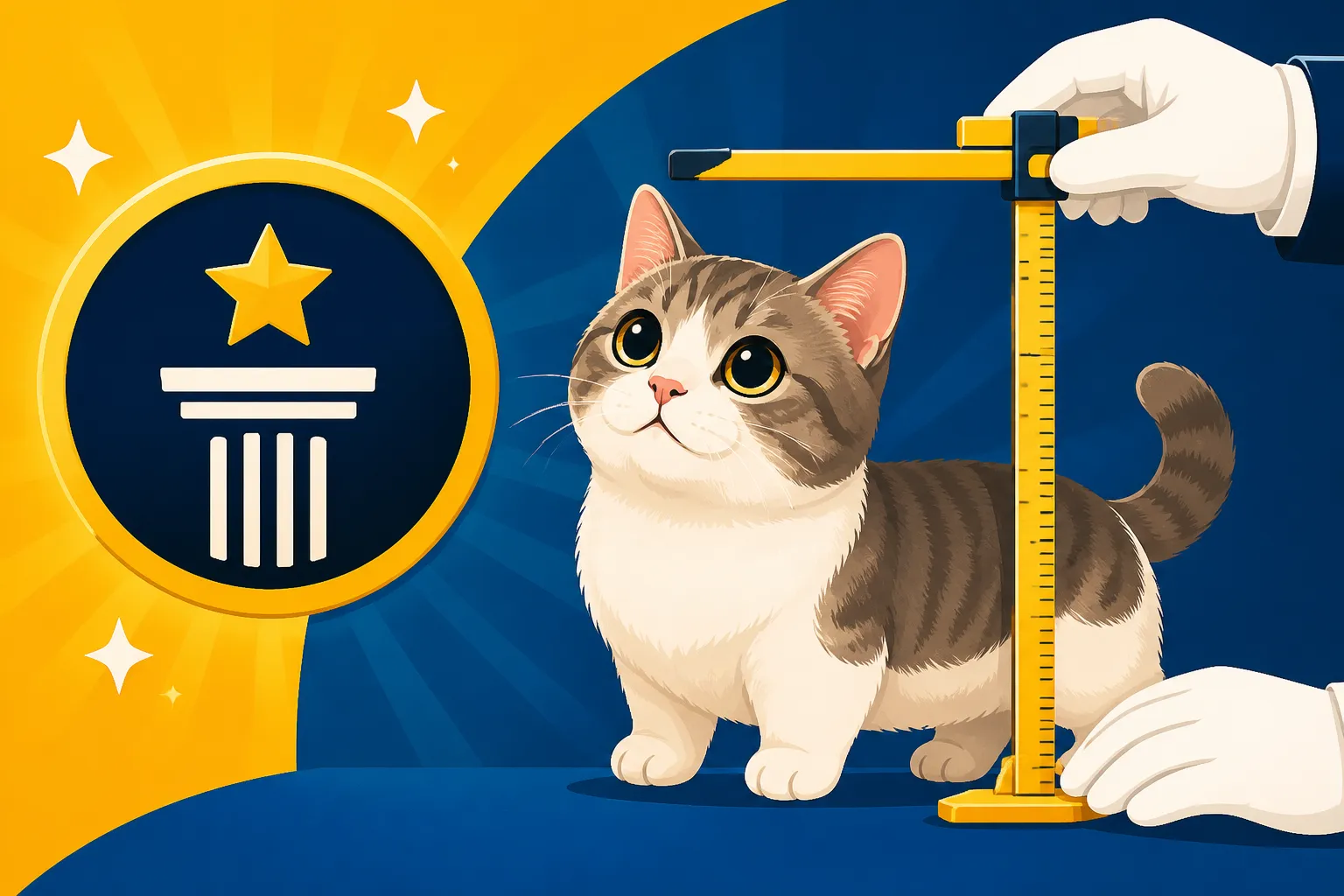
The Guinness record commonly associated with the shortest Munchkin belongs to Lilieput, a female cat owned by Christel Young in Napa, California. Her recorded height was 5.25 inches, or 13.34 centimeters. Guinness reports the measurement as the distance from the floor to the cat’s shoulder area, often described using the anatomical term withers.
The withers are the upper point of the shoulders, where the neck meets the back. Measuring to this point gives a more consistent idea of a cat’s standing height than measuring to the top of the head. A cat can lift, lower, or turn its head, so head height changes with posture. The shoulder landmark is more stable.
That distinction matters because “shortest cat” can sound as though someone measured from the tip of a cat’s ears to its paws, or compared the length of its legs alone. Neither is the useful interpretation of the record. The reported figure describes how high the cat stood at the shoulder when measured.
For more background on the record and the breed, see The Munchkin Holds the Shortest Cat Record and Which Munchkin Holds the Shortest Cat Record.
Height is different from leg length
A Munchkin’s short legs are the feature most people notice first, but leg length and overall standing height are not interchangeable measurements. A cat’s height also reflects its body proportions, posture, and the exact point used for the measurement. Two cats with similarly short legs might not have precisely the same height at the shoulder.
The breed is not simply a short-legged version of a cat whose entire body has been scaled down. Munchkins generally have a body of ordinary length for a domestic cat, supported by shorter legs. That helps explain why a height record is not, by itself, a complete description of the cat’s structure. Why a Munchkin's Body Must Be Normal Length explores that distinction in more detail.
It is also worth separating an individual record from a breed standard. A record identifies an exceptional measurement in a particular cat; it does not define what every Munchkin should measure. The breed’s appearance and the way its legs are assessed are separate topics, covered in What the TICA Munchkin Standard Weights Most and What a Standard Munchkin Leg Length Is.
| Measurement or description | What it refers to | What it does not tell you |
|---|---|---|
| 5.25 inches or 13.34 centimeters | Lilieput’s reported standing height to the shoulder area | The length of her legs alone |
| Withers | The upper shoulder point where the neck meets the back | The top of the head or ears |
| “Shortest cat” record | A record based on a measured individual cat | The typical height or health of every Munchkin |
| Leg length | The length and shape of the limbs | The cat’s full standing height by itself |
Why the withers make a useful landmark
A measurement needs a defined endpoint. Without one, two people could measure the same cat and come up with different figures simply because one chose the head, another chose the shoulder, and the cat shifted between measurements. Using a recognizable anatomical point makes the result easier to interpret and compare.
The withers are useful because they are part of the cat’s trunk and remain in roughly the same place as the cat changes its gaze. The cat still needs to stand naturally and squarely for a meaningful height measurement, but the endpoint is less affected by head movement than the ears or crown would be.
This is also why the record should not be treated as a measurement of how close a cat’s belly comes to the floor. Belly clearance varies with the cat’s stance, body shape, coat, and where along the underside someone is looking. It is a different observation from shoulder height.
How a standing-height measurement is understood
The cat needs a natural standing posture
A standing-height measurement is meaningful only when the cat is upright on all four paws, rather than sitting, crouching, stretching, or leaning. A cat that is startled may lower its body; a curious cat may stretch upward; a relaxed cat may shift its weight. Each posture changes the apparent distance between the floor and the shoulders.
This is a practical challenge with any cat, not only a Munchkin. Cats do not hold a show-ring pose simply because a person has a ruler nearby. A calm setting, a level surface, and a patient handler make it easier to observe a natural stance. Forcing a cat into position can make the result less representative and may distress the animal.
The Guinness figure is a published record, not an invitation to repeatedly pose or stretch a pet at home. If you are curious about your own cat’s size, a gentle, ordinary observation is enough. There is no benefit in trying to make a household measurement look official.
The floor and measuring direction matter
The measurement starts at the floor and runs vertically to the shoulder landmark. A sloping surface, thick bedding, or a soft cushion can change the starting point or allow the cat’s paws to sink. A firm, level surface is easier to interpret than carpet or a mattress.
The measuring direction matters too. Measuring at an angle can produce a longer distance than measuring straight up from the floor. In everyday terms, the measuring tool should be aligned vertically beside the cat, with the endpoint corresponding to the shoulder area—not extended diagonally from the paws to a point on the back.
This explains why a casual measurement at home may not match a formal record figure. The cat’s posture, the surface, the chosen landmark, and the method all affect the result. A household observation can be interesting, but it is not comparable to an officially documented record unless the same method and conditions are established.
A reported result is not a full measurement protocol
The public-facing record figure gives readers a result and identifies what kind of measurement it represents. It should not be used to invent details about every step of the measuring process. Unless a record description specifically provides them, details such as the exact measuring instrument, the number of attempts, or the precise handling procedure should not be assumed.
That caution is useful whenever a record is retold online. A short headline may say “shortest cat,” while a caption gives a height in inches, and later retellings may leave out the shoulder landmark. The result can then sound like a different kind of measurement than it actually is.
A careful explanation keeps to what the record means: Lilieput’s reported height was measured from the floor to the shoulder area. The figure is not a claim about her leg bones in isolation, her body length, or the height of every Munchkin.
What the record does and does not tell you
It documents one cat, not a typical breed measurement
Lilieput’s record is an individual achievement, not an average. It does not show that most Munchkins stand 5.25 inches tall, and it should not be used as a target for breeding or as a standard owners should expect their cats to meet. Individual cats vary, and the record belongs to the particular cat measured.
A striking measurement can easily become shorthand for an entire breed. That shorthand is appealing, especially when a cat’s appearance is unusual, but it can obscure the differences between cats. A Munchkin’s height does not reveal its temperament, mobility, comfort, or overall health.
Likewise, the record does not prove that a shorter cat is healthier, more desirable, or a better example of the breed. A record is a measurement distinction. It is not a veterinary assessment or a welfare ranking.
It does not explain health or quality of life
Height alone cannot tell you whether a cat is comfortable moving around, grooming, playing, or reaching the places it needs to access. Those questions depend on the individual animal and call for observation of behavior and, when there is a concern, veterinary assessment.
A cat’s low profile may make certain everyday tasks look different from those of a longer-legged cat. But seeing a cat move—or seeing one photograph—does not establish whether it is in pain or whether its joints and spine are healthy. That requires more than comparing a number on a record page.
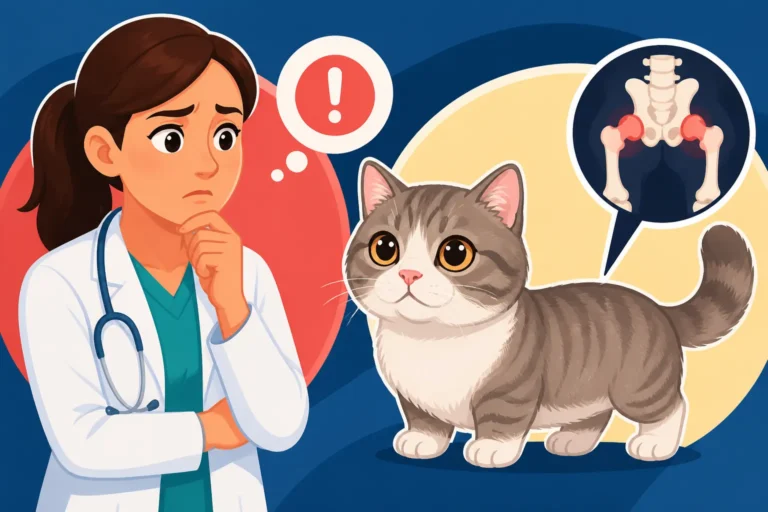
For an overview of the debate about the breed’s health, see Which Health Problems the Munchkin Actually Has and Why Munchkin Spinal Problems Are More Common Than in Other Cats. Those are distinct questions from how Guinness recorded Lilieput’s height, and a record measurement cannot settle them.
It does not turn the record into a breed rule
A breed standard describes the traits considered in evaluating a breed; a Guinness record recognizes an individual’s exceptional measurement. Those purposes are different. A cat can hold a record without that measurement becoming the definition of the breed, and breed-standard descriptions should not be read as promises that every cat will have a particular height.
The word “shortest” can also encourage unhelpful comparisons between cats. If someone is choosing a pet, the record should not be the main measure of suitability. A responsible decision is better grounded in the cat’s health history, observed movement, care needs, and the match between the animal and the household.
If you are looking at a short-legged cat and wondering whether it is a Munchkin, appearance alone may not answer the question. How to Tell a Munchkin From a Cat With Injured Legs explains why a short-legged appearance can have more than one explanation.
How to interpret the Guinness figure carefully
Keep the number and the landmark together
The clearest way to repeat the record is to include both the number and what it measures: Lilieput’s reported standing height was 5.25 inches, or 13.34 centimeters, from the floor to the shoulder area. Leaving out the landmark makes the figure easier to misread as leg length or total body size.
If you see a different number in a caption or social post, check whether it is describing the same cat, the same record, and the same measurement. A figure could refer to another cat, a later claim, or a different dimension entirely. Without that context, numbers that look like contradictions may not be measuring the same thing.
The related page How Tall the Record Holding Munchkin Measured focuses on the height itself, while Whether Any Munchkin Has Beaten That Record addresses the question of later claims. Keeping those questions separate helps prevent a repeated headline from being mistaken for a new official record.
Don’t try to reproduce an official record at home
It is natural to wonder how your own Munchkin compares. If you measure for curiosity, keep the experience calm and brief. Use a firm, level floor, let the cat stand naturally, and avoid pulling, pressing, or stretching its body to improve the number. If the cat is uncomfortable or keeps moving away, stop.
A home measurement should be treated as an informal note, not a competition. Differences in posture and technique can make small variations meaningless. It is more useful to keep an eye on changes in your cat’s movement or comfort than to chase a comparison with a record-holder.
If you notice a new change in gait, reluctance to move, difficulty reaching familiar places, or signs of discomfort, speak with a veterinarian rather than trying to interpret the change through height. A record tells you how one cat’s standing height was reported; it does not provide a diagnostic tool for another cat.
A record is most useful as a precise fact
The Guinness measurement is memorable because it turns an unusual physical trait into a simple number. Its real value, though, comes from understanding what that number represents. Lilieput’s reported 5.25-inch height describes the floor-to-shoulder measurement of one Munchkin cat—not the breed’s average, not a leg-length measurement, and not evidence about health by itself.
When you keep those distinctions in view, the record is easier to appreciate without overreading it. It remains an unusual documented measurement, while questions about breed characteristics, welfare, and an individual cat’s needs are considered on their own terms.
Disclaimer
This article is for general informational purposes only and does not constitute professional advice. Laws, prices and regulations vary by location and change over time. Consult a qualified professional for guidance on your specific situation.