Why the Munchkin Divides the Cat Fancy More Than Any Breed
A Munchkin’s short legs can make the breed look instantly charming, but that same feature is why it prompts unusually strong disagreement among cat enthusiasts, breeders, and animal-welfare advocates. This guide explains what the debate is really about: the breed’s genetics, possible effects on wellbeing, differences between registry policies, and the questions a prospective owner can ask without reducing the issue to a simple yes or no.
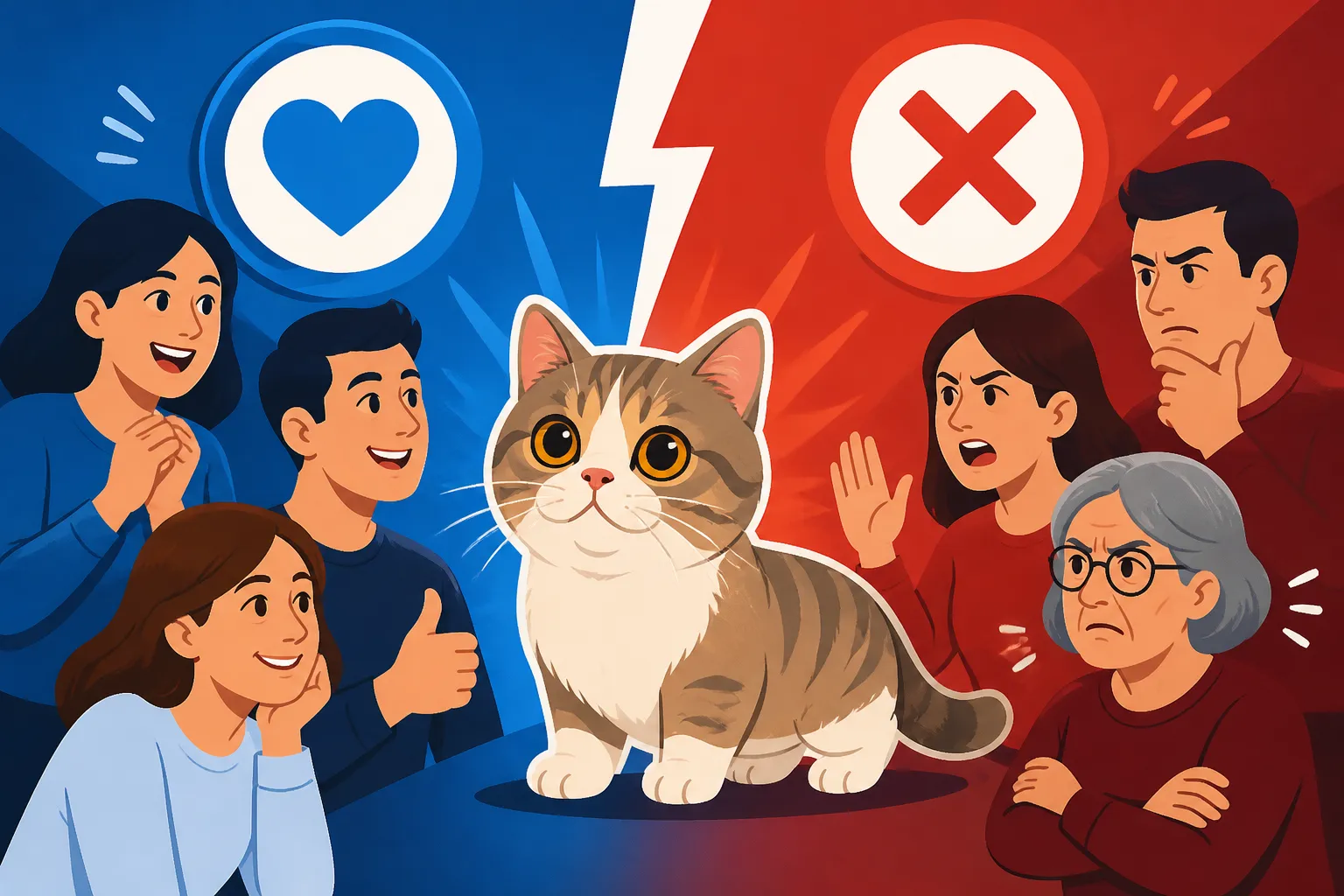
Why the Munchkin divides people
One defining feature, two very different interpretations
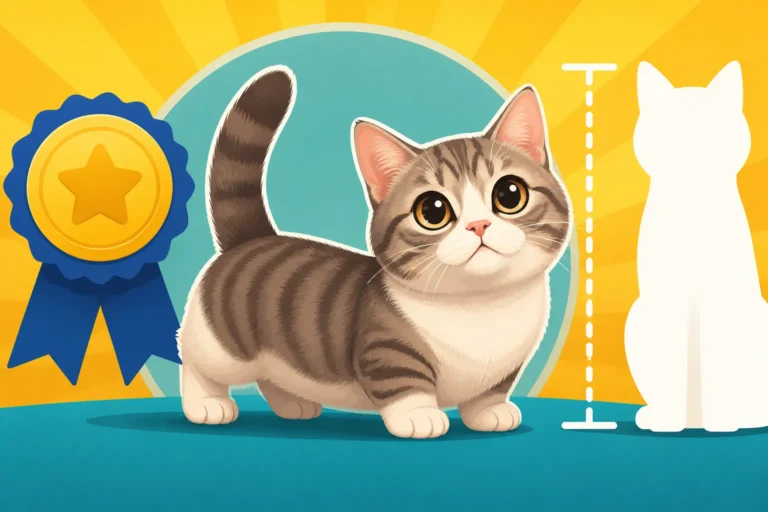
The Munchkin’s short legs are not simply a coat color or a body shape that breeders selected from ordinary variation. They result from a heritable skeletal trait that affects limb length. To admirers, that trait gives the cat a distinctive appearance and does not automatically mean an individual animal is uncomfortable or unable to enjoy a normal life. Many Munchkins run, play, seek company, and explore their homes.
Critics see the same trait differently. They argue that intentionally breeding cats for a physical feature that alters the skeleton may prioritize appearance over function, even if some individual cats appear active and content. The central question is not whether a particular Munchkin can play with a toy. It is whether deliberately reproducing a body structure that may affect movement and access to the environment is ethically justified.
This is why personal anecdotes rarely settle the argument. An owner may know a lively, comfortable Munchkin, while a veterinarian may have concerns about breeding for short limbs as a general practice. Both can be describing real experiences, but neither experience alone answers broader questions about inherited risk across a population.
The debate is about breeding choices, not whether cats deserve care
The argument can become personal very quickly. Some Munchkin owners hear criticism of the breed as an accusation that they do not love their pets. Some critics feel that pointing to an individual cat’s happy behavior is used to dismiss concerns about breeding. That tension can make a practical discussion harder than it needs to be.
It helps to separate two questions. First, how is a particular cat doing right now? That calls for attention to the individual’s comfort, movement, health, and behavior. Second, should cats with this inherited body type be deliberately bred? That is an ethical and population-level question, and it cannot be answered only by observing one well-cared-for pet.
The distinction also matters when discussing adoption. A Munchkin already born needs thoughtful, ordinary veterinary care, just like any other cat. A discussion about whether breeding should continue is not a reason to neglect, shame, or deny care to cats who already exist. The questions to consider when choosing a cat are explored further in Whether a Munchkin Is the Right Cat for You.
What the physical trait means for health and welfare
Short legs do not automatically tell you how a cat feels
A cat’s appearance does not provide a complete health assessment. Short legs alone do not show whether a particular cat is in pain, has joint problems, or can manage everyday activities. A veterinarian should assess the animal in front of them, considering its gait, body condition, mobility, and medical history rather than relying on appearance or breed label alone.
At the same time, being able to walk does not settle every welfare concern. Cats can adapt their behavior around limitations. A cat that avoids a high surface, for instance, may still appear playful and relaxed; an owner might not notice the missed opportunity unless the home is arranged with accessible routes. A useful assessment looks at what the cat can comfortably do, what it routinely avoids, and whether its options are limited compared with its needs.
There is also a difference between a risk that is possible and a condition that is inevitable. Claims that every Munchkin will develop a particular spinal or joint disorder are too sweeping. So are claims that the breed has no distinctive welfare concerns because an individual cat seems healthy. For a closer look at what evidence can and cannot establish, see What the Published Munchkin Health Data Actually Shows.
Genetics is part of the ethical discussion
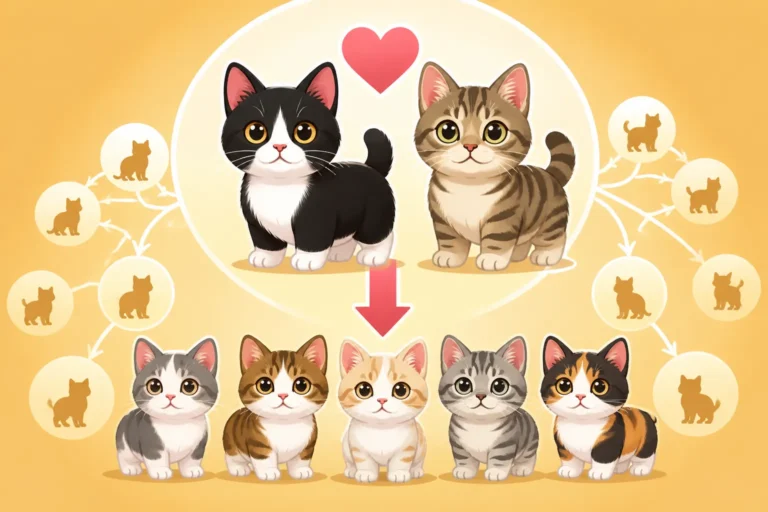
The short-legged trait is inherited, and breeding practices matter. Munchkins are generally bred to normal-legged cats rather than pairing two short-legged Munchkins. This is connected to concerns about inheriting two copies of the relevant mutation. Understanding that breeding pattern helps explain why the issue is more than a disagreement over taste: it involves what traits are passed on, how breeders manage risk, and what happens to kittens that do not have short legs.
That does not mean a prospective owner should try to interpret genetics from a sales listing. A responsible discussion should include the parents, the kittens’ health, the breeder’s mating decisions, veterinary records, and the way the breeder handles any kitten with a health concern. If the answers are vague, or if a seller treats every welfare question as an insult, take that seriously. Munchkin Dwarfism Is Dominant and Lethal in Two Copies explains the inheritance issue in more detail.
A DNA test should not be treated as a shortcut to proving that a kitten will have a particular quality of life. Genetic information can clarify inheritance, but it does not replace examination, observation, or responsible breeding decisions. For the limits of testing and what a buyer should realistically expect, see Whether a Munchkin DNA Test Exists.
Everyday access is a practical welfare question
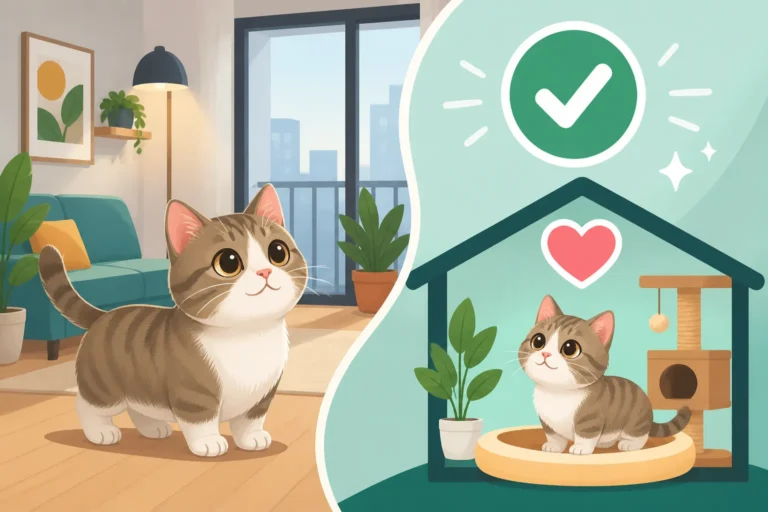
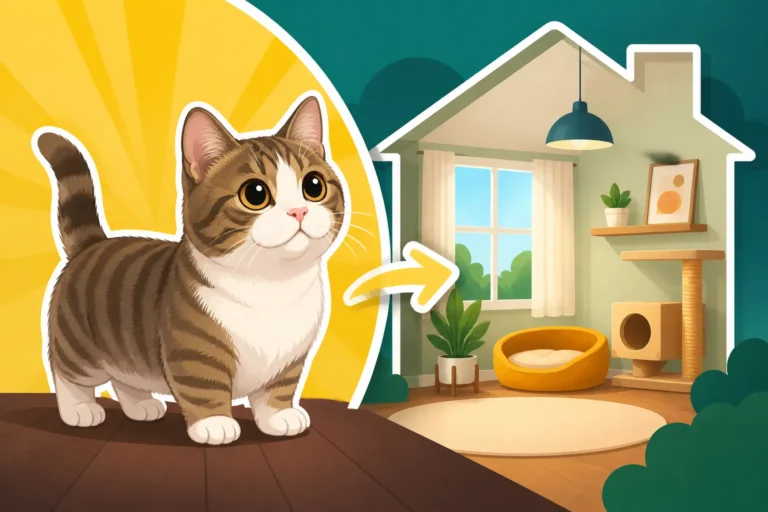
A low body can change how easily a cat reaches a sofa, bed, window, or favorite perch. Some Munchkins find a route using intermediate furniture; others may need ramps or low steps. That is not necessarily a medical emergency, but it is a real part of planning a home. A cat’s welfare includes having safe opportunities to rest, explore, play, and move away from unwanted attention.
A prospective owner can look at the home from cat height. Are food, water, litter, and resting places accessible without repeated difficult jumps? Are floors slippery? Can the cat get to a quiet retreat without having to pass a dog or a busy doorway? These details matter especially in a multi-level home, or where furniture is arranged with large gaps between surfaces.
For practical adjustments, useful reading includes With a Munchkin the House Changes, Not the Cat and Ramps and Steps Are Munchkin Equipment, Not Luxuries. If you are buying basic supplies, retailers such as Chewy may offer low-entry litter boxes, pet steps, and other home-care items. Check that a product is stable, sized appropriately, and comfortable for the individual cat rather than assuming that a label makes it suitable.
Why cat registries and experts disagree
Recognition by a registry is not a health verdict
Cat registries make decisions about breed standards, registration, and showing. Their policies are not identical, and a breed’s acceptance by one organization does not mean every other organization agrees with its breeding or presentation. Likewise, non-recognition by a registry does not by itself prove that every cat of that type is unhealthy.
The Munchkin is accepted for recognition by The International Cat Association, while major registries such as the Cat Fanciers’ Association have not accepted it. The differences reflect distinct policies and judgments about breed development and standards. For background on how those decisions shape what buyers encounter, see TICA Judges the Munchkin and CFA Will Not Register It.
This can be confusing when a seller uses registration as shorthand for “safe,” “ethical,” or “healthy.” Registration may help establish a cat’s recorded lineage within a system, but it is not a substitute for veterinary care, transparent health information, or a careful look at the breeder’s practices. Ask what a document actually confirms and what it does not.
Welfare views focus on breeding policy as well as individual outcomes
Animal-welfare objections often focus on the deliberate reproduction of a physical trait that may affect function. Supporters may respond that Munchkins can be active, cared for, and individually healthy, and that responsible breeding can reduce avoidable risks. These positions do not always disagree about what a particular cat looks like; they may disagree about what evidence should be enough to justify continuing a breeding program.
The difficulty is that research on a relatively small or inconsistently documented breed can leave important questions unanswered. A lack of strong evidence for a specific widespread problem is not proof that no problem exists. But uncertainty alone also does not establish that every Munchkin experiences impairment. Good judgment means being clear about what is known, what remains uncertain, and how that uncertainty affects breeding decisions.
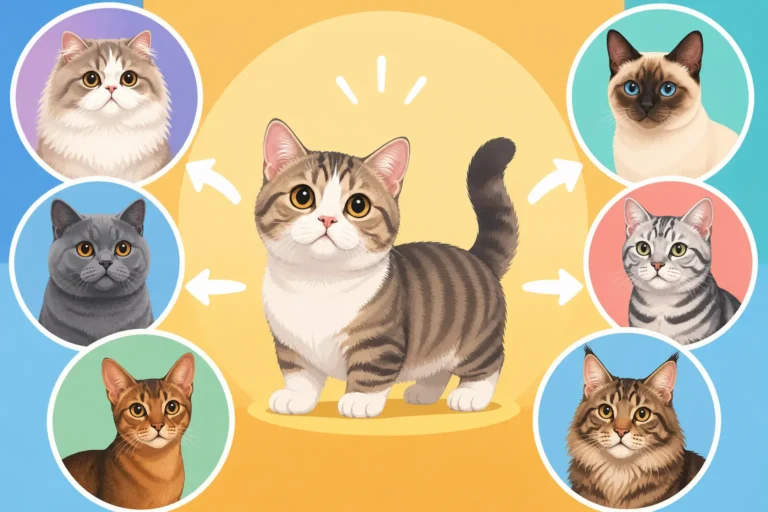
There is a related concern when breeders combine the short-legged trait with another distinctive inherited feature. Some crosses raise questions about stacking traits that may each affect the skeleton or overall health. The general issue is discussed in Why Munchkin Crosses Worry Veterinarians. A buyer should ask what other breeds are in a kitten’s background and whether the combination introduces additional health considerations.
A quick guide to the competing claims
| Question | A careful way to think about it | What not to assume |
|---|---|---|
| Does short-legged appearance prove a cat is in pain? | No; an individual cat needs an individual assessment. | That appearance alone diagnoses pain. |
| Does a playful cat prove the breed has no welfare concerns? | No; one cat’s behavior cannot settle population-level breeding questions. | That a happy anecdote answers every ethical concern. |
| Does registry acceptance guarantee health? | No; registration and veterinary assessment serve different purposes. | That papers certify lifelong health or ethical breeding. |
| Does uncertainty prove the breed is harmful? | No; uncertainty calls for careful claims and responsible decisions. | That an unanswered question is proof either way. |
| Does a home need special planning? | It may; accessible routes and resources can make daily life easier. | That every Munchkin needs the same adaptations. |
How to think through the decision as a prospective owner
Ask questions that reveal the breeder’s priorities
A thoughtful breeder should be able to discuss the kitten’s health, the parents’ movement, the mating choices, and veterinary care without relying only on photographs or claims about temperament. Ask to see kittens moving naturally on a non-slippery surface. A short video can help, but it does not replace seeing the animal in person when that is possible. A cat should not be posed or handled in a way that hides how it walks.
Ask what health checks have been done, what concerns have occurred in the line, and what the breeder would do if a kitten developed a problem. Listen for specific, calm answers. “There are never any issues” is less reassuring than a clear explanation of known risks, monitoring, and the limits of what can be predicted. What a Munchkin Breeder Should Be Able to Show You offers a more detailed checklist.
You can also ask about the kitten’s expected needs at home. Would the breeder recommend steps to a bed or sofa? How does the kitten use a litter box? Has it been accustomed to gentle grooming and handling? These are practical questions, not a way to judge whether a breeder likes the breed. A breeder who takes the cat’s daily experience seriously should be willing to talk about access and care.
Consider the cat’s whole life, not just the kitten stage
A kitten may look energetic and adaptable, but the home should also work as the cat matures. Keep weight under control, make key resources easy to reach, and notice changes in play, grooming, jumping, or gait. A cat that stops using a familiar step or seems reluctant to move may need a veterinary check rather than an assumption that it is simply being stubborn.
Ongoing care can include routine veterinary examinations, a sensible feeding plan, nail care, and help grooming parts the cat struggles to reach. For many owners, the most useful approach is to make small adjustments before a problem becomes obvious: place a stable step beside a favored chair, use a litter box the cat can enter comfortably, and keep resting and feeding areas accessible.
Chewy and similar pet-supply retailers can be one place to look for grooming tools, low-entry boxes, or steps, but product choice should follow the cat’s needs. A tall, narrow stair set that wobbles may be less useful than a lower, wider option with good traction. If your cat has pain or mobility changes, ask a veterinarian before relying on equipment alone. More routine care considerations appear in Why Weight Control Is the Whole Munchkin Care Plan.
Make a decision without relying on slogans
A useful decision is neither “all Munchkins are unhealthy” nor “there is nothing to think about because they are cute.” Consider what is known about the inherited trait, what questions remain, the quality of the breeder’s answers, and whether you can provide an accessible home and appropriate veterinary care. If you feel pressured to make a quick deposit or are discouraged from asking about health, pause rather than letting urgency make the choice for you.
You may also decide that you are comfortable caring for an individual Munchkin but uneasy about supporting intentional breeding. That is a valid distinction. Adoption, rescue, or choosing a different cat may fit your values better. Whatever you decide, assess the actual cat’s behavior and needs with a veterinarian and avoid treating breed identity as a complete health report.
Chewy may help with practical supplies after a cat comes home, but buying the right ramp or litter box cannot resolve the broader ethical debate. Those products address access and comfort; they do not replace responsible breeding or individualized medical care. The most useful approach is to keep those questions separate and take both seriously.
Disclaimer
This article is for general informational purposes only and does not constitute professional advice. Laws, prices and regulations vary by location and change over time. Consult a qualified professional for guidance on your specific situation.