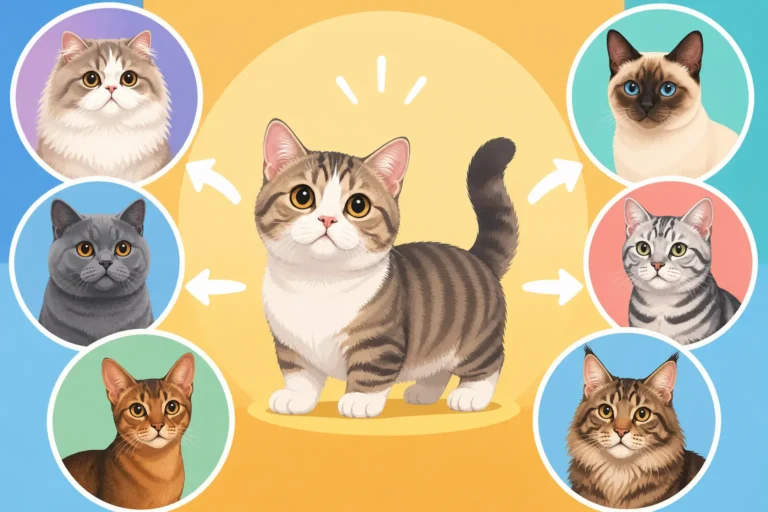
Whether a Munchkin Can Be an Only Cat
A Munchkin can be an only cat, and a second cat is not automatically necessary to keep one happy. The bigger question is whether your cat’s individual temperament, your daily routine, and the home’s layout provide enough company, play, and safe ways to reach what it needs. This guide helps you decide whether solo-cat life fits your Munchkin—and how to set it up well.
Can a Munchkin Be Happy as an Only Cat
Being an only cat is about the individual
Some Munchkins enjoy having the home to themselves; others seek frequent company or seem to thrive around another friendly animal. The breed name alone can’t tell you which kind of companion your cat will be. Personality, early experiences, age, health, and the time people spend at home all influence how a cat handles being the only pet.
A cat who is comfortable alone may nap while you work, explore familiar rooms, and greet you when you return. Another might follow you from room to room, call for attention, or become restless when left without things to do. Those behaviors aren’t proof that an only-cat arrangement is failing, but they are useful clues to observe over time.
If you’re choosing a kitten, ask the breeder or rescue what the kitten is like when littermates are elsewhere. Does it settle after play, investigate new objects, and enjoy people without constantly demanding contact? If you’re adopting an adult, ask how it has responded to other cats and to periods alone. A history of being the sole pet can be helpful, though it doesn’t guarantee every new household will feel the same.
For a broader sense of whether your home and routine may suit the breed, see Whether a Munchkin Is the Right Cat for You and Which Household a Munchkin Fits.
A second cat is not a substitute for your attention
It’s easy to imagine that two cats will keep each other entertained while you’re away. Sometimes they do become close playmates. But adding another cat is not a reliable fix for boredom or separation-related distress: the cats may simply ignore one another, or one may feel unsettled by the newcomer.
Compatibility matters more than the number of cats. A sociable, playful Munchkin may enjoy a gentle companion with a similar activity level. A shy or territorial cat may prefer a predictable, quiet home without a new animal competing for resting spots, food, litter boxes, or human attention. Cats who share a home still need separate resources and a gradual introduction; friendship should never be assumed.
Munchkins also have a physical consideration that can affect social dynamics. Their shorter legs can make some jumps and escape routes harder, so a cat may have fewer options for moving away from a persistent playmate or an overly energetic dog. That doesn’t mean every Munchkin needs to live alone, but it does make the other animal’s temperament, size, and play style especially important. Read Whether a Second Cat Helps or Bullies a Munchkin and Why a Munchkin Cannot Get Away From a Dog before deciding that another pet is the answer.
What Solo Life Requires From You
Plan for company, not constant entertainment
An only cat doesn’t need you to provide nonstop attention. Cats spend plenty of time resting, and a good routine can include independent play and quiet stretches. Still, predictable interaction makes a difference. A few short play sessions around your workday can be more satisfying than leaving out a pile of toys that your cat loses interest in after a few minutes.
Try rotating toys instead of keeping every option available all the time. A wand toy can encourage chasing and pouncing at floor level, while soft toys and lightweight balls give your cat opportunities to play alone. Supervise wand toys and put them away afterward, especially if they have strings or small parts that could be chewed or swallowed.
Food puzzles can add variety, but choose one your cat can comfortably reach and use. If you compare options through Chewy or another pet retailer, check the product’s dimensions, stability, and opening size rather than assuming a puzzle designed for cats will suit every cat. Start with an easy setup and show your cat how it works; a puzzle that is frustrating or physically awkward can quickly become furniture. For practical play ideas, see How Much Floor Level Play a Munchkin Needs.
Make everyday necessities easy to reach
A Munchkin living alone should be able to access food, fresh water, litter, resting places, and enrichment without relying on you to lift it. Look at the room from the cat’s perspective. If the favorite bed is on a high sofa, the only window view is on a tall sill, or the litter box has a difficult entry, the cat may spend the day unable to reach things it wants or needs.
Low, stable steps or a gently graded ramp can help with access to a sofa or bed. Place them so they don’t wobble, slide, or end at a narrow landing. Rugs or other secure surfaces can improve footing on slippery floors, while a low-entry litter box makes it easier to step in and out. Keep the route clear of clutter and avoid placing essential resources up or down a flight of stairs if your cat would have to use them repeatedly.
A useful test is to spend a few minutes watching your cat move through its usual spaces. Does it hesitate before trying to reach the water bowl? Does it repeatedly attempt a jump, or wait for you beside the sofa? Is there a comfortable place to rest and observe the room without climbing? If not, adapt the route instead of assuming the cat will simply learn to manage. Making One Room Reachable for a Munchkin All Day offers ideas for creating a more accessible home base.
| Need | What to check in a solo-cat home | Helpful adjustment |
|---|---|---|
| Food and water | The cat can reach both without climbing or stretching awkwardly | Use stable bowls in an easy-to-access spot |
| Litter | The entry is manageable and the box is on the cat’s usual level | Choose a low-entry box and keep it easy to reach |
| Resting places | There is a comfortable bed or perch the cat can reach on its own | Add secure steps or a low resting spot |
| Play | Toys and activities suit floor-level movement | Rotate toys and schedule interactive play |
| Retreat | The cat can rest undisturbed and move away from household activity | Provide a quiet bed or hideaway with a clear exit |
| Company | The cat gets regular, positive interaction | Build short play and social check-ins into the day |
Notice whether your cat is coping
A cat that spends time alone may sleep more while the house is quiet, and that can be perfectly ordinary. Look for changes from your own cat’s baseline rather than comparing it with a neighbor’s pet or an idealized picture of a constantly playful cat. Appetite, litter habits, grooming, energy, and interest in interaction can all help you assess how things are going.
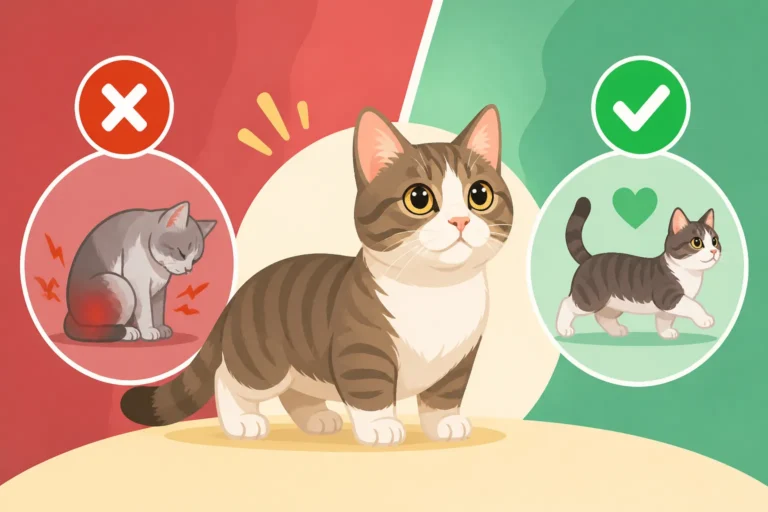
Pay attention to repeated signs of frustration or withdrawal. A cat that suddenly hides more, stops playing, vocalizes persistently, changes its eating habits, or begins avoiding the litter box may need more than extra toys. Changes can reflect stress, an environmental problem, or a health concern, so discuss them with a veterinarian rather than assuming loneliness is the cause.
It can help to make a small routine log for a week: note when you play, how your cat responds, whether it eats normally, and where it spends its time. This can reveal patterns that are easy to miss when you’re busy. If you’re away for a long stretch, ask a trusted person to check in and interact with the cat, not just refill bowls. A pet camera may also help you understand the day’s routine, but it does not replace in-person care.
How to Decide Whether to Add Another Cat
Consider the reason before adopting
Before bringing home a second cat, name the problem you hope to solve. Is your Munchkin showing signs of distress when left alone, or are you mainly worried that an only cat must be lonely? Is the cat looking for more play, more predictable attention, or easier access around the home? Different needs call for different responses, and another animal may not address the underlying issue.
If the concern is boredom, try a more consistent play routine, safe toy rotation, or a reachable window-viewing spot first. If your schedule has changed, arrange a reliable person to visit and spend time with the cat. If behavior has changed abruptly, begin with a veterinary check rather than adopting a companion in a hurry.
A second cat is a substantial commitment for both animals. You’ll need to provide separate feeding areas, resting places, hiding spots, and litter resources, and be prepared to manage introductions slowly. If your current cat is easily overwhelmed or has a history of conflict with other cats, forcing a pairing can create more stress than companionship.
Choose compatibility, then introduce gradually
If you decide that another cat could be a good fit, consider temperament and energy level before appearance or breed. A calm adult with a known history of living peacefully with other cats may be a better match for a settled Munchkin than a highly boisterous kitten. There is no guarantee of a bond, so make a plan that allows both cats to have their own space.
Start with separate rooms and separate resources. Let the cats become familiar with each other’s scent before they meet face to face, then use brief, supervised introductions that can end calmly. Don’t force them to share a bed, bowl, or litter box. Give your Munchkin accessible retreat options where it can rest without being cornered, and make sure the newcomer can’t block a route to essentials.
When comparing adoption options, ask the shelter or rescue about the cat’s behavior around other cats and what support they offer if the introduction is difficult. A second cat should be welcomed because you’re prepared to care for two individuals—not because you expect one to entertain the other automatically.
A Practical Routine for an Only Munchkin
Build a dependable day around the cat’s needs
A predictable routine can make solo time easier. Before leaving, offer a short interactive play session, then provide a meal or a simple food activity if it fits your cat’s feeding plan. Make sure the litter box is clean, water is fresh, and the cat has comfortable places to rest. Before you leave the room, check that the cat can reach its usual resources without needing help.
When you return, give your cat a chance to approach rather than immediately picking it up or waking it. Some cats want a greeting and play; others prefer to settle nearby first. A few minutes of attention that follows the cat’s cues can be more rewarding than a long, forced cuddle. Keep climbing routes and steps stable, and take a moment to notice whether your cat is using them normally.
A retailer such as Chewy can be useful for comparing basics like toys, bowls, and accessible litter-box options, but check measurements against your home and your cat’s abilities. If a product is unstable, too steep, or difficult to clean, it may create more work instead of helping. The best setup is the one your cat can use comfortably and consistently.
Adjust as your cat ages or its mobility changes
A layout that works for a young, active cat may become less comfortable later. Watch for hesitation on steps, reluctance to jump, changes in grooming, or a new preference for sleeping on the floor. These can be signs that the environment needs adjusting, and sometimes that your cat needs a veterinary assessment. Don’t wait for a dramatic mobility problem before making easy routes easier.
Keep a low resting place near the family’s usual activity, and make sure food, water, and litter remain convenient. If your cat no longer uses a ramp it used to enjoy, check that the surface is secure and the slope is manageable, but also consider whether discomfort or illness is involved. A sudden shift in movement deserves attention rather than repeated encouragement to try harder.
If your work schedule, household, or the cat’s behavior changes, reassess the arrangement instead of treating “only cat” as a permanent label that requires no thought. Some Munchkins do very well as solo pets when their people provide steady companionship, accessible surroundings, and appropriate daily stimulation. Others may benefit from more social contact, but the right response depends on the individual cat—not on the assumption that every Munchkin needs a feline roommate. For cues about communication, see How a Munchkin Asks When It Cannot Reach You.
Disclaimer
This article is for general informational purposes only and does not constitute professional advice. Laws, prices and regulations vary by location and change over time. Consult a qualified professional for guidance on your specific situation.