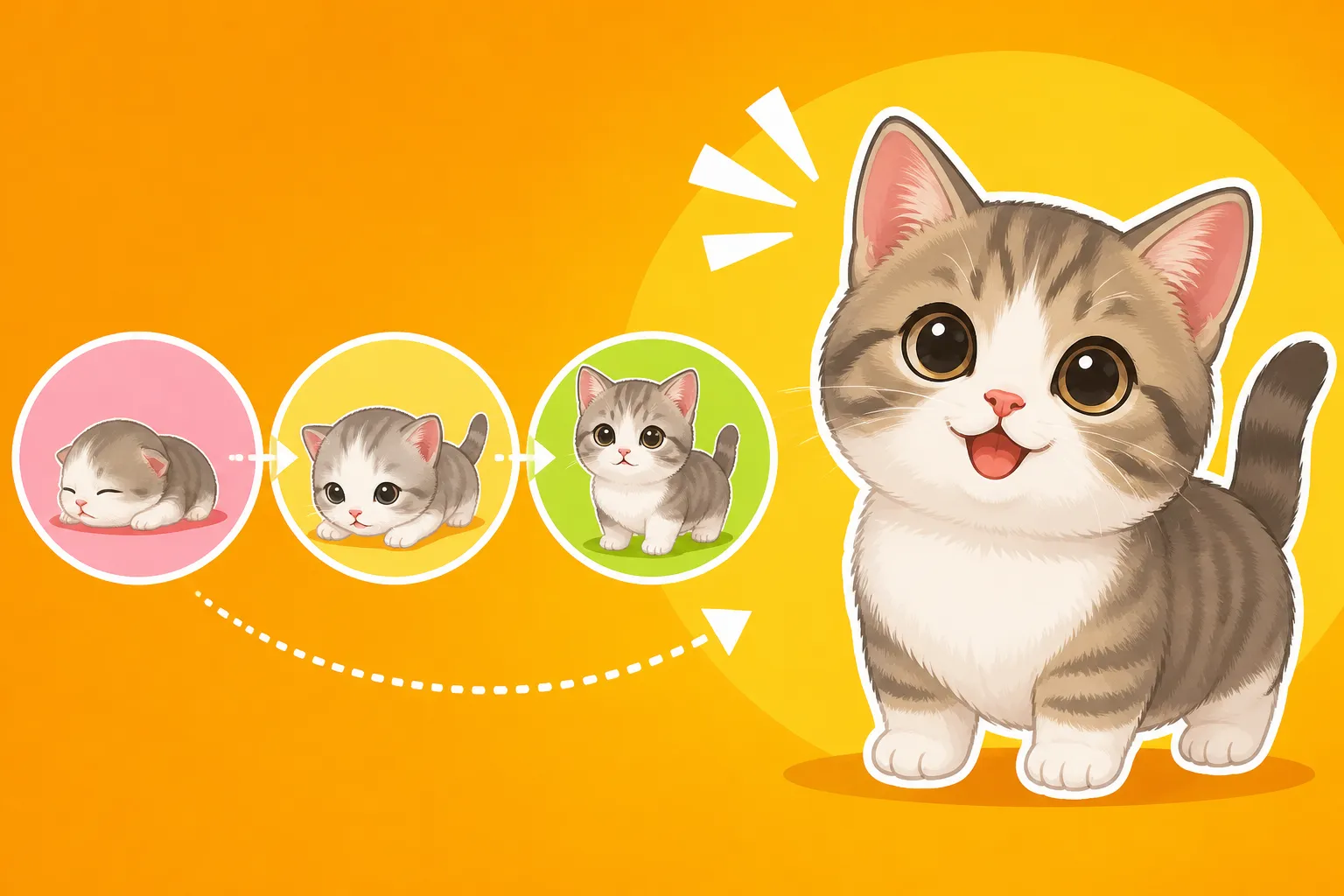
How Early a Munchkin Kitten’s Legs Show
A Munchkin kitten’s legs do not suddenly become short weeks after birth, but it can be surprisingly hard to judge leg length in a newborn. Tiny bodies, curled sleeping positions, and ordinary kitten growth can make early comparisons unreliable. This guide explains what you may notice as a kitten develops, when to ask a vet for an assessment, and how to distinguish short legs from a health or movement concern.
When Munchkin kitten legs become noticeable
Newborn legs can be difficult to assess
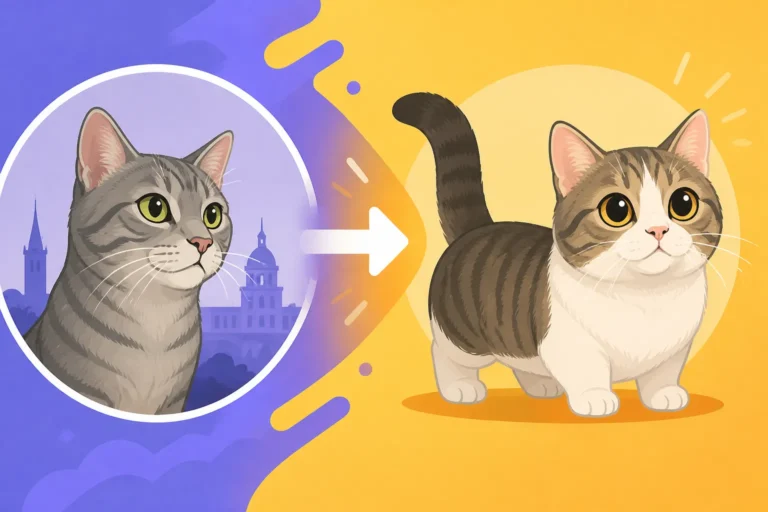
A kitten is born with its basic limb structure already in place. If it has the short-legged Munchkin trait, its legs do not start out typical length and then shorten later. The difference can simply be difficult to see at first: newborn kittens are very small, often tucked against their mother or littermates, and may not yet be standing or moving in a way that lets you compare their proportions.
In the first days, you may see a difference in the length of the legs, but a quick glance is not a dependable assessment. A kitten curled on its side can make its legs look shorter than they are, while a stretched-out sibling may appear longer. Fur, camera angle, and the position of the body can also change how proportions look in photographs.
It helps to watch a kitten on a flat, non-slip surface when it is awake and moving naturally. Compare its proportions with littermates of a similar age, rather than relying on a single photo or a posed picture. Even then, a visual comparison is only an observation—not a diagnosis of breed, inheritance, or overall health.
The difference is easier to judge as kittens grow
As kittens become more mobile, their proportions are often easier to notice. A short-legged kitten may look low to the ground, with a body that appears longer in relation to its legs. The legs can look more clearly different when the kitten stands, walks, or plays beside littermates.
This is not a precise deadline. Growth, posture, coat, and individual variation all affect how noticeable the trait is. A seller’s claim that a kitten’s legs will become a particular length by a particular week should not substitute for seeing the kitten move and having it examined. If you are comparing a kitten with breed descriptions, How a Munchkin's Legs Are Judged explains why leg appearance is only one part of assessing a Munchkin.
The Munchkin trait is generally described as an inherited dominant trait. In a litter from a short-legged parent and a normal-legged parent, kittens may have short or typical-length legs. A kitten with typical-length legs can still come from Munchkin parents; leg appearance alone does not establish every detail of its ancestry or genetic status. For more about how variation can appear among siblings, see How Many Kittens in a Munchkin Litter Are Short Legged.
What to look for as a kitten develops
Look at proportions, not one measurement
A kitten’s appearance changes quickly as it grows. Rather than judging by one measurement or one photograph, observe the whole kitten: how its legs relate to its body, how it stands, whether it moves comfortably, and whether the pattern seems consistent over time. A side view while the kitten is standing can be more informative than a close-up of its paws or a picture taken while it is being held.
Photos and videos can be useful for tracking changes, but try to keep the conditions similar. Take them from roughly the same height and angle, with the kitten on level ground. A short video of the kitten walking and turning at its own pace may show more than a still image. Do not repeatedly position a very young kitten for photos if that causes stress or interferes with rest and nursing.
A breeder or owner can keep a simple growth record with dates, weight, and notes about movement. A small pet scale and notebook can help track weight, while a retailer such as Chewy may be one place to look for basic kitten-care equipment. Weight records do not measure leg length, however, and home observations cannot identify the cause of an unusual gait.
Leg shape and movement need separate attention
Short legs are not the same thing as a bent, swollen, painful, or poorly functioning leg. A kitten’s gait may look different from that of a long-legged cat, but marked limping, reluctance to move, repeated falls, or one leg that appears substantially different from the others deserves veterinary attention. A veterinarian can examine the kitten’s limbs and joints, assess its movement, and decide whether further evaluation is needed.
Avoid trying to straighten a leg or testing its range of motion yourself. Kittens are delicate, and handling a limb roughly can cause discomfort or injury. If you are concerned, record a brief video of the kitten walking naturally and show it to a veterinarian. Include when you first noticed the difference and whether it seems to be getting more pronounced.
It is also useful to distinguish a kitten’s normal low stance from a change in its ability to move. A kitten that has always moved in a particular way is different from one that suddenly stops playing, begins favoring a limb, or seems uncomfortable when handled. For a closer look at limb shape, see How a Vet Assesses a Munchkin's Leg Conformation and Why a Munchkin's Front Legs Look Bowed.
| Observation | What it may tell you | What to do |
|---|---|---|
| Legs look short beside littermates | A possible difference in leg proportions | Observe the kitten standing and moving; ask the breeder or vet for context |
| Legs seem difficult to judge in newborn photos | Position, size, and camera angle may obscure proportions | Wait for natural standing and walking views rather than relying on a posed image |
| One leg looks swollen, painful, or unusually positioned | This is not simply a question of breed appearance | Arrange a veterinary examination |
| Kitten limps or avoids moving | Possible discomfort or another mobility concern | Contact a veterinarian and share a natural walking video |
| Seller promises a precise future leg length | A prediction is not a health or genetic assessment | Ask for in-person movement views and veterinary records |
How to assess a kitten responsibly
Ask for natural movement and clear records
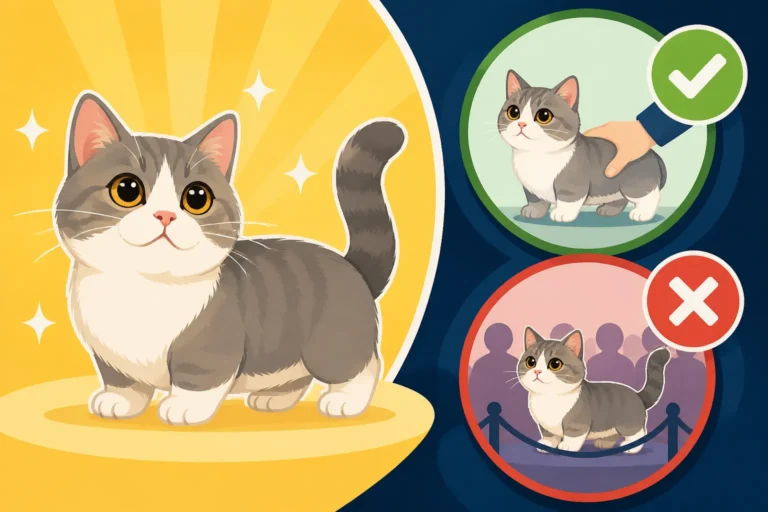
If you are choosing a kitten, ask to see it walking, turning, and playing on a level surface. The kitten should be moving at its own pace, not being encouraged to make repeated jumps or posed in a way that hides its limbs. If you cannot visit in person, a continuous video is more useful than a set of carefully selected still images because it shows how the kitten moves between positions.
Ask the breeder or current caregiver when the leg difference first became apparent and whether a veterinarian has examined the kitten. Request the kitten’s veterinary records and ask what the examination covered. A checkup is not a guarantee that a kitten will never develop a health issue, but clear answers and records help you understand what has actually been assessed.
You can also ask to see the kitten’s parents moving naturally, while remembering that a parent’s appearance does not guarantee the kitten’s future health. The goal is not to demand that a seller predict every outcome. It is to make sure you are not being asked to make a decision based only on a label, a close-up, or a promise that an issue will “sort itself out.” What a Munchkin Breeder Should Be Able to Show You offers more questions to consider when reviewing a breeder’s information.
Use veterinary checks for health questions
A veterinarian can assess a kitten’s posture, limb alignment, joints, and gait in the context of its age and development. If something looks unusual, the vet may recommend monitoring or further tests based on the examination. It is reasonable to ask what the vet observed, what would count as a change, and when the kitten should be rechecked.
For a new kitten, arrange a veterinary visit according to the kitten’s health needs and the advice given by the breeder or rescue. Mention any concerns about leg shape before the appointment, and bring clear video if the movement looks different at home. A short clinic visit may not capture every behavior a kitten shows while playing, so your observations can be helpful.
If you are considering a Munchkin specifically, learning what the trait means—and what remains uncertain—can make the decision more grounded. How Munchkin Dwarfism Is Inherited explains the inheritance discussion, while What a Munchkin Looks Like Against the TICA Standard provides context on appearance. Those topics are not substitutes for an individual kitten’s veterinary assessment.
Preparing for the kitten beyond its leg length
Set up a safe, accessible space
Whether a kitten has short legs or typical-length legs, it needs a secure, clean space with food, water, a resting area, and a litter box it can use comfortably. Watch how the kitten moves around its environment. If it struggles to enter a box, reach a resting spot, or move across slippery flooring, make practical adjustments and mention the difficulty to a veterinarian.
As the kitten settles in, a written routine can help you notice changes. Record appetite, weight if advised, litter habits, play, and any new movement concerns. A basic digital scale or non-slip mat from a general pet retailer such as Chewy may be useful for routine care, but equipment does not replace professional guidance. Choose items for safety and ease of use rather than assuming a product is specifically suited to a Munchkin.
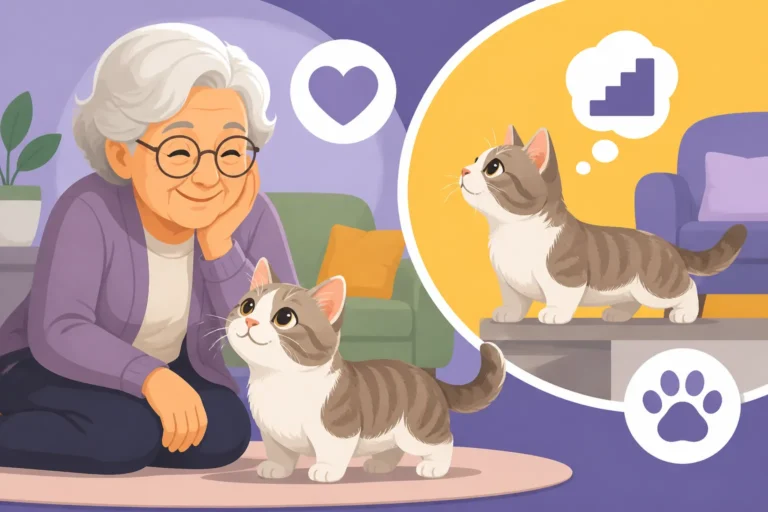
For a kitten with short legs, accessibility can remain important as it grows. A low-entry litter box, stable steps to favored furniture, and secure surfaces can make daily movement easier. Chewy is one possible place to browse general pet supplies such as mats or litter boxes, but measure the space and check the item’s dimensions before buying. What matters is whether the kitten can use the setup comfortably, not the label on the packaging.
Treat leg length as one part of the picture
A kitten’s short legs may be the first thing people notice, but appearance does not tell you everything about comfort, health, temperament, or future care. Pay attention to how the kitten behaves over time. Does it move willingly? Can it reach the places it needs? Does its gait remain steady, or do you notice a new limp or reluctance to play?
Do not judge well-being by whether a kitten can perform a particular jump. Cats vary in confidence and ability, and repeated attempts to reach a high surface are not a useful test of health. Arrange the home so the kitten can move safely, and ask a vet about any persistent difficulty or change in mobility. Chewy or another pet retailer may help you source ordinary home-care supplies, but your veterinarian is the right person to assess a health concern.
The most dependable answer to “How early do Munchkin kitten legs show?” is that the trait is present from birth, but may not be easy to recognize in a tiny, curled newborn. It often becomes more apparent as kittens stand and move, yet no single age or photo can confirm a kitten’s health or future proportions. Observe movement, ask for records, and use a veterinary examination when something worries you.
Disclaimer
This article is for general informational purposes only and does not constitute professional advice. Laws, prices and regulations vary by location and change over time. Consult a qualified professional for guidance on your specific situation.