Whether a Munchkin Queen Needs Help Giving Birth
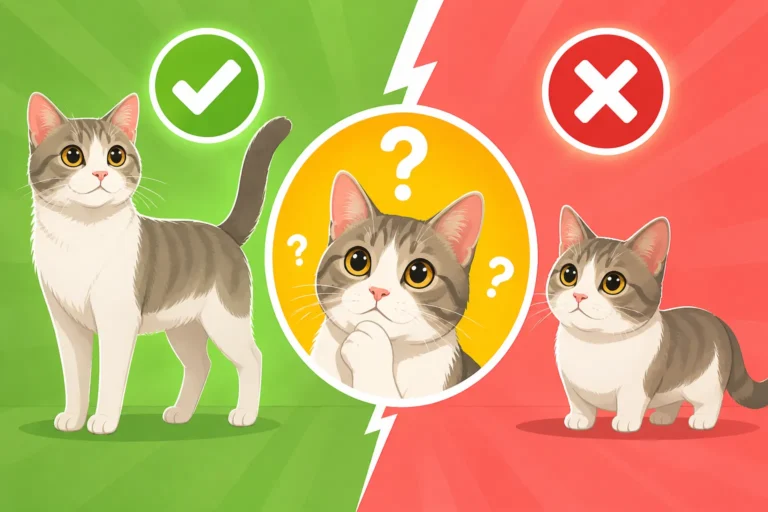
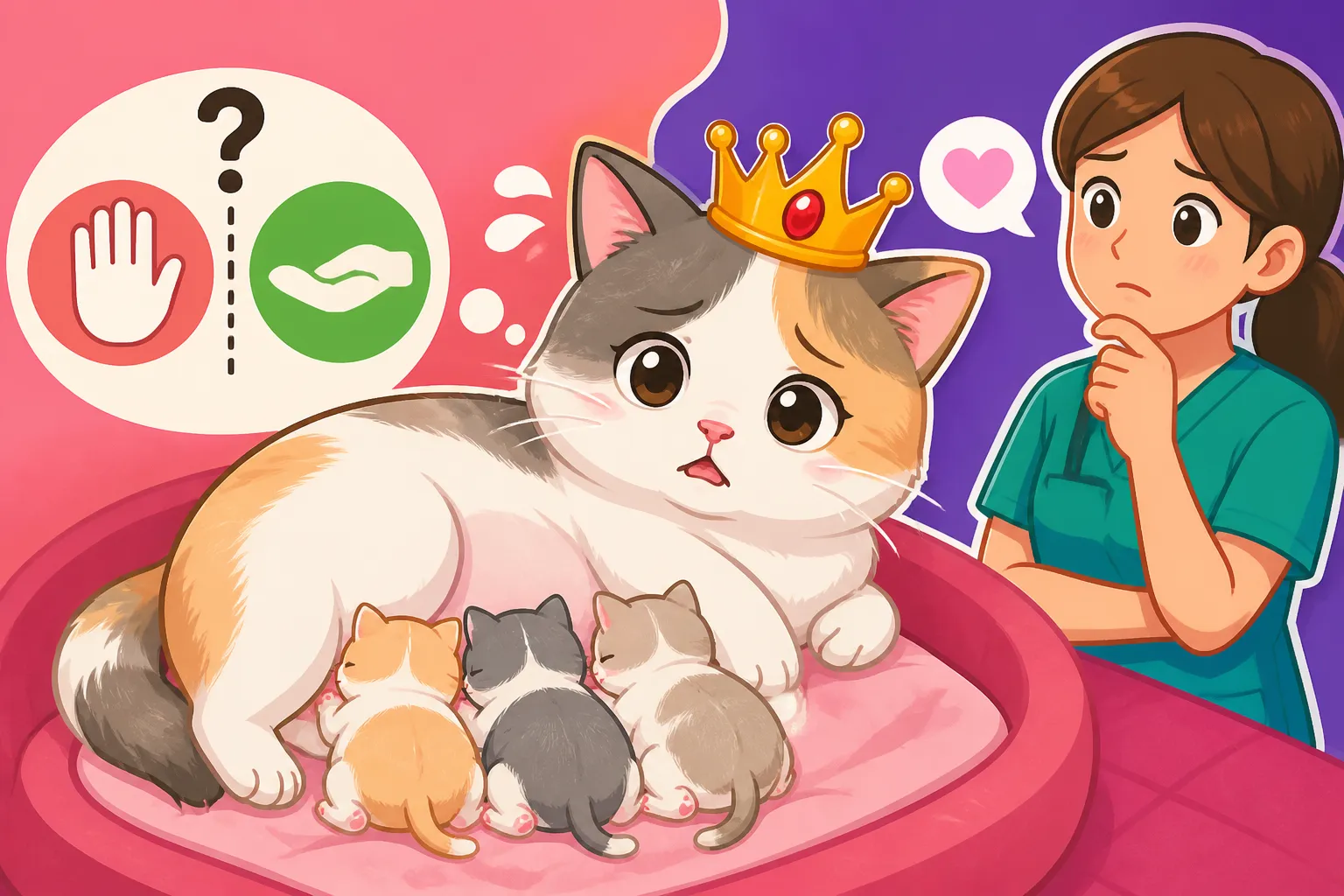
A Munchkin queen usually gives birth without a person assisting, just like other healthy domestic cats. Her short legs alone do not mean she will need a cesarean or hands-on delivery. The important thing is preparation: arrange veterinary care before labor, know what normal progress looks like, and recognize the signs that mean she needs urgent help.
Do Munchkin queens usually give birth naturally
Short legs do not automatically mean a difficult labor
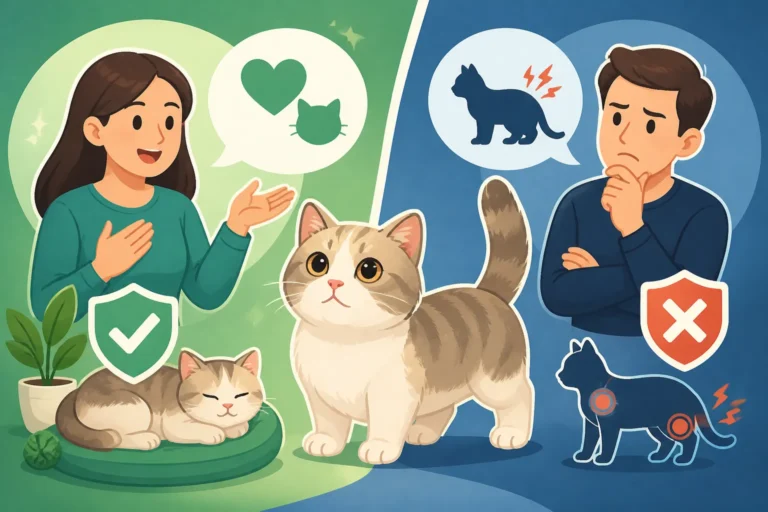
A Munchkin’s short legs result from a difference in how the long bones develop. That appearance, by itself, does not establish that her pelvis is too narrow or that she cannot deliver kittens. There is no simple rule that every Munchkin queen needs help giving birth, and a breed label alone cannot predict how an individual pregnancy will go.
That said, “usually gives birth without help” does not mean “there is nothing to plan for.” Any cat can experience dystocia, or difficulty delivering kittens. A kitten may be positioned poorly, labor may not progress, or the mother may become exhausted. These are concerns for queens of all body types, not a reason to assume a Munchkin will have trouble.
A vet can assess the individual cat and pregnancy, rather than relying on appearance. Ask about her general health, previous pregnancies or deliveries, and whether her history suggests extra monitoring. The broader context of the breed’s inherited traits is covered in Why Munchkin Dwarfism Is Called Autosomal Dominant, but inheritance of short legs should not be confused with a definite birth complication.
Breed is only one part of the picture
Age, overall health, litter size, kitten position, and the queen’s labor all matter. So does her history: a cat who has previously had a difficult delivery may need a different plan from a healthy first-time mother. A veterinarian who knows the queen can advise whether routine monitoring is appropriate or whether closer supervision is sensible.
Breeding decisions also affect the health and welfare of the queen and kittens. Responsible planning includes suitable mate selection, veterinary guidance, and a clear plan for unexpected complications. For more on what that preparation should involve, see How a Breeder Plans a Munchkin Mating and What a Munchkin Breeder Should Be Able to Show You.
It is also worth asking whether the queen is a Munchkin or a cat from a Munchkin cross, and what is known about her family and health history. Outcrossing is part of the breed’s development, but it does not eliminate the need to evaluate each cat individually. Why Munchkin Outcrossing Was Necessary From the Start explains that background; the practical question for a pregnant queen remains what her own vet recommends.
What a vet can help determine before labor
A pre-birth appointment is a good time to ask what to expect, which clinic to contact after hours, and what signs should prompt an immediate call. The veterinarian may recommend examination or monitoring based on the queen’s condition and pregnancy. Do not assume that every queen needs imaging or a planned surgical delivery; those choices depend on an individual veterinary assessment.
If the queen has had a previous cesarean, a prior difficult birth, or a known health problem, make sure the vet knows. Share any information the breeder has about previous litters and the queen’s relatives, while understanding that family history can inform—not guarantee—the outcome. Keep the clinic’s number and the route to an emergency hospital easy to access before labor begins.
How to prepare for a Munchkin queen’s labor
Set up a quiet, accessible nesting area
Choose a warm, calm room where the queen can settle without being disturbed by children, other pets, or frequent visitors. A sturdy, low-sided nesting box can make it easier for her to enter and leave. Line it with clean, washable bedding, and keep extra towels or pads nearby. The space should be private but not so hidden that you cannot check on her.
Make sure food, fresh water, and a litter box are easy for her to reach. Avoid placing supplies up stairs or requiring her to jump onto furniture. A nesting box that is too high, slippery, or cramped may make her reluctant to use it, so introduce the space ahead of time and let her explore it voluntarily.
Some people buy washable pads, a suitable box, or cleaning supplies from retailers such as Chewy. Whatever the source, prioritize items that are easy to clean and safe to use around newborn kittens. Avoid loose threads, deep bedding that kittens can become trapped in, and strong fragrances that may bother the mother.
Make a plan for veterinary help
Before the due period, identify your regular veterinary clinic and an emergency clinic that can see cats when your regular clinic is closed. Call ahead to confirm how to reach them and what information they will want. If the queen needs to be transported, a ready-to-use carrier can save precious time; keep it nearby, clean, and easy to open.
Ask your vet what to do if labor begins overnight, what symptoms they consider urgent, and whether they want you to call before setting out. Write down the queen’s expected due window, any relevant medical history, and the number of kittens expected if that is known. A vet may be able to estimate litter size, but an estimate is not a promise that every kitten will arrive at a particular time.
A small supply kit can help you stay organized: clean towels, disposable or washable pads, a notebook, a clock, and your clinic’s contact details. Chewy may be useful for sourcing routine supplies such as pads or a carrier, but delivery purchases are no substitute for knowing where to get urgent veterinary care.
Keep the queen’s pregnancy and litter size in perspective
Litter size varies, and the number of kittens cannot reliably tell you whether delivery will be easy. A very small litter does not automatically mean a problem, nor does a larger litter guarantee complications. For an overview of typical litter-size considerations, read How Many Kittens a Munchkin Queen Has.
Avoid trying to predict labor by repeatedly handling or pressing the queen’s abdomen. Do not give medications, supplements, or home remedies to start or speed up labor unless a veterinarian specifically directs you. If the queen seems unwell, has unusual discharge, or is in distress, contact a vet rather than waiting for a scheduled appointment or searching for a home intervention.
What normal labor can look like
Early signs may be subtle
In the hours or days before delivery, a queen may seek a nesting spot, become restless, groom herself more often, or want extra attention—or prefer to be left alone. Some cats eat less shortly before labor. These changes are not a precise countdown, and not every queen shows the same pattern.
As labor approaches, she may settle in the nesting area and begin having visible contractions. Stay nearby enough to observe without hovering over her. A calm room and a quiet human presence are often more helpful than frequent touching, moving her, or inviting a crowd to watch.
If she chooses a different safe location, do not forcibly move her while she is actively laboring unless there is a clear hazard. If the chosen spot is unsafe, call your vet for advice on how to manage the situation with as little stress as possible.
Kittens may arrive with pauses between them
A queen often delivers each kitten in its own sac and tends to clean the newborn and sever the cord herself. There can be a pause between kittens while she rests and cares for the ones already born. The length of a pause alone does not always tell you whether there is a problem; the queen’s comfort, contractions, and the overall pattern matter too.
Observe from a short distance and note when strong contractions begin, when each kitten is born, and whether the mother is attentive and recovering between births. If you are unsure whether labor has finished, do not press on her abdomen to check. Call the veterinarian and describe what you have seen, including the timing and any signs of distress.
Most importantly, do not pull on a kitten or attempt to reposition one inside the birth canal. A stuck kitten can be injured, and the mother can be seriously harmed by forceful handling. If a kitten appears lodged or the queen is struggling, seek urgent veterinary help.
Watch the mother as well as the kittens
After delivery, check that the queen is breathing comfortably, responsive, and able to settle with her kittens. Newborns should be kept warm and close to their mother, but avoid excessive handling, especially while they are very young. If a kitten seems weak, cold, unable to nurse, or separated from the litter, contact a vet for guidance.
Some discharge can occur after birth, but heavy bleeding, a foul smell, collapse, marked weakness, or obvious pain needs veterinary attention. If the mother ignores the kittens, seems confused, or cannot rest, that also warrants a call. When in doubt, describe the signs to a clinic instead of deciding on your own that they are normal.
When a Munchkin queen needs veterinary help
Call urgently for stalled or distressing labor
Contact a veterinarian promptly if the queen is having strong, repeated contractions without producing a kitten, appears exhausted or severely distressed, or a kitten is visibly stuck. Also call if there is heavy bleeding, collapse, breathing difficulty, severe pain, or unusual discharge with a bad odor. These signs can indicate an emergency.
A prolonged pause between kittens can be difficult to interpret without knowing the pregnancy and labor details. If the queen is actively straining, unwell, or seems unable to continue, do not wait for a specific number of minutes to pass before calling. Describe what is happening and follow the clinic’s directions about whether to come in.
A vet may recommend examination, medication, or surgery depending on the cause. Never give human painkillers or use medication intended to induce labor without direct veterinary instruction. A well-meaning attempt to help can make a dangerous situation worse.
Know when to call even if the queen seems calm
Not every serious problem looks dramatic. A queen may become quiet or withdrawn, stop caring for her kittens, or seem unusually weak. A kitten that is not nursing or appears limp also deserves prompt attention. If something feels wrong, a phone call is a sensible first step; you do not need to wait until the situation looks severe.
Keep a simple record of kitten arrival times and the queen’s behavior. This helps the veterinary team make a clearer assessment over the phone. If you have a known estimate of the litter size, share it, but remember that an estimate should not override signs that the queen or kittens are struggling.
For follow-up after birth, arrange veterinary advice about the mother and litter, including what to do if nursing is not going well. Kittens also need appropriate early assessment; Why a Munchkin Kitten Needs an Early Vet Check covers why early attention matters.
Use a clear decision guide
| What you observe | What to do |
|---|---|
| Nesting, restlessness, or mild behavior changes before labor | Keep the space quiet and monitor without repeatedly handling her |
| Kittens arriving and the queen resting comfortably between them | Observe, note timing, and keep the clinic number available |
| Strong repeated straining with no kitten, or a kitten visibly stuck | Contact a veterinarian urgently and follow instructions |
| Collapse, severe pain, breathing difficulty, heavy bleeding, or foul-smelling discharge | Seek emergency veterinary care |
| A newborn is weak, cold, not nursing, or separated from the mother | Call a veterinarian promptly for guidance |
| You are uncertain whether labor has finished or a pause is safe | Call the vet and explain the timing and signs |
A Munchkin queen does not automatically need assistance simply because of her short legs. She does need the same thoughtful preparation every pregnant cat deserves: a quiet nest, a reachable emergency clinic, close observation, and a willingness to call for help when labor or the kittens do not seem right. If the pregnancy is planned, make the veterinary plan before the first signs of labor—not while you are trying to find an open clinic.
Disclaimer
This article is for general informational purposes only and does not constitute professional advice. Laws, prices and regulations vary by location and change over time. Consult a qualified professional for guidance on your specific situation.