How Many Kittens in a Munchkin Litter Are Short Legged
It's completely normal to wonder how many short-legged kittens you can expect in a Munchkin litter, especially when you're considering welcoming one of these unique felines into your home. The world of cat genetics can feel like a labyrinth, and understanding why some kittens have those adorable stubby legs while their siblings are perfectly normal can be a real head-scratcher. This guide aims to clear up all that confusion, giving you a detailed look into the genetics and the typical makeup of a Munchkin litter.
Understanding the Unique Genetics of the Munchkin Cat
The defining characteristic of the Munchkin cat breed is, of course, their wonderfully short legs. This trait isn't some random occurrence; it's a specific genetic mutation that's inherited in a very particular way. For anyone looking into the breed, grasping this fundamental aspect is key to understanding everything else about them, from breeding practices to litter composition. It’s also important for responsible ownership, as it sheds light on why these cats are bred in a certain manner to protect their health.
The Autosomal Dominant Trait Explained
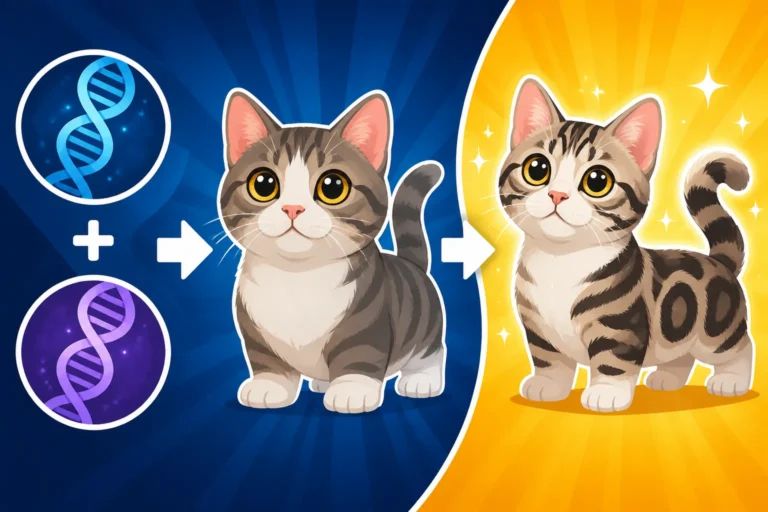
The short-legged trait in Munchkin cats is caused by an autosomal dominant gene. Now, what does "autosomal dominant" really mean in plain English? "Autosomal" simply means the gene is located on a non-sex chromosome, so it affects both male and female cats equally. "Dominant" is the crucial part: it means that a cat only needs to inherit one copy of this specific gene from either parent to display the short-legged characteristic. Unlike recessive traits, where a cat needs two copies of the gene to show the trait, a single copy is enough to produce those distinctive short legs.
This genetic quirk is what makes the Munchkin breed so unique and, at times, controversial. If a kitten inherits the short-leg gene, it will have short legs. If it doesn't, it will have legs of normal length. There’s no in-between carrier state where a normal-legged cat can secretly carry the short-leg gene without showing it, unlike some other genetic conditions. This simplifies understanding how the trait is passed on, yet it also carries a significant caveat that responsible breeders must always consider.
It's also why you might hear discussions about whether Munchkin Dwarfism Is Dominant and Lethal in Two Copies. The science behind it is fascinating and incredibly important for the well-being of the breed. While the gene for short legs is dominant, it also has a dark side when inherited in a double dose. This leads directly to why ethical breeding practices are so stringent with Munchkins.
Why Two Short-Legged Munchkins Are Never Bred Together
This is perhaps the most critical piece of information when discussing Munchkin genetics and litter composition. Due to the autosomal dominant nature of the gene, if a kitten inherits two copies of the short-leg gene (one from each parent), it results in what is known as a homozygous embryo. Sadly, these homozygous embryos are not viable and will not develop past an early stage of gestation. Essentially, they are absorbed by the mother, and kittens with two copies of the gene are never born. This is why you will never see a breeder intentionally mate two short-legged Munchkins. It's considered unethical and simply doesn't produce viable offspring.
This grim reality underlies the strict breeding protocols for Munchkin cats. Every single short-legged Munchkin cat alive today is heterozygous, meaning they carry only one copy of the short-leg gene and one copy of the normal-leg gene. They express the short-leg trait because it's dominant, but they also have that normal gene to fall back on. This is precisely why What Two Copies of the Munchkin Gene Do is such a critical topic in the Munchkin community, and why reputable breeders adhere to strict guidelines.
Therefore, to produce a litter of Munchkin kittens, a short-legged Munchkin cat is always bred to a normal-legged domestic cat. This is known as an outcross. The partner can be any domestic shorthair or longhair cat, provided they meet health and temperament standards. This strategy ensures genetic diversity and, crucially, prevents the possibility of creating homozygous embryos, safeguarding the health and viability of the litter. This practice is foundational to the breed's continued existence and health.
The Expected Ratio of Short-Legged Kittens in a Litter
Now that we've covered the basics of Munchkin genetics, let's get to the heart of the matter: what does all this mean for the kittens in a litter? When a responsible breeder mates a short-legged Munchkin with a normal-legged domestic cat, the genetic outcome follows a predictable pattern, even if individual litters can sometimes surprise you with their specific numbers.
The Standard "Carrier Cross" Mating
As we discussed, the standard and ethically mandated breeding practice for Munchkin cats involves mating a short-legged Munchkin (which carries one copy of the short-leg gene, represented as 'M', and one copy of the normal-leg gene, 'm') with a normal-legged domestic cat (which carries two copies of the normal-leg gene, 'mm'). This is often referred to as a "carrier cross" or "outcross" because the short-legged parent is a carrier of the dominant trait, and the other parent provides only normal genes.
When you look at the potential combinations of genes from such a pairing, it generally breaks down like this:
| Parent 1 (Munchkin – Mm) | Parent 2 (Normal – mm) | Offspring (Probability) | Leg Length |
|---|---|---|---|
| M | m | Mm (50%) | Short |
| m | m | mm (50%) | Normal |
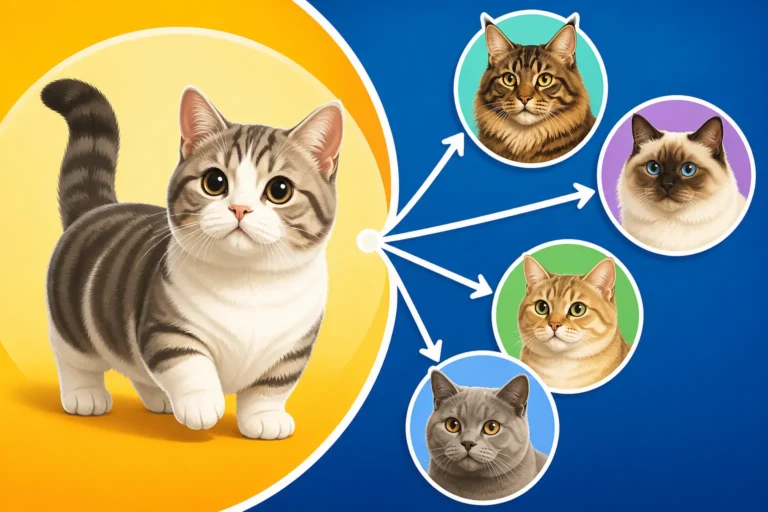
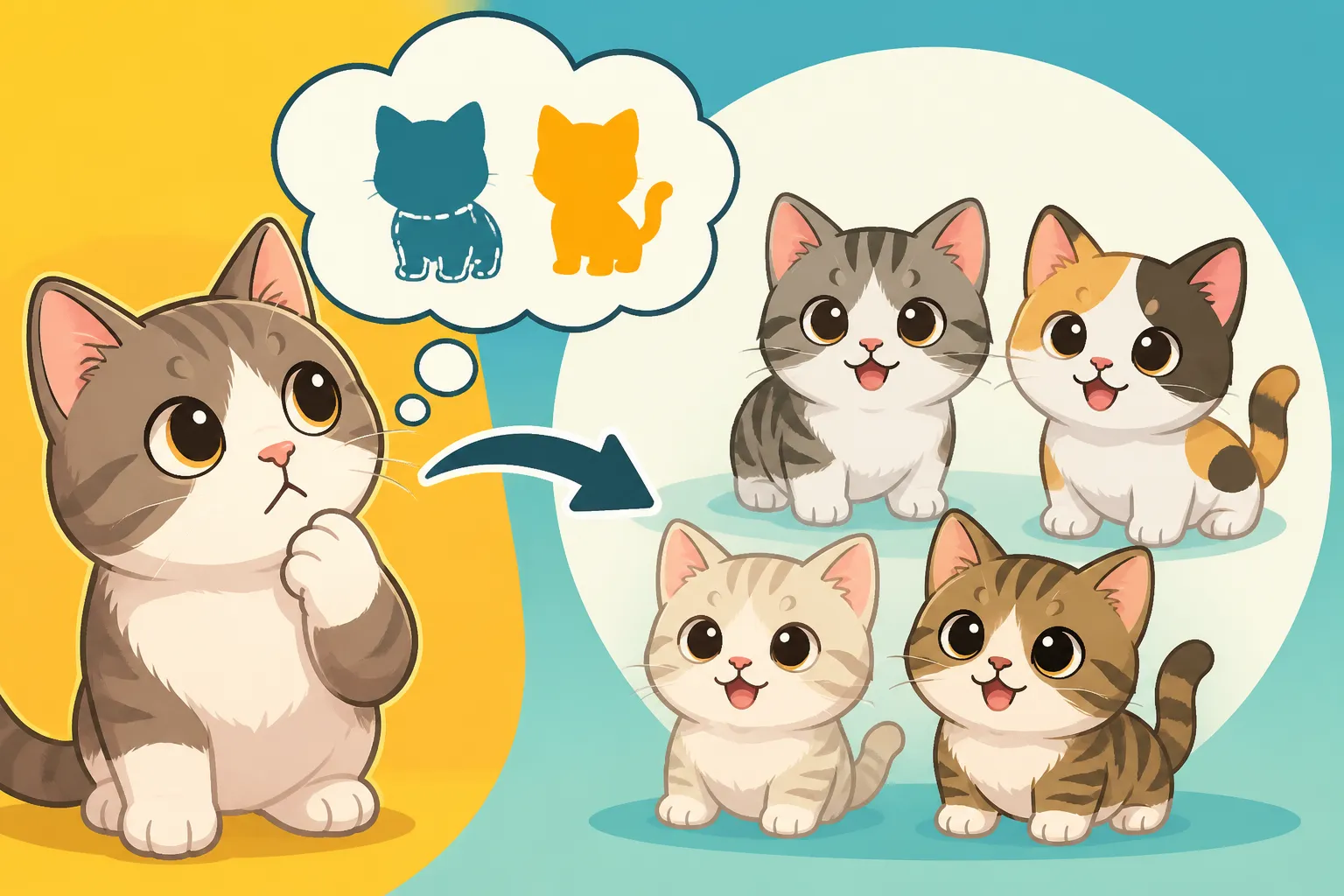
This genetic cross results in an expected statistical ratio of 50% short-legged kittens (Mm) and 50% normal-legged kittens (mm). It's a classic example of Mendelian inheritance at play. So, if a litter has four kittens, statistically, you'd expect two with short legs and two with normal legs. If it's a litter of six, you'd anticipate three of each. This is why Why Every Munchkin Litter Is a Carrier Cross is a core tenet of Munchkin breeding.
It's important to remember that this 50/50 split is a statistical average over many litters. In any single litter, the actual numbers might vary slightly. You could have a litter of four with three short-legged kittens and one normal-legged, or vice-versa. Think of it like flipping a coin: you expect roughly half heads and half tails over many flips, but a single sequence of ten flips might easily give you six heads and four tails. However, a reputable breeder aims for these percentages in their overall breeding program. This means that Why Half a Munchkin Litter Has Normal Legs is not just a theoretical concept, but a visible reality in every litter.
Categorizing Kittens by Leg Length
From a very young age, usually by a few weeks old, a keen eye can begin to distinguish between the short-legged and normal-legged kittens in a Munchkin litter. Breeders often assess the leg length more formally around 8-12 weeks, which is typically when kittens are ready to go to their new homes. The differences become quite apparent as they grow and start moving around more.
The short-legged kittens are typically categorized further, though these are not official genetic classifications but rather descriptive terms used within the breed community. You might hear terms like "Standard Munchkin" for those with the classic short legs, or even "Rug Hugger" for those with exceptionally short legs that appear to barely clear the ground. These terms are more about the degree of expression of the short-leg gene rather than different genetic types. These distinct leg lengths, from standard to what is known as a 'rug hugger,' are part of the spectrum of the breed.
The normal-legged kittens, sometimes referred to as "non-standard" Munchkins, "Munchkin variants," or "long-legged Munchkins," will have leg lengths identical to any other domestic cat. They don't carry the short-leg gene, so they won't pass it on to their own offspring. Learning How Short a Munchkin's Legs Actually Are can help you recognize the different types, even as tiny kittens. This careful categorization is crucial for breeders to ensure they are placing kittens appropriately and for owners to know exactly what they are getting.
The Role and Future of Long-Legged Munchkin Offspring
Understanding the 50/50 genetic split means acknowledging that roughly half of every Munchkin litter will have normal leg length. These long-legged siblings are just as much a part of the Munchkin family as their short-legged counterparts, and they play a vital role, especially in the health and future of the breed. It’s a common misconception that if a kitten doesn't have short legs, it's somehow "less" of a Munchkin, but this couldn't be further from the truth.
Not All Kittens Get the Short Legs
Let's reiterate: the long-legged kittens born in a Munchkin litter are genetically indistinguishable from any other domestic cat when it comes to leg length. They simply did not inherit the dominant Munchkin gene from their short-legged parent. This means they are not carriers of the short-leg gene, and if they were to be bred (which is generally discouraged to maintain clear lines and prevent confusion), none of their offspring would spontaneously develop short legs. They are, in essence, genetically normal-legged cats born into a Munchkin family.
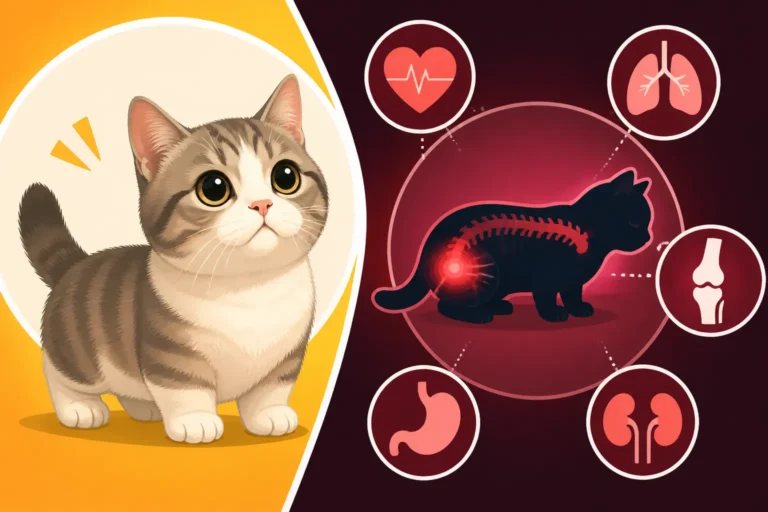
This is an important point for both breeders and potential owners. These cats are not "defective" or "failed" Munchkins; they are simply the natural outcome of the carefully planned outcross breeding. Their normal leg length also means they do not carry the specific skeletal characteristics or potential health considerations associated with the short-legged trait. This offers peace of mind regarding the specific concerns sometimes raised about the Munchkin breed, ensuring these kittens enjoy the mobility and physical characteristics of any average housecat.
For anyone who loves the temperament and personality of Munchkin cats but has reservations about the unique physical characteristics, a long-legged Munchkin offers the best of both worlds. They often share the same playful, curious, and outgoing personalities as their short-legged siblings, having been raised in the same environment and with the same loving care from the breeder. It's a testament to the overall breed standard that focuses on temperament and health beyond just the leg length. Whether a Long Legged Munchkin Carries the Gene is a common question, and the answer is definitively no.
Placing Long-Legged Kittens in Homes
So, what happens to these normal-legged Munchkin offspring? Reputable breeders typically sell these kittens as beloved pets, just like their short-legged siblings. They are often highly sought after by individuals who appreciate the Munchkin personality but prefer a cat with standard mobility, or perhaps those who wish to avoid the higher price tag associated with the short-legged variety. Since they don't carry the gene, they can't be used in breeding programs to produce short-legged Munchkins.
Their price point is generally lower than that of their short-legged littermates. This is not because they are considered less valuable as companions, but purely due to the market demand for the distinctive short-legged appearance that defines the Munchkin breed. However, they receive the same vaccinations, health checks, and early socialization as their short-legged siblings. They come with the same love and care from the breeder, making them wonderful additions to any family. It’s also important to consider pet insurance for any kitten, and reputable providers like Healthy Paws can offer great peace of mind, covering accidents and illnesses regardless of leg length.
Families looking for a playful, affectionate, and well-socialized cat will find these long-legged Munchkins to be excellent companions. They're often energetic and just as mischievous as their shorter siblings, able to jump and climb with the agility of any other domestic cat. Understanding What a Long Legged Munchkin Kitten Is Worth often comes down to the market value of their unique appearance versus the standard appearance. They are still registered as Munchkins, often with the designation "non-standard" to indicate their leg length.
Responsible Breeding Practices and Owner Considerations
The ethical breeding of Munchkin cats is a topic that generates a lot of discussion, and for very good reason. Given the specific genetic mutation that defines the breed, responsible practices are paramount to ensure the health and welfare of every kitten. As a potential owner, understanding these practices is not just about curiosity; it's about making an informed, ethical decision and knowing what to look for in a breeder.
The Breeder's Ethical Obligation
A truly responsible Munchkin breeder operates with an unwavering commitment to the health and well-being of their cats. Their primary ethical obligation is to strictly adhere to the breeding standard that dictates a short-legged Munchkin must always be bred to a normal-legged domestic cat. This protocol, as discussed, is critical to prevent the lethal homozygous gene combination that results in non-viable embryos. Any breeder advertising "Munchkin to Munchkin" matings should be a serious red flag.
Furthermore, ethical breeders go beyond just mating pairs correctly. They ensure that their breeding cats, both the Munchkin parent and the outcross domestic cat, undergo thorough health screenings. This includes testing for common feline genetic diseases, ensuring good temperament, and regular veterinary check-ups. They will be transparent about their practices, openly discussing the genetics, showing you the parents (or at least photos/videos if the stud is external), and providing full health records for the kittens. They'll be able to demonstrate What a Munchkin Breeder Should Be Able to Show You – from pedigree papers to health clearances.
These breeders are also invested in the ongoing welfare of their kittens, often including clauses in their contracts about spaying/neutering and ensuring the kitten goes to a suitable home. They educate potential owners about the specific needs and considerations for a short-legged cat, such as appropriate home modifications like ramps and low-entry litter boxes. They understand that even with careful breeding, health issues can arise, and often recommend pet insurance like Healthy Paws as a safeguard for unforeseen veterinary expenses.
What Potential Owners Should Ask
When you're considering bringing a Munchkin into your home, it's absolutely crucial to do your homework and ask a lot of questions. Don't be shy; a good breeder will welcome your inquiries and be happy to educate you. Start by asking about their breeding philosophy and why they choose specific outcross partners. Inquire about the health testing of the parent cats – what specific tests have been done, and can you see the results? This proactive approach protects both you and the kitten.
You should also ask about the kitten's early veterinary care. A reputable breeder will ensure that kittens have had their first vaccinations, deworming, and a thorough health check by a veterinarian before they go to their new homes. They should be able to provide documentation for all of this. Understanding Why a Munchkin Kitten Needs an Early Vet Check is important, as early detection of any issues, although rare in well-bred litters, is always best.
Finally, inquire about their support post-purchase. A responsible breeder will be a resource for you throughout your cat's life, offering advice and guidance. They will often have a take-back clause in their contract, ensuring that if for any reason you can no longer care for the cat, it can be returned to them rather than ending up in a shelter. And don't forget to ask about pet insurance; a good breeder will often recommend options such as Healthy Paws to help manage potential future vet costs, ensuring your new family member is well-protected.
Disclaimer
As a responsible content creator, we must stress that while this guide provides extensive information based on current understanding and best practices within the Munchkin cat community, it is not a substitute for professional veterinary advice. Always consult with a qualified veterinarian regarding the specific health and care needs of your individual cat. Breeding decisions should only be made by experienced, ethical breeders in consultation with veterinary geneticists.