Whether a Long Legged Munchkin Carries the Gene
It's completely understandable to feel a bit confused when you hear about "long-legged Munchkins" and wonder what that even means for their genetics. You see these adorable kittens in a litter, some with those characteristic short legs, and others looking perfectly normal, just like any other domestic cat. The big question then becomes: do those seemingly regular, long-legged kittens still carry the gene for short legs, making you wonder about their future health or potential if you were considering breeding? This guide is here to untangle that genetic mystery for you, offering clarity on whether a long-legged Munchkin truly carries the gene that defines the breed.
Understanding Munchkin Genetics 101
Before we dive into the long-legged siblings, it helps to understand the fundamental genetic principles at play with the Munchkin cat. It’s not as complicated as it sounds, but it’s crucial for making sense of how litters turn out. The unique short-legged trait that defines a Munchkin isn't some hidden, recessive characteristic that lurks unseen for generations. It’s much more direct than that.
The Autosomal Dominant Gene
The short-legged trait in Munchkin cats is caused by an autosomal dominant gene. What exactly does "autosomal dominant" mean in plain English? Well, "autosomal" means the gene isn't linked to sex chromosomes, so it affects both male and female cats equally. "Dominant" is the key part here: it means that if a cat inherits even one copy of this particular gene, it will express the trait – in this case, short legs. There's no hiding it; if the gene is there, the legs are short.
This is precisely why breeders strictly adhere to a specific mating practice: a short-legged Munchkin is always bred to a normal-legged cat, often referred to as an "outcross." You'll never see two short-legged Munchkins intentionally bred together. This isn't just a preference; it’s a necessity rooted in the harsh reality of the gene. If a kitten were to inherit two copies of the Munchkin short-leg gene (one from each parent), the condition is lethal, and the embryo simply doesn't survive. This is why you never see homozygous Munchkin kittens born, making the point clear that "Munchkin Dwarfism Is Dominant and Lethal in Two Copies". The understanding that "Why Two Short Legged Munchkins Are Never Bred Together" is a fundamental principle of responsible Munchkin breeding, directly related to the dominant nature of the gene.
The Litter: Short, Long, and In-Between
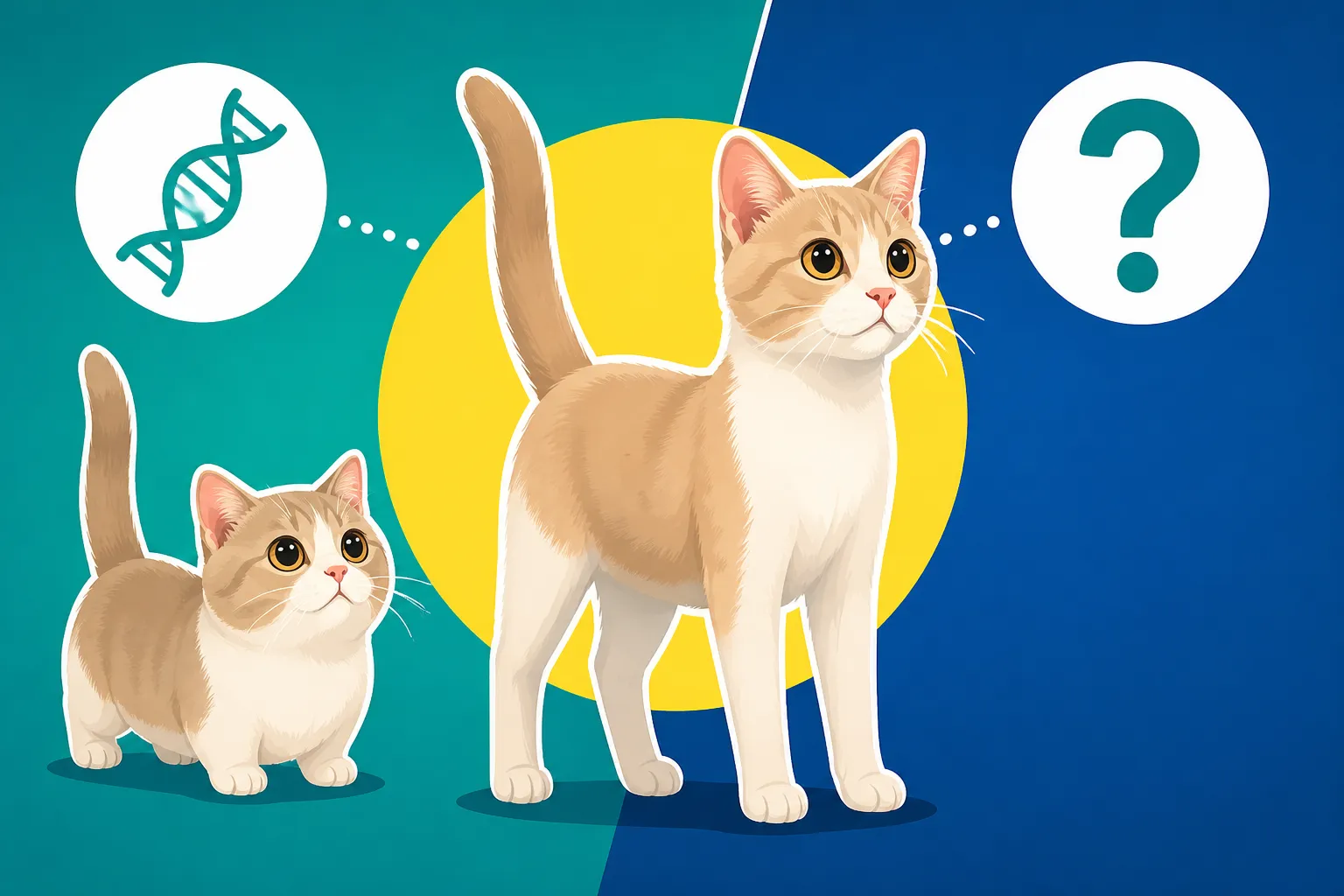
So, when a short-legged Munchkin (which, by definition, has one copy of the dominant gene) is bred to a normal-legged domestic cat (which has no copies of the gene), what do you get? A beautiful, varied litter! Typically, such a pairing results in a roughly 50/50 split of kittens. About half the kittens will inherit the short-leg gene from their Munchkin parent and thus display the characteristic short legs. The other half will not inherit the gene from their Munchkin parent and will therefore have normal-length legs.
These long-legged kittens, born in the same litter as their short-legged siblings, look exactly like any other domestic cat. They have typical leg length, bone structure, and mobility. They might be referred to as "Munchkin variants" or "non-standard Munchkins" by breeders, simply because of their parentage, but physically and genetically, they don't carry the short-leg trait. It's truly fascinating to see how a single gene can create such a distinct difference within one litter, and it’s a perfect illustration of Mendelian genetics in action. If you've ever wondered "How Many Kittens in a Munchkin Litter Are Short Legged", it's usually around half, and understanding this genetic principle explains why "Why Half a Munchkin Litter Has Normal Legs".
Do Long-Legged Munchkins Carry the Gene?
This is the million-dollar question for many prospective owners and certainly for anyone interested in the genetics of these captivating cats. It’s easy to assume that because they come from a Munchkin parent, they must somehow "carry" the trait, even if it doesn't show. But in genetics, especially with dominant traits, things are often more straightforward than we might imagine.
The Clear-Cut Answer
Let's get straight to it: No, a long-legged Munchkin does not carry the short-leg gene. If a kitten has normal-length legs, it means it did not inherit the dominant gene responsible for the short-leg trait from its Munchkin parent. Because the gene is dominant, if it were present, the cat's legs would be short. There's no "carrier" state where the cat looks normal but secretly harbors the gene for short legs. It's either expressed, or it's not present at all.
Think of it like this: if you have brown eyes (a dominant trait), and one of your parents has brown eyes, you either got the brown eye gene or you didn't. If you have blue eyes, you definitely didn't get the brown eye gene from that parent. The same applies to the Munchkin gene. The long-legged kittens are genetically indistinguishable from any other domestic cat when it comes to leg length. They simply didn't receive that specific gene mutation from their short-legged parent. This means that "What Happens to the Long Legged Munchkin Kittens" is that they develop into perfectly normal-bodied cats.
Why the Confusion?
The confusion often stems from a common misunderstanding of how dominant versus recessive genes work. For recessive traits (like blue eyes in humans, or sometimes certain genetic diseases), an animal can be a "carrier." This means they have one copy of the recessive gene but don't show the trait themselves because the dominant gene masks it. They can, however, pass that recessive gene on to their offspring.
With the Munchkin gene, this isn't the case. Because it's an autosomal dominant gene, there is no "carrier" status for the physical manifestation of short legs. If a cat has the gene, it has short legs. If it has long legs, it does not have the gene. The term "long-legged Munchkin" is really just a way of describing a normal-legged cat that resulted from a breeding where one parent was a short-legged Munchkin. It’s about their lineage, not about them secretly carrying the gene for short legs. This fundamental difference is important to grasp, as it highlights "Why Munchkin Dwarfism Is Called Autosomal Dominant".
Implications for Breeding and Ownership
Understanding that long-legged Munchkin offspring do not carry the gene has significant implications, both for potential breeding programs and for their everyday lives as beloved pets. It shapes how they are viewed, valued, and cared for.
Breeding Long-Legged Offspring
For responsible breeders working to maintain genetic diversity within the Munchkin breed, long-legged offspring play a crucial role. While they cannot produce short-legged kittens themselves (unless bred to a short-legged Munchkin, which would just mean the short-leg gene comes from the other parent), they are invaluable as outcrosses. This means they can be introduced into a Munchkin breeding program to bring in fresh genetics from a broader pool of domestic cats, without any concern of them passing on the short-leg gene. This helps maintain a robust gene pool, preventing issues that can arise from excessive inbreeding.
When considering such a cat for breeding, verifying their pedigree is always essential to ensure the integrity of the lines. A reputable breeder will always provide clear documentation. If you're pondering "Whether a Long Legged Munchkin Should Be Bred From", the answer is yes, they are perfect for outcrossing, as they represent the genetic normalcy needed to keep the Munchkin breed healthy, and they are essentially the same as "Which Domestic Cats Are Used as Munchkin Outcrosses".
Ownership Considerations for Long-Legged Munchkins
For pet owners, this genetic clarity is wonderful news! If you adopt a long-legged kitten from a Munchkin litter, you are essentially getting a perfectly normal domestic cat with no genetic predisposition to the skeletal issues associated with the short-legged trait. This means:
- Normal Health and Mobility: Your long-legged companion will have the full range of motion, jumping ability, and agility of any other cat. You won't need to worry about the special accommodations for their joints or spine that short-legged Munchkins often require.
- No Special Care: Their care routine will be exactly like that of any other domestic cat – regular vet check-ups, appropriate diet, and plenty of love and play.
- Peace of Mind: You can rest assured that you won't be passing on the short-leg gene if your cat ever accidentally breeds (though responsible pet ownership includes spaying or neutering!).
- Affordability: Often, long-legged Munchkin kittens are sold at a lower price point than their short-legged siblings, making them a fantastic option for those who love the idea of Munchkin lineage but prefer a cat with no dwarfism traits. This is partly why "What a Long Legged Munchkin Kitten Is Worth" tends to be less than their short-legged littermates.
When it comes to pet insurance, a long-legged Munchkin would typically be insured just like any other domestic cat. Brands like Healthy Paws, for example, would evaluate them based on their physical characteristics and general breed type (domestic shorthair/longhair), not specifically as a "Munchkin" with potential breed-specific genetic conditions related to dwarfism. This means you generally wouldn't face exclusions related to the short-leg gene, as the gene simply isn't present in your pet.
Here’s a quick overview contrasting the short-legged and long-legged offspring from a Munchkin breeding:
| Feature | Short-Legged Munchkin | Long-Legged Munchkin (Offspring) |
|---|---|---|
| Genetic Trait | Carries one copy of the autosomal dominant short-leg gene | Does not carry the autosomal dominant short-leg gene |
| Phenotype | Expresses short legs, characteristic Munchkin appearance | Normal leg length, appears like any domestic cat |
| Breeding Implications | Must be bred to a normal-legged cat; passes gene to ~50% of offspring | Can be used as an outcross; does not pass on short-leg gene |
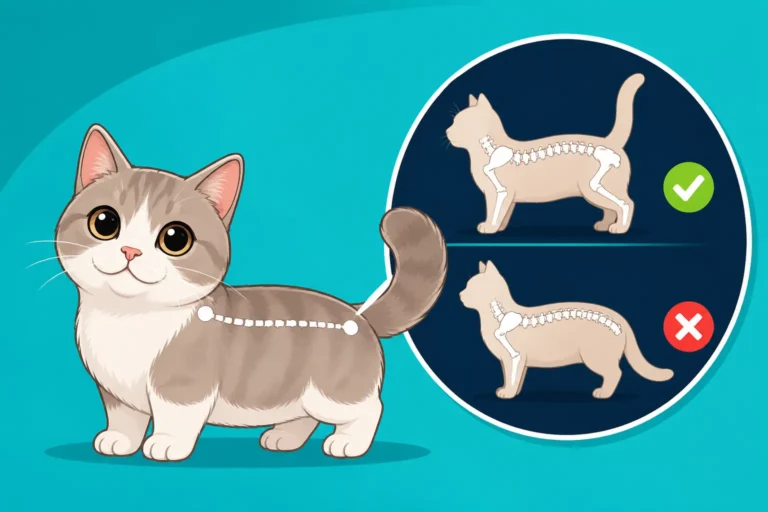
| Health Considerations | Potential for spinal issues (lordosis), joint strain | Typical feline health, no dwarfism-related health risks |
| Price (Kitten) | Generally higher due to desirable trait | Generally lower, treated as a domestic cat with lineage |
What Defines a Long-Legged Munchkin?
If a long-legged Munchkin doesn't carry the gene and looks like a regular cat, what makes them "Munchkin" at all? It really boils down to their parentage and the context of their birth. They are a crucial byproduct of ethical Munchkin breeding practices.
The "Normal" Appearance
A long-legged Munchkin offspring will look, move, and behave like any other cat without the dwarfism gene. Their legs are proportionate to their body, their spine is a normal length and curvature, and they can jump and climb with the agility you’d expect from a feline. There are no subtle physical tells that betray their Munchkin parentage in terms of their skeletal structure. They will have all the charming characteristics of a domestic cat, be it a curious personality or a love for playtime. When considering "Why a Munchkin's Legs Are Short but Its Body Is Not" it helps to remember that the gene specifically affects limb bone growth, not overall body length or other skeletal structures, making the contrast with their long-legged siblings even more striking.
Registry and Recognition
For pedigree purposes, a long-legged kitten born from a registered Munchkin parent and a registered outcross (often a domestic shorthair or longhair) can indeed be registered with an organization like The International Cat Association (TICA). However, they are typically registered as "domestic" cats, or as "Munchkin variants" rather than "Munchkins" (which is reserved for the short-legged phenotype). They don't meet the physical standard for the Munchkin breed itself, which specifically requires short legs. Nonetheless, their lineage is documented, confirming their parentage and their role in a breeding program as an outcross. This clarification answers the question of "Whether a Long Legged Munchkin Can Be Registered" and explains the nuance of their registration status. It's always a good idea to ask "What a Munchkin Breeder Should Be Able to Show You" regarding registration and pedigree for both short-legged and long-legged kittens.
Disclaimer
This article is for general informational purposes only and does not constitute professional advice. Laws, prices and regulations vary by location and change over time. Consult a qualified professional for guidance on your specific situation.