Why the First Munchkin’s Legs Were Not a Disease
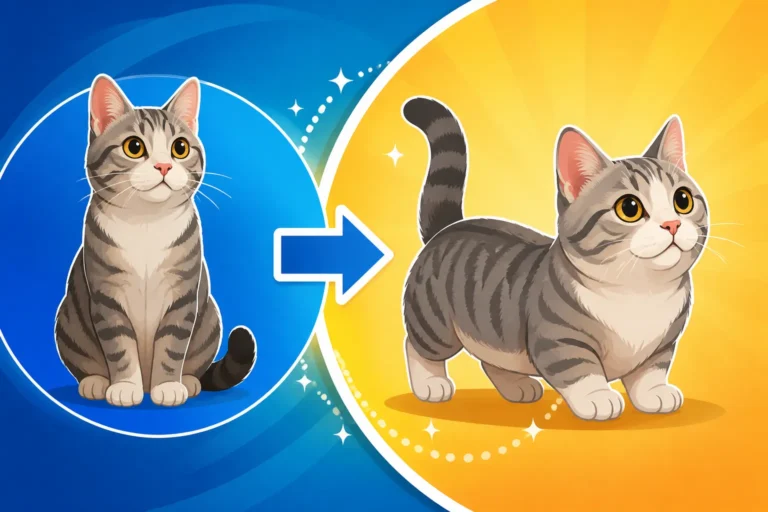
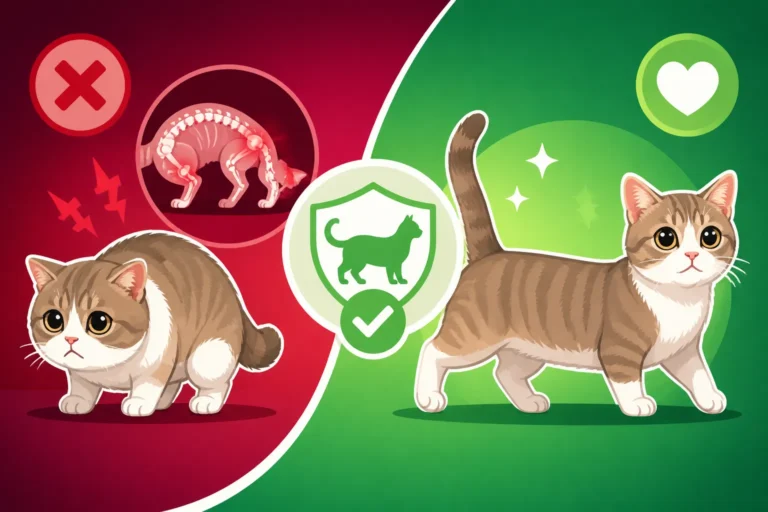
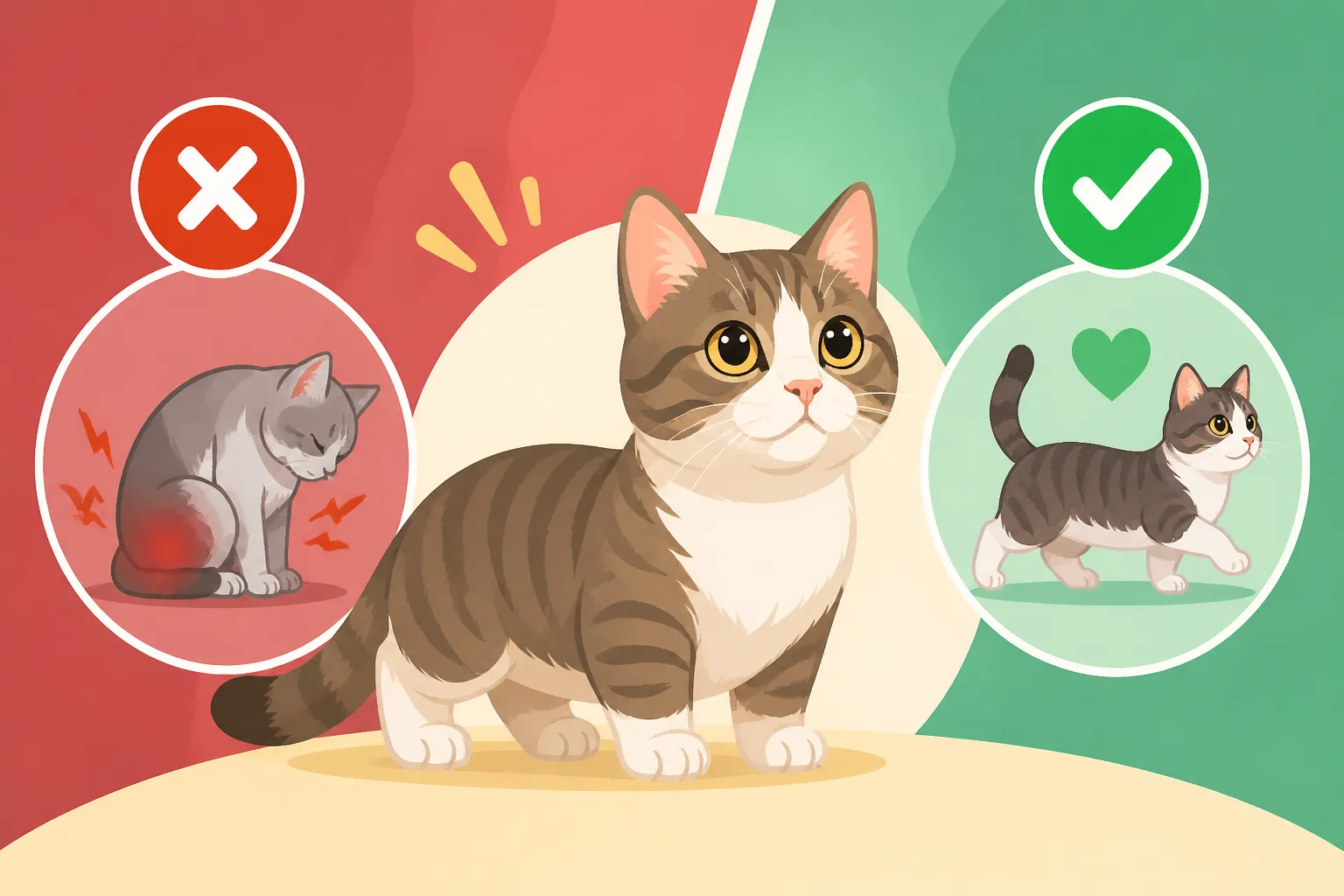
It’s a common misconception, one that swirls around the Munchkin cat breed often: that their short legs are a disease or some kind of sad deformity. But when we look back at the very beginning, at the first little cat that started it all, her unique legs weren't a sign of illness at all. This guide aims to clear up that persistent misunderstanding, diving into the genetic reality of the Munchkin's defining characteristic and explaining why, from a scientific standpoint, those early short legs were a mutation, not a disease.
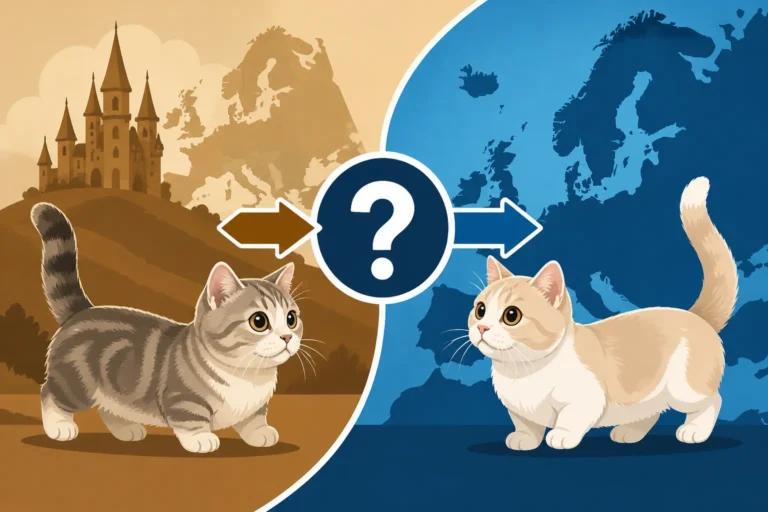
The Genesis of the Munchkin: A Spontaneous Mutation, Not an Illness
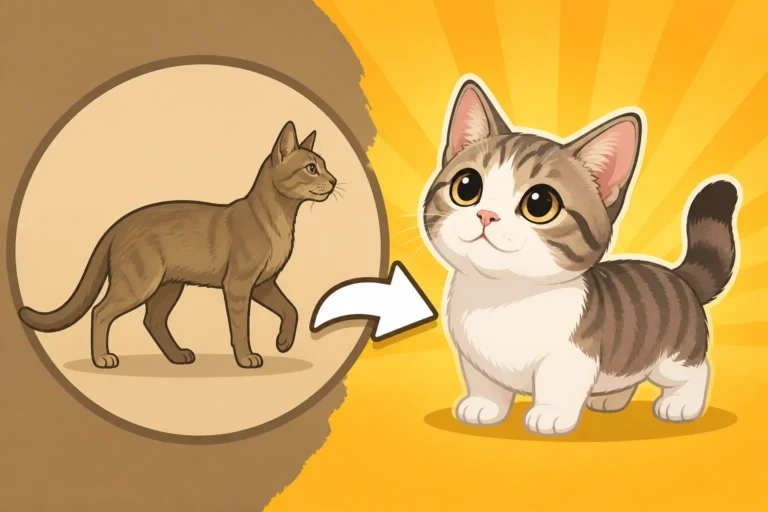
When you hear about a cat breed with a distinctive physical trait, it's natural to wonder where it came from. For the Munchkin, it all began with a stray, a little black cat with short legs who was found under a truck. Her story is crucial to understanding why her legs were not, in fact, a disease.
Blackberry's Unexpected Arrival
Imagine this: it's 1983, in Rayville, Louisiana. A woman named Sandra Hochenedel finds two pregnant stray cats under a truck. One of them, a little black cat, stood out immediately. She had unusually short legs, a trait that made her look quite different from any other cat Sandra had seen. Sandra took her in, named her Blackberry, and gave her a safe home. Despite her short stature, Blackberry was otherwise a healthy, active cat, full of life and typical feline curiosity. Her unique legs didn't seem to hinder her playful nature or her ability to get around. She moved with surprising agility, even if she couldn't jump to the same heights as her long-legged counterparts.
When Blackberry eventually gave birth, her litter held a fascinating surprise: about half of her kittens also had those distinctive short legs. This immediately suggested that whatever caused her short legs was an inherited trait, passed directly from mother to offspring. This pattern of inheritance, observed right from the very first litter, was a key indicator that they were dealing with a genetic variation, not an infection or a developmental disease that typically wouldn't pass on in such a clear, predictable manner. The kittens, like their mother, appeared robust and healthy in every other respect, which further solidified the observation that the short legs themselves were not causing them distress or illness. This initial observation of good health in the founding cat and her progeny laid the groundwork for the future of the breed, emphasizing that this was a genetic characteristic, not a pathology. It’s a story worth reading in more detail; you can find it in Blackberry and Toulouse Are the Two Cats Behind Every Munchkin.
The Difference Between a Mutation and a Disease
It's easy to conflate a physical difference with a disease, especially when it's as striking as the Munchkin's short legs. However, scientifically, there's a clear distinction. A genetic mutation is simply a spontaneous, permanent alteration in the DNA sequence of an organism. It's a change, an anomaly that arises naturally, and it can be harmless, beneficial, or detrimental. In the case of Blackberry, a spontaneous genetic mutation occurred, causing her unique leg length. This change meant that her body's genetic instructions for growing long bones were different from those of a typical cat.
A disease, on the other hand, implies a state of illness or dysfunction, often involving a progressive deterioration of health, an infection by pathogens, or a malfunction of organs and bodily systems. While some genetic mutations can lead to diseases, the mutation itself is not the disease. For Blackberry, her short legs were a result of this genetic mutation, but they weren't causing her pain, organ failure, or a compromised immune system. She was, in all other aspects, a normal, healthy cat. Her mutation simply gave her a different physical structure. The crucial point is that her short legs did not, in themselves, equate to her being "sick" or "diseased."
Think of it like this: having curly hair isn't a disease, it's a genetic trait. If you inherit a gene for blue eyes, that's a genetic trait, not a disease. Similarly, the specific gene that causes the Munchkin's short legs acts in a way that simply dictates shorter long bones. It's a variation in form, not an inherent malfunction of the cat's biological systems. While we'll discuss associated health considerations that need proactive management due to this variation, the fundamental characteristic of short legs is a genetic mutation, not a pathological process like a bacterial infection or a failing kidney.
Understanding the Autosomal Dominant Trait
To fully grasp why the Munchkin's short legs aren't a disease, we need to delve a little deeper into the genetics behind them. It's not just a random occurrence; there's a very specific mode of inheritance at play that distinguishes it further from a general "illness."
How the Munchkin Gene Is Inherited
The genetic trait responsible for the Munchkin's short legs is described as "autosomal dominant." Let's break that down. "Autosomal" means the gene isn't located on the sex chromosomes (X or Y), so it affects males and females equally. "Dominant" means that only one copy of the gene is needed for the trait to be expressed. If a cat inherits just one copy of the Munchkin gene from either parent, it will have short legs. This is precisely what happened with Blackberry's kittens: even though she likely only carried one copy of the gene (as her parents were presumably long-legged domestic cats), half her litter inherited that single copy and, therefore, exhibited the short leg trait.
This dominant inheritance pattern is why breeders always breed a short-legged Munchkin to a long-legged, non-Munchkin domestic cat (often referred to as an "outcross"). If two short-legged Munchkins were bred together, the kittens could inherit two copies of the dominant gene. Unfortunately, as we understand it, two copies of this particular gene are lethal; the embryo does not develop past an early stage. This means that Munchkin Dwarfism Is Dominant and Lethal in Two Copies, and homozygous Munchkin kittens (those with two copies) are never born. This careful breeding strategy ensures that all Munchkin kittens born alive will have inherited only one copy of the short-leg gene. Understanding How Munchkin Dwarfism Is Inherited is fundamental to responsible breeding.
The predictability of this inheritance pattern—a roughly 50% chance of short legs in each kitten when a Munchkin is bred to a normal-legged cat—further reinforces its nature as a genetic trait rather than an unpredictable disease. Diseases often have more complex, multifactorial causes, or are influenced by environmental factors. The Munchkin's short legs are a direct and observable consequence of a specific genetic instruction.
The Specifics of Pseudoachondroplasia
The scientific term for the type of dwarfism seen in Munchkin cats is pseudoachondroplasia. This might sound intimidating, but it simply describes a condition where the long bones of the limbs are shortened, while the skull, spine, and overall body length remain largely unaffected. Unlike some other forms of dwarfism that can cause significant health complications due to widespread skeletal abnormalities or compromised organ development, pseudoachondroplasia in Munchkins primarily impacts the length of the legs.
What this means for the cat is that its spine typically maintains a normal length and flexibility. You can read more about this in Why a Munchkin's Spine Is Normal Length. This is a crucial distinction, as spinal deformities can lead to severe neurological problems and pain. While Munchkins can, like any cat, develop spinal issues such as lordosis (a severe inward curvature of the spine) or pectus excavatum (a sunken chest), these are generally considered separate conditions that can occur in any cat breed, though their manifestation or impact might be exacerbated by the Munchkin's unique conformation. The core characteristic—the short legs themselves—is pseudoachondroplasia, a condition affecting bone growth, not an ongoing disease process.
It's also important to note that the term "dwarfism" itself can sometimes carry negative connotations due to human medical conditions. However, in the context of the Munchkin cat, pseudoachondroplasia describes a specific genetic trait that results in short long bones without necessarily causing systemic illness or pain directly related to the bone shortening itself. While all cats need excellent care, understanding What Pseudoachondroplasia Does to a Munchkin's Legs helps us focus on supporting their unique needs rather than incorrectly labeling their core trait as a disease.
Dispelling Misconceptions and Addressing Concerns
The journey from a unique stray cat to a recognized breed has been fraught with debate. Addressing the "disease" label requires looking at how these cats live and the discussions around their welfare.
Early Health Observations and Vet Assessments
From the moment Blackberry's kittens appeared, and as more Munchkins were born and raised, breeders and veterinarians paid close attention to their overall health and well-being. What they consistently observed was that these cats were incredibly active, playful, and, in all other aspects, behaved like typical domestic felines. They ran, they chased, they played with toys, and they explored their surroundings with boundless energy—albeit closer to the ground. Their short legs did not prevent them from living full, engaging lives, nor did they show signs of chronic pain or inherent physical limitation beyond the obvious reduced jumping ability. This firsthand observation was critical in differentiating their short stature from a debilitating illness.
Veterinary assessments during the breed's development also largely confirmed that the short legs themselves weren't causing pathological issues. Regular check-ups revealed normal organ function, healthy teeth (though regular dental care is always vital for cats, and you can find many dental products on Chewy), and good overall physical condition in the vast majority of individuals. Of course, any cat, including a Munchkin, can experience health problems, and there are certain considerations specific to the breed's structure. For instance, maintaining a healthy weight is absolutely paramount for a Munchkin, because Why Weight Is More Dangerous on a Munchkin. However, these are management considerations, not an indication that the short legs themselves are a disease. These early and ongoing observations were vital in the eventual acceptance of the breed by registries like The International Cat Association (TICA).
It's fair to say that proactive management of a Munchkin’s environment and health is more important than with a long-legged cat. They are, at their heart, A Munchkin Is a Normal Cat That Cannot Reach, and this fundamental difference dictates a slightly different approach to care, not a constant battle against an inherent disease.
The Ongoing Debate: Welfare vs. Breed Acceptance
Despite the genetic understanding and veterinary observations, the debate surrounding the Munchkin breed has been intense and enduring. Critics often argue that intentionally breeding for short legs, which some perceive as a "deformity," is unethical and inherently promotes ill health or pain, labeling the trait as a disease. This perspective often stems from a comparison to human dwarfism, where various forms can indeed lead to severe health issues. However, as discussed, the specific pseudoachondroplasia in Munchkins is typically not associated with the same widespread systemic problems.
Cat fancy organizations like TICA, after extensive review, ultimately granted the Munchkin championship status. Their decision was based on evaluations of the cats' overall health, mobility, temperament, and quality of life over multiple generations, concluding that the short legs, in well-bred individuals, did not inherently cause suffering or impair their ability to live as normal, happy cats. This acceptance hinges on the distinction that while it's a mutation resulting in a physical difference, it does not fit the definition of a disease that progressively harms the individual's vital functions or causes constant pain. This is why Munchkin breeders' reply to critics often focuses on the breed';s vitality and affectionate nature.
However, it's also true that Why Vets Disagree About the Munchkin. Some veterinarians and welfare organizations still express concerns, particularly regarding the potential for secondary issues like arthritis or spinal problems if not properly cared for. While these concerns are valid and necessitate responsible breeding practices and diligent owner care, they do not necessarily define the short leg trait itself as a disease. Instead, they highlight the responsibility of owners and breeders to ensure that a cat with unique physical characteristics receives appropriate care and has a good quality of life. The average How Many Years a Well Bred Munchkin Lives is a testament to their general health when properly cared for.
Ultimately, the first Munchkin's legs were the result of a spontaneous genetic mutation, a natural variation in her DNA. This mutation simply dictated shorter long bones, a trait she passed on to her offspring. It was not a disease, an infection, or a pathological condition causing her distress. While the breed's unique conformation demands careful consideration in breeding and daily care, understanding its genetic origin helps us move past the misconception of it being an illness and towards responsible pet ownership.
| Feature | Genetic Mutation (Munchkin's Short Legs) | Disease |
|---|---|---|
| Origin | Spontaneous change in DNA sequence | Pathogens, environmental factors, organ dysfunction, severe genetic predisposition |
| Inheritance | Autosomal dominant, predictable patterns | Variable, can be genetic, infectious, or environmental |
| Symptoms | Primarily altered physical form (short limbs) | Illness, pain, organ dysfunction, systemic decline, progressive deterioration |
| Progression | Static physical trait | Often progressive, may worsen over time |
| Treatment | Not "treated" as an illness; managed through environment and preventative care | Medical intervention, medication, surgery, supportive care |
| Impact | Changes mobility & interaction with environment | Compromises health, reduces quality of life, potentially life-threatening |
| Blackberry's Case | Healthy cat, active, short legs | Not applicable; no signs of illness |
Disclaimer
This article is for general informational purposes only and does not constitute professional advice. Laws, prices and regulations vary by location and change over time. Consult a qualified professional for guidance on your specific situation.