What a Kinkalow Is and How It Relates to the Munchkin
A cat with very short legs and curled ears may be described as a Kinkalow, but the name can be confusing: it refers to a crossbreed associated with the Munchkin and American Curl, not a universally standardized breed. This guide explains what those features mean, how a Kinkalow relates to the Munchkin, and what to consider before bringing one home.
What a Kinkalow is
The Munchkin and American Curl connection
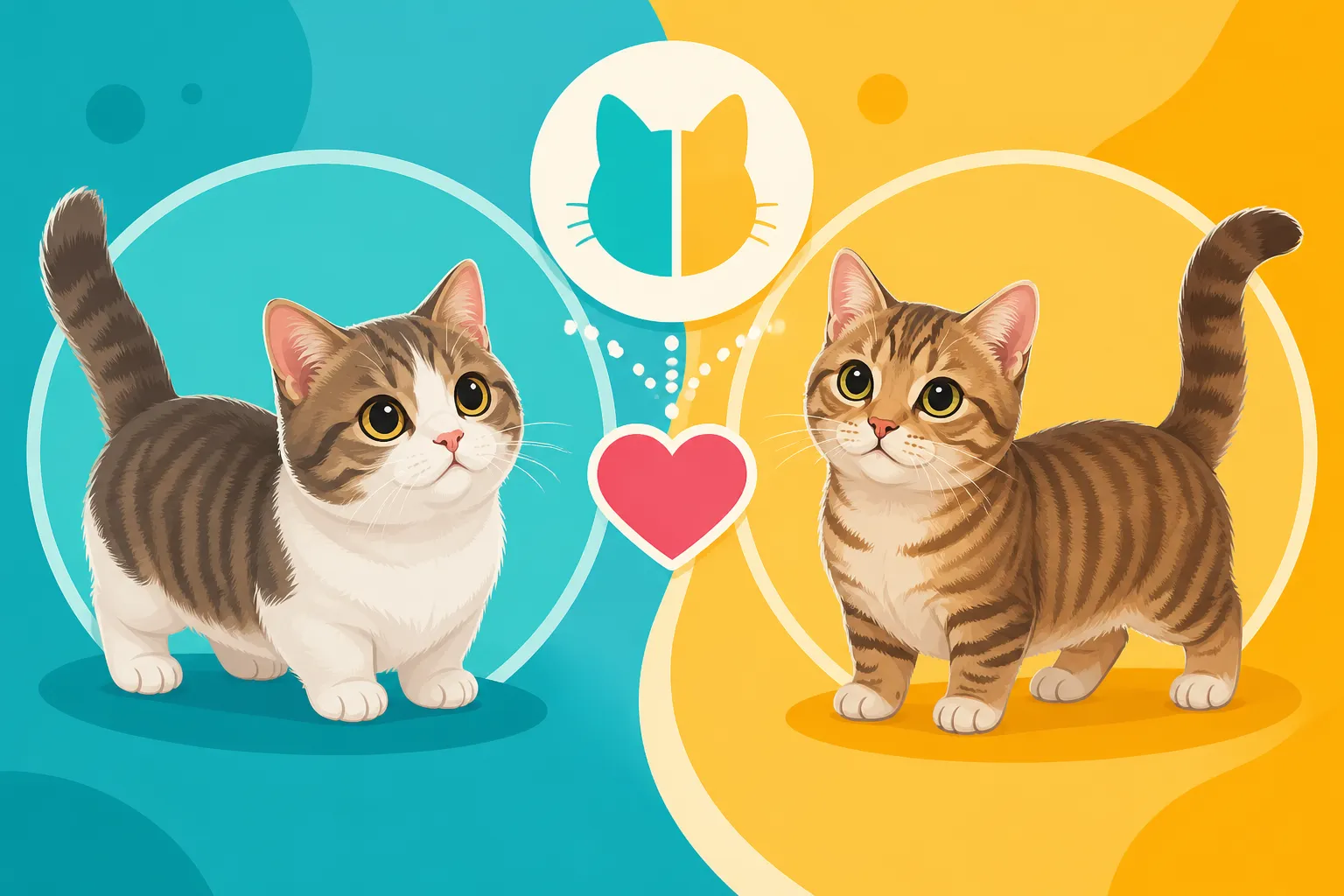
A Kinkalow is generally described as a cat developed by crossing a Munchkin with an American Curl. The Munchkin is associated with short legs, while the American Curl is known for ears that curve backward. A Kinkalow may show both traits, although individual cats can vary in how clearly either feature appears.
That variation is important. A kitten described as a Kinkalow may not have especially short legs or strongly curled ears, and looks alone cannot confirm its ancestry. Like other crossbred cats, Kinkalows can inherit a mix of physical traits from their parents. A breeder’s records and the kitten’s veterinary history are more useful than a label in an online listing.
The Munchkin connection is specifically about the short-legged trait. For a closer look at the breed’s physical appearance, see What a Munchkin Looks Like Against the TICA Standard. The American Curl connection concerns the ear shape; it does not mean a Kinkalow is simply an American Curl with short legs.
How a Kinkalow differs from a Munchkin
A Munchkin is identified primarily by its short legs, though Munchkins can vary in coat length, color, and other features. A Kinkalow is described by a combination of traits from two breeds: Munchkin-associated short legs and American Curl-associated curled ears. A short-legged cat without curled ears may be a Munchkin or another cat entirely, while curled ears alone do not make a cat a Kinkalow.
The ears can also change in appearance as a kitten grows. American Curl kittens are not necessarily born with their adult ear shape fully established; the curl develops over time. So a very young kitten’s ears may not provide a reliable visual shortcut to its eventual appearance. Ask how the breeder tracks ear development, and request ordinary videos of the kitten moving and interacting rather than relying only on posed photos.
| Feature | Munchkin | Kinkalow |
|---|---|---|
| Commonly described defining trait | Short legs | Short legs and backward-curving ears |
| Breed relationship | The short-legged cat breed associated with the Kinkalow | A crossbreed associated with the Munchkin and American Curl |
| Appearance across individuals | Coat, color, and leg length vary | Leg length and degree of ear curl may vary |
| What to verify | Parentage, health records, and breeder practices | Parentage, health records, breeder practices, and how the cat is registered or described |
The table is a general guide, not a way to identify a cat from appearance alone. If you are trying to distinguish a Kinkalow from a similar cross, How to Tell a Munchkin From a Bambino offers a useful example of why related breed names and looks can be easy to mix up.
How Kinkalow traits are inherited
Short legs do not appear in every kitten
Munchkin short legs are commonly described as a dominant inherited trait. In practical terms, a litter from a short-legged cat and a normal-legged cat may include kittens with different leg lengths. That means a kitten from parents marketed as Kinkalows may not have short legs, even if one parent does.
Responsible breeding plans take this variation seriously. Munchkins are not ordinarily bred short-legged to short-legged, and the reasons behind that practice are explained in Why a Munchkin Is Always Bred to a Normal Legged Cat. If a breeder cannot explain the parent pairing, the expected range of kitten appearances, and how kittens with different leg lengths are placed, take time to ask more questions before making a commitment.
A kitten’s leg length is only one part of the picture. It does not tell you whether the cat is comfortable, active, or free of other health concerns. A calm, natural video of a kitten walking, turning, playing, and getting up from rest can help you notice how it moves. For guidance on what to look for, see Why to Watch a Munchkin Kitten Walk in Person.
Curled ears deserve careful, gentle handling
The American Curl’s signature ears are curled backward, but they should not be treated as handles or bent to “test” their flexibility. A kitten’s ears are delicate, and the breeder should be able to explain how they monitor their development without repeatedly manipulating them.
When you meet a kitten, look for comfortable, ordinary behavior: it should be able to move its ears naturally, respond to sounds, and explore without showing obvious distress. Ask whether the kitten has had routine veterinary checks and whether any ear concerns have been noted. A vet can examine the ears as part of a broader health assessment; appearance alone cannot establish that everything is healthy.
Also ask what the breeder means by “Kinkalow.” Breed names and registration practices can differ, and not every organization treats a developing crossbreed as a formally recognized breed. A pedigree or registration document should be explained clearly, including what it does and does not certify. For background on the Munchkin’s registry questions, see Which Registries Accept a Munchkin.
Health, welfare, and everyday care
Consider both the cat and the breeding choices
A Kinkalow may inherit traits from both sides of its ancestry, so it is sensible to ask about the health history of the parents and the breeder’s approach to screening. Ask whether the adult cats have been examined by a veterinarian, whether relevant health problems have occurred in the line, and what support is available if a kitten develops a concern after going home.
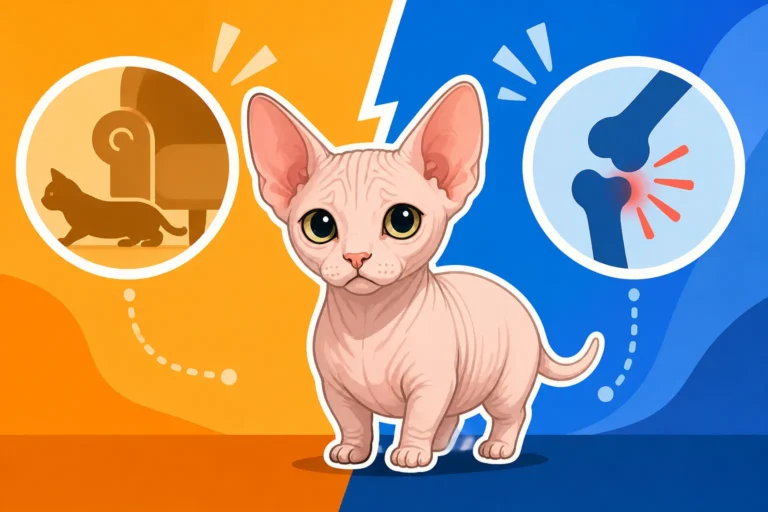
Short legs can affect what a cat can reach, even when it is playful and otherwise active. A home with a high bed, tall sofa, or steep cat tree may need accessible routes so the cat is not repeatedly attempting difficult jumps. Small steps, stable ramps, and low resting spots can help. See How to Rearrange a Room So a Munchkin Can Climb for ideas that are also relevant to a short-legged Kinkalow.
It is worth thinking about welfare beyond convenience. The question is not only whether a cat can adapt to a home, but whether the breeding practices prioritize health and comfortable function alongside appearance. Whether Buying a Munchkin Is an Ethical Decision explores the broader discussion behind breeding for short legs.
Set up the home around reachable essentials
Place food, water, litter, and resting areas where the cat can reach them without having to climb or jump repeatedly. A low-entry litter box can be easier to use than one with a tall threshold. Keep favorite beds and safe hiding places accessible, and use stable furniture or ramps if the cat needs help reaching a sofa or window perch.
Observe how your individual cat moves rather than assuming that every Kinkalow will need the same adaptations. One may happily run around a level room but struggle to reach a high windowsill; another may prefer a floor-level perch even when a ramp is available. If you add steps, make them broad, steady, and easy to approach. Encourage their use with treats or toys rather than placing the cat on a ramp and expecting it to understand immediately.
Routine supplies are part of that setup. A shop such as Chewy may be one place to look for brushes, low-entry litter boxes, or pet steps, but check the dimensions and stability of any item before buying. The right product is the one your cat can use safely in your actual space, not simply one marketed for cats.
Choosing a Kinkalow responsibly
Questions to ask a breeder
A careful breeder should be willing to discuss the kitten’s parents, background, veterinary care, and expected adult appearance without making promises that no one can guarantee. Ask what breeds were used in the pairing and how the breeder describes the kittens whose legs or ears do not match the expected look. Also ask for the kitten’s medical records and details about vaccinations, parasite care, and any examination already completed.
Ask to see the kitten moving naturally and, if possible, the parent cats. A video should show more than a close-up of curled ears or short legs: look for the kitten walking across a normal surface, playing, and getting around its space. You can also ask whether the breeder welcomes an independent veterinary examination before or soon after the kitten comes home.
Be cautious if the seller applies pressure to pay quickly, refuses reasonable questions, or presents a particular appearance as proof of exceptional health. A specific label, pedigree, or registration document should be explained rather than used to shut down discussion. What a Munchkin Breeder Should Be Able to Show You provides a useful checklist of the kinds of transparency to look for.
Make a decision based on the cat, not the novelty
Curled ears and short legs can make a Kinkalow memorable, but those features should not be the only reasons to choose one. Think about your home layout, your ability to provide routine grooming and veterinary care, and whether you are comfortable adapting furniture or play spaces if the cat cannot reach something easily.
It can also help to compare a breeder’s claims with what you can observe. Does the kitten seem curious and comfortable? Can it move around its environment without repeatedly struggling? Do the adults appear well cared for? A single visit cannot answer every health question, but it can reveal whether the breeder is open, attentive, and willing to discuss the cats as individuals.
For everyday needs, a retailer such as Chewy may carry practical items like grooming tools or feeding supplies. Choose based on fit and ease of use, and ask your veterinarian if you are unsure whether a product or setup is appropriate for your cat. If you bring a Kinkalow home, keep an eye on changes in movement, appetite, grooming, or willingness to use steps; those shifts are worth discussing with a vet.
Disclaimer
This article is for general informational purposes only and does not constitute professional advice. Laws, prices and regulations vary by location and change over time. Consult a qualified professional for guidance on your specific situation.