Why the Munchkin Was Named After the Wizard of Oz
The Munchkin cat’s name comes from the small fictional people in The Wizard of Oz, a fitting reference to the breed’s short legs. But the name has a little more history than a simple size joke: it connects the cats’ early Louisiana story with the way their unusual appearance caught people’s attention. This guide explains the name’s origin, what it does and does not mean, and how it became part of the breed’s identity.
The Wizard of Oz connection
The Munchkins in the story
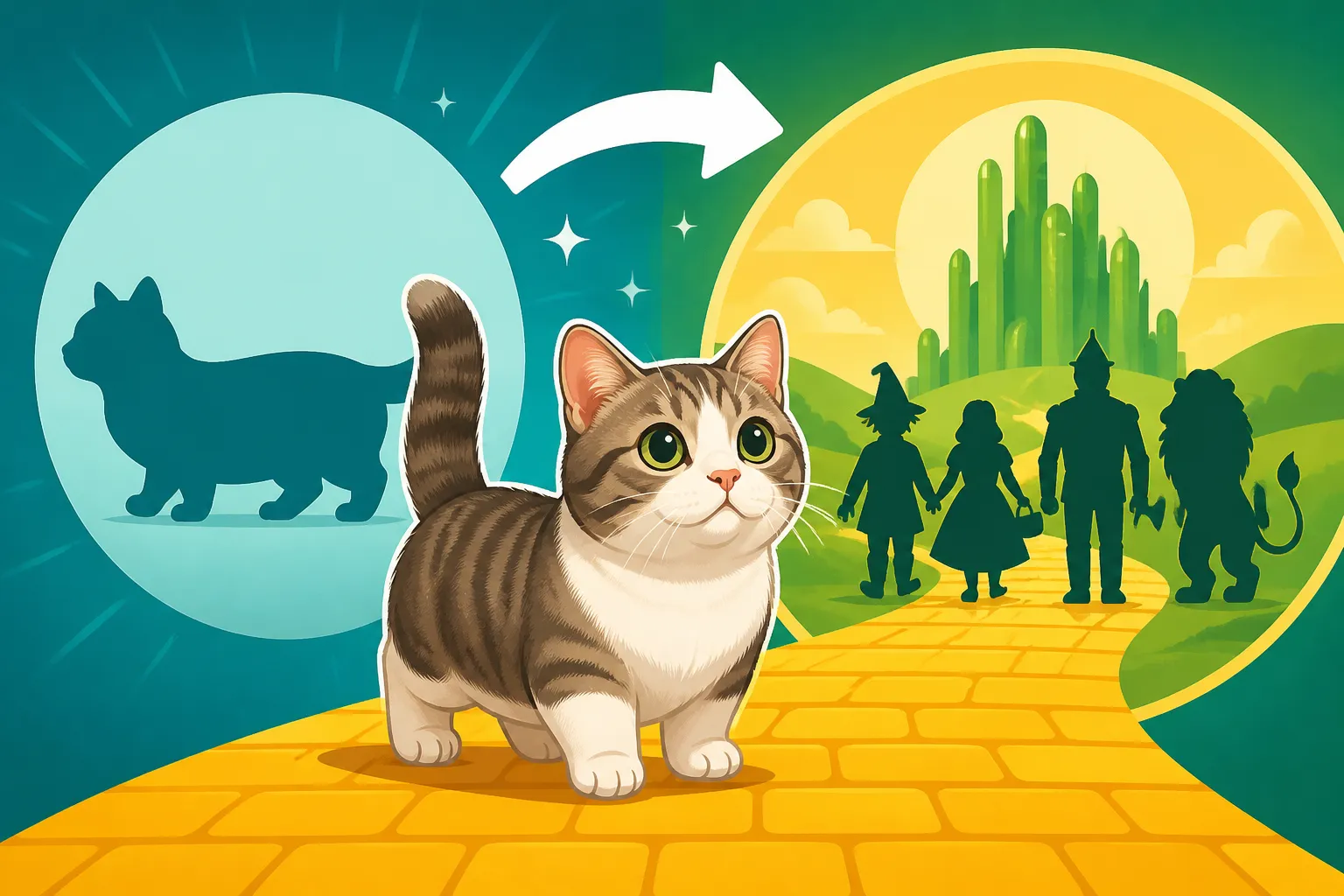
In L. Frank Baum’s The Wonderful Wizard of Oz, the Munchkins are a community of small people in the Land of Oz. The book appeared before the familiar film adaptation, and the name became especially recognizable to many people through the 1939 movie. When someone hears “Munchkin,” that pop-culture image is often the first thing that comes to mind.
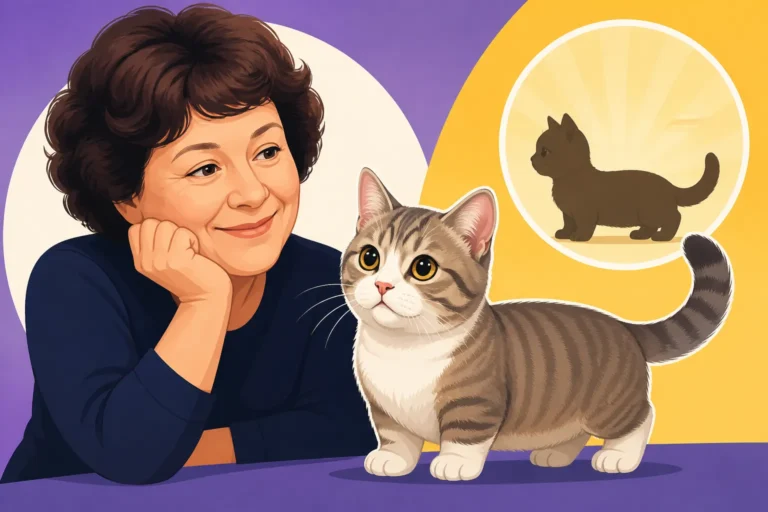
The cat breed’s name borrows from that fictional name. It is a reference to the cats’ short legs, not to a place where the cats originated in the story, or to a supposed personality trait. The name is memorable and easy to say, which likely helped it stick as people began talking about the cats.
The connection is playful, but it can also create confusion. The cats are not named after an actual small-bodied cat breed from the book or film, and the Wizard of Oz characters have no biological connection to them. The name is simply a cultural reference that gives the breed a distinctive label.
Why the reference seemed fitting
A name often helps people make sense of something they have not seen before. A short-legged cat can look striking beside an average-legged domestic cat, so a familiar reference to small characters offers an immediate visual association. That does not explain the biology behind the cats’ legs, but it does explain why the name is easy to remember.
There is a difference between a nickname that describes an appearance and a scientific explanation of that appearance. “Munchkin” is the breed name; it is not a veterinary diagnosis or a precise description of a cat’s overall size. Individual cats can vary in body size, coat, color, and proportions, even when they share the short-legged trait.
For more on how the name entered the breed’s story, see Where the Munchkin Name Came From. The origin is often repeated as a neat anecdote, but the broader history also includes the cats and people who helped establish the early population.
How the name became attached to a cat breed
The early Louisiana cats
The modern Munchkin story is commonly traced to Louisiana in the 1980s. The account often begins with Sandra Hochenedel finding a pregnant short-legged cat beneath a vehicle in Rayville. She named the cat Blackberry. Some of Blackberry’s kittens also had short legs, and one kitten, Toulouse, is frequently named in accounts of the breed’s early development.
Those details matter because the Munchkin name did not arise from a fictional setting or a planned connection to Oz. It became attached to real cats with a distinctive inherited trait. The cats’ story is described in more detail in Sandra Hochenedel and the First Munchkin and What Happened in Rayville That Started the Munchkin.
Accounts of breed origins can become simplified as they are retold. One version may spotlight the first cat; another may emphasize the kittens, the people who cared for them, or later breeding efforts. The useful distinction is that the Wizard of Oz explains the inspiration for the name, while the Louisiana cats explain the breed’s early history.
From a memorable name to public recognition
A name can make a new type of cat easier to discuss, but it does not by itself establish a breed. People also need to describe the cats, consider their health and welfare, and decide whether and how they should be recognized within organized cat fancy. The Munchkin’s recognition history has involved debate, so the name’s popularity should not be mistaken for universal agreement about the breed.
The cats were shown publicly and later entered a formal registration process with The International Cat Association. Those steps helped make “Munchkin” a more widely used breed label. They did not change the origin of the word, nor did they mean every registry or animal organization viewed the breed in the same way. For background, see When the Munchkin Was First Shown Publicly and What TICA Registered the Munchkin As in 1994.
The name has also remained useful because it distinguishes the breed in everyday conversation. A person can say “Munchkin cat” and most listeners will understand that they mean a short-legged cat associated with this breed. But a label is not proof of pedigree. A short-legged cat found in a shelter, for example, cannot automatically be identified as a registered Munchkin based on appearance alone.
What the name does and does not tell you
It describes a recognizable look, not the whole cat
The name draws attention to short legs, but it can encourage people to think of the cat as a novelty before thinking of it as an individual animal. Munchkin cats still have ordinary feline needs: safe places to rest, suitable food, play, grooming, veterinary care, and a home arranged around their abilities. Their name does not tell you whether a particular cat is lively, shy, affectionate, or independent.
Nor does the name mean that the cat’s body is simply a scaled-down version of another cat. The short-legged trait is associated with a skeletal difference, while the rest of a cat’s size and shape can vary. If you want to understand the physical trait more clearly, Why a Munchkin's Legs Are Short but Its Body Is Not explains the distinction.
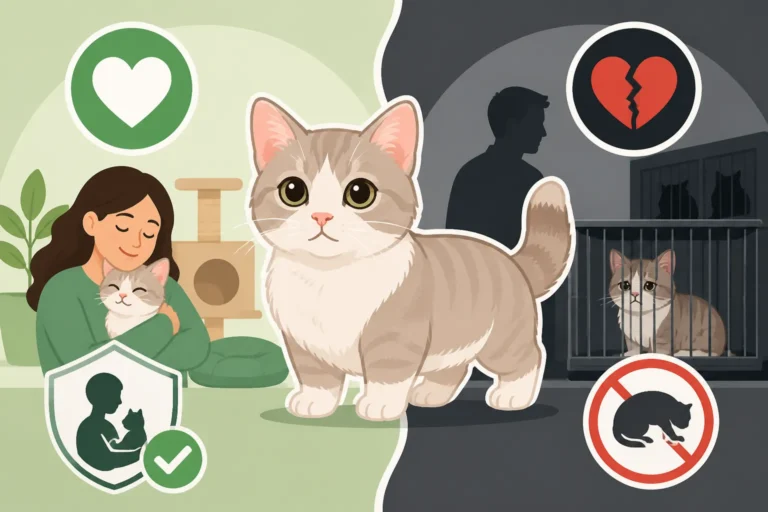
It is also worth separating appearance from welfare. A cute name cannot answer questions about a cat’s mobility, comfort, or long-term health. Those are individual considerations, and they deserve more attention than the word on a pedigree or in an advertisement. For an overview of the wider debate around the breed, see Whether Buying a Munchkin Is an Ethical Decision.
It does not promise a particular temperament or care routine
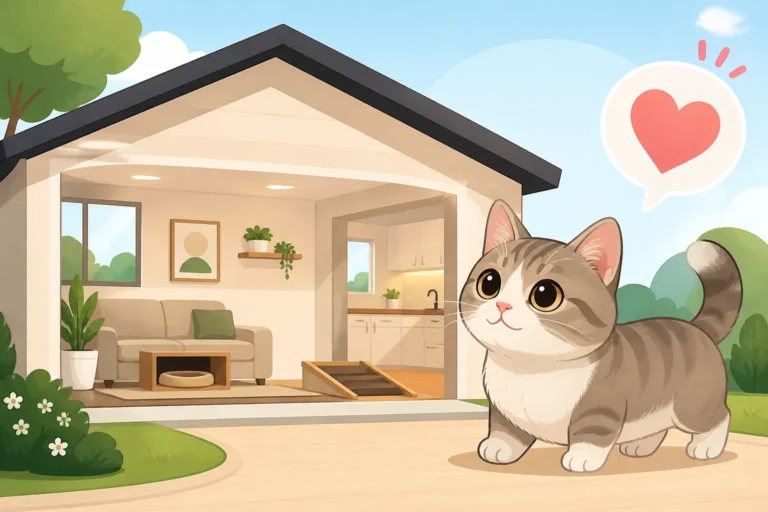
People sometimes assume a Munchkin’s small-looking stature means the cat needs only miniature versions of standard cat equipment. In practice, it is better to focus on access and comfort. A litter box with an easy-to-enter opening, stable steps to a favorite resting place, and reachable food and water can matter more than whether an item is marketed specifically for the breed.
For example, if you are comparing litter boxes, check the height of the entrance and whether the cat can step in without struggling. Retailers such as Chewy may be one place to compare general cat supplies, but measure the item and consider your cat’s needs rather than relying on a label. A low entry is not automatically a good fit if the box is unstable or cramped.
The same practical approach applies to play and furniture. A Munchkin may enjoy chasing a wand toy along the floor, exploring a low platform, or using steps to reach a sofa. If you browse toys or home accessories through Chewy or another retailer, consider whether the cat can use them safely and comfortably. The breed name alone cannot tell you which setup your individual cat will prefer.
Common questions about the name
Was the breed named directly after the movie?
The name is associated with the Munchkins from The Wizard of Oz, but that does not mean the cats’ early history came from the film or that the characters inspired the short-legged trait. The trait and the cultural reference are separate things: one concerns the cats’ physical inheritance, and the other concerns the label people chose to use.
The connection is often described as an obvious fit because the fictional Munchkins are small and the cats have short legs. Still, a simple explanation can leave out the larger context. The cats’ history involves early individuals such as Blackberry and Toulouse, human decisions about breeding and naming, and later debate about recognition and welfare.
A useful way to understand the story is to keep three parts distinct: the name’s literary association, the cats’ Louisiana origins, and the later effort to establish the breed. Blackberry and Toulouse Are the Two Cats Behind Every Munchkin covers two of the cats most often mentioned in that early history.
Does “Munchkin” mean every short-legged cat is the same breed?
No. A shared appearance does not establish a cat’s ancestry or registration. Cats can have short legs for different reasons, and a cat without a documented history should not be labeled as a Munchkin solely because it looks similar. If you are adopting or buying a cat, ask about its background and have a veterinarian assess its health rather than relying on the name alone.
The name also does not guarantee that every Munchkin has identical proportions, movement, or care needs. One cat may move confidently around a home with low furniture and stable steps, while another may need a different arrangement. Watching how a cat walks, climbs, plays, and rests is more informative than assuming all cats with the same breed label behave alike.
If you are setting up a home for a short-legged cat, focus on practical access rather than novelty. A retailer such as Chewy can be one option for browsing everyday cat supplies, but the key questions are whether an item is stable, reachable, and appropriate for the individual animal. The Wizard of Oz reference may explain the name; it cannot choose the right litter box or resting spot for your cat.
Disclaimer
This article is for general informational purposes only and does not constitute professional advice. Laws, prices and regulations vary by location and change over time. Consult a qualified professional for guidance on your specific situation.